
What is "Fungal Acne"? Isn't it the same as regular acne (acne vulgaris)?
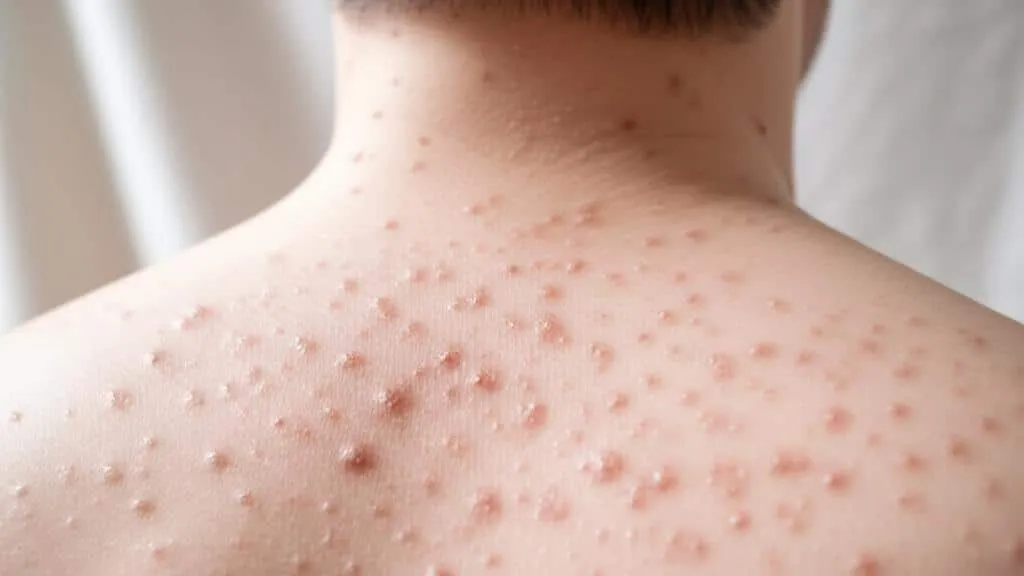
Simply put, "Fungal Acne" is an infection that occurs when a fungus (fungus) enters the hair follicles (the small holes where hairs come out) on our skin. Doctors call this Malassezia folliculitis or Pityrosporum folliculitis. The type of fungus that causes it is a yeast called Malassezia. Okay, now you're asking how this is different from regular acne. Many people confuse the two. Regular acne (acne vulgaris) occurs when our hair follicles become clogged with bacteria, oil, and dead skin cells. However, "Fungal Acne" is a fungal infection. The main difference is that the blisters that appear due to "Fungal Acne" are often itchy. Normal acne is rarely itchy. These bumps are small, red bumps (papules). Sometimes they can become larger and turn into white or yellow pus-filled bumps (pustules). These appear in clusters all at once. It is important to know the difference between the two because the treatments are completely different. Sometimes both types of acne can occur together. So it is important to know exactly which one is which.Who is more likely to develop "Fungal Acne"?
Actually, anyone can develop this. However, it is especially common in young boys and young adult men (whose skin is usually oily). This is because this yeast called Malassezia (Malassezia) grows well on oily skin. Also, this yeast spreads very quickly on warm, moist, sweaty skin . So, people who live in hot, sweaty countries like ours are more likely to develop this condition. There are several other risk factors:- For those who live in areas with hot and humid climates.
- For people whose immune system is weakened (e.g. due to certain diseases or certain medications).
- People who already have other fungal infections . For example, seborrheic dermatitis- If you have a severe condition like dandruff or tinea versicolor (a skin disease we also call "ringworm").
- For those who sweat a lot (hyperhidrosis).
- For those who frequently use oily moisturizers and sunscreens.
- For those who use antibiotics for a long time.
Why does this "fungal acne" occur? What are the causes?
We all naturally have small amounts of the yeast Malassezia on our skin. That's normal. However, the problem arises when our hair follicles are damaged in some way, or when they become blocked and this yeast grows too much. There are several ways that hair follicles can become damaged:- When skin-to-skin contact increases (e.g., wearing tight clothing, certain exercises).
- If the skin is hot and humid for a long time (especially after sweating).
- Because of hair removal methods. For example, when shaving (removing hair from a beard or other places), plucking (removing hair with a tweezers) or waxing (removing hair by waxing).
- If you constantly touch and rub your skin.
- If you use a hot tub or whirlpool that is not well maintained.
- Wearing tight clothes, especially when sweating.
What are the symptoms of "Fungal Acne"? How do you recognize it?
Fungal acne is a condition where many small blisters appear suddenly, like a rash. These blisters appear in clusters of the same size and shape. They are not all the same size as regular acne. Sometimes, you may see a red border or ring around each blister . Your skin may feel like this:- Burning.
- Severe itching (Itchy). This is one of the main symptoms!
- Sometimes it's painful.
- Chin.
- Chest.
- Forehead.
- Neck.
- Upper arms.
- In the shoulders.
- Upper back.
How does a doctor accurately diagnose this as "Fungal Acne"?
If you have these symptoms, it's best to see a primary care physician or dermatologist. A doctor will do the following to determine if it's Pityrosporum folliculitis or Fungal Acne:- They will ask you about your symptoms and details like how long you've had them.
- Your skin will be examined carefully.
- Sometimes, a small sample of the skin (a skin sample) can be taken and looked at under a microscope. This can then be used to determine exactly whether the fungus is present.
- You can also use a special device called a Wood's lamp. This is like a small black light. When the light is held against the skin, the areas infected with the fungus glow yellow or green.
What are the treatments for "Fungal Acne"?
Dermatologists usually treat Malassezia folliculitis by prescribing either oral antifungal medications or topical antifungal medications. Oral antifungal medications are the most effective treatments. For example:- Fluconazole
- Itraconazole
- Econazole cream.
- Ketoconazole cream or shampoo.
- Selenium sulfide shampoo - Although this is a shampoo used for dandruff, it is also used for "fungal acne ".
Can these treatments cause side effects?
Oral antifungal medications can sometimes cause side effects such as:- Diarrhea
- Nausea and vomiting
- Stomach pain
- Very rarely, liver damage may occur.
Therefore, it is very important to take the medication exactly as prescribed by a doctor, for the prescribed period of time. If you experience any side effects, you should also tell your doctor immediately.
What can be done to prevent "Fungal Acne" from coming back?
These things can help reduce the occurrence of Pityrosporum folliculitis or Fungal Acne:- After exercising and sweating, take a quick shower and change your clothes.
- When removing hair (shaving, plucking, waxing), be very careful not to injure the skin.
- If you use a hot tub, only use it in areas that are well-maintained and clean.
- After using your swimsuit, always wash it thoroughly, let it dry completely, and then reuse it.
- Wear loose clothing, especially on hot, humid days or when exercising. Tight clothing can trap sweat and increase the risk of fungus growth.
Can Fungal Acne come back after it heals?
Yes, that's true. Topical and oral antifungal treatments are usually very effective. However, even after successful treatment, fungal acne can recur. Therefore, making hygiene changes and using an antifungal shampoo once a week can help prevent fungal acne from coming back. Talk to your doctor about this and get advice.Is there anything I can do at home to reduce this itching and blistering?
There are a few simple things you can do at home to help reduce the symptoms of Fungal Acne and help the blisters heal faster. But remember, these are best done after talking to and getting approval from a doctor.- Apply warm compresses to the blistered area several times a day. Soak a clean cloth in hot water, wring it out, and hold it on the area for a few minutes.
- Try to avoid things that damage hair follicles for about a month. For example, try to avoid things like shaving and wearing tight clothing for a while.
The most important thing is to talk to a doctor before trying any of these home remedies to make sure they are right for your condition, as sometimes these can actually make things worse.



No comments yet. Be the first to share your question or experience below.