
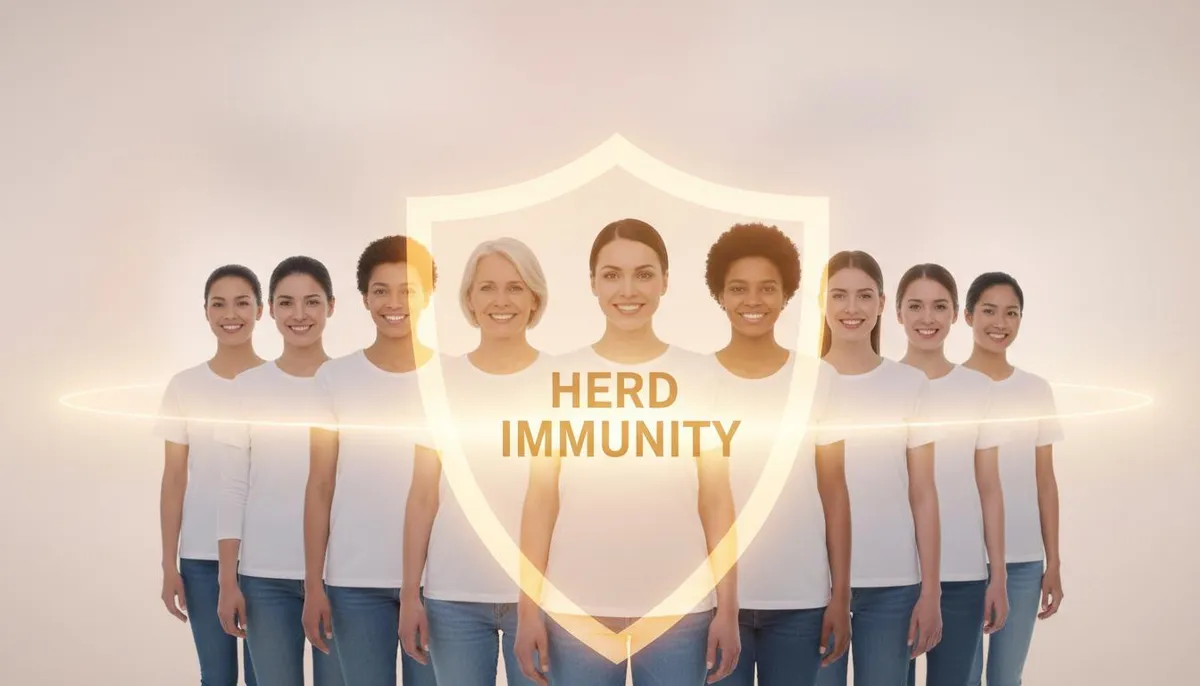
You've probably heard the term "Herd Immunity." There's been a lot of talk about it, especially during the COVID-19 pandemic. So, what does it really mean? Let's talk about it a little bit today, like talking to a friend.
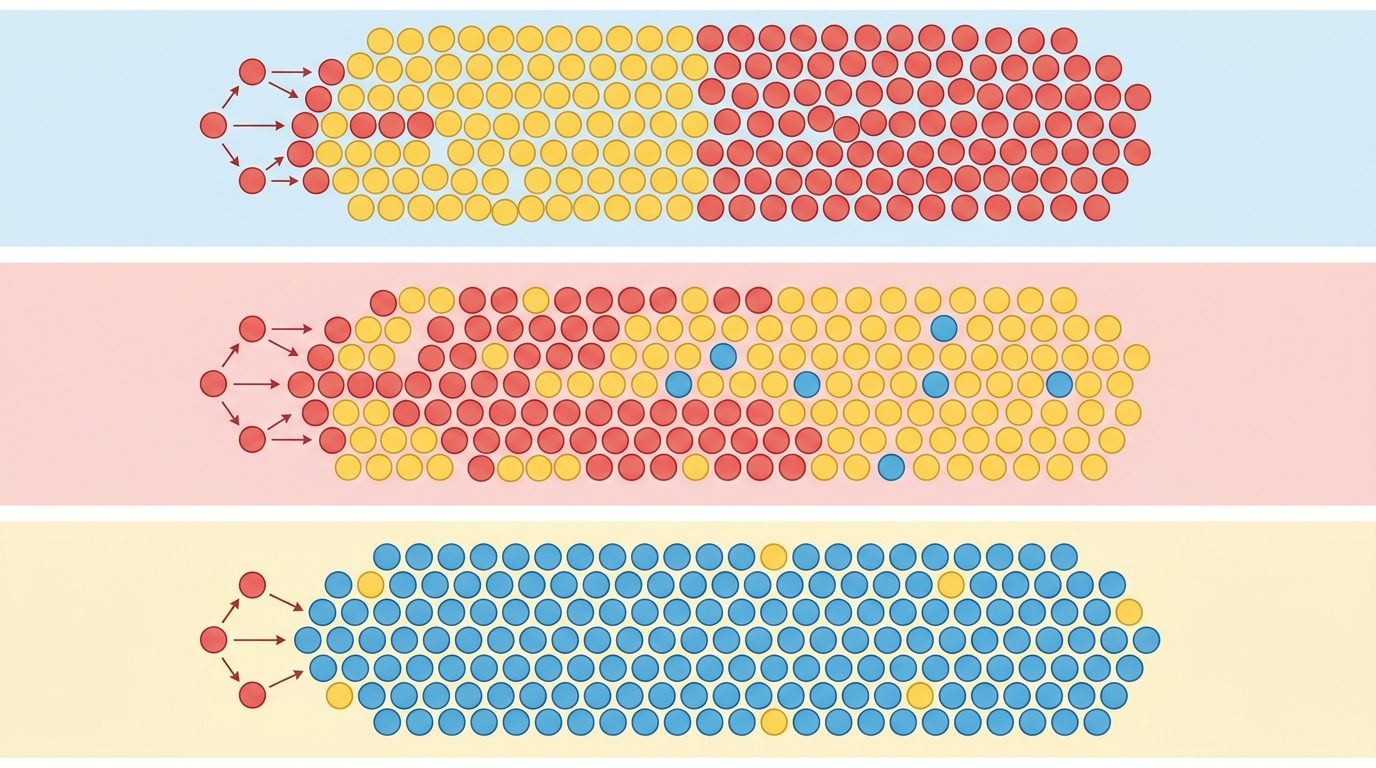
What is this 'Herd Immunity'?
Simply put, herd immunity is when a large number of people in a certain area or group are immune (i.e. protected) against a particular virus or other infectious agent, making it much harder for that disease to spread. Imagine, when a large number of people are protected, the chance of that pathogen jumping from one person to another is reduced.
There are several ways to build immunity:
- By getting sick and recovering naturally.
- Through vaccination.
- By receiving antibodies from outside, like from mother to baby (this is called passive immunity, we'll talk about that in a bit).
Doctors say that vaccination is the best and safest method of prevention .
Everyone who is immune helps prevent the disease from spreading to others. Imagine you are vaccinated. That way, the chance of passing the virus on to someone else is reduced. It also reduces the chance of the virus changing inside your body and creating a new variant. However, if a virus is spreading very quickly, the number of people who are immune to it needs to be much higher to stop it.
Sometimes this group immunity is also called community immunity'' or population immunity.'' They all mean the same thing.
How is immunity developed?
Antibodies are special substances that our bodies make to fight disease-causing germs that enter our bodies. Each antibody provides protection against only one disease. We can get this immunity in two main ways.
Active Immunity
This involves making antibodies from our own body. This can also happen in two ways:
1. Natural immunity: This means that when we get sick and recover from it, our body makes antibodies against that disease.
2. Immunity from vaccination: Vaccines are used to introduce a weakened or killed pathogen (or part of it) into our bodies, causing our bodies to produce antibodies against that disease.
This active immunity gives our body an "immune memory." This means that if we get the same disease again in the future, our body can quickly recognize it and make antibodies.
Passive Immunity
This is when we receive antibodies from outside our body. For example:
- Newborn babies receive antibodies from their mothers through breast milk.
- Antibodies can be obtained through some blood products.
In this passive immunity, our body doesn't develop that kind of "memory." Therefore, the protection it provides is only until we receive antibodies from outside. It's temporary.
How is herd immunity related to COVID-19?
You know how quickly the (COVID-19) virus, its original form, and later variants like (Delta variant) and (Omicron variant) spread. In the early days of the pandemic, researchers thought that if 60% to 70% of the world's population were vaccinated, had recovered from the disease, or had immunity, they would be able to build herd immunity to (COVID-19).
However, researchers realized that this number may not be enough, given how contagious the (Delta) and (Omicron) variants are. Now some say that number could be as high as 85%.
Can't we achieve herd immunity to COVID-19 without a vaccine?
In fact, it is very difficult and dangerous to build herd immunity to a disease like (COVID-19) without a vaccine. For that to happen, a lot of people would have to get the disease. If that happens, a lot of people would die and a lot of people would get seriously ill.
Currently, even with vaccines, there are some problems in achieving herd immunity. Take a look:
- Some people accept that vaccines are safe, but they don't want to take them.
- Some people cannot get vaccinated for health reasons.
- Some people (for example, those with very low immunity - (immunocompromised)) do not produce antibodies properly even after getting vaccinated.
- Even after recovering from COVID-19 or getting vaccinated, we still don't know exactly how long that immunity lasts.
- Not everyone in the world receives the same vaccines.
The most important thing is that expecting herd immunity without vaccination is like committing a major disaster.
What we learned about herd immunity from measles and influenza
Vaccines have truly saved our lives from deadly diseases. We don't think of measles as a serious disease anymore, but in parts of the world where there is no good medical care, about 5% of children who get measles die. In countries like the United States, where vaccinations became standard, measles cases have dropped by more than 99%.
However, measles outbreaks sometimes occur in people who have not been vaccinated. For example, in 2019, there were 1,282 measles cases in the United States, the highest number since 1992. Unvaccinated people, especially those who have traveled abroad, and those who live in unvaccinated communities, are most at risk.
While vaccines can build herd immunity against diseases caused by the same pathogen, such as measles and smallpox, diseases like influenza (we call them "flu") are a little different. There are many different types of viruses that can cause flu. The flu vaccine given each year is made against a few types of viruses that are thought to be most prevalent that year.
Getting the flu vaccine can prevent deaths, especially among children. It can also reduce the severity of the illness and the need for hospitalization. It also protects others around us. However, despite all these good things, many people do not get the flu vaccine every year.
The Risks of Developing "Natural" Herd Immunity
To build herd immunity to deadly diseases "naturally" means allowing many people to die and many more to get seriously ill. We have been using vaccines for years to protect ourselves and those around us who cannot get vaccinated, are too young to get vaccinated, or are immunocompromised and do not respond well to the vaccine. That is, to build herd immunity.
💡 Finally, the most important thing (Take-Home Message)
So, you probably now understand what herd immunity is and how important it is for the safety of everyone in our society.
- Vaccination is the safest and best way to achieve herd immunity.
- When you get a vaccine, you help protect not only yourself, but also your family, friends, and the entire community.
- In particular, those who cannot get vaccinated (e.g., young babies, people with certain illnesses, and those with weakened immune systems) will receive greater protection.
- In rapidly spreading diseases like COVID-19, the best strategy to control the disease is to get as many people as possible vaccinated and build immunity.
Therefore, as advised by doctors, get your vaccinations and contribute to building this herd immunity. It will benefit us all!
ukat juk’ampinaka Doctoran qillqatapa
ukat juk’ampinaka Inmunidad de rebaño ukax amuyt’awiwa, kunatix mä jach’a porcentaje de población ukax vacunación jan ukax infección natural tuqiw mä usump inmunidad ukar tukupxi, ukatw taqpach comunidad ukax uka usux jan jilxatañapatakix jark’aqasi. Jilïr amtawix jark’aqasiña indirecta ukax khitinakatix ayllunkirinakarux jan vacunación ukamp k’umaräñ tuqit (cáncer usut jaqinakaru, jisk’a imill wawanakaru ukhamarak sinti inmunocomprometido jaqinakaru). Ukhamarusa, pachaparu vacunación ukaxa wali wakiskiriwa k’umara jakañataki ukhamaraki taqpacha markachirinakaru jani walt’ayañataki.





Janiw kuna arsuwinakas jichhakamax uñt’ayatäkiti. Aka chiqanx amuyt’awim jan ukax jiskt’awim yapxatañamawa.