
We don't always think about how precious breathing is, do we? But this breath goes through a long journey before it enters our body and comes out again. The pathways that help us make this journey are what we call 'airways'. So today, let's talk about these in a little more detail and simply.
What are our airways?
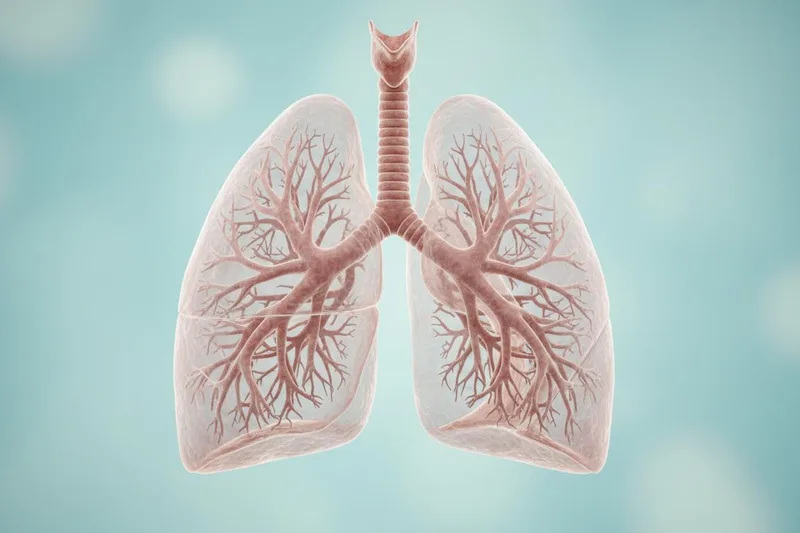
Simply put, these airways inside your lungs are like tubes. Some people compare them to straws. Air goes in and out through these tubes. That's how we breathe. Doctors call these `(Bronchial tubes)`, or `(Bronchi)` (pronounced: bronchi). That means they're all part of the same system.
Think of it like the branches of a tree, our main windpipe, the trachea , splits into two as it enters the chest. These are the two main bronchi . These go into each lung. Then these bronchi divide into smaller branches, just like the branches of a tree divide into smaller branches. We call these smaller branches bronchioles . At the ends of these bronchioles are millions of tiny air sacs, like tiny grapes. They are called alveoli . That's where the most important part of breathing is, that is, gas exchange.
How do these airways work?
Now look, the way these airways work is amazing. When we breathe in, a large flat muscle at the bottom of our chest, called the diaphragm , moves down and flattens. At the same time, the muscles between the ribs in the chest help to expand the chest cavity up and to the sides. Then the space inside the lungs increases, the pressure decreases, and the air outside is pulled in through the nose or mouth.
The air that comes in doesn't just go away. The tiny hairs and mucus inside our nose clean this air, trap dust particles, warm it, adjust it to body temperature, and moisten it. The air that is prepared in this way passes through the `(Trachea)` to the `(Bronchi)`, from there to the `(Bronchioles)` and finally to those tiny air sacs `(Alveoli)`.
The real work happens in those `(Alveoli)`. The oxygen in the air we breathe in, that is, oxygen , is absorbed into the blood through the walls of these `(Alveoli)`. There is a network of very small blood vessels around these `(Alveoli)`. At the same time, the waste products that are produced when the cells in our body work, become a gas.Carbon dioxide , from the blood, enters these air sacs (alveoli) and is released when we exhale. When we exhale, the diaphragm moves up, the chest muscles relax, the lungs contract, and the air is forced out. This is called gas exchange . All of this happens in a matter of seconds, without us even realizing it. Isn't it amazing?
Why is it important to keep our airways healthy?
So, you probably understand now how important it is for these airways to function properly, right? Every cell and tissue in our body needs oxygen to function and live. That oxygen enters the body through these airways. So if there is any blockage, infection, or swelling in these airways, it affects our entire body.
Healthy airways are essential for a healthy life. When we can breathe well, our bodies get more energy, we stay alert, our brains work better, and we are more likely to protect ourselves from diseases .
Imagine, if these roads were not clean and open, just like vehicles moving on a busy road, our bodies would not get enough oxygen. Then we would feel tired, have difficulty breathing, feel a heaviness in our chest, and start developing one disease after another.
What are the common problems that affect the airways?
Unfortunately, our precious airways can be subject to a variety of diseases and problems. Let's take a look at a few of them.
Little things like colds and coughs
Sometimes, even a common cold or a cough that comes with a fever can have a small impact on our respiratory tract. Our nose gets stuffy, our throat hurts, and we sometimes get a little stuffy. These usually go away in a few days, but during that time, our airways are a little blocked and uncomfortable. These are often caused by viruses.
Let's talk a little about asthma.
Asthma is a long-term condition that requires some attention. It is a condition that occurs when, for some reason (we call it `triggers`), our airways, the `(Bronchi)` and `(Bronchioles), suddenly become blocked (the muscles in the walls tighten), the lining swells, and excess mucus is produced. It is then very difficult to breathe, the chest feels tight, and a ``cheese-cheese'' sound is heard when exhaling (``Wheezing``), and coughing occurs, especially at night and in the early morning. This can often start in childhood. Dust, house dust mites, animal dander, pollen, smoke, cold air, exercise, certain foods, and stress can all aggravate asthma. If you have asthma, you should definitely follow your doctor's advice and use medication (like ``Inhalers``).
What is bronchitis?
Bronchitis is an inflammation and swelling of the lining of our main airways, the bronchi. The main symptom is a cough. Often, it is a cough that comes with mucus. This can be acute bronchitis, which comes on suddenly and gets better in a few days or weeks. This is often caused by a viral infection. Or, it can be chronic bronchitis , which lasts for a long time, especially among smokers. In this, there must be a cough with mucus for at least three months a year, or for two consecutive years.
Let's also learn about pneumonia.
Pneumonia is a potentially serious lung infection. This occurs when one or more of the small air sacs (alveoli) at the end of the lungs become infected (from bacteria, viruses, or fungi), and they fill with fluid or pus. This prevents oxygen from getting into the bloodstream. Symptoms include difficulty breathing, fever, fatigue, chest pain, and a severe cough. It is important to seek medical attention immediately if you suspect pneumonia. This can be especially dangerous for young children, the elderly, and those with other medical conditions.
Other infections and the effects of smoking
Apart from this, various viral and bacterial infections can also cause various diseases in the respiratory tract. For example, influenza. Also, smoking is the biggest damage that can be done to the respiratory tract. Smoking can cause not only chronic bronchitis, but also emphysema (in which the walls of the alveoli are damaged and breathing becomes difficult), and a serious and incurable disease called chronic obstructive pulmonary disease (COPD), which is a combination of both. Therefore, it is best to stay away from smoking completely. Smoking is also the main cause of lung cancer.
What should we do to keep our airways healthy?
Okay, so let's look at what we can do to take care of these precious airways and keep them healthy. These are very simple things, but very important.
- " Avoid smoking completely. If you are a smoker, decide to quit today. If you need help, seek help from a doctor or from programs that are available for that purpose. `Secondhand smoke` is also harmful, so stay away from places where people smoke."
- " Wash your hands thoroughly with soap and water regularly. Especially before eating, after using the toilet, after visiting the sick, after going out, and after sneezing or coughing. Washing your hands can help prevent many infections."
- " Get the necessary vaccinations on time."For example, it is best to get the influenza vaccine every year, and the pneumonia vaccine (especially for those in risk groups; those over 65, those with chronic diseases) on medical advice."
- " Eat a good, balanced diet and exercise daily. This will strengthen your immune system and help you resist illness."
- " If you have allergies, control them. If you are allergic to things like dust, pollen, or animal dander, stay away from them as much as possible and seek medical advice."
- " Try to stay in an environment with as much clean air as possible. Keep your doors and windows open, and try to stay away from things like vehicle exhaust, factory exhaust, and wood stove exhaust. Also minimize indoor air pollution."
- " Drink plenty of water. Drink at least 8 glasses of water a day. This keeps the body hydrated and helps thin out mucus in the airways so it can be expelled more easily."
When should you see a doctor?
Something as minor as a common cold will subside in a few days with home care. However, if you have certain symptoms, you should definitely see a doctor. What are they?
- " A cough that lasts for several days and doesn't go away (if it lasts more than two or three weeks)."
- "If you feel short of breath , especially when you are at rest."
- "If you have chest pain that gets worse when you take a deep breath."
- "If you hear a 'cheese-cheese' sound (`Wheezing`) when you breathe."
- " If you are losing weight for no reason, if you constantly feel tired and lifeless ."
- " If you cough up blood (this is a very dangerous sign, you should see a doctor immediately)."
- " If you have a high fever (over 38 Celsius) for several days. "
- " If your lips or fingernails turn blue (this means there is not enough oxygen)."
"If you have symptoms like these, don't ignore them. Instead of assuming 'it's okay,' seeking medical advice quickly can help identify and treat a serious problem early."
Take-Home Message
So, from what we have discussed today, I hope you have gained a good understanding of our airways. Remember, these airways are a very complex, amazing system that is essential to our lives. Only when they are working properly can we be healthy, happy, and energetic.
Take care of your breath. It's the most precious gift you've ever received. By following healthy habits and seeking medical advice early if you have any concerns, you can keep your airways healthy.
So, take a deep breath and start your day with joy! If you have any questions about this, don't be afraid or embarrassed to ask your family doctor. They will be happy to help you.
` Airways, Respiratory System, Lungs, Asthma, Bronchitis, Pneumonia, Breathing


💬 Comments (0)
No comments have been posted yet. Add your comment here for the first time.
Add your comment