

Does your child sometimes wake up in the middle of the night and cry, "Mommy... Dad... My legs hurt!"? Or do you remember having a similar experience when you were a child? In fact, it is common for young children, especially those between the ages of three and twelve, to experience leg pain like this. As doctors, we call this " growing pains ." When you hear the name, you think it is a pain that comes with growing up? But is it really like that? Today, we will talk about this in a little more detail , as if we were talking to a friend. Because I know that this is a bit of a worry and a fear for many parents.
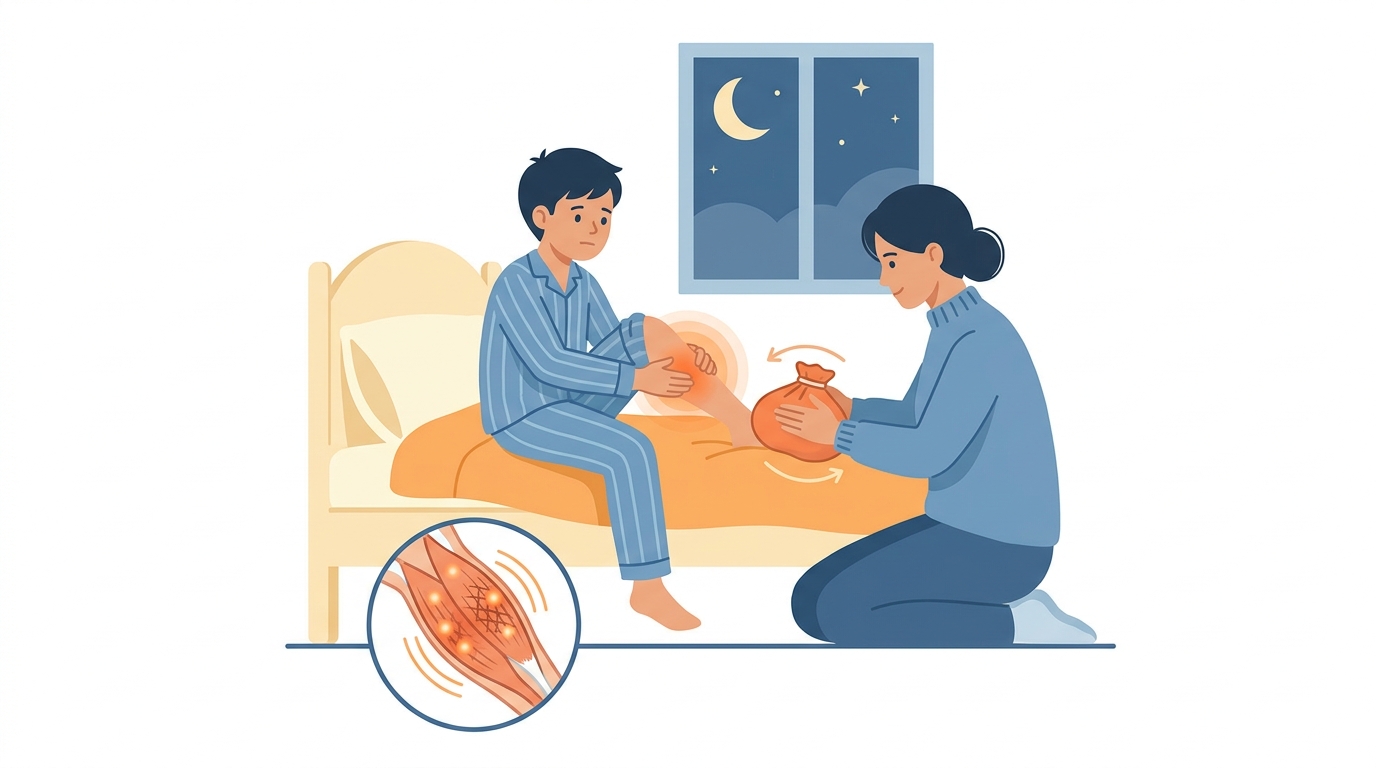
What exactly are these "Growing Pains"?
Simply put, "Growing Pains" are not a disease. Yes, you heard that right. This is a pain in the legs that some children experience as they grow, that is, during the growth period. However, this does not mean that the pain is caused by the bones growing inside the child's body. Doctors still do not know exactly what causes this pain. But one thing is clear, these pains usually go away by the time children get a little older, which is usually when they reach their teenage years.
Most often, this pain occurs in children between the ages of 3 and 12. Some children do not experience this at all. Some may feel it a little more. So if your child experiences something like this, don't compare yourself to other children and worry, okay?
The important thing is that these "growing pains" are not a sign of a serious illness. They are just a normal (and sometimes painful) part of a child's development.
How does this pain feel? Where?
Okay, now let's see what kind of pain a child feels during these "growing pains" and where they occur most often.
- Pain in both legs: Most of the time, children will experience pain in both legs at the same time. However, sometimes it may only occur in one leg and then spread to the other leg the next day.
- Location of pain: The pain mainly occurs in the front of the thighs , the calves , that is, the back of the leg below the knee, or the front of the leg below the knee (shins) , and sometimes the pain can also occur behind the knee .
- Nature of the pain: This is a dull, aching pain. Some children also describe it as a pulling or squeezing sensation. This is a dull, aching or throbbing pain, rather than a sharp stabbing pain.
- Time of pain: This is a very important characteristic. The pain of "growing pains" often comes in the evening or at night.Sometimes, a child will wake up screaming at night after sleeping soundly because of the pain in their legs. Surprisingly, by morning, the pain is often completely gone! The child will run, jump, and play normally.
Remember, this pain is felt most in the child's muscles , not in the joints, such as the knees and ankles.
So, why do our little ones get these "growing pains"?
This is a bit of a complicated issue because doctors still haven't found the exact cause of this. But there are different opinions about it.
- More active days: One theory is that when children are a little more active than usual , running around, climbing trees, and playing all day, the muscles can become overworked and sore at night. Imagine, your little one , your daughter or son, has a sports meet at school and comes home tired after playing all day, and they may have leg cramps that night.
- Muscle fatigue: This is related to the previous point. Children who run and jump all day get tired in their leg muscles . This fatigue can cause pain at night.
- Other factors: Some doctors believe that children with a lower pain threshold may be more likely to experience this. It is also said that if someone in the family had "growing pains" as a child, there is a slight chance that the child will also experience them.
But none of this has been proven 100% yet. So the truth is that we don't know exactly what causes this. The most important thing is that this is not your fault or your child's fault.
What are some home remedies for sore legs?
The good news is that these "growing pains" often don't require major medication. Simple things you can do at home can help your child feel better.
- Gently massage the legs: Gently massage the painful area with your hands. This massage, along with your loving touch, will provide great relief to the child. The muscles will relax and the pain will decrease.
- Apply something warm: Place a hot water bottle (well-sealed, wrapped in a cloth) or a heating pad on the painful area for a few minutes. This heat will relax the muscles, improve blood circulation, and help reduce pain. But be careful not to burn the skin.
- Stretching exercises: Just like you do during sports period at school, do simple stretching exercises for your legs.You can do some stretching exercises. Stretching the muscles in the thighs and buttocks can help relieve the pain. But this should be done in a way that does not hurt the child, without forcing it.
- Give a pain reliever if necessary: If the pain is too much for your child to bear, or if he or she is unable to sleep, you can talk to a doctor and give him or her a pain reliever , such as acetaminophen or ibuprofen, in the dosage prescribed by the doctor. However, it is not a good idea to give medication regularly. Consider this a last resort. Do not give aspirin to young children without medical advice.
While doing these things, it is also very important to talk to the child lovingly and comfort him. Words like "This will subside in a little while, son/daughter, I will be there" can bring great comfort to the child's heart.
Are there times when you need to see a doctor?
Growing Pains usually do not require a visit to the doctor. However, sometimes it is wise to seek medical advice to make sure that your child's leg pain is not due to a more serious cause. If your child has any of the following symptoms, you should definitely see a doctor:
- Pain with fever: If the child has a fever along with leg pain.
- Walking with a limp: If the child is limping, either when he wakes up in the morning or during the day, unable to put his leg down.
- Pain that is present in the morning: "Growing Pains" usually subside in the morning. However, if the pain is severe in the morning, and the pain is so severe that it prevents the child from playing, running, or jumping.
- Swelling, redness, or warmth to the touch in the leg: If the area where the pain is is swollen, red, or feels warmer to the touch than other areas.
- Constant pain in only one leg: If the pain always occurs in the same leg, in the same place.
- Joint pain and swelling: If you have pain or swelling in a joint, such as the knee or ankle.
- The child's weight loss, excessive fatigue: Along with leg pain, the child may lose weight and appear to be constantly tired.
- Inability to perform normal activities: If the child is unable to perform daily activities such as work or play due to pain.
If you have these symptoms, a doctor can examine your child and help determine if the pain is just "growing pains" or something else. Sometimes other conditions, such as arthritis, can cause similar symptoms, so it's best to see a doctor if you have any concerns.
So, here are some important things we need to remember! (Take-Home Message)
Okay, so I hope you have a good understanding of "Growing Pains" from what we have discussed. Finally, keep these points in mind:
- "Growing Pains" is not an illness. It's a temporary thing that some people experience as their child grows.
- This pain often comes at night and subsides in the morning.
- This usually does not have a major impact on the child's daily activities .
- Simple home remedies (massage, warm compresses) can provide relief .
- Only give painkillers if necessary, as directed by a doctor.
- If you have unusual symptoms such as fever, swelling, or limping , be sure to see a doctor.
- The most important thing is to give the child love, affection, and reassurance. It's a great thing to reassure the child by saying, "This will get better on its own, don't worry."
Your child may never have "growing pains." But if they do, remember that they will go away on their own after a while. Kids grow up so fast, right? So these pains will go away just as quickly!
` Growing Pains, Children's Leg Pain, Growing Pains Sinhala, Pediatrics, Leg Cramps, Night Pain, Muscle Pain
ukat juk’ampinaka Doctoran qillqatapa
ukat juk’ampinaka Wawanakan jiltañax mä jan walt’awiwa, ukax 3 maranit 12 marani wawanakanx wali uñt’atawa. Aka usux janiw jilpachax ch’akhanakankiti, jan ukasti thixni ch’akhanakan ukhamarak waka ch’akhanakan (Calf musculos) arumanakax utji. Ukax inas muskulunakan qarjatapat utjchispa, kunatix tardex sinti ch’amanchatawa. Utanxa, wawar kayunakap llamp’u chuymampiw masajasax (Masaje), compresa caliente (Compresión caliente) ukat suma ikiñ churasax samarañ jikxatasma. Alwakamaxa uka usuxa q’al chhaqtayatawa.
❓ ukat juk’ampinaka Mä qawqha juk’amp jiskt’äwinakampiw jikisipxasma (FAQ) .
ukat juk’ampinaka ¿Kunjamatsa jiltañ usunaka ukat ch’akhanak usuchjasiñanak mayjt’ayaña?▼
ukat juk’ampinaka Surco usunakax janiw articulacionanakankiti jan ukasti musculonakanwa, ukat arumanakakiw uñsti ukat alwakamax qʼal qullasi.
ukat juk’ampinaka ¿Kuna qullanakas utan utji jiltasin usuchjasiñataki?▼
ukat juk’ampinaka Wawan kayunakapax llamp’u chuymampiw masajasispa, mä telampiw junt’uchasispa, ukat paracetamol ukax wakisispa ukhax qullirinakan iwxt’awiparjamaw churasirakispa.
¿Kuna jan wali chimpunakas utjaspa qullirir uñjañax jilxattaski?▼
ukat juk’ampinaka Alwax usuchjassta jan ukax chhuxriñchjasiñama, articulacionanakax punki jan ukax wila, ukat calenturas utjchi ukhaxa, jankʼakiw doctorar uñjañama.


💬 Comments (0)
No comments have been posted yet. Add your comment here for the first time.
Add your comment