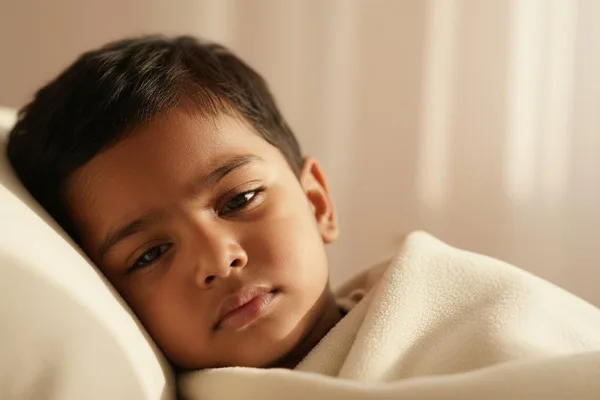
Does your little one have a fever?

Does your little one have a fever?
It's normal for parents to worry and feel scared when their baby has a fever, isn't it? When our little one's body is hot and uncomfortable, we can't help but feel uneasy. But did you know, most of the time, a fever isn't a serious illness. In fact, a fever can be a sign that our body's defense system is working and fighting an illness. It's like the little soldiers inside us! So, today we'll talk clearly about this fever, what to do when it comes, and when to see a doctor.

How do you know if you have a fever?

The most important thing to know if your child has a fever is to take their temperature. But in addition, a child with a fever may also show these symptoms:
  • Constant crying, screaming, and feeling unwell: They may be restless and crying all the time because they are having a hard time. It's like they're struggling to say, "I'm having a hard time."
  • Your body feels hot to the touch: When you touch your forehead, neck, or chest, you may feel that your body is hotter than usual.
  • The face looks red: Sometimes the face and cheeks can be red due to a fever.
  • Sweating: You can sweat when your fever starts to subside or when your fever is high.
  • Loss of appetite , lethargy: When children have a fever, they may not feel like eating. They may also not play as much as usual, and may simply be lethargic and sleepy.
If your child is showing one or more of these symptoms, it is best to take their temperature using a thermometer.

What can you do when your little one has a fever?

When a child has a fever, the most important thing is to keep them comfortable and seek medical advice. Let's see what can be done.

Special for little babies!

This is very important. If your baby is less than 3 months old, that is, less than 90 days old, and his body temperature is 38 degrees Celsius (100.4 degrees Fahrenheit) or higher , you should call a doctor immediately, without delay. Otherwise, take him to the nearest hospital emergency room (`ER` - Emergency Room). Because a fever in a baby this age can sometimes be a sign of a serious infection. Therefore, it is essential to get him checked out by a doctor as soon as possible.

More tips for caring for a child with a fever

When an older child has a fever, there are a few things you can do to help them feel better:
  • Hold off on sending your child to school for a while: Avoid sending your child to school, day care, or other public places for at least 24 hours after the fever has completely subsided and the body temperature has returned to normal. This will give the child a break .As well as getting it, it can prevent other children from getting sick.
  • Give plenty of fluids: When you have a fever, your body loses water through sweat, so you are more likely to become dehydrated . Therefore, give your child plenty of fluids to drink. Not just water, but also orange juice, well-diluted fruit juice (with less sugar ), porridge, and soup. If your child is old enough to breastfeed , breastfeed frequently.
  • Be careful with fever-reducing medications:
  • If your child is very uncomfortable with a fever, you can give them paracetamol (` Paracetamol `) or ibuprofen (` Ibuprofen `) in a dose appropriate for the child's weight, as recommended by your doctor. These can be purchased at the pharmacy. However, the dosage should be given exactly as directed on the package or as prescribed by your doctor.
  • > Never give your child (especially those under 19) aspirin for any reason! Giving aspirin can sometimes cause a very dangerous condition called `Reye Syndrome`, which affects the liver and brain. So be very careful about this.
  • Don't mention these things!
  • Do not use rubbing alcohol, ice-cold compresses, or cold baths to reduce fever. These things can make your child feel worse, have aches, and chills, rather than reducing the fever. Also, alcohol can sometimes be absorbed through the skin and become toxic.
  • Dress your child in light clothing: When your child has a fever, don't overdress or wrap them up tightly. This can prevent the body from losing heat and cause the fever to rise even more. Dress your child in light, cotton-like clothing and use a light cloth or thin blanket to wrap them.
  • Don't force food: It's normal for children to have a poor appetite when they have a fever. So, don't force them to eat. Give them something light and small to eat, something they like. If they don't like rice, try giving them something like yogurt, a piece of fruit, or a biscuit. Liquid food is best.
  • Special attention if there is vomiting and diarrhea: If the child has vomiting and/or diarrhea along with a fever, there is a high chance that he is losing more fluid from the body and becoming dehydrated.In such a case, ask a doctor if a solution like ``Oral Rehydration Solution`` (ORS) should be given. These are available from pharmacies. These restore the salts and sugars needed by the body.
  • Rest is essential: Since the body is fighting the illness during a fever, it is very important to make sure your child gets plenty of rest. Instead of running around and playing, encourage them to sleep, read a book, and be quiet. Good rest helps them recover from the illness faster.

At a time like this, definitely see a doctor!

Although most fevers subside in a few days, there are times when you should definitely see a doctor for advice. Let's take a look at what those times are:
  • For a baby under 3 months: As we mentioned earlier, if a baby under 3 months has a temperature of 38 degrees Celsius (100.4 Fahrenheit) or higher , it could be serious and should be taken to a doctor immediately.
  • If an older child has any of the following symptoms along with a fever:
  • It's hard to see, it's very melancholy (`looks sick`): If you're not playing like you used to, you can't even open your eyes, you're very lifeless.
  • If you have a skin rash: If you suddenly develop a red, brown, or other rash, such as a blister, along with a fever.
  • If you have persistent diarrhea and/or vomiting: If you have watery diarrhea several times a day, or if you vomit up everything you eat or drink.
  • If you see signs of dehydration: These can be identified as follows:
  • Urinating less than usual (if you haven't urinated for about 6-8 hours).
  • The state of not having tears when crying.
  • My mouth and lips feel dry.
  • It looks like it's under my eyes.
  • He is more depressed than usual, sleepy, and less active.
  • If the fever persists for 5 days: If the fever persists for 5 days or more without completely reducing despite medication.
  • If your child has a chronic medical problem: For example, a child with a chronic medical condition such as sickle cell disease, heart disease, kidney disease, or cancer may be at higher risk than a normal child if they develop a fever. Therefore, it is wise to see a doctor at such times as well.
  • If your child shows other serious symptoms such as a severe headache, stiff neck, difficulty breathing, or seizures , take them to the hospital immediately.
In cases like this, instead of waiting for "it's just a fever, it will go away," seeing a doctor and getting the necessary treatment can prevent potentially serious conditions from developing.

Can you prevent a fever?

In fact, every child will get a fever at some point in their life, not just once or twice, but several times. It's very common. Fever is the body's response to various infections, so children can get a fever when they are exposed to diseases. Although it is difficult to completely prevent a fever, things like washing hands frequently, staying clean, feeding a balanced diet, and getting your child vaccinated on time can help reduce the number of times they get sick.
The most important thing is not to panic when the child has a fever, to make them as comfortable as possible, and to seek medical advice when necessary, as we have discussed.
In most cases, the fever subsides within a few days and the child starts playing, running, and walking again.

Shall we remember what we talked about as a summary? (Take-Home Message)

Okay, so now you have a better idea of ​​what to do when your little one has a fever. Let's review the most important points we discussed today:
  • Fever is often a protective process of the body. Don't be afraid of it right away.
  • If a baby under 3 months old has a fever (over 38°C / 100.4°F), take him to a doctor immediately.
  • Give a child with a fever plenty of fluids, rest, and dress them in light clothing.
  • As per the doctor's advice, give Paracetamol or Ibuprofen in a dose appropriate for the child's weight. Do not give Aspirin for any reason!
  • Do not rub rubbing alcohol on your body or bathe in cold water to reduce fever.
  • If your child is unusually pale, has skin lesions, continues to vomit/diarrhea, shows signs of dehydration, has a fever for more than 5 days, or has other serious symptoms, be sure to see a doctor.
  • Your care, love, and the right steps can help your child recover quickly.

⚠️ Important: The medical articles and information on Nirogi Lanka are for general awareness only, and are by no means a substitute for professional medical advice, diagnosis, or treatment. For any medical problem you have, consult a qualified physician immediately.

💬 Comments (0)

No comments have been posted yet. Add your comment here for the first time.

Add your comment

Please calculate: 1 + 1 =
Does your little one have a fever?
Physical FitnessFebruary 15, 2026

Does your little one have a fever?

It's normal for parents to worry and feel scared when their baby has a fever, isn't it? When our little one's body is hot and uncomfortable, we can't help but feel uneasy. But did you know, most of the time, a fever isn't a serious illness. In fact, a fever can be a sign that our body's defense system is working and fighting an illness. It's like the little soldiers inside us! So, today we'll talk clearly about this fever, what to do when it comes, and when to see a doctor.

How do you know if you have a fever?

The most important thing to know if your child has a fever is to take their temperature. But in addition, a child with a fever may also show these symptoms:
  • Constant crying, screaming, and feeling unwell: They may be restless and crying all the time because they are having a hard time. It's like they're struggling to say, "I'm having a hard time."
  • Your body feels hot to the touch: When you touch your forehead, neck, or chest, you may feel that your body is hotter than usual.
  • The face looks red: Sometimes the face and cheeks can be red due to a fever.
  • Sweating: You can sweat when your fever starts to subside or when your fever is high.
  • Loss of appetite , lethargy: When children have a fever, they may not feel like eating. They may also not play as much as usual, and may simply be lethargic and sleepy.
If your child is showing one or more of these symptoms, it is best to take their temperature using a thermometer.

What can you do when your little one has a fever?

When a child has a fever, the most important thing is to keep them comfortable and seek medical advice. Let's see what can be done.

Special for little babies!

This is very important. If your baby is less than 3 months old, that is, less than 90 days old, and his body temperature is 38 degrees Celsius (100.4 degrees Fahrenheit) or higher , you should call a doctor immediately, without delay. Otherwise, take him to the nearest hospital emergency room (`ER` - Emergency Room). Because a fever in a baby this age can sometimes be a sign of a serious infection. Therefore, it is essential to get him checked out by a doctor as soon as possible.

More tips for caring for a child with a fever

When an older child has a fever, there are a few things you can do to help them feel better:
  • Hold off on sending your child to school for a while: Avoid sending your child to school, day care, or other public places for at least 24 hours after the fever has completely subsided and the body temperature has returned to normal. This will give the child a break .As well as getting it, it can prevent other children from getting sick.
  • Give plenty of fluids: When you have a fever, your body loses water through sweat, so you are more likely to become dehydrated . Therefore, give your child plenty of fluids to drink. Not just water, but also orange juice, well-diluted fruit juice (with less sugar ), porridge, and soup. If your child is old enough to breastfeed , breastfeed frequently.
  • Be careful with fever-reducing medications:
  • If your child is very uncomfortable with a fever, you can give them paracetamol (` Paracetamol `) or ibuprofen (` Ibuprofen `) in a dose appropriate for the child's weight, as recommended by your doctor. These can be purchased at the pharmacy. However, the dosage should be given exactly as directed on the package or as prescribed by your doctor.
  • > Never give your child (especially those under 19) aspirin for any reason! Giving aspirin can sometimes cause a very dangerous condition called `Reye Syndrome`, which affects the liver and brain. So be very careful about this.
  • Don't mention these things!
  • Do not use rubbing alcohol, ice-cold compresses, or cold baths to reduce fever. These things can make your child feel worse, have aches, and chills, rather than reducing the fever. Also, alcohol can sometimes be absorbed through the skin and become toxic.
  • Dress your child in light clothing: When your child has a fever, don't overdress or wrap them up tightly. This can prevent the body from losing heat and cause the fever to rise even more. Dress your child in light, cotton-like clothing and use a light cloth or thin blanket to wrap them.
  • Don't force food: It's normal for children to have a poor appetite when they have a fever. So, don't force them to eat. Give them something light and small to eat, something they like. If they don't like rice, try giving them something like yogurt, a piece of fruit, or a biscuit. Liquid food is best.
  • Special attention if there is vomiting and diarrhea: If the child has vomiting and/or diarrhea along with a fever, there is a high chance that he is losing more fluid from the body and becoming dehydrated.In such a case, ask a doctor if a solution like ``Oral Rehydration Solution`` (ORS) should be given. These are available from pharmacies. These restore the salts and sugars needed by the body.
  • Rest is essential: Since the body is fighting the illness during a fever, it is very important to make sure your child gets plenty of rest. Instead of running around and playing, encourage them to sleep, read a book, and be quiet. Good rest helps them recover from the illness faster.

At a time like this, definitely see a doctor!

Although most fevers subside in a few days, there are times when you should definitely see a doctor for advice. Let's take a look at what those times are:
  • For a baby under 3 months: As we mentioned earlier, if a baby under 3 months has a temperature of 38 degrees Celsius (100.4 Fahrenheit) or higher , it could be serious and should be taken to a doctor immediately.
  • If an older child has any of the following symptoms along with a fever:
  • It's hard to see, it's very melancholy (`looks sick`): If you're not playing like you used to, you can't even open your eyes, you're very lifeless.
  • If you have a skin rash: If you suddenly develop a red, brown, or other rash, such as a blister, along with a fever.
  • If you have persistent diarrhea and/or vomiting: If you have watery diarrhea several times a day, or if you vomit up everything you eat or drink.
  • If you see signs of dehydration: These can be identified as follows:
  • Urinating less than usual (if you haven't urinated for about 6-8 hours).
  • The state of not having tears when crying.
  • My mouth and lips feel dry.
  • It looks like it's under my eyes.
  • He is more depressed than usual, sleepy, and less active.
  • If the fever persists for 5 days: If the fever persists for 5 days or more without completely reducing despite medication.
  • If your child has a chronic medical problem: For example, a child with a chronic medical condition such as sickle cell disease, heart disease, kidney disease, or cancer may be at higher risk than a normal child if they develop a fever. Therefore, it is wise to see a doctor at such times as well.
  • If your child shows other serious symptoms such as a severe headache, stiff neck, difficulty breathing, or seizures , take them to the hospital immediately.
In cases like this, instead of waiting for "it's just a fever, it will go away," seeing a doctor and getting the necessary treatment can prevent potentially serious conditions from developing.

Can you prevent a fever?

In fact, every child will get a fever at some point in their life, not just once or twice, but several times. It's very common. Fever is the body's response to various infections, so children can get a fever when they are exposed to diseases. Although it is difficult to completely prevent a fever, things like washing hands frequently, staying clean, feeding a balanced diet, and getting your child vaccinated on time can help reduce the number of times they get sick.
The most important thing is not to panic when the child has a fever, to make them as comfortable as possible, and to seek medical advice when necessary, as we have discussed.
In most cases, the fever subsides within a few days and the child starts playing, running, and walking again.

Shall we remember what we talked about as a summary? (Take-Home Message)

Okay, so now you have a better idea of ​​what to do when your little one has a fever. Let's review the most important points we discussed today:
  • Fever is often a protective process of the body. Don't be afraid of it right away.
  • If a baby under 3 months old has a fever (over 38°C / 100.4°F), take him to a doctor immediately.
  • Give a child with a fever plenty of fluids, rest, and dress them in light clothing.
  • As per the doctor's advice, give Paracetamol or Ibuprofen in a dose appropriate for the child's weight. Do not give Aspirin for any reason!
  • Do not rub rubbing alcohol on your body or bathe in cold water to reduce fever.
  • If your child is unusually pale, has skin lesions, continues to vomit/diarrhea, shows signs of dehydration, has a fever for more than 5 days, or has other serious symptoms, be sure to see a doctor.
  • Your care, love, and the right steps can help your child recover quickly.
⚠️ Important: The medical articles and information on Nirogi Lanka are for general awareness only, and are by no means a substitute for professional medical advice, diagnosis, or treatment. For any medical problem you have, consult a qualified physician immediately.

💬 Comments (0)

No comments have been posted yet. Add your comment here for the first time.

Add your comment

Please calculate: 1 + 1 =