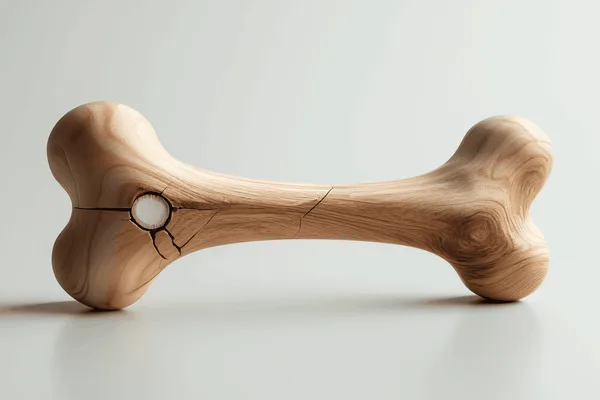
How does a broken bone heal? (Bone Healing) An amazing ability of our body!

How does a broken bone heal? (Bone Healing) An amazing ability of our body!
Oh really, the pain and discomfort you feel when you break a bone like an arm or a leg is indescribable, right? You can't do anything for days, maybe even months, and you may even have to stay in bed. But did you know that at times like these, an amazing healing process takes place inside our own bodies? It's like a team of little doctors inside our bodies that repair these broken bones. This happens very quickly in young children, but even adults have this ability.

What exactly is a bone fracture? (What is a Bone Fracture?)

Simply put, a fracture is a break, a break, or a split in a bone in our body. It's like a tree branch breaking. But bones can break in different ways. Imagine, you fall while playing cricket and break your arm. It could be a small crack. If someone else breaks their leg in a bicycle accident, it could be broken into several pieces. Sometimes the broken bone can break through the skin and come out, which we call open fractures . Some are inside the skin, which are closed fractures . No matter how it breaks, our body has an amazing system to heal it.

How Does Our Body Heal These Broken Bones?

This is a truly amazing process. We have specialized cells in our bodies that are just for this job. It's like having builders and carpenters come to fix a broken house. This process happens in a few key steps.

First step: Inflammation and Hematoma Formation

When a bone breaks, some blood comes out of the small blood vessels around the broken area. This blood collects and forms something like a blood clot. In medicine, we call this a ``Hematoma``. This is the first step in the healing process. You may remember, when you hit something hard, it turns blue and swells. This is the same thing. This swelling and pain are the body's signals to us, "There's a problem here, be careful." It is within this ``Hematoma`` that the cells needed for the healing process begin to gather.
Important: It is very important at this early stage to properly set the bone and apply a cast if necessary. That is when it will begin to heal properly.

Step Two: Soft Callus Formation

Now, special cells from our body start to come to the place where the blood clot (hematoma) was. These cells come and create something like glue between the two broken bone pieces. This first forms as a soft tissue. It's like putting some gum to hold a broken vase together. We call this soft tissue bridge a soft callus . It usually takes about a week or two to form. At this time, the bone is not yet strong enough. That's why doctors tell you not to move your limbs or lift heavy weights.

Step Three: A Strong Bone Bridge! (Hard Callus Formation)

Now the real work happens. Bone-forming cells, called osteoblasts , move into the place where the soft callus was and start to build new bone. This is like cementing the place where the glue used to hold it together. We call this new bone tissue hard callus . This is what connects the two broken bone pieces together and strengthens them. This process can take a few weeks, maybe a month or two. During this time, you will feel the pain gradually decrease and the bone will become a little stronger. The doctor will take an X-ray to determine how far the bone has progressed.

The final step: Bone Remodeling

Now that hard callus has formed and the bone has been fused together, it is a little bigger than the original bone, perhaps like a lump. Now another special group of cells in our body, the osteoclasts , come in and remove the excess parts of this newly formed bone and start rebuilding the bone back to its original shape. This is called bone remodeling . This process takes a while. It can take months or even years. But eventually, the bone will return to its original shape.

How long does it take for a bone to heal? (How Long Does It Take for a Bone to Heal?)

This varies from person to person. There are several reasons for this:
  • Your age: Young children's bones heal very quickly, sometimes completely within a few weeks. But as they get older, this healing rate slows down a bit.
  • Type and location of broken bone: A large bone in the leg that breaks into several pieces takes longer to heal than a small crack in a finger. Also, bones heal faster in areas with good blood flow .
  • Fracture type: A comminuted fracture , in which the bone is broken into many pieces, takes longer to heal than a simple fracture. An open fracture is more likely to cause infection, which can hinder healing.
  • Your general health: People with certain medical conditions (e.g., Diabetes Mellitus , Osteoporosis ) may have a slower rate of bone healing.
Generally speaking, it takes about 6-8 weeks for new bone tissue (Callus) to form and the bone to become somewhat strong. But for it to become fully strong and for that remodeling to occur,It could take a few months, or even a year or two. So it's best to be careful until the doctor says otherwise.

What Factors Affect Bone Healing?

Different things can speed up or slow down the healing of a bone.

Positive Factors:

  • Correct medical treatment: Setting the broken bone properly, applying a plaster cast, and, if necessary, surgery to keep it in place.
  • Good nutrition: It is especially important to eat foods that are rich in nutrients like calcium, vitamin D , and protein. Things like milk, cheese, yogurt, green vegetables, and fish.
  • Rest : Do not move the broken limb too much, and rest as the doctor tells you.
  • Young age: As mentioned earlier, young people recover faster.
  • Not smoking : This is very important.

Negative Factors:

  • Smoking: People who smoke take longer for their bones to heal. They may also not heal properly. This is because smoking constricts blood vessels , reducing the amount of blood that reaches the fracture site.
  • Nutritional deficiencies: If the body does not receive the necessary nutrients, bone formation is delayed.
  • Some diseases: Diabetes Mellitus, Osteoporosis, and thyroid disorders.
  • Certain medications: People who take medications like steroids for a long time may experience delayed bone healing.
  • Excessive movement of the broken bone: If the cast is not applied properly, or if the patient is moved excessively without following the doctor's instructions, the bone will be prevented from healing.
  • Infections: If infections occur, especially in open fractures, healing can be very delayed.
  • Severe fractures and reduced blood supply: Healing is difficult if the bone is broken into many pieces, or if the main blood vessels supplying blood to the fracture are damaged.

Things You Can Do for Faster Healing

You may be thinking, "Oh, can't I just fix this quickly?" You can actually help with this too.
  • Follow the doctor's instructions exactly. If he tells you not to lift weights while you have the cast on, stick to it.
  • Don't try to remove the plaster yourself or fix it. That will only cause more problems.
  • Eat a well-balanced diet. Eat foods rich in calcium, vitamin D, and protein. Ask your doctor for additional vitamins if necessary.
  • If you smoke, definitely quit. At least until the bone heals.
  • Go to the clinics on scheduled dates (`follow-up appointments`). The doctor will tell you how things are now and what else needs to be done.
  • If necessary, do physiotherapy exercises as directed by your doctor. This will strengthen the muscles around the bone and help the joint return to normal.

Do You Always Need a Doctor? When to Worry?

Yes, definitely. If you think you have a broken bone, or if you suspect that you have, definitely see a doctor. Because,
  • You need to take an X-ray to find out exactly if it's broken, where, and how.
  • The broken bone fragments may need to be aligned and a plaster cast applied, or surgery may be required if necessary.
  • If these things are not done properly, the bone can become malunion , meaning it will not fit together properly, or it can become non-union at all . This can lead to bigger problems later on.
Also, be careful of the following things after you get home with a cast:
  • If the pain is getting worse.
  • If the swelling is too much, the plaster is tight and the fingers are turning blue.
  • If you have a fever.
  • If there is a bad smell coming from the inside of the plaster, or if it feels damp.
  • If your fingers are tingling or have decreased sensation.
If you have any of these symptoms, see a doctor immediately. It could be a sign of an infection.

So, finally, a few things to remember! (Take-Home Message: A Few Things to Remember!)

So, do you see the amazing ability of our body? When a bone breaks, there are so many things that happen inside our body to heal it. It's like our body's natural repair team. The most important thing is to be patient and follow the doctor's instructions. It takes a while for a bone to heal. During that time, if you rest properly, eat well, and stay away from bad habits like smoking, your broken bone will heal quickly and you will be able to function as you used to. Don't worry, our body is very good at healing itself!

⚠️ Important: The medical articles and information on Nirogi Lanka are for general awareness only, and are by no means a substitute for professional medical advice, diagnosis, or treatment. For any medical problem you have, consult a qualified physician immediately.

💬 Comments (0)

No comments have been posted yet. Add your comment here for the first time.

Add your comment

Please calculate: 6 + 6 =
How does a broken bone heal? (Bone Healing) An amazing ability of our body!
How the Body WorksMay 18, 2025

How does a broken bone heal? (Bone Healing) An amazing ability of our body!

Oh really, the pain and discomfort you feel when you break a bone like an arm or a leg is indescribable, right? You can't do anything for days, maybe even months, and you may even have to stay in bed. But did you know that at times like these, an amazing healing process takes place inside our own bodies? It's like a team of little doctors inside our bodies that repair these broken bones. This happens very quickly in young children, but even adults have this ability.

What exactly is a bone fracture? (What is a Bone Fracture?)

Simply put, a fracture is a break, a break, or a split in a bone in our body. It's like a tree branch breaking. But bones can break in different ways. Imagine, you fall while playing cricket and break your arm. It could be a small crack. If someone else breaks their leg in a bicycle accident, it could be broken into several pieces. Sometimes the broken bone can break through the skin and come out, which we call open fractures . Some are inside the skin, which are closed fractures . No matter how it breaks, our body has an amazing system to heal it.

How Does Our Body Heal These Broken Bones?

This is a truly amazing process. We have specialized cells in our bodies that are just for this job. It's like having builders and carpenters come to fix a broken house. This process happens in a few key steps.

First step: Inflammation and Hematoma Formation

When a bone breaks, some blood comes out of the small blood vessels around the broken area. This blood collects and forms something like a blood clot. In medicine, we call this a ``Hematoma``. This is the first step in the healing process. You may remember, when you hit something hard, it turns blue and swells. This is the same thing. This swelling and pain are the body's signals to us, "There's a problem here, be careful." It is within this ``Hematoma`` that the cells needed for the healing process begin to gather.
Important: It is very important at this early stage to properly set the bone and apply a cast if necessary. That is when it will begin to heal properly.

Step Two: Soft Callus Formation

Now, special cells from our body start to come to the place where the blood clot (hematoma) was. These cells come and create something like glue between the two broken bone pieces. This first forms as a soft tissue. It's like putting some gum to hold a broken vase together. We call this soft tissue bridge a soft callus . It usually takes about a week or two to form. At this time, the bone is not yet strong enough. That's why doctors tell you not to move your limbs or lift heavy weights.

Step Three: A Strong Bone Bridge! (Hard Callus Formation)

Now the real work happens. Bone-forming cells, called osteoblasts , move into the place where the soft callus was and start to build new bone. This is like cementing the place where the glue used to hold it together. We call this new bone tissue hard callus . This is what connects the two broken bone pieces together and strengthens them. This process can take a few weeks, maybe a month or two. During this time, you will feel the pain gradually decrease and the bone will become a little stronger. The doctor will take an X-ray to determine how far the bone has progressed.

The final step: Bone Remodeling

Now that hard callus has formed and the bone has been fused together, it is a little bigger than the original bone, perhaps like a lump. Now another special group of cells in our body, the osteoclasts , come in and remove the excess parts of this newly formed bone and start rebuilding the bone back to its original shape. This is called bone remodeling . This process takes a while. It can take months or even years. But eventually, the bone will return to its original shape.

How long does it take for a bone to heal? (How Long Does It Take for a Bone to Heal?)

This varies from person to person. There are several reasons for this:
  • Your age: Young children's bones heal very quickly, sometimes completely within a few weeks. But as they get older, this healing rate slows down a bit.
  • Type and location of broken bone: A large bone in the leg that breaks into several pieces takes longer to heal than a small crack in a finger. Also, bones heal faster in areas with good blood flow .
  • Fracture type: A comminuted fracture , in which the bone is broken into many pieces, takes longer to heal than a simple fracture. An open fracture is more likely to cause infection, which can hinder healing.
  • Your general health: People with certain medical conditions (e.g., Diabetes Mellitus , Osteoporosis ) may have a slower rate of bone healing.
Generally speaking, it takes about 6-8 weeks for new bone tissue (Callus) to form and the bone to become somewhat strong. But for it to become fully strong and for that remodeling to occur,It could take a few months, or even a year or two. So it's best to be careful until the doctor says otherwise.

What Factors Affect Bone Healing?

Different things can speed up or slow down the healing of a bone.

Positive Factors:

  • Correct medical treatment: Setting the broken bone properly, applying a plaster cast, and, if necessary, surgery to keep it in place.
  • Good nutrition: It is especially important to eat foods that are rich in nutrients like calcium, vitamin D , and protein. Things like milk, cheese, yogurt, green vegetables, and fish.
  • Rest : Do not move the broken limb too much, and rest as the doctor tells you.
  • Young age: As mentioned earlier, young people recover faster.
  • Not smoking : This is very important.

Negative Factors:

  • Smoking: People who smoke take longer for their bones to heal. They may also not heal properly. This is because smoking constricts blood vessels , reducing the amount of blood that reaches the fracture site.
  • Nutritional deficiencies: If the body does not receive the necessary nutrients, bone formation is delayed.
  • Some diseases: Diabetes Mellitus, Osteoporosis, and thyroid disorders.
  • Certain medications: People who take medications like steroids for a long time may experience delayed bone healing.
  • Excessive movement of the broken bone: If the cast is not applied properly, or if the patient is moved excessively without following the doctor's instructions, the bone will be prevented from healing.
  • Infections: If infections occur, especially in open fractures, healing can be very delayed.
  • Severe fractures and reduced blood supply: Healing is difficult if the bone is broken into many pieces, or if the main blood vessels supplying blood to the fracture are damaged.

Things You Can Do for Faster Healing

You may be thinking, "Oh, can't I just fix this quickly?" You can actually help with this too.
  • Follow the doctor's instructions exactly. If he tells you not to lift weights while you have the cast on, stick to it.
  • Don't try to remove the plaster yourself or fix it. That will only cause more problems.
  • Eat a well-balanced diet. Eat foods rich in calcium, vitamin D, and protein. Ask your doctor for additional vitamins if necessary.
  • If you smoke, definitely quit. At least until the bone heals.
  • Go to the clinics on scheduled dates (`follow-up appointments`). The doctor will tell you how things are now and what else needs to be done.
  • If necessary, do physiotherapy exercises as directed by your doctor. This will strengthen the muscles around the bone and help the joint return to normal.

Do You Always Need a Doctor? When to Worry?

Yes, definitely. If you think you have a broken bone, or if you suspect that you have, definitely see a doctor. Because,
  • You need to take an X-ray to find out exactly if it's broken, where, and how.
  • The broken bone fragments may need to be aligned and a plaster cast applied, or surgery may be required if necessary.
  • If these things are not done properly, the bone can become malunion , meaning it will not fit together properly, or it can become non-union at all . This can lead to bigger problems later on.
Also, be careful of the following things after you get home with a cast:
  • If the pain is getting worse.
  • If the swelling is too much, the plaster is tight and the fingers are turning blue.
  • If you have a fever.
  • If there is a bad smell coming from the inside of the plaster, or if it feels damp.
  • If your fingers are tingling or have decreased sensation.
If you have any of these symptoms, see a doctor immediately. It could be a sign of an infection.

So, finally, a few things to remember! (Take-Home Message: A Few Things to Remember!)

So, do you see the amazing ability of our body? When a bone breaks, there are so many things that happen inside our body to heal it. It's like our body's natural repair team. The most important thing is to be patient and follow the doctor's instructions. It takes a while for a bone to heal. During that time, if you rest properly, eat well, and stay away from bad habits like smoking, your broken bone will heal quickly and you will be able to function as you used to. Don't worry, our body is very good at healing itself!
⚠️ Important: The medical articles and information on Nirogi Lanka are for general awareness only, and are by no means a substitute for professional medical advice, diagnosis, or treatment. For any medical problem you have, consult a qualified physician immediately.

💬 Comments (0)

No comments have been posted yet. Add your comment here for the first time.

Add your comment

Please calculate: 6 + 6 =