
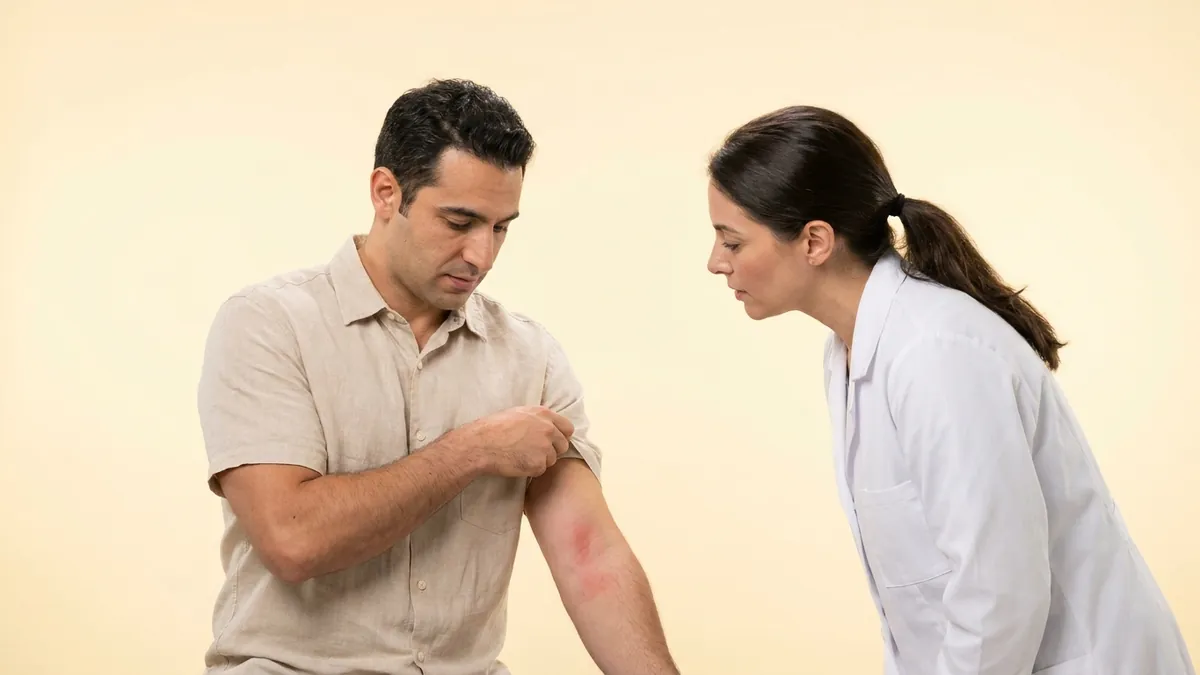
Sometimes your body suddenly turns red, has small blisters , and itches unbearably, doesn't it? Then you probably think, "Oh, did I touch something new and this happened?" This kind of skin allergy can happen very often. But do we need to run to the doctor for every rash, every itch? Or at what point should we definitely seek medical advice? Let's talk about all this today.
Anytime you want to see a doctor
In fact, if you're absolutely sure what's causing your skin discoloration, and it's not too serious, you probably don't need to see a doctor. Imagine, you know that when you put on a cheap pair of imitation earrings, your earlobes itch and turn red. So, if you don't wear them anymore, the problem goes away.
However, if you have no idea why this rash has appeared , if it is gradually spreading throughout your body, or if it is accompanied by unbearable itching and pain, you should definitely see your doctor. You don't want to make a big deal out of something you think is minor.
What tests are used to detect skin allergies?
When you go to the doctor, the first thing he does is examine your skin carefully. Then he asks you a few questions.
"Have you recently used a new type of soap, perfume, or skin cream ? Have you worn a new outfit? Have you used latex gloves? Have you worn new jewelry?"
These questions are asked to get an idea of what you might be allergic to. For example, the condition that occurs when our skin comes into contact with something we are allergic to is medically called ' Contact Dermatitis ' .
What is a Patch Test?
If your doctor suspects that you have an allergy, he or she will recommend that you have a patch test . This test is usually performed by a dermatologist .
Simply put, this involves taking very small amounts of the things you think you might be allergic to, applying them to small, plaster-like patches and sticking them on your back. These patches cannot be removed for about 48 hours.
The most important thing is not to let these belts get wet during this time.That means you can't shower or wash your body. You also need to reduce sweating as much as possible. After 48 hours, the doctor will remove the strips and check your skin for any reactions. Sometimes, you may be asked to come back in two or three days. This will help you find out exactly what you are allergic to.
Rarely, a blood test or a 'skin biopsy' may be done. A biopsy involves taking a very small piece of your skin and sending it to a lab for testing.
What are the treatments for this?
Treatment depends on the cause of your condition. In most cases, the best treatment is to avoid the allergen.
In addition, the following can help reduce skin discomfort and itching :
- Cold compresses ( using a clean cloth soaked in cold water )
- Applying calamine lotion
- Washing or bathing the body with water mixed with a little oats
Medical treatment
If you have symptoms in only a small area, your doctor will prescribe a steroid cream . The most important thing here is to follow your doctor's instructions exactly. Apply only the amount and frequency your doctor tells you to. Don't use too much, thinking "If you apply more, it will get better faster," as this can cause side effects . Applying this cream while your skin is still damp after bathing will give you more results.
If your allergy is widespread, your doctor may prescribe oral medications such as steroid pills and antihistamines .
Sometimes the surface of the skin becomes red, swollen, and itchy, right? We also call it "hives." In medical terms, this condition is called Hives (Urticaria) . Sometimes there may be swelling under the skin. Even in such cases, if you know what you are allergic to, it is very important to avoid it.
What if the skin gets injured and infected due to scratching?
We can't help but scratch our skin, right? So we scratch those places without realizing it. When we scratch, the skin gets scratched and injured. When the protective layer of the skin is lost in this way, germs such as disease-causing bacteria can enter through those wounds and cause an infection . If that happens, you will have to take antibiotics.
Let's look at the symptoms of an infection in this table.
| Symptoms of a skin infection | |
|---|---|
| Characteristic | Description |
| Swelling or redness | The area around the wound is more swollen and red than normal. |
| Skin warmth | The infected area feels warmer to the touch than other areas. |
| Pus | Yellow or green fluid (pus) draining from the wound. |
| Hardening and crusting | The skin around the wound becomes hard and yellow crusts form. |
If you have any of these symptoms, it's likely an infection. So see your doctor immediately.
💡 Take-Home Message
- If you suddenly develop a rash on your skin, if you don't know the cause, or if it's severe, don't hesitate to see a doctor.
- Use the medications prescribed by your doctor, especially steroid creams, only in the prescribed amount and for the prescribed period of time.
- Once you've found out what you're allergic to through a patch test, it's best to try your best to avoid those things.
- If the area where you scratched is sore, red, swollen, or oozing pus, it could be an infection. See a doctor right away.






Janiw kuna arsuwinakas jichhakamax uñt’ayatäkiti. Aka chiqanx amuyt’awim jan ukax jiskt’awim yapxatañamawa.