
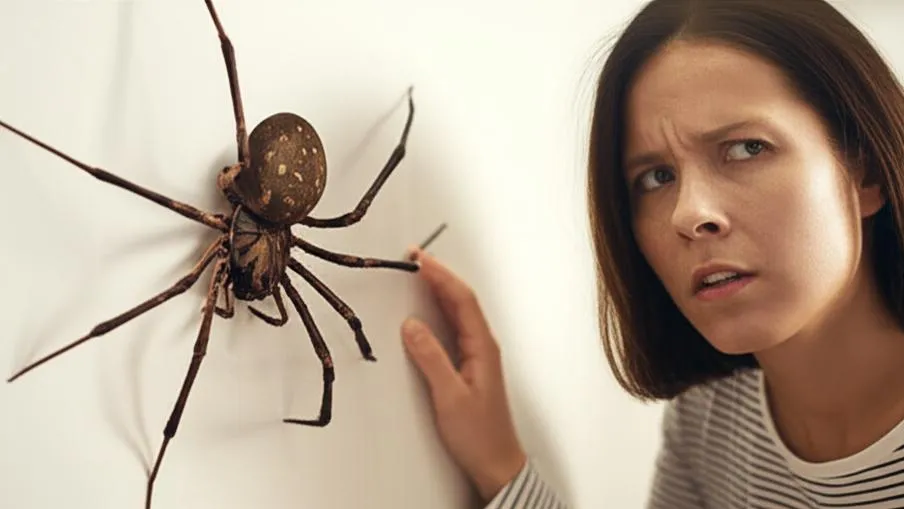
Who are these spiders? Are they really insects?
First, let's get this straight. Spiders are not insects, as many people think. They belong to a slightly different group of animals called Arachnida . The biggest difference is that while insects have 6 legs and 3 body parts, spiders have 8 legs and 2 body parts . Spiders are actually a type of animal that helps people. Just think, they eat harmful insects like mosquitoes, flies, and cockroaches that bother us. In other words, the spiders in our homes provide us with a free 'pest control' service. Also, spiders don't just come to attack people. They are very innocent. Spider bites are very rare.Why do spiders weave webs?
Simply put, the main reason is to catch their food . The spider's web is their hunting ground. When an insect gets caught in this web, the spider can easily catch it. But not all spiders weave webs just for food.- Some spiders, such as tarantulas, line the inside of their burrows with silk threads, like a protective wall to protect them from predators.
- Another important thing is that these silk threads are used to lay eggs . Female spiders lay eggs and then create a protective sac (egg sac) around them, covered with a thick layer of silk threads. We can sometimes see these in spider webs.
- After the young hatch from their eggs, some spiderlings climb to a high place and release a silk thread into the wind. The wind picks up the thread and carries them away like a balloon. This allows them to spread over long distances.
Common types of spiders and dangerous spiders
There are many different types of spiders in our homes and gardens. Let's take a look at some of the most common types.| Spider Type | How to identify and where is it located? |
|---|---|
| Cobweb spiders | These are the ones who build irregular webs in the doorways of our homes. They are brown or gray, small-bodied spiders. They often stay in the same place. |
| Cellar spiders | Many people are familiar with these creatures. They are also called 'Daddy Longlegs' because of their thin, long legs. They live in dark, secluded places in homes (e.g. basements, under closets). |
| Orb-weaver spiders | These are the ones who make beautiful, neat, circular webs in the garden, between the trees. They come in different colors and sizes. Most of the time, they don't come inside the houses. |
| Jumping spiders | These people do not build webs. Instead, they jump in and grab their prey as soon as they come within sight. However, they build small silken nests in places like under leaves for protection. |
Shall we also learn about dangerous spiders?
Okay, now you might be thinking, "So there aren't any dangerous spiders?" Yes, there are poisonous, dangerous spiders in the world. But the most important thing is that a venomous spider bite that is severe enough to threaten human life is very, very rare in the domestic environment of Sri Lanka .- Black Widow spider : This spider's venom is dangerous. But these spiders don't usually live indoors. They live outdoors, like in woodpiles and garbage dumps. Also, they don't bite unless they're in trouble.
- Funnel-web spider: These are mainly found in Australia. Their venom is very dangerous. However, since antivenom has been found, there are no deaths reported.
The most important thing is that we shouldn't be unnecessarily scared of the average spider in the corner of our house. Most of them are friendly creatures that help us.
What to do if you get bitten by a spider?
Most of the time, we don't even feel a spider bite. Even if we do, it's just a small bite, like an ant or mosquito bite. A spider's fangs are very small, so it's hard for them to penetrate human skin. Even if they do bite, the venom is designed for insects, not humans. So usually, the bite site is a little red, a little swollen, and there's a little itching or pain . This usually goes away on its own in a day or two. However, rarely, someone can have a severe allergic reaction. Or, if you're bitten by a venomous spider, the symptoms can be much more severe.First aid for a spider bite
If you are sure you have been bitten by a spider, or if there are unusual symptoms at the site of the bite, do these things.| What to do for a common bite | |
|---|---|
| Cleaning | Wash the bite area thoroughly with soap and lukewarm water. |
| Cold frying | Wrap a few ice cubes in a clean cloth and place them on the wound for about 10 minutes. This will reduce swelling and pain. |
| Keeping it on top | Elevating the bitten arm or leg above the heart can help reduce swelling. |
| Medicines | You can ask your doctor for an antihistamine to help with itching and swelling. You can take a painkiller such as paracetamol for pain. |
| When to see a doctor/go to the ETU immediately | |
| |
How to control spiders in the house?
Remember, since spiders help our environment, it is wiser to control their entry into the home rather than completely eliminating them.- Seal cracks: Seal cracks and holes in the foundation and walls of your home.
- Close windows and doors properly: Check whether the screens on windows and doors are properly installed and whether there are any gaps.
- Keep the environment clean: Remove places where spiders can hide, such as piles of wood, piles of rocks, and old planks around the house.
- Keep the inside of the house clean: Keep areas like basements and attics clean and free of unnecessary items. When there are no other insects to feed on in the house, spiders will be less likely to come.
- Remove cobwebs: Always remove cobwebs with a vacuum cleaner, broom, or brush.
💡 Take-Home Message
- Spiders are not insects. They are a friendly group of animals that help our environment by eating harmful insects.
- Most spider bites seen in Sri Lankan households are not dangerous. They only cause minor redness, swelling, and itching.
- If you get bitten by a spider, wash the area with soap and apply ice. It usually heals in a few days.
- If you experience severe symptoms such as severe headache and difficulty breathing, see your doctor immediately or go to the nearest ETU (Emergency Treatment Unit) .
- Keeping your home and garden clean can help prevent spiders from entering your home.





Janiw kuna arsuwinakas jichhakamax uñt’ayatäkiti. Aka chiqanx amuyt’awim jan ukax jiskt’awim yapxatañamawa.