
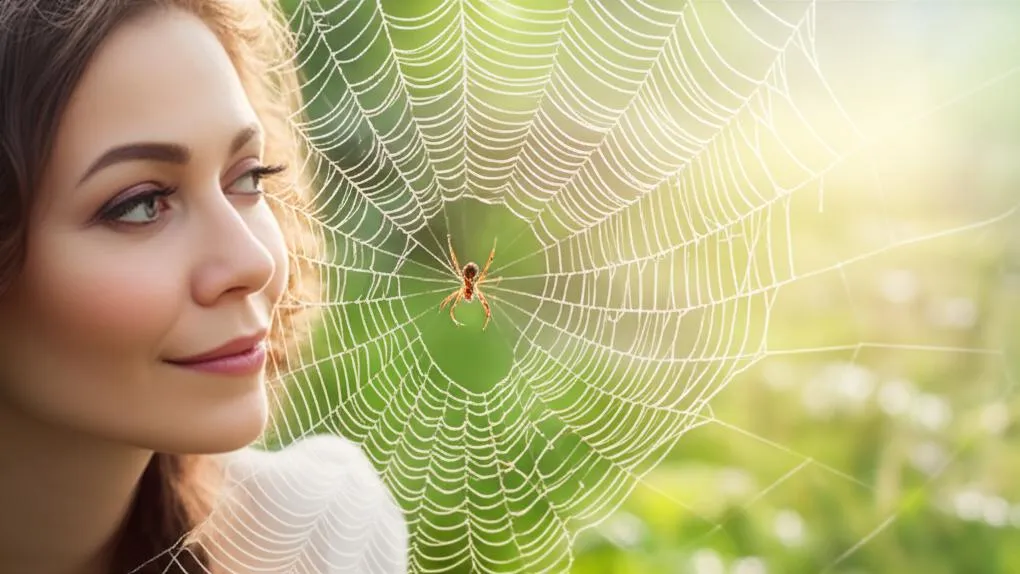
Who is this Orb Weaver?
Simply put, the Orb Weaver is a species of spider that commonly lives in gardens, bushes, and trees all over the world, as well as in our country. This is not one spider, but a large family of spiders with more than 2,800 species. Although many people think that spiders are insects, this is wrong. Spiders are a group of animals that are not insects, but belong to the order of arachnids. The most special thing about these spiders is the large, circular web they weave. This is their home as well as their hunting ground. They build this web and wait patiently, either in the middle of it or on a nearby leaf, until a prey is caught. The amazing thing is that sometimes the spider goes a little far from the web, but it keeps a fine thread from the web until it reaches its body. It's like a signaling system. As soon as a prey, such as an insect, gets entangled in the web, the spider feels the vibration along that thread. Then the spider comes back and catches the prey.One amazing thing is that these Orb Weaver spiders weave their webs anew every night. They eat the old web and use the nutrients it provides to build the new web. By morning, a fresh, strong web is ready to catch prey.These spiders are not aggressive, they are very quiet and innocent creatures. In fact, they are more afraid of us than we are of them. When they feel threatened, they either run and hide or jump down from their webs. Therefore, they rarely cause any problems for humans. In fact, these spiders are very useful in our gardens. Because they eat other annoying insects like mosquitoes and flies, they act as natural pest control.
How do you recognize them?
Orb weaver spiders can be a little tricky to identify. They come in a variety of colors and patterns. Some are reddish-brown, while others are gray. But some species have bright, menacing-looking colors. But the easiest way to identify them is by their web. They often build a flat, round web that spirals outward from the center. If you see a web like this, it is more likely to be an Orb Weaver. Another distinctive feature is their large, bloated abdomen . This means that the back of the body looks larger than other spiders. Two common Orb Weaver species in our country and around the world are the Garden Orb Weaver and the Spiny Orb Weaver.| Spider species | Appearance and characteristics |
|---|---|
| The Common Orb Weaver in the Garden | Often reddish-brown or gray. The abdomen may have a leaf-shaped pattern. Sometimes white or brown stripes are visible. |
| Spiny Orb Weaver (Spiny Orb Weaver) | It looks very different. It has about 6 spikes protruding from its oval abdomen. It is not dark like the normal species, but comes in bright colors like yellow, white, and red. |
Their diet and life cycle
Orb weaver spiders eat any insect that gets caught in their web. The female is the one who hunts most often. As soon as an insect is caught in the web, the spider rushes in and stabs the victim with its venomous fangs. The venom paralyzes the victim. Then, it wraps the victim tightly in silk threads, carries it to the center of the web, and stores it for later consumption. When they eat, they suck out the dissolved parts of the victim's body. Male spiders often rely on females for food. Adult males live with females and eat the prey they catch. The only purpose of males is to find a female and reproduce. Therefore, they do not stay in one place, they travel frequently. After mating with the female, the male dies shortly after. The female spider lives with the web she has built. After waiting for a male to come and lay their eggs, they die in the cold weather. But the egg sac they lay survives the cold and is safe until the following spring. One egg sac can contain hundreds of eggs.Are these spiders really dangerous to us?
Here's the problem for everyone. Orb weaver spiders are not dangerous to humans. They are a very calm, timid group of animals. They rarely bite humans. If they do, they will only bite if we try to catch them or restrain them in a way that they can't escape. That is, they will only bite if they feel a serious threat. Imagine what would happen if such a bite were to occur. Fortunately, the venom of an Orb weaver spider does not have much effect on humans. The bite site may be slightly painful, slightly swollen, and numb.Symptoms may occur, such as feeling like you've been bitten by an ant. Very rarely, some people may also experience symptoms such as nausea and dizziness .The most important thing is that if your symptoms worsen after a spider bite, or if they do not improve after a few days, see a doctor immediately for advice.
How do you prevent spiders from coming into the house?
Since these spiders do not pose a major threat to us, there is no need to rush to kill them. Remember that they also provide a service to our gardens. However, some people may find their webs a nuisance, or they may want to keep them away from their homes due to their fear of spiders (Arachnophobia). In that case, you can do the following:- Seal off entryways: Seal up doors, windows, and cracks in walls. This will prevent spiders and other insects from entering your home.
- Keep it clean: Keep the inside and outside of your home clean and tidy. Piles of trash and old items are the best places for spiders to hide.
- Outdoor lights: Turn off the lights near the entrance to your home. At night, lights attract insects. Spiders will also come to where the insects are to eat them.
- Removing webs: Carefully remove any spider webs you see with a broom. However, it is best to remove the spider without harming it, by placing it on a leaf and moving it to another part of the garden.
💡 Take-Home Message
- Orb weaver spiders are a group of silent, harmless creatures that are often found in our gardens.
- They are not aggressive and will not bite unless they feel strongly threatened.
- Their venom is not dangerous to humans, and a bite only causes minor pain and swelling.
- If symptoms are severe or persist, be sure to see a doctor.
- They provide a beneficial service to our environment by eating small insects in the garden.






Janiw kuna arsuwinakas jichhakamax uñt’ayatäkiti. Aka chiqanx amuyt’awim jan ukax jiskt’awim yapxatañamawa.