

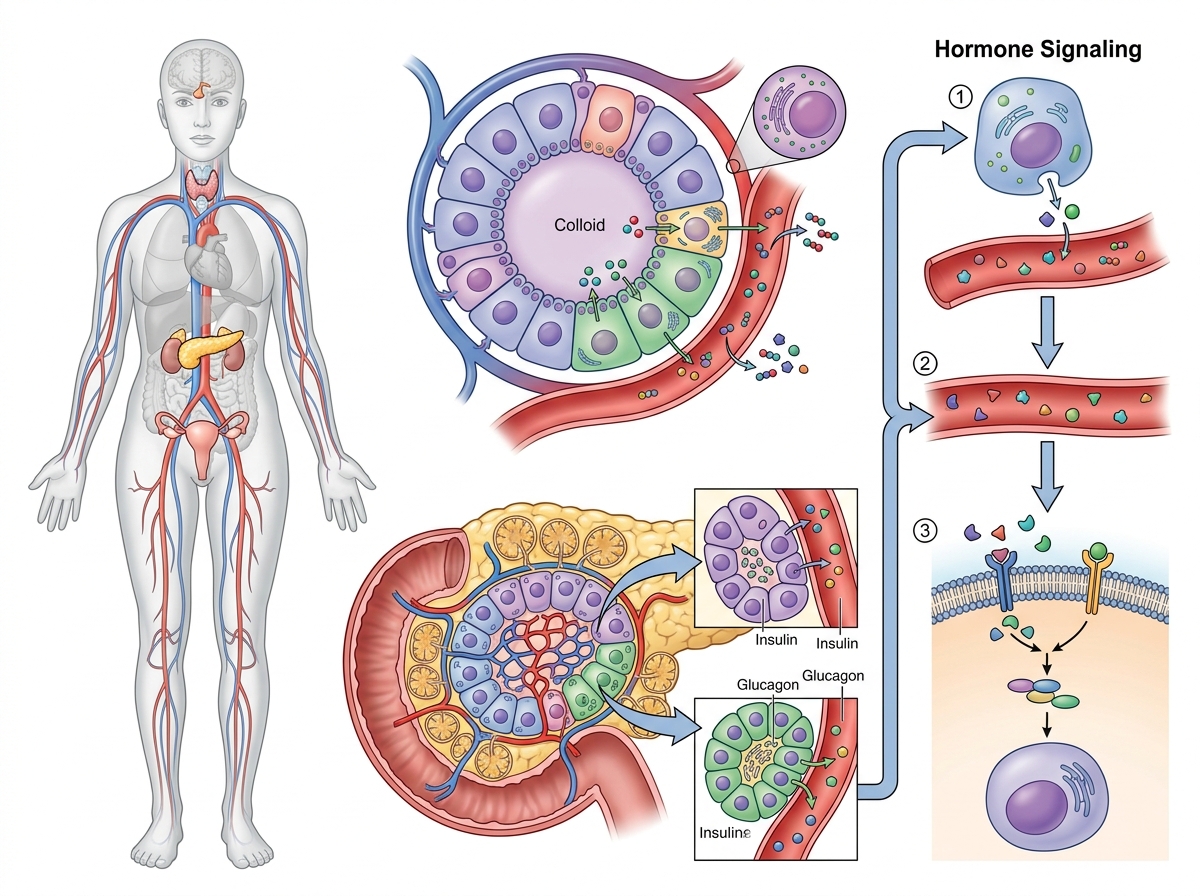
Who is this endocrinologist?
Simply put, an endocrinologist is a doctor who specializes in the endocrine system , that is, the glands that produce hormones, and their related diseases. There are more than 50 types of hormones that control various functions in our body. These are produced by various glands in our body. Some of the main hormone-producing glands are:- Thyroid gland
- Parathyroid glands
- Pancreas
- Adrenal glands
- Pituitary gland
- Hypothalamus
- Ovaries (in women)
- Testes (male)
What are the main conditions that an endocrinologist treats?
You can seek help from these specialists for any hormone-related problem. Let's see what the main conditions are. To understand this information clearly, see the table below.| Disease category | Conditions treated (examples) |
|---|---|
| Metabolic Conditions |
|
| Thyroid Conditions | |
| Bone & Calcium Conditions |
|
| Reproductive Health Conditions |
|
| Endocrine Cancers & Tumors |
|
Why is your doctor referring you to an endocrinologist?
Usually, your family doctor (GP) can treat common hormonal problems like diabetes and thyroid. However, there are some cases where the help of a specialist is needed.Imagine you've just been diagnosed with diabetes. You have a lot to learn about how to manage it, how to use insulin, and how to make lifestyle changes. At a time like this, the advice of a specialist is invaluable.You may be referred to an endocrinologist in the following situations:
- If you have just been diagnosed with diabetes: Learn to manage your disease.
- If your diabetes is difficult to control: Even if you take your medication correctly, your blood sugar levels are not controlled.
- If you use an insulin pump or take insulin injections several times a day.
- If diabetes has caused other complications: for example, if there is damage to the kidneys, eyes, or nerves.
- If you have PCOS, osteoporosis, or a complex thyroid problem.
Questions to ask your specialist if you have diabetes
If you've been referred to an endocrinologist for diabetes, it's a good idea to prepare a little bit about what to ask before your appointment. The doctor will ask you about your symptoms, your lifestyle, and will also examine your feet and review your blood test results. You might ask questions like:- How should I take care of my feet? What should I be careful of?
- What exercises are good for me to do? Are there any I should avoid?
- When should I check my blood sugar levels? What are normal levels?
- What should I do if my blood sugar is low or high?
- What do I do if I miss a dose of medication?
- Can these medications cause side effects? What should you do if they do?
- How do I manage my diabetes when I travel or get sick?
- Are there any special vaccines I need to get?
The most important thing is to feel free to ask your doctor any questions you have, no matter how small. Clearing your doubts is crucial to the success of your treatment.Typically, someone taking insulin will need to see a doctor every 3-4 months, or even every 4-6 months. However, if the disease is not under control or new complications arise, you may need to go more often.
Take-Home Message
- An endocrinologist is a doctor who specializes in diseases related to hormones and the glands that produce them.
- They treat a number of common conditions, such as diabetes, thyroid problems, PCOS, osteoporosis, and infertility.
- If your family doctor suspects that your condition is hormone-related, they will refer you to a specialist like this.
- When you go to see a specialist, make sure to ask all your questions clearly. That's a big help in taking charge of your health.
ukat juk’ampinaka Doctoran qillqatapa
ukat juk’ampinaka Hormonas, cuerpon mensajeros químicos ukanakax metabolismo, control de peso, energía ukat estado de ánimo ukanakaruw regula.
- ukat juk’ampinaka Tiroides ukan irnaqawipan mayjt’awinaka jan ukax akatjamat pesaje mayjt’awinak uñjasax hormonas ukanakat yant’asiñamawa.
- ukat juk’ampinaka Suma manq’aña, ejercicio luraña ukhamaraki chiqapa apnaqaña qullanaka/insulina ukaxa endocrinólogo ukana churata ukaxa wali wakiskiriwa diabetes ukaru jark’aqañataki.
- ukat juk’ampinaka PCOS jan ukax desequilibrio hormonal ukan jan walt’awinakapata, nayraqat yatxatat iwxt’awinak thaqhañax jaya pacha jan walt’awinak jark’aqasispawa.


💬 Comments (0)
No comments have been posted yet. Add your comment here for the first time.
Add your comment