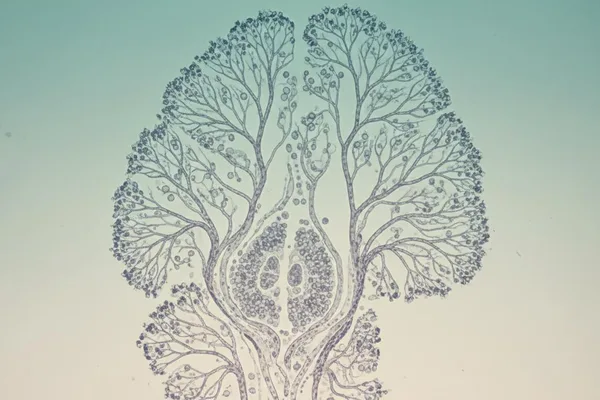
The indispensable little hero in our lives: Everything about the Medulla Oblongata!

The indispensable little hero in our lives: Everything about the Medulla Oblongata!
Have you ever wondered how some of the things in our bodies – breathing, beating our hearts, swallowing food – happen automatically, without any effort, without us even thinking about it? The small but very powerful person behind many of these very important tasks is called the Medulla Oblongata. Shall we talk about this amazing part today?

What is the Medulla Oblongata? Simply put...

Simply put, your medulla oblongata is part of your brainstem. Think of it this way, from our brain down to our spine, we have the spinal cord, which is like a bridge connecting the two. That's why the medulla oblongata is a very important junction in our nervous system. It's like a big junction where major roads meet! It controls many of the most important functions in our body.

What exactly does the medulla oblongata do? Some of its functions...

The medulla oblongata (let's just call it "medulla") has a very important job. It's not just because of its location, but because of the things it controls. Here are some of the things it does:
  • Manages heart , blood circulation , and breathing : Yes, the medulla is where our cardiovascular system and respiratory system work together to control things like your heart rate, how you breathe, and blood pressure . Imagine, without it, we wouldn't even be able to breathe properly!
  • Other automatic processes are managed: These are the things that happen automatically in your body without you even thinking about them. For example, things like coughing, sneezing, swallowing food, vomiting , and maintaining balance . When we eat, we don't think, "I need to swallow now," right? It happens automatically. This is what helps us do that.
  • Nerve connections : Most of the major nerves in our body connect to our spinal cord. From there, messages are sent to and from the brain through these nerves. So, all of those messages have to pass through the medulla. Four of the twelve cranial nerves, which connect areas like your neck, throat , and tongue directly to the brain, pass through this medulla.
  • Crossover point:Here's something really amazing! There's a special area called the "Pyramids" in the medulla where many of the nerves involved in our body's movements cross over. That crossing is why one side of your brain often controls the other side of your body. Imagine, when you want to move your right hand, the command comes from the left side of your brain. That's what happens because of this crossing.
Important: The medulla is an essential part of our lives and performs a very delicate function. Therefore, it is very important to take care of it.

What is the relationship between the medulla and the cranial nerves?

We've already mentioned that there are a type of nerve called the cranial nerves. These come in pairs. Let's look at some of the nerves that pass through the medulla:
  • Cranial Nerve IX (CN IX): This ninth cranial nerve is involved in many functions in our mouth. It controls the glands that produce saliva, taste, and touch inside the mouth. It also controls the gag reflex, which stops us from accidentally getting something stuck in our throat.
  • Cranial Nerve X (CN X): Another name for this tenth cranial nerve is the Vagus nerve. This is actually a very important nerve in our body. It is connected to every major organ from our neck to the upper part of our colon. It carries messages from the autonomic nervous system, which we don't even think about. It manages things like heart rate and bowel movements. It also carries messages to our larynx (voice box) and the muscles used to swallow food.
  • Cranial Nerve XI (CN XI): The eleventh cranial nerve controls the muscles in our neck and upper back. These muscles help when you turn your head and raise your shoulders.
  • Cranial Nerve XII (CN XII): The twelfth cranial nerve controls the muscles you use to stick out your tongue. So, speaking and swallowing are essential.
You see, what an important neural network operates through this little medulla!

Where is the medulla located?

The medulla is located at the very bottom of your brain. Specifically, it is where your spinal cord connects to your brain through an opening called the foramen magnum at the base of your skull. Just above the medulla is the pons, which is located below the structures in the middle of the brain. Another unique feature of the medulla is that it separates the nerves that control muscle movement (located on the left side) from the nerves that control sensations such as touch, temperature, and pain (located on the right side).

What does this look like? Shape, color, size?

  • Shape:The medulla is usually shaped like a tube, or funnel. The top part, where it connects to the pons, is the widest.
  • Color: This is usually beige or pale in color. Sometimes it has a pinkish tinge.
  • Size: The medulla is very important, but it is very small. It is about 3 centimeters (about 1.1 inches) long. The widest cross-section is about 2 centimeters (about 0.78 inches).
  • Weight: The average adult brain weighs between 1.2 and 1.4 kilograms (2.6 and 3.1 pounds). The medulla accounts for about 0.5% of this. That means it weighs between 59 and 72 grams (2 and 2.5 ounces). It's small, but it does a lot of work, right?

What is this made of?

Like other brain tissue, the medulla is made up of various types of white and gray brain matter and nerve cells. Our brain tissue roughly consists of:
  • 77% water
  • Fat `(Lipids)` 11%
  • 8% protein
  • Other things 4%

What are the common diseases and disorders that affect the medulla?

This small but very important part can be affected by various diseases and disorders. Here are some of them:
  • Aneurysms (weakened and bulging blood vessels)
  • Cancer
  • Brain damage caused by head injuries, such as concussions and traumatic brain injuries
  • Strokes or Transient ischemic attacks (TIAs) (also called mini-strokes)
  • There are also several other rare conditions, such as Moebius syndrome, multiple system atrophy, and progressive supranuclear palsy.
There are also several conditions that are caused by strokes in the brainstem, known by special names:
  • Wallenberg syndrome: Also known as lateral medullary syndrome, this condition occurs when blood flow to a side of the medulla is interrupted, causing damage to that area. This is the most common type of stroke affecting the medulla.
  • Dejerine syndrome: Also called medial medullary syndrome, this occurs when a stroke blocks blood flow to the middle of the medulla, affecting the pyramids where the nerves cross.
  • Bilateral medial medullary syndrome: This is a somewhat unusual condition. It combines the features of Dejerine syndrome and Wallenberg syndrome, affecting both sides of the body.
  • Reinhold syndrome:This is also called hemidemedullary syndrome. This is very rare. It has symptoms of both Wallenberg and Dejerine syndrome, but Wallenberg syndrome only affects one side.
  • Babinski-Nageotte and Cestan-Chenais syndromes: These are also very, very rare conditions. They are caused by a combination of some of the effects of Wallenberg syndrome and Reinhold syndrome.

What are the symptoms of problems in the medulla?

Symptoms of conditions that affect the medulla can be very similar to those seen in problems with parts of the body that are connected to the nerves that run through the medulla. However , the most important difference is that with a stroke that affects the medulla, you will experience some symptoms on one side of your body and some on the other. Here are some of the most common symptoms:
  • Stroke symptoms (e.g., drooping of the face, inability to speak, loss of a limb)
  • Inability or lack of coordination (symptoms of ataxia) - walking like a drunk person, not being able to grasp things.
  • Headache
  • Hoarseness of voice (Dysphonia)
  • Loss of sensation of temperature or pain in a part of the body or face
  • Nystagmus (uncontrolled eye movements)
  • Nausea and vomiting
  • Paralysis (in various parts of the face or body)
  • Difficulty swallowing (Dysphagia)
  • Vision problems

What tests are done to check the health of the medulla?

There are many tests that can help diagnose conditions that affect your brain, including the medulla. Some of the most common tests are:
  • Blood tests (e.g., those that look for immune system problems or genetic diseases)
  • Computerized tomography (CT) scan
  • Electroencephalogram (EEG) (monitoring the electrical activity of the brain)
  • Electromyogram (EMG) (looking at nerve activity in muscles)
  • Magnetic resonance imaging (MRI)
  • Positron emission tomography (PET) scan
  • Spinal tap / Lumbar puncture

What are the treatments for diseases of the medulla?

Some treatments for diseases of the medulla are specific, because this part of the brain performs very specific functions. Also, because of the location of the medulla, surgery can be very difficult, and sometimes impossible, because of the high risk of damage to other parts of the brain or spinal cord nearby.

What can I do to keep my medulla healthy?

There are several things you can do to prevent damage to your medulla, or to avoid conditions that affect it:
  • Eat a balanced diet.If you are deficient in certain vitamins, especially vitamin B12, it can affect your brain, including the medulla, and cause major problems.
  • Stay physically active and maintain a healthy weight. Problems with your circulatory system and heart can affect your brain. Stroke is one such example. Strokes are often caused by heart problems. Staying active and maintaining a healthy weight can help reduce this risk.
  • Wear protective equipment when necessary. Head injuries can cause serious brain damage. Concussions or traumatic brain injuries can occur. Wearing protective equipment (like a helmet) while working or playing can help protect your brain from these types of injuries.

Does the medulla control anger and aggressive behavior?

No, your medulla doesn't control emotions like anger, rage, and aggressive behavior. Those emotions depend on two other areas of your brain, specifically the limbic system. The medulla's only role in aggression is to manage your heart rate, breathing, and other automatic processes.

Finally, things to remember

So, you probably understand now that the Medulla Oblongata is a very important part of our body, no matter how small it is. It acts like a relay station, helping to direct nerve messages to different parts of the body. Without it, you wouldn't be able to do something as simple as saying your name, or as complex as catching and throwing a ball.
Knowing about the medulla oblongata can help you gain a better understanding of your own body. It will also help you take better care of the health of your brain and nervous system. Always try to stay healthy!

Medulla oblongata, brain stem, nervous system, breathing, heartbeat, cranial nerves, stroke
⚠️ Important: The medical articles and information on Nirogi Lanka are for general awareness only, and are by no means a substitute for professional medical advice, diagnosis, or treatment. For any medical problem you have, consult a qualified physician immediately.

💬 Comments (0)

No comments yet. Be the first to share your thoughts here.

Add Your Comment

Please calculate: 3 + 7 =
The indispensable little hero in our lives: Everything about the Medulla Oblongata!
How the Body WorksFebruary 19, 2026

The indispensable little hero in our lives: Everything about the Medulla Oblongata!

Have you ever wondered how some of the things in our bodies – breathing, beating our hearts, swallowing food – happen automatically, without any effort, without us even thinking about it? The small but very powerful person behind many of these very important tasks is called the Medulla Oblongata. Shall we talk about this amazing part today?

What is the Medulla Oblongata? Simply put...

Simply put, your medulla oblongata is part of your brainstem. Think of it this way, from our brain down to our spine, we have the spinal cord, which is like a bridge connecting the two. That's why the medulla oblongata is a very important junction in our nervous system. It's like a big junction where major roads meet! It controls many of the most important functions in our body.

What exactly does the medulla oblongata do? Some of its functions...

The medulla oblongata (let's just call it "medulla") has a very important job. It's not just because of its location, but because of the things it controls. Here are some of the things it does:
  • Manages heart , blood circulation , and breathing : Yes, the medulla is where our cardiovascular system and respiratory system work together to control things like your heart rate, how you breathe, and blood pressure . Imagine, without it, we wouldn't even be able to breathe properly!
  • Other automatic processes are managed: These are the things that happen automatically in your body without you even thinking about them. For example, things like coughing, sneezing, swallowing food, vomiting , and maintaining balance . When we eat, we don't think, "I need to swallow now," right? It happens automatically. This is what helps us do that.
  • Nerve connections : Most of the major nerves in our body connect to our spinal cord. From there, messages are sent to and from the brain through these nerves. So, all of those messages have to pass through the medulla. Four of the twelve cranial nerves, which connect areas like your neck, throat , and tongue directly to the brain, pass through this medulla.
  • Crossover point:Here's something really amazing! There's a special area called the "Pyramids" in the medulla where many of the nerves involved in our body's movements cross over. That crossing is why one side of your brain often controls the other side of your body. Imagine, when you want to move your right hand, the command comes from the left side of your brain. That's what happens because of this crossing.
Important: The medulla is an essential part of our lives and performs a very delicate function. Therefore, it is very important to take care of it.

What is the relationship between the medulla and the cranial nerves?

We've already mentioned that there are a type of nerve called the cranial nerves. These come in pairs. Let's look at some of the nerves that pass through the medulla:
  • Cranial Nerve IX (CN IX): This ninth cranial nerve is involved in many functions in our mouth. It controls the glands that produce saliva, taste, and touch inside the mouth. It also controls the gag reflex, which stops us from accidentally getting something stuck in our throat.
  • Cranial Nerve X (CN X): Another name for this tenth cranial nerve is the Vagus nerve. This is actually a very important nerve in our body. It is connected to every major organ from our neck to the upper part of our colon. It carries messages from the autonomic nervous system, which we don't even think about. It manages things like heart rate and bowel movements. It also carries messages to our larynx (voice box) and the muscles used to swallow food.
  • Cranial Nerve XI (CN XI): The eleventh cranial nerve controls the muscles in our neck and upper back. These muscles help when you turn your head and raise your shoulders.
  • Cranial Nerve XII (CN XII): The twelfth cranial nerve controls the muscles you use to stick out your tongue. So, speaking and swallowing are essential.
You see, what an important neural network operates through this little medulla!

Where is the medulla located?

The medulla is located at the very bottom of your brain. Specifically, it is where your spinal cord connects to your brain through an opening called the foramen magnum at the base of your skull. Just above the medulla is the pons, which is located below the structures in the middle of the brain. Another unique feature of the medulla is that it separates the nerves that control muscle movement (located on the left side) from the nerves that control sensations such as touch, temperature, and pain (located on the right side).

What does this look like? Shape, color, size?

  • Shape:The medulla is usually shaped like a tube, or funnel. The top part, where it connects to the pons, is the widest.
  • Color: This is usually beige or pale in color. Sometimes it has a pinkish tinge.
  • Size: The medulla is very important, but it is very small. It is about 3 centimeters (about 1.1 inches) long. The widest cross-section is about 2 centimeters (about 0.78 inches).
  • Weight: The average adult brain weighs between 1.2 and 1.4 kilograms (2.6 and 3.1 pounds). The medulla accounts for about 0.5% of this. That means it weighs between 59 and 72 grams (2 and 2.5 ounces). It's small, but it does a lot of work, right?

What is this made of?

Like other brain tissue, the medulla is made up of various types of white and gray brain matter and nerve cells. Our brain tissue roughly consists of:
  • 77% water
  • Fat `(Lipids)` 11%
  • 8% protein
  • Other things 4%

What are the common diseases and disorders that affect the medulla?

This small but very important part can be affected by various diseases and disorders. Here are some of them:
  • Aneurysms (weakened and bulging blood vessels)
  • Cancer
  • Brain damage caused by head injuries, such as concussions and traumatic brain injuries
  • Strokes or Transient ischemic attacks (TIAs) (also called mini-strokes)
  • There are also several other rare conditions, such as Moebius syndrome, multiple system atrophy, and progressive supranuclear palsy.
There are also several conditions that are caused by strokes in the brainstem, known by special names:
  • Wallenberg syndrome: Also known as lateral medullary syndrome, this condition occurs when blood flow to a side of the medulla is interrupted, causing damage to that area. This is the most common type of stroke affecting the medulla.
  • Dejerine syndrome: Also called medial medullary syndrome, this occurs when a stroke blocks blood flow to the middle of the medulla, affecting the pyramids where the nerves cross.
  • Bilateral medial medullary syndrome: This is a somewhat unusual condition. It combines the features of Dejerine syndrome and Wallenberg syndrome, affecting both sides of the body.
  • Reinhold syndrome:This is also called hemidemedullary syndrome. This is very rare. It has symptoms of both Wallenberg and Dejerine syndrome, but Wallenberg syndrome only affects one side.
  • Babinski-Nageotte and Cestan-Chenais syndromes: These are also very, very rare conditions. They are caused by a combination of some of the effects of Wallenberg syndrome and Reinhold syndrome.

What are the symptoms of problems in the medulla?

Symptoms of conditions that affect the medulla can be very similar to those seen in problems with parts of the body that are connected to the nerves that run through the medulla. However , the most important difference is that with a stroke that affects the medulla, you will experience some symptoms on one side of your body and some on the other. Here are some of the most common symptoms:
  • Stroke symptoms (e.g., drooping of the face, inability to speak, loss of a limb)
  • Inability or lack of coordination (symptoms of ataxia) - walking like a drunk person, not being able to grasp things.
  • Headache
  • Hoarseness of voice (Dysphonia)
  • Loss of sensation of temperature or pain in a part of the body or face
  • Nystagmus (uncontrolled eye movements)
  • Nausea and vomiting
  • Paralysis (in various parts of the face or body)
  • Difficulty swallowing (Dysphagia)
  • Vision problems

What tests are done to check the health of the medulla?

There are many tests that can help diagnose conditions that affect your brain, including the medulla. Some of the most common tests are:
  • Blood tests (e.g., those that look for immune system problems or genetic diseases)
  • Computerized tomography (CT) scan
  • Electroencephalogram (EEG) (monitoring the electrical activity of the brain)
  • Electromyogram (EMG) (looking at nerve activity in muscles)
  • Magnetic resonance imaging (MRI)
  • Positron emission tomography (PET) scan
  • Spinal tap / Lumbar puncture

What are the treatments for diseases of the medulla?

Some treatments for diseases of the medulla are specific, because this part of the brain performs very specific functions. Also, because of the location of the medulla, surgery can be very difficult, and sometimes impossible, because of the high risk of damage to other parts of the brain or spinal cord nearby.

What can I do to keep my medulla healthy?

There are several things you can do to prevent damage to your medulla, or to avoid conditions that affect it:
  • Eat a balanced diet.If you are deficient in certain vitamins, especially vitamin B12, it can affect your brain, including the medulla, and cause major problems.
  • Stay physically active and maintain a healthy weight. Problems with your circulatory system and heart can affect your brain. Stroke is one such example. Strokes are often caused by heart problems. Staying active and maintaining a healthy weight can help reduce this risk.
  • Wear protective equipment when necessary. Head injuries can cause serious brain damage. Concussions or traumatic brain injuries can occur. Wearing protective equipment (like a helmet) while working or playing can help protect your brain from these types of injuries.

Does the medulla control anger and aggressive behavior?

No, your medulla doesn't control emotions like anger, rage, and aggressive behavior. Those emotions depend on two other areas of your brain, specifically the limbic system. The medulla's only role in aggression is to manage your heart rate, breathing, and other automatic processes.

Finally, things to remember

So, you probably understand now that the Medulla Oblongata is a very important part of our body, no matter how small it is. It acts like a relay station, helping to direct nerve messages to different parts of the body. Without it, you wouldn't be able to do something as simple as saying your name, or as complex as catching and throwing a ball.
Knowing about the medulla oblongata can help you gain a better understanding of your own body. It will also help you take better care of the health of your brain and nervous system. Always try to stay healthy!

Medulla oblongata, brain stem, nervous system, breathing, heartbeat, cranial nerves, stroke
⚠️ Important: The medical articles and information on Nirogi Lanka are for general awareness only, and are by no means a substitute for professional medical advice, diagnosis, or treatment. For any medical problem you have, consult a qualified physician immediately.

💬 Comments (0)

No comments yet. Be the first to share your thoughts here.

Add Your Comment

Please calculate: 3 + 7 =