
Let's find out exactly what your urethra is like.

Let's find out exactly what your urethra is like.
We all know that there are different parts of our body, each of which has a special function. We often talk about some organs, for example, the heart, lungs, and kidneys. But there are some organs that we don't think or talk about much. But the functions they perform are very important. Similarly, a very important, but not much talked about part of the urinary system of our body is the urethra. So today, let's talk about this urethra, or as it is called in English, `(Urethra)`, in detail and simply.

What is the urethra? Simply put...

Think of it like a small tube. This tube carries urine from your bladder to the outside of your body. If you're a man, your urethra is a little longer. It passes through the prostate gland and opens out through the penis. But if you're a woman, your urethra is much shorter than a man's. It's located just in front of the bladder and the vagina. Simply put, the urethra is the passageway through which urine flows out.

What is the function of the urinary tract? What happens to it?

The urinary tract is a very important part of our urinary system. This urinary system is made up of two kidneys, a bladder, ureters, and a urethra. Think of it like this. 1. First, our kidneys clean our blood and make the unwanted waste products in it into urine. 2. Then, the urine produced by the kidneys travels through two tubes called ureters and ends up in the bladder. The bladder is like a small bag that can hold urine for a while. 3. When you need to urinate, the urine in the bladder goes out of the body through the urethra. So you can see, without the urethra, we would have no way to excrete the urine produced in the body. That's why it performs a very important function. The opening at the end of the urethra that opens to the outside of the body is called the ``Urethral meatus.`` The word ``Meatus`` generally refers to any opening from the inside of the body to the outside.

Where is the urinary tract located? How is it formed?

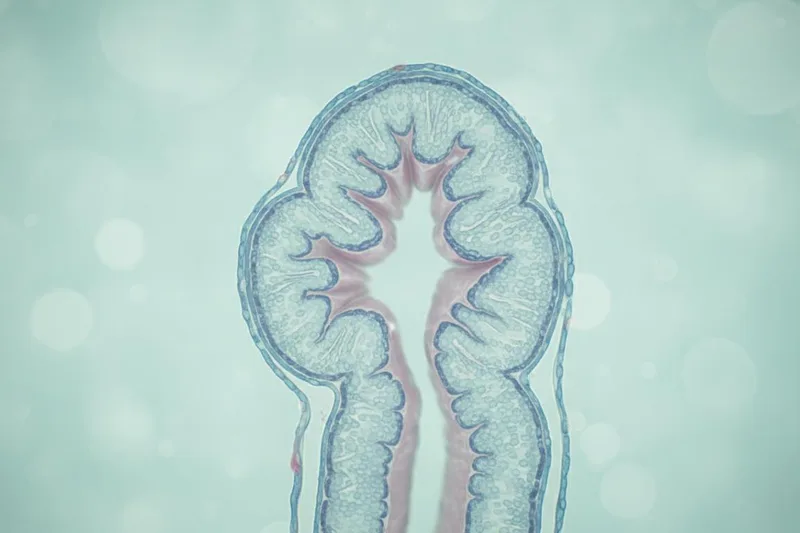
The urethra is located in the pelvic region of our body. That is, in the part below the abdomen. It is not just a tube. Its walls are thin, but they are made up of special types of tissue. For example, it is made up of epithelial tissue, smooth muscle cells, and connective tissue. A very important part of the urethra is the sphincters . These work like valves. That is, they can open and close when needed. There are two types of sphincters:
  • Internal urineInternal urethral sphincter: This is located at the entrance to the urethra from the bladder. It is not something we consciously control, it works automatically.
  • External urethral sphincter: This is located between the muscles at the bottom of the pelvic cavity (pelvic floor). We can control this to some extent. This is what helps us stop the flow of urine in an emergency.
These two muscles, along with the bladder, work together to expel urine from the body.

How long is the urethra?

This varies depending on whether you are a man or a woman.
  • The female urethra is usually about 1.5 inches (3-4 centimeters) long. That's why women are slightly more likely to get urinary tract infections (UTIs) than men. This is because germs have less distance to travel to the bladder .
  • The male urethra is much longer, measuring about 8-9 inches (20 centimeters) long.
There are three main parts of the male urethra: 1. Prostatic urethra: This part passes through the prostate gland. When sperm is ejaculated, it carries seminal fluid and helps to make semen. 2. Membranous urethra: This is a very short part. It helps to carry fluid through the pelvic floor. 3. Penile urethra: This is also called the spongy urethra and the cavernous urethra. This is the longest part of the urethra. This continues to extend the entire penis, ending at the ``urethral meatus'' we mentioned earlier, that is, the hole that opens out of the body.

What are the common diseases that affect the urinary tract?

In fact, urinary tract problems are more common in men. The reason for this is that the male urethra is longer and has a more complex structure. Let's take a look at some of the most common conditions.
  • Urinary Tract Infections (UTIs): These are very common. Infections can occur anywhere in the urinary system, including the urethra. Sometimes, when a urinary catheter is inserted, a catheter-associated urinary tract infection (CAUTIs) can occur.
  • Urethritis :This means that the urethra becomes swollen or inflamed. Most often, this is caused by an infection. Sometimes, it can be caused by a sexually transmitted disease called gonorrhea . Urethritis caused by causes other than gonorrhea is also called nongonococcal urethritis ( NGU ).
  • Urethral strictures: This occurs when scarring occurs in the urethra, blocking the passage of urine through it. This can cause swelling of the urethra, infections, pain when urinating, and inability to empty the bladder.
  • Genitourinary vaginal fistulas: This is a condition that can occur in women. This is where an abnormal hole forms between the urinary system, vagina, or uterus.
  • Injuries or damage to the urethra: This can be caused by accidents, blunt force trauma, or someone trying to insert something into the urethra. This can cause bruising and urine leakage into the surrounding tissue.
  • Urethral cancer: This is a very rare type of cancer.

Complications that may arise due to this

If the urinary tract is damaged, it can lead to various complications. For example:
  • Frequent infections
  • Bleeding
  • Narrowing of the urethra (Strictures)
  • Urinary incontinence
  • For men, erectile dysfunction

What are the common symptoms of urinary tract diseases?

If you have any problems with your urinary tract, you may experience symptoms like these. You should be aware of these.
  • Pain or difficulty urinating (Dysuria) or the inability to urinate at all.
  • Blood in the urine (Hematuria).
  • Abnormal discharge from the urethra.
If you have any of these symptoms, it is very important to see a doctor immediately for advice, as ignoring them can make the condition worse.

What tests are done to check the health of the urinary tract?

If your doctor suspects that you have a urinary tract problem, he or she may perform several tests, such as:
  • Urine tests: This involves taking a sample of your urine and testing it in a lab. It can look for things like infections and blood.
  • Cystoscopy:In this, the doctor inserts a small camera-equipped tube (cystoscope) into the urethra to look inside the urethra and bladder. This can help to check for any abnormalities.
  • X-rays and/or ultrasound: These imaging tests can look at bones and soft tissues. An ultrasound can look at the kidneys and bladder.
  • Retrograde urethrography: This involves injecting a special substance (contrast agent) into the urethra and taking an X-ray. This helps to see the shape of the urethra, any narrowing, etc.
  • Voiding cystourethrogram (VCUG): This test uses a special substance called a contrast agent. It is done to see what happens when your bladder fills and then when you urinate.
These tests are a great help to your doctor in determining your exact condition.

What are the treatments for urinary tract diseases?

If you are diagnosed with a urinary tract infection, the treatment will depend on the condition you have. Let's take a look at what these treatment options are.

Medications

  • If you have an infection , your doctor will give you medicines to kill the infection, such as antibiotics.
  • In cases such as urethral cancer, chemotherapy drugs may be prescribed.

Medical Procedures

Many urinary tract diseases have to be treated through various medical methods.
  • Dilation: In this procedure, the doctor uses a cystoscope and a balloon-like device to widen the narrowed urethra.
  • Urethrotomy: Here, too, the doctor uses a cystoscope and a cutting instrument to cut out the ring-like area of ​​scar tissue that has become blocked.
  • Urethroplasty or urethral reconstruction: This is a slightly more complicated surgery. In this procedure, the doctor takes tissue from another part of your body and uses it to create a new urethra or repair an existing one.
  • Surgery to remove tumors: These are necessary in conditions like cancer.
  • Radiation therapy: This treatment is used to destroy cancer cells.

What are some simple things we can do to keep the urinary tract healthy?

There are a few simple things we can do to keep our urinary tract and entire urinary system healthy. If we make these a habit, we can avoid many problems.
  • Drink plenty of water:The most important thing is to drink enough water per day. This will help cleanse the urinary system.
  • Avoid smoking and tobacco products: These are harmful not only to the urinary system, but to the entire body.
  • Reduce your intake of alcohol and caffeine (such as tea and coffee): These stimulate the bladder, causing you to need to urinate more frequently.
  • Maintain a healthy weight that suits you: Being overweight can contribute to urinary tract problems.
  • Exercise regularly: This improves overall health as well as the functioning of the urinary system.
  • Avoid constipation: Constipation can put pressure on the bladder and cause difficulty urinating.
  • Don't hold your urine: When you feel the need to urinate, urinate immediately.
  • Empty your bladder completely when urinating.
  • Urinate after sex: This helps flush out any germs that may have entered the urinary tract, especially in women.
  • When cleaning after going to the bathroom, wipe from front to back: This is also very important for women to prevent infections.
  • Choose underwear made of cotton: Synthetic fabrics can trap sweat and cause germs to grow.
  • Don't wear tight clothes (like pants).
  • If playing sports, use protective clothing (e.g., jockstrap).
If you have frequent urinary problems, talk to your doctor about the medications, foods, and birth control you take. Some medications and foods can also affect the urinary system.

Take-Home Message

So, the urethra is a small but very important organ that helps us eliminate waste products from our body, urine. Although we cannot guarantee that it will be 100% healthy, we can help it with simple things like drinking plenty of water every day and limiting caffeine and alcohol. If you feel pain when you urinate, or if you see blood in your urine, do not assume that it is normal. Seek medical advice immediately. Because the sooner the disease is diagnosed, the easier it is to treat, and the less likely it is to develop complications. You are the one who should take the most care of your health. Urinary tract, Urethra, Urinary system, Urinary infections, UTI, Urinary symptoms, Bladder, Kidneys

⚠️ Important: The medical articles and information on Nirogi Lanka are for general awareness only, and are by no means a substitute for professional medical advice, diagnosis, or treatment. For any medical problem you have, consult a qualified physician immediately.

💬 Comments (0)

No comments yet. Be the first to share your thoughts here.

Add Your Comment

Please calculate: 3 + 6 =
Let's find out exactly what your urethra is like.
How the Body WorksFebruary 21, 2026

Let's find out exactly what your urethra is like.

We all know that there are different parts of our body, each of which has a special function. We often talk about some organs, for example, the heart, lungs, and kidneys. But there are some organs that we don't think or talk about much. But the functions they perform are very important. Similarly, a very important, but not much talked about part of the urinary system of our body is the urethra. So today, let's talk about this urethra, or as it is called in English, `(Urethra)`, in detail and simply.

What is the urethra? Simply put...

Think of it like a small tube. This tube carries urine from your bladder to the outside of your body. If you're a man, your urethra is a little longer. It passes through the prostate gland and opens out through the penis. But if you're a woman, your urethra is much shorter than a man's. It's located just in front of the bladder and the vagina. Simply put, the urethra is the passageway through which urine flows out.

What is the function of the urinary tract? What happens to it?

The urinary tract is a very important part of our urinary system. This urinary system is made up of two kidneys, a bladder, ureters, and a urethra. Think of it like this. 1. First, our kidneys clean our blood and make the unwanted waste products in it into urine. 2. Then, the urine produced by the kidneys travels through two tubes called ureters and ends up in the bladder. The bladder is like a small bag that can hold urine for a while. 3. When you need to urinate, the urine in the bladder goes out of the body through the urethra. So you can see, without the urethra, we would have no way to excrete the urine produced in the body. That's why it performs a very important function. The opening at the end of the urethra that opens to the outside of the body is called the ``Urethral meatus.`` The word ``Meatus`` generally refers to any opening from the inside of the body to the outside.

Where is the urinary tract located? How is it formed?

The urethra is located in the pelvic region of our body. That is, in the part below the abdomen. It is not just a tube. Its walls are thin, but they are made up of special types of tissue. For example, it is made up of epithelial tissue, smooth muscle cells, and connective tissue. A very important part of the urethra is the sphincters . These work like valves. That is, they can open and close when needed. There are two types of sphincters:
  • Internal urineInternal urethral sphincter: This is located at the entrance to the urethra from the bladder. It is not something we consciously control, it works automatically.
  • External urethral sphincter: This is located between the muscles at the bottom of the pelvic cavity (pelvic floor). We can control this to some extent. This is what helps us stop the flow of urine in an emergency.
These two muscles, along with the bladder, work together to expel urine from the body.

How long is the urethra?

This varies depending on whether you are a man or a woman.
  • The female urethra is usually about 1.5 inches (3-4 centimeters) long. That's why women are slightly more likely to get urinary tract infections (UTIs) than men. This is because germs have less distance to travel to the bladder .
  • The male urethra is much longer, measuring about 8-9 inches (20 centimeters) long.
There are three main parts of the male urethra: 1. Prostatic urethra: This part passes through the prostate gland. When sperm is ejaculated, it carries seminal fluid and helps to make semen. 2. Membranous urethra: This is a very short part. It helps to carry fluid through the pelvic floor. 3. Penile urethra: This is also called the spongy urethra and the cavernous urethra. This is the longest part of the urethra. This continues to extend the entire penis, ending at the ``urethral meatus'' we mentioned earlier, that is, the hole that opens out of the body.

What are the common diseases that affect the urinary tract?

In fact, urinary tract problems are more common in men. The reason for this is that the male urethra is longer and has a more complex structure. Let's take a look at some of the most common conditions.
  • Urinary Tract Infections (UTIs): These are very common. Infections can occur anywhere in the urinary system, including the urethra. Sometimes, when a urinary catheter is inserted, a catheter-associated urinary tract infection (CAUTIs) can occur.
  • Urethritis :This means that the urethra becomes swollen or inflamed. Most often, this is caused by an infection. Sometimes, it can be caused by a sexually transmitted disease called gonorrhea . Urethritis caused by causes other than gonorrhea is also called nongonococcal urethritis ( NGU ).
  • Urethral strictures: This occurs when scarring occurs in the urethra, blocking the passage of urine through it. This can cause swelling of the urethra, infections, pain when urinating, and inability to empty the bladder.
  • Genitourinary vaginal fistulas: This is a condition that can occur in women. This is where an abnormal hole forms between the urinary system, vagina, or uterus.
  • Injuries or damage to the urethra: This can be caused by accidents, blunt force trauma, or someone trying to insert something into the urethra. This can cause bruising and urine leakage into the surrounding tissue.
  • Urethral cancer: This is a very rare type of cancer.

Complications that may arise due to this

If the urinary tract is damaged, it can lead to various complications. For example:
  • Frequent infections
  • Bleeding
  • Narrowing of the urethra (Strictures)
  • Urinary incontinence
  • For men, erectile dysfunction

What are the common symptoms of urinary tract diseases?

If you have any problems with your urinary tract, you may experience symptoms like these. You should be aware of these.
  • Pain or difficulty urinating (Dysuria) or the inability to urinate at all.
  • Blood in the urine (Hematuria).
  • Abnormal discharge from the urethra.
If you have any of these symptoms, it is very important to see a doctor immediately for advice, as ignoring them can make the condition worse.

What tests are done to check the health of the urinary tract?

If your doctor suspects that you have a urinary tract problem, he or she may perform several tests, such as:
  • Urine tests: This involves taking a sample of your urine and testing it in a lab. It can look for things like infections and blood.
  • Cystoscopy:In this, the doctor inserts a small camera-equipped tube (cystoscope) into the urethra to look inside the urethra and bladder. This can help to check for any abnormalities.
  • X-rays and/or ultrasound: These imaging tests can look at bones and soft tissues. An ultrasound can look at the kidneys and bladder.
  • Retrograde urethrography: This involves injecting a special substance (contrast agent) into the urethra and taking an X-ray. This helps to see the shape of the urethra, any narrowing, etc.
  • Voiding cystourethrogram (VCUG): This test uses a special substance called a contrast agent. It is done to see what happens when your bladder fills and then when you urinate.
These tests are a great help to your doctor in determining your exact condition.

What are the treatments for urinary tract diseases?

If you are diagnosed with a urinary tract infection, the treatment will depend on the condition you have. Let's take a look at what these treatment options are.

Medications

  • If you have an infection , your doctor will give you medicines to kill the infection, such as antibiotics.
  • In cases such as urethral cancer, chemotherapy drugs may be prescribed.

Medical Procedures

Many urinary tract diseases have to be treated through various medical methods.
  • Dilation: In this procedure, the doctor uses a cystoscope and a balloon-like device to widen the narrowed urethra.
  • Urethrotomy: Here, too, the doctor uses a cystoscope and a cutting instrument to cut out the ring-like area of ​​scar tissue that has become blocked.
  • Urethroplasty or urethral reconstruction: This is a slightly more complicated surgery. In this procedure, the doctor takes tissue from another part of your body and uses it to create a new urethra or repair an existing one.
  • Surgery to remove tumors: These are necessary in conditions like cancer.
  • Radiation therapy: This treatment is used to destroy cancer cells.

What are some simple things we can do to keep the urinary tract healthy?

There are a few simple things we can do to keep our urinary tract and entire urinary system healthy. If we make these a habit, we can avoid many problems.
  • Drink plenty of water:The most important thing is to drink enough water per day. This will help cleanse the urinary system.
  • Avoid smoking and tobacco products: These are harmful not only to the urinary system, but to the entire body.
  • Reduce your intake of alcohol and caffeine (such as tea and coffee): These stimulate the bladder, causing you to need to urinate more frequently.
  • Maintain a healthy weight that suits you: Being overweight can contribute to urinary tract problems.
  • Exercise regularly: This improves overall health as well as the functioning of the urinary system.
  • Avoid constipation: Constipation can put pressure on the bladder and cause difficulty urinating.
  • Don't hold your urine: When you feel the need to urinate, urinate immediately.
  • Empty your bladder completely when urinating.
  • Urinate after sex: This helps flush out any germs that may have entered the urinary tract, especially in women.
  • When cleaning after going to the bathroom, wipe from front to back: This is also very important for women to prevent infections.
  • Choose underwear made of cotton: Synthetic fabrics can trap sweat and cause germs to grow.
  • Don't wear tight clothes (like pants).
  • If playing sports, use protective clothing (e.g., jockstrap).
If you have frequent urinary problems, talk to your doctor about the medications, foods, and birth control you take. Some medications and foods can also affect the urinary system.

Take-Home Message

So, the urethra is a small but very important organ that helps us eliminate waste products from our body, urine. Although we cannot guarantee that it will be 100% healthy, we can help it with simple things like drinking plenty of water every day and limiting caffeine and alcohol. If you feel pain when you urinate, or if you see blood in your urine, do not assume that it is normal. Seek medical advice immediately. Because the sooner the disease is diagnosed, the easier it is to treat, and the less likely it is to develop complications. You are the one who should take the most care of your health. Urinary tract, Urethra, Urinary system, Urinary infections, UTI, Urinary symptoms, Bladder, Kidneys
⚠️ Important: The medical articles and information on Nirogi Lanka are for general awareness only, and are by no means a substitute for professional medical advice, diagnosis, or treatment. For any medical problem you have, consult a qualified physician immediately.

💬 Comments (0)

No comments yet. Be the first to share your thoughts here.

Add Your Comment

Please calculate: 3 + 6 =