
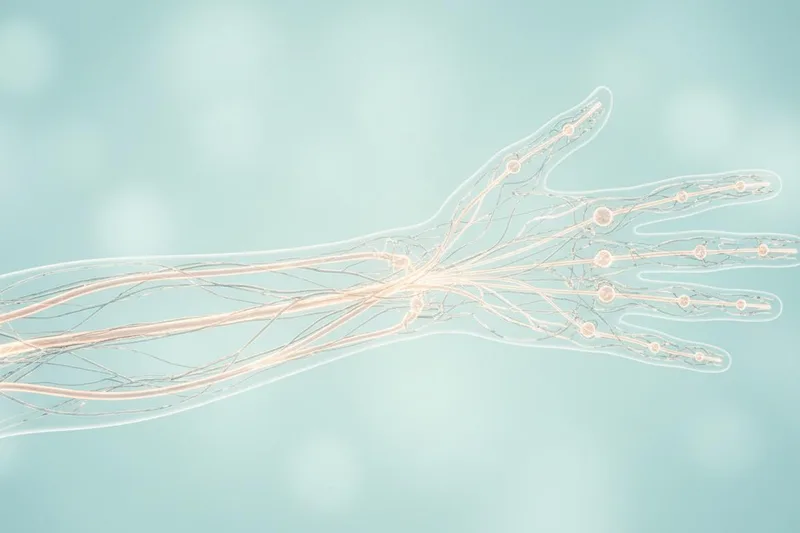
Let's simply learn about the Peripheral Nervous System (PNS) that runs throughout your body!

Let's simply learn about the Peripheral Nervous System (PNS) that runs throughout your body!
Have you ever wondered how information travels around your body? How does it happen when you think to move your hand? Or how do you feel heat, cold, or when someone touches you? Today we're going to talk about an amazing network of nerves that extends outside of our brain and spinal cord that helps with all of this. This is what we call the `(Peripheral Nervous System)` or `(PNS)`.

So, what is this peripheral nervous system (PNS)?

Simply put, the PNS is the network of nerves that runs through your body, except for your brain and spinal cord (which we call the Central Nervous System or CNS). The brain and spinal cord are like two major cities in a country. But there shouldn't be a network of roads connecting those two cities, and every other village and house. That's how the PNS is. It has two main functions: 1. Collecting information from different parts of your body – your limbs, skin, eyes, ears, etc. – and sending it to the brain and spinal cord. 2. Receiving commands from the brain and spinal cord and sending them to the appropriate parts of your body – your muscles, glands, etc. Imagine a small thorn pricking your leg. How would you feel that pain? That's where the nerves in the `(PNS)` take the message "I got a thorn" to the brain. Then the brain decides, "Ah, I need to move my leg away." That command goes back through the `(PNS)` to the muscles in your leg, and you move your leg away. Isn't it amazing? Some of the things that are controlled by this `(PNS)`, for example, your heartbeat and bowel movements, happen automatically . That means you don't even have to think about them. But things like raising your hand and speaking are things you do consciously . The `(PNS)` is involved in both of these.

What is the difference between `(PNS)` and `(CNS)`?

As we mentioned earlier, there are two main parts to our nervous system:
  • Central Nervous System (CNS): This consists of only the brain and spinal cord . This is like the "control center" of our body.
  • Peripheral Nervous System (PNS): This is all the nerves outside the CNS. These nerves start in the spinal cord and some parts of the brain and run to your face and every other part of your body. The word "peripheral" means "around" or "outside the center."

What does the peripheral nervous system (PNS) do?

There are two main subsystems of your `(PNS)`: 1. The `(Autonomic Nervous System)`:These are the processes that you control automatically, without you thinking about them. For example, breathing, heartbeat, digestion. 2. Somatic Nervous System: These are the processes that you control consciously. For example, walking, writing, speaking. It is through these two subsystems that the PNS performs its three main functions:
  • Senses : The PNS is very important in providing information to the brain about the world around you. This is part of the Somatic Nervous System. What you see, hear, feel (cold, heat, touch , pain), taste, smell, all go to the brain through the PNS.
  • Movement: The nerves in the PNS carry commands to every muscle in your body that you can consciously control. This is also part of the Somatic Nervous System. It involves everything from something as simple as scratching your nose to something as complex as dancing.
  • Unconscious processes: These are the essential processes that the brain does to keep you alive without you thinking about them. For example, things like heart rate and blood pressure . The `` Autonomic Nervous System '' helps with this.

How information is brought to the brain (sensation)

Imagine your brain as a very powerful supercomputer. But that computer, without any input from the outside, cannot know anything about the outside world. That is why the PNS is so important. Just as a computer needs a camera, a microphone, and a keyboard to receive information from the outside, the brain also needs the PNS. Your PNS is the way your brain receives information about the outside world. Many of the nerves in the PNS connect to the spinal cord and go to other parts of the body. But there is a special type of nerve called the Cranial Nerves , which are directly connected to the brain. These nerves carry signals from your nose, ears, and mouth, as well as signals from many other senses, to the brain. These cranial nerves are also the ones that provide the sense of touch to the skin of your face, head, and neck. Other peripheral nerves are spread all over your body. These run all the way down to the tips of your fingers and toes. The sensory nerves in your hands and feet also help your brain receive information from the outside world. Motor nerves are what allow you to move different parts of your body.

How to control movement

The peripheral nerves, which branch out throughout your body, carry commands from your brain to your muscles. They're what allow you to move around and do things. They can do everything from simple things like scratching your nose to complex things like juggling three or four balls.

Control of unconscious processes

Your ``Autonomic Nervous System'' works without you thinking about it. It's a part of your brain that's always on, controlling the processes that keep you alive. Your ``PNS'' is essential for your brain to control those processes. For example, your heart rate, breathing, blood pressure, and the movement of food through your intestines.

What are the types of nerve signals?

Your nerves are made up of many nerve cells (Nerve Cells or Neurons). These nerve cells have a long arm-like part called an axon . These nerve cells and their axons are twisted together to form nerve fibers. It's like sewing thread made by twisting several threads together. Some of the nerves in these nerve bundles carry information to the brain, while others carry information away from the brain. There are three main types of nerve signals:
  • Sensory Nerves: These carry information to the brain and spinal cord. They either connect directly to the brain via the cranial nerves , or they carry information to the spinal nerves, which then travel to the spinal cord. Sensory nerves that connect to the spinal cord are located at the back of the spinal cord.
  • Motor Nerves: These carry commands from the brain to various parts of the body. These carry information only outside the brain. Motor nerves connect to the spinal cord at the front. This means that these nerves are only there to send commands to move muscles .
  • Autonomic Nerves: These are the nerves that control the automatic functions of your body's organs and systems. Autonomic nerves often have mixed nerve fibers. Some carry commands from the brain to the appropriate location, while others carry information about the functioning of those organs back to the brain.

How does the PNS help other senses?

The Autonomic Nervous System, which is part of your PNS, helps your brain control all the vital organs in your body. It also helps your brain take care of itself. For example, your heart rate is controlled by your brain. It makes sure your heart pumps blood to your body and brain. Without that blood flow, your brain can die in minutes. The PNS also carries nerve signals from those organs to your brain. For example, the feeling of warmth in your stomach when you drink something hot, or the feeling of fullness after eating.

Where is `(PNS)`?

Your ``(PNS)`` is spread throughout your body except for your spinal cord and brain. It includes:
  • Cranial Nerves: There are 12 pairs of nerves that connect directly to the brain. 11 of these belong to the PNS (the second cranial nerve - the one that controls your vision - belongs to the CNS). These 11 nerves are responsible for your sense of smell, sound, taste, and touch in the skin of your head, face, and neck. One of these 11, the Vagus Nerve, runs down and connects to every major organ from your neck to your colon.
  • Spinal Nerves: These are the 31 pairs of nerves that connect to the spinal cord at approximately the level of each vertebra (bone) in your spine.
All of these nerves branch out into smaller ones that spread throughout your body. They eventually end up in places like your fingertips, toes, or just under your skin.
Think of the nervous system as an upside-down tree. Your brain is the root of the tree, your spinal cord is the trunk. Your ``PNS'' is like the branches and shoots of the tree, spreading out to the rest of your body.

What is `(PNS)` made of?

Your PNS is made up of many different types of nerve cells and structures. Neurons are the control centers of the peripheral and cranial nerves, and they have axons and dendrites, which are like highways that carry information. The types of cells are as follows, and more information about them is provided below:

Neurons

Neurons are cells that send and receive signals throughout your nervous system using electrical and chemical signals. Each neuron has these parts:
  • Cell body: This is the main part of the cell.
  • Axon: This is a long, arm-like part that extends out from the cell body. At the end of the axon are several finger-like extensions, where the neuron's electrical signal is converted into chemical signals. These extensions, called synapses , connect to other nearby nerve cells.
  • Dendrites: These are the small, branching structures on the cell body (the name comes from a Latin word meaning "tree-like"). Dendrites are where chemical signals from the synapses of other neurons are received.
  • Myelin: This is a thin layer of fatty chemical compounds. Myelin surrounds the axons of many neurons, acting as a protective sheath.
Neuronal connections are very complex. The dendrites of a single neuron can connect to thousands of other synapses. Some neurons are long, some are short. This depends on where they are in the body and the function they perform.

Glial cells

Glial cells (pronounced gl-yal) have many different jobs. They help develop and maintain neurons when you're young, and they also manage how neurons work throughout your life. They protect your nervous system from infection, regulate the chemical balance of your nervous system, and form the myelin sheath around the axons of neurons. There are ten times more glial cells than neurons in your nervous system.

What are the common diseases and conditions that affect this nervous system?

Peripheral Neuropathy is a condition where your peripheral nervous system (PNS) becomes diseased or damaged. This can have many causes. Some common examples include:
  • Type 2 Diabetes: Uncontrolled or untreated type 2 diabetes can damage your peripheral nervous system (PNS). This is why people with diabetes are at risk for losing sensation in their feet and legs. This type of diabetes is the most common cause of peripheral neuropathy.
  • Autoimmune and inflammatory conditions: These include diseases like Lupus, Guillain-Barré syndrome, and Rheumatoid Arthritis.
  • Hansen's disease (better known as leprosy): Although the effects of this disease, which is rare in developed countries, are more visible on the skin, it can also damage the PNS.
  • Congenital and genetic conditions: These are problems you are born with. Genetic conditions are those inherited from one or both parents.
  • Infections: Nerve damage can be caused by viruses such as HIV or bacteria such as Borrelia burgdorferi, which causes Lyme disease. Another common example is shingles, which can cause nerve pain for a while.
  • Medications and medical procedures: Some types of antibiotics and chemotherapy drugs for cancer can damage the PNS. This type of nerve damage can also occur as a side effect of surgery.
  • Poisons and toxins: Toxic heavy metals such as mercury or lead can damage the PNS. Many industrial chemicals can also cause this type of damage.
  • Trauma: Accidents can cause nerve damage. It can be long-term or permanent. Swelling caused by injury can also cause nerve compression in the PNS. Carpal Tunnel Syndrome and Sciatica are examples of conditions caused by nerve compression.
  • Tumors: Both malignant and benign tumors can interfere with the function of your PNS.
Your `(PNS)` can also show the effects of conditions that affect any part of your `(CNS)`. While these may not directly affect the `(PNS)`, they can interfere with the way it works. Symptoms of problems with the peripheral nervous system (PNS) depend on the type of nerve affected. Damage to the motor nerves can affect muscles in the following ways:
  • Weakness.
  • Muscle twitching, jerking, trembling, or twitching.
  • Muscle wasting (wasting).
  • Loss of control.
Damage to the sensory nerves causes these symptoms:
  • Reduced or lost sense of touch in the affected area: When the sense of touch is reduced, it can feel like you are wearing gloves or something that blocks your touch. You may also lose the ability to feel temperature or vibration. If this condition affects the hands or feet, simple tasks like walking or buttoning a shirt can become very difficult.
  • Numbness or loss of feeling (Paresthesia): This is similar to a tingling sensation in an arm or leg. In other words, it is a "pins and needles" sensation in the affected area.
  • Neuropathic pain: This often feels like a burning or sharp pain around the affected area. Sometimes, the pain can be so severe that you can't sleep or do normal activities. In some conditions, such as Allodynia, the pain can be felt even when something soft, like clothing or bedding, touches your body.
Damage to the autonomic nerves can affect these organs and systems:
  • Circulatory system: Damage to the autonomic nervous system can interfere with the body's ability to manage blood pressure.
  • Digestive system: Depending on the part of the digestive system affected, digestive problems may occur.
  • Skin and temperature control: People with autonomic nerve damage may have difficulty staying comfortable in hot weather. They may sweat excessively (hyperhidrosis) or not at all (anhidrosis).

What are the common tests done to check the health of this part of the body?

There are many tests that can help diagnose conditions that affect your PNS. The most common test is a neurological exam . Your doctor will ask you to use different parts of your body, especially your arms, hands, legs, and feet, in certain ways. Some of the most common tests include:
  • Blood tests: These can detect a wide range of problems, from immune system problems to toxins and poisons, especially metals like mercury or lead.
  • Nerve conduction tests .
  • Electromyogram (EMG).
  • Nerve ultrasound `(Nerve ultrasound)` .
  • Nerve biopsy .
  • Genetic testing .
  • Magnetic Resonance Imaging (MRI) .

What are the common treatments for this organ?

Treatments for PNS-related problems are as varied as the problems themselves. In many cases, treating the underlying cause of PNS problems can help alleviate the effects on that system. Also, treatments that work for one condition (or similar conditions) may not work for other types of problems. Possible treatments include, but are not limited to:
  • Medications: There are many medications available to treat PNS problems. These can come in various forms, such as injections, oral medications, or slow-release patches.
  • Surgery: Surgery can help reconnect severed nerves and relieve pain caused by pinched nerves.
  • Transcutaneous Electrical Nerve Stimulation (TENS): This uses a mild electrical current to disrupt the way nerves transmit pain signals.
  • Nerve ablation: This procedure intentionally damages a misbehaving nerve. This damage stops the misbehaving nerve from sending signals to the brain, which can help treat chronic pain.
  • Physical therapy: This can help you recover from injuries or medical procedures, or reduce pain symptoms. It can also help you adjust to changes in your nervous system.
  • Acupuncture: In this method, very fine needles are inserted into various points on your body. Although this method is known as an ancient Chinese method, its use in modern medicine is increasing. Many doctors, especially anesthesiologists or pain management specialists, use acupuncture to treat nerve-related problems.
  • Devices and wearable equipment: This includes medical devices, such as braces, canes and walkers, and things like prescription shoes.

How can I protect myself from diseases and problems associated with `(PNS)`?

The key is to avoid many of the conditions that can damage the `(PNS)`. Here are some of the most important things you can do:
  • Eat a balanced diet:Some vitamin deficiencies, especially vitamin B12 deficiency, can affect your nervous system and cause serious problems. Other vitamins, especially B6, are toxic when taken in excess, which can cause `(Peripheral Neuropathy)`.
  • Stay physically active and maintain a healthy weight: This is important to prevent injuries that can damage your nerves. This, along with your diet, can help prevent or delay the development of type 2 diabetes, which can damage your PNS over time.
  • Wear protective equipment when necessary: ​​Injuries are a major cause of nerve damage. By using protective equipment at work and play, you can protect yourself from these injuries and limit the severity of the injuries.
  • Manage chronic conditions as recommended: If you have a chronic condition that can affect your (PNS), especially type 2 diabetes, it is important to manage it as recommended by your doctor. This can help limit the effects of the condition or delay the time it takes for it to get worse.

Finally, what to remember (Take-Home Message)

Your Peripheral Nervous System (PNS) is a very important part of your life. It helps you move around and carries vital information from your senses to your brain. Prevention is the key when it comes to caring for this nervous system. If you have a condition that affects your PNS, doctors have a wide range of ways to diagnose and treat it. Even with incurable conditions, you can usually limit the impact that symptoms have on your life. So, if you experience anything unusual, such as pain, numbness, or weakness, it's important to seek medical advice without ignoring it.
Peripheral nervous system, PNS, nerves, brain, spinal cord, neuropathy, sensation, movement, autonomic function, neuropathic pain
⚠️ Important: The medical articles and information on Nirogi Lanka are for general awareness only, and are by no means a substitute for professional medical advice, diagnosis, or treatment. For any medical problem you have, consult a qualified physician immediately.

💬 Comments (0)

No comments yet. Be the first to share your thoughts here.

Add Your Comment

Please calculate: 3 + 6 =
Let's simply learn about the Peripheral Nervous System (PNS) that runs throughout your body!

Let's simply learn about the Peripheral Nervous System (PNS) that runs throughout your body!

Have you ever wondered how information travels around your body? How does it happen when you think to move your hand? Or how do you feel heat, cold, or when someone touches you? Today we're going to talk about an amazing network of nerves that extends outside of our brain and spinal cord that helps with all of this. This is what we call the `(Peripheral Nervous System)` or `(PNS)`.

So, what is this peripheral nervous system (PNS)?

Simply put, the PNS is the network of nerves that runs through your body, except for your brain and spinal cord (which we call the Central Nervous System or CNS). The brain and spinal cord are like two major cities in a country. But there shouldn't be a network of roads connecting those two cities, and every other village and house. That's how the PNS is. It has two main functions: 1. Collecting information from different parts of your body – your limbs, skin, eyes, ears, etc. – and sending it to the brain and spinal cord. 2. Receiving commands from the brain and spinal cord and sending them to the appropriate parts of your body – your muscles, glands, etc. Imagine a small thorn pricking your leg. How would you feel that pain? That's where the nerves in the `(PNS)` take the message "I got a thorn" to the brain. Then the brain decides, "Ah, I need to move my leg away." That command goes back through the `(PNS)` to the muscles in your leg, and you move your leg away. Isn't it amazing? Some of the things that are controlled by this `(PNS)`, for example, your heartbeat and bowel movements, happen automatically . That means you don't even have to think about them. But things like raising your hand and speaking are things you do consciously . The `(PNS)` is involved in both of these.

What is the difference between `(PNS)` and `(CNS)`?

As we mentioned earlier, there are two main parts to our nervous system:
  • Central Nervous System (CNS): This consists of only the brain and spinal cord . This is like the "control center" of our body.
  • Peripheral Nervous System (PNS): This is all the nerves outside the CNS. These nerves start in the spinal cord and some parts of the brain and run to your face and every other part of your body. The word "peripheral" means "around" or "outside the center."

What does the peripheral nervous system (PNS) do?

There are two main subsystems of your `(PNS)`: 1. The `(Autonomic Nervous System)`:These are the processes that you control automatically, without you thinking about them. For example, breathing, heartbeat, digestion. 2. Somatic Nervous System: These are the processes that you control consciously. For example, walking, writing, speaking. It is through these two subsystems that the PNS performs its three main functions:
  • Senses : The PNS is very important in providing information to the brain about the world around you. This is part of the Somatic Nervous System. What you see, hear, feel (cold, heat, touch , pain), taste, smell, all go to the brain through the PNS.
  • Movement: The nerves in the PNS carry commands to every muscle in your body that you can consciously control. This is also part of the Somatic Nervous System. It involves everything from something as simple as scratching your nose to something as complex as dancing.
  • Unconscious processes: These are the essential processes that the brain does to keep you alive without you thinking about them. For example, things like heart rate and blood pressure . The `` Autonomic Nervous System '' helps with this.

How information is brought to the brain (sensation)

Imagine your brain as a very powerful supercomputer. But that computer, without any input from the outside, cannot know anything about the outside world. That is why the PNS is so important. Just as a computer needs a camera, a microphone, and a keyboard to receive information from the outside, the brain also needs the PNS. Your PNS is the way your brain receives information about the outside world. Many of the nerves in the PNS connect to the spinal cord and go to other parts of the body. But there is a special type of nerve called the Cranial Nerves , which are directly connected to the brain. These nerves carry signals from your nose, ears, and mouth, as well as signals from many other senses, to the brain. These cranial nerves are also the ones that provide the sense of touch to the skin of your face, head, and neck. Other peripheral nerves are spread all over your body. These run all the way down to the tips of your fingers and toes. The sensory nerves in your hands and feet also help your brain receive information from the outside world. Motor nerves are what allow you to move different parts of your body.

How to control movement

The peripheral nerves, which branch out throughout your body, carry commands from your brain to your muscles. They're what allow you to move around and do things. They can do everything from simple things like scratching your nose to complex things like juggling three or four balls.

Control of unconscious processes

Your ``Autonomic Nervous System'' works without you thinking about it. It's a part of your brain that's always on, controlling the processes that keep you alive. Your ``PNS'' is essential for your brain to control those processes. For example, your heart rate, breathing, blood pressure, and the movement of food through your intestines.

What are the types of nerve signals?

Your nerves are made up of many nerve cells (Nerve Cells or Neurons). These nerve cells have a long arm-like part called an axon . These nerve cells and their axons are twisted together to form nerve fibers. It's like sewing thread made by twisting several threads together. Some of the nerves in these nerve bundles carry information to the brain, while others carry information away from the brain. There are three main types of nerve signals:
  • Sensory Nerves: These carry information to the brain and spinal cord. They either connect directly to the brain via the cranial nerves , or they carry information to the spinal nerves, which then travel to the spinal cord. Sensory nerves that connect to the spinal cord are located at the back of the spinal cord.
  • Motor Nerves: These carry commands from the brain to various parts of the body. These carry information only outside the brain. Motor nerves connect to the spinal cord at the front. This means that these nerves are only there to send commands to move muscles .
  • Autonomic Nerves: These are the nerves that control the automatic functions of your body's organs and systems. Autonomic nerves often have mixed nerve fibers. Some carry commands from the brain to the appropriate location, while others carry information about the functioning of those organs back to the brain.

How does the PNS help other senses?

The Autonomic Nervous System, which is part of your PNS, helps your brain control all the vital organs in your body. It also helps your brain take care of itself. For example, your heart rate is controlled by your brain. It makes sure your heart pumps blood to your body and brain. Without that blood flow, your brain can die in minutes. The PNS also carries nerve signals from those organs to your brain. For example, the feeling of warmth in your stomach when you drink something hot, or the feeling of fullness after eating.

Where is `(PNS)`?

Your ``(PNS)`` is spread throughout your body except for your spinal cord and brain. It includes:
  • Cranial Nerves: There are 12 pairs of nerves that connect directly to the brain. 11 of these belong to the PNS (the second cranial nerve - the one that controls your vision - belongs to the CNS). These 11 nerves are responsible for your sense of smell, sound, taste, and touch in the skin of your head, face, and neck. One of these 11, the Vagus Nerve, runs down and connects to every major organ from your neck to your colon.
  • Spinal Nerves: These are the 31 pairs of nerves that connect to the spinal cord at approximately the level of each vertebra (bone) in your spine.
All of these nerves branch out into smaller ones that spread throughout your body. They eventually end up in places like your fingertips, toes, or just under your skin.
Think of the nervous system as an upside-down tree. Your brain is the root of the tree, your spinal cord is the trunk. Your ``PNS'' is like the branches and shoots of the tree, spreading out to the rest of your body.

What is `(PNS)` made of?

Your PNS is made up of many different types of nerve cells and structures. Neurons are the control centers of the peripheral and cranial nerves, and they have axons and dendrites, which are like highways that carry information. The types of cells are as follows, and more information about them is provided below:

Neurons

Neurons are cells that send and receive signals throughout your nervous system using electrical and chemical signals. Each neuron has these parts:
  • Cell body: This is the main part of the cell.
  • Axon: This is a long, arm-like part that extends out from the cell body. At the end of the axon are several finger-like extensions, where the neuron's electrical signal is converted into chemical signals. These extensions, called synapses , connect to other nearby nerve cells.
  • Dendrites: These are the small, branching structures on the cell body (the name comes from a Latin word meaning "tree-like"). Dendrites are where chemical signals from the synapses of other neurons are received.
  • Myelin: This is a thin layer of fatty chemical compounds. Myelin surrounds the axons of many neurons, acting as a protective sheath.
Neuronal connections are very complex. The dendrites of a single neuron can connect to thousands of other synapses. Some neurons are long, some are short. This depends on where they are in the body and the function they perform.

Glial cells

Glial cells (pronounced gl-yal) have many different jobs. They help develop and maintain neurons when you're young, and they also manage how neurons work throughout your life. They protect your nervous system from infection, regulate the chemical balance of your nervous system, and form the myelin sheath around the axons of neurons. There are ten times more glial cells than neurons in your nervous system.

What are the common diseases and conditions that affect this nervous system?

Peripheral Neuropathy is a condition where your peripheral nervous system (PNS) becomes diseased or damaged. This can have many causes. Some common examples include:
  • Type 2 Diabetes: Uncontrolled or untreated type 2 diabetes can damage your peripheral nervous system (PNS). This is why people with diabetes are at risk for losing sensation in their feet and legs. This type of diabetes is the most common cause of peripheral neuropathy.
  • Autoimmune and inflammatory conditions: These include diseases like Lupus, Guillain-Barré syndrome, and Rheumatoid Arthritis.
  • Hansen's disease (better known as leprosy): Although the effects of this disease, which is rare in developed countries, are more visible on the skin, it can also damage the PNS.
  • Congenital and genetic conditions: These are problems you are born with. Genetic conditions are those inherited from one or both parents.
  • Infections: Nerve damage can be caused by viruses such as HIV or bacteria such as Borrelia burgdorferi, which causes Lyme disease. Another common example is shingles, which can cause nerve pain for a while.
  • Medications and medical procedures: Some types of antibiotics and chemotherapy drugs for cancer can damage the PNS. This type of nerve damage can also occur as a side effect of surgery.
  • Poisons and toxins: Toxic heavy metals such as mercury or lead can damage the PNS. Many industrial chemicals can also cause this type of damage.
  • Trauma: Accidents can cause nerve damage. It can be long-term or permanent. Swelling caused by injury can also cause nerve compression in the PNS. Carpal Tunnel Syndrome and Sciatica are examples of conditions caused by nerve compression.
  • Tumors: Both malignant and benign tumors can interfere with the function of your PNS.
Your `(PNS)` can also show the effects of conditions that affect any part of your `(CNS)`. While these may not directly affect the `(PNS)`, they can interfere with the way it works. Symptoms of problems with the peripheral nervous system (PNS) depend on the type of nerve affected. Damage to the motor nerves can affect muscles in the following ways:
  • Weakness.
  • Muscle twitching, jerking, trembling, or twitching.
  • Muscle wasting (wasting).
  • Loss of control.
Damage to the sensory nerves causes these symptoms:
  • Reduced or lost sense of touch in the affected area: When the sense of touch is reduced, it can feel like you are wearing gloves or something that blocks your touch. You may also lose the ability to feel temperature or vibration. If this condition affects the hands or feet, simple tasks like walking or buttoning a shirt can become very difficult.
  • Numbness or loss of feeling (Paresthesia): This is similar to a tingling sensation in an arm or leg. In other words, it is a "pins and needles" sensation in the affected area.
  • Neuropathic pain: This often feels like a burning or sharp pain around the affected area. Sometimes, the pain can be so severe that you can't sleep or do normal activities. In some conditions, such as Allodynia, the pain can be felt even when something soft, like clothing or bedding, touches your body.
Damage to the autonomic nerves can affect these organs and systems:
  • Circulatory system: Damage to the autonomic nervous system can interfere with the body's ability to manage blood pressure.
  • Digestive system: Depending on the part of the digestive system affected, digestive problems may occur.
  • Skin and temperature control: People with autonomic nerve damage may have difficulty staying comfortable in hot weather. They may sweat excessively (hyperhidrosis) or not at all (anhidrosis).

What are the common tests done to check the health of this part of the body?

There are many tests that can help diagnose conditions that affect your PNS. The most common test is a neurological exam . Your doctor will ask you to use different parts of your body, especially your arms, hands, legs, and feet, in certain ways. Some of the most common tests include:
  • Blood tests: These can detect a wide range of problems, from immune system problems to toxins and poisons, especially metals like mercury or lead.
  • Nerve conduction tests .
  • Electromyogram (EMG).
  • Nerve ultrasound `(Nerve ultrasound)` .
  • Nerve biopsy .
  • Genetic testing .
  • Magnetic Resonance Imaging (MRI) .

What are the common treatments for this organ?

Treatments for PNS-related problems are as varied as the problems themselves. In many cases, treating the underlying cause of PNS problems can help alleviate the effects on that system. Also, treatments that work for one condition (or similar conditions) may not work for other types of problems. Possible treatments include, but are not limited to:
  • Medications: There are many medications available to treat PNS problems. These can come in various forms, such as injections, oral medications, or slow-release patches.
  • Surgery: Surgery can help reconnect severed nerves and relieve pain caused by pinched nerves.
  • Transcutaneous Electrical Nerve Stimulation (TENS): This uses a mild electrical current to disrupt the way nerves transmit pain signals.
  • Nerve ablation: This procedure intentionally damages a misbehaving nerve. This damage stops the misbehaving nerve from sending signals to the brain, which can help treat chronic pain.
  • Physical therapy: This can help you recover from injuries or medical procedures, or reduce pain symptoms. It can also help you adjust to changes in your nervous system.
  • Acupuncture: In this method, very fine needles are inserted into various points on your body. Although this method is known as an ancient Chinese method, its use in modern medicine is increasing. Many doctors, especially anesthesiologists or pain management specialists, use acupuncture to treat nerve-related problems.
  • Devices and wearable equipment: This includes medical devices, such as braces, canes and walkers, and things like prescription shoes.

How can I protect myself from diseases and problems associated with `(PNS)`?

The key is to avoid many of the conditions that can damage the `(PNS)`. Here are some of the most important things you can do:
  • Eat a balanced diet:Some vitamin deficiencies, especially vitamin B12 deficiency, can affect your nervous system and cause serious problems. Other vitamins, especially B6, are toxic when taken in excess, which can cause `(Peripheral Neuropathy)`.
  • Stay physically active and maintain a healthy weight: This is important to prevent injuries that can damage your nerves. This, along with your diet, can help prevent or delay the development of type 2 diabetes, which can damage your PNS over time.
  • Wear protective equipment when necessary: ​​Injuries are a major cause of nerve damage. By using protective equipment at work and play, you can protect yourself from these injuries and limit the severity of the injuries.
  • Manage chronic conditions as recommended: If you have a chronic condition that can affect your (PNS), especially type 2 diabetes, it is important to manage it as recommended by your doctor. This can help limit the effects of the condition or delay the time it takes for it to get worse.

Finally, what to remember (Take-Home Message)

Your Peripheral Nervous System (PNS) is a very important part of your life. It helps you move around and carries vital information from your senses to your brain. Prevention is the key when it comes to caring for this nervous system. If you have a condition that affects your PNS, doctors have a wide range of ways to diagnose and treat it. Even with incurable conditions, you can usually limit the impact that symptoms have on your life. So, if you experience anything unusual, such as pain, numbness, or weakness, it's important to seek medical advice without ignoring it.
Peripheral nervous system, PNS, nerves, brain, spinal cord, neuropathy, sensation, movement, autonomic function, neuropathic pain
⚠️ Important: The medical articles and information on Nirogi Lanka are for general awareness only, and are by no means a substitute for professional medical advice, diagnosis, or treatment. For any medical problem you have, consult a qualified physician immediately.

💬 Comments (0)

No comments yet. Be the first to share your thoughts here.

Add Your Comment

Please calculate: 3 + 6 =