
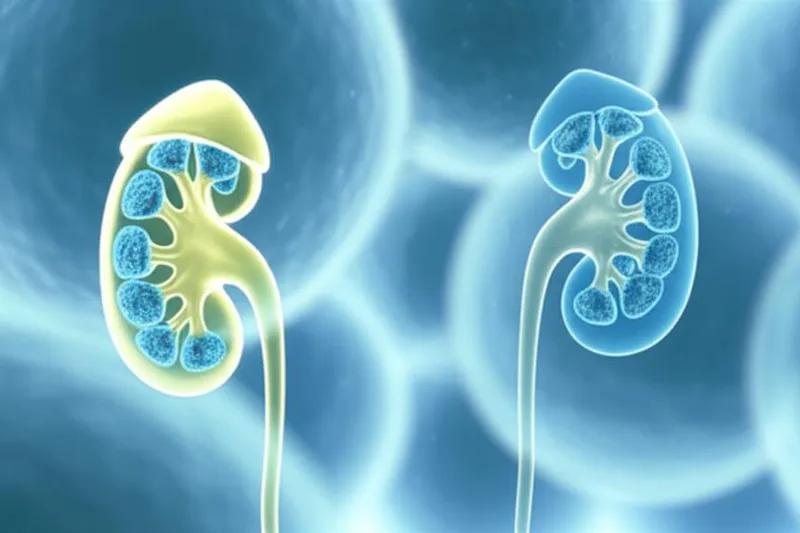
Have you ever thought that your blood pressure is not just something that is out of your control? In fact, there is a very complex and amazing system inside our bodies to control it. That is the system we are going to talk about today. This is called the renin-angiotensin-aldosterone system , or RAAS for short. Don't worry, even though the name is a bit long, let's understand it simply.
What is this RAAS (Renin-Angiotensin-Aldosterone System)?
Okay, so what is the RAAS (Renin-Angiotensin-Aldosterone System)? Simply put, it is an interconnected system of hormones, proteins, and enzymes in our bodies that work together. It is like a well-designed little team. The main job of this team is to control our blood pressure and the amount of fluid in our body, that is, blood volume, over the long term.
Think of the blood vessels in our body as pipes carrying water. The amount of blood that flows through these pipes, and the pressure that that blood exerts on the walls of the pipes, is what we call blood pressure. So, what this RAAS does is increase the reabsorption of salt (sodium) and water back into the body. Then the amount of fluid in the body, that is, the blood volume, increases. It also causes the blood vessels to constrict. That is, it controls the vascular tone of the veins. All of this helps to keep blood pressure at the desired level, or rather, at a healthy level.
There are three main actors in this RAAS system, like the main characters in a play:
- Renin: This is an enzyme.
- Angiotensin II: This is a hormone.
- Aldosterone : This is also a hormone.
To explain these two words a little, enzymes are special types of proteins that help and speed up chemical reactions in our bodies. They help to make some things new and break down some things. Hormones are chemical messengers that coordinate the functions of our bodies. They travel through the blood and tell different organs, muscles, and tissues what to do and when to do it. It's like our body's postal service.
So, what is blood pressure?
When you go to the doctor, they measure your blood pressure with a cuff on your arm. To be precise, this is the pressure created by the blood inside your arteries every time your heart beats. This normal pressure is very important for the proper flow of blood from our heart to every other organ and tissue in our body.
Blood pressure depends on a number of things, such as how much blood your heart pumps and the diameter of the arteries through which your blood flows.
Many things, such as certain medications, high cholesterol levels, and smoking, can affect your blood pressure. However, the main system responsible for controlling blood pressure is the RAAS (Renin-Angiotensin-Aldosterone System). But remember, if you have high blood pressure (hypertension) or low blood pressure (hypotension), it doesn't always have to be a problem with the RAAS system. There could be other causes.
What is the difference between the RAAS and the baroreceptor reflex?
Both of these are very important in controlling blood pressure, but there is a slight difference.
The RAAS (Renin-Angiotensin-Aldosterone System) primarily functions to control long-term blood volume and systemic vascular resistance throughout the body.
On the other hand, the baroreceptor reflex, or as some call it , the baroreflex , works when there is a short-term drop in blood pressure. That is, it responds quickly to small, rapid changes in blood pressure from heartbeat to heartbeat. These baroreceptors, which are located in our arteries, quickly inform our autonomic nervous system about these changes.
What are the important organs involved in the RAAS?
Several organs, glands, and tissues in our body work together to ensure that this RAAS system works properly. The most important of these are:
- Kidneys : These are the first to release renin.
- Liver: The protein called angiotensinogen is made here.
- Blood vessels: These are what constrict and increase blood pressure.
- Lungs: The main location of the ACE enzyme.
- Adrenal glands: These are two small, triangular-shaped glands located above our kidneys. They produce aldosterone.
- Pituitary gland: This is a small gland about the size of a bone, located at the base of the brain, below the hypothalamus. It produces the hormone ADH.
- Hypothalamus: This is a region of the brain that coordinates the activity of our autonomic nervous system and the pituitary gland.
See how many things have to work together to make one thing work!
How exactly does this RAAS system work?
Okay, now let's see how this RAAS (Renin-Angiotensin-Aldosterone System) works. This is a process that occurs in several steps:
1. First, imagine that your blood pressure suddenly drops a little . Or that the amount of blood going to the kidneys decreases. At that moment, our two clever kidneys release an enzyme called renin into the blood.
2. Then this renin goes and breaks down a protein called angiotensinogen , which is made in our liver and added to the blood. It's like cutting paper with scissors. Then a hormone called angiotensin I is formed.
3. But this angiotensin I is not very active, that is, it does not have much effect (inactive). So when it floats through the blood, the angiotensin-converting enzyme (ACE) in our lungs and kidneys breaks it into more pieces. That's when the very active hormone called angiotensin II is formed.
4. Now this angiotensin II is the real workhorse. It suddenly causes the muscular walls of our small arteries, the arterioles, to constrict. Think of it like squeezing a water pipe and the water going faster, and when the veins constrict, blood pressure increases. Not only that, this angiotensin II signals our adrenal glands to release a hormone called aldosterone . It also tells the pituitary gland to release the antidiuretic hormone, ADH (Antidiuretic Hormone), or Vasopressin .
5. Next, aldosterone and ADH work together to tell the kidneys to reabsorb the salt that the body needs, that is, sodium, into the body, that is, to retain it. At the same time, aldosterone tells the kidneys to excrete the potassium that the body does not need in the urine .
6. So, when the amount of sodium in the blood increases, the body also starts to retain water. Then the total blood volume increases, and with it the blood pressure increases. That's how this renin-angiotensin-aldosterone system is completed. The blood pressure returns to normal.
The RAAS system can be activated by several other hormones. For example , corticosteroids, estrogen, and thyroid hormones can also stimulate the system.
What is the relationship between Heart Failure and RAAS?
Now let's look at the relationship between this RAAS system and the condition known as heart failure, which some call heart failure. In fact, this RAAS system plays a very important, and sometimes complex, role in the body of a person with heart failure.
Initially, when the heart is unable to pump blood properly (i.e., when the heart is weak), it is unable to provide enough blood to the body's vital organs. At that time, changes in the RAAS system begin to occur as a way to compensate for this. In other words, the body tries to compensate for this deficiency.
Specifically, the RAAS releases more of a hormone called Angiotensin II in an attempt to compensate for the reduced blood flow. However, this increased release of Angiotensin II over time can worsen heart disease. Scientists believe that this excess Angiotensin II causes heart enlargement and remodeling.
To be precise, when the heart is weak and pumping less blood, the body thinks, 'Oh, my blood pressure is low, I don't have enough blood.' So the RAAS is activated to increase blood pressure and increase blood volume. While that may help in the short term, in the long term, it adds more strain to an already weak heart.
For this reason, when treating people with heart disease, doctors use medications that directly affect the RAAS system and control its activity. These medications stop the RAAS system from working in an unnecessary way. Here are a few examples:
- Beta-blockers
- Angiotensin-converting enzyme inhibitors (ACE inhibitors)
- Angiotensin receptor blockers (ARBs)
- Mineralocorticoid receptor antagonists (MRAs)
These medications reduce unnecessary strain on the heart and help control heart disease.
The most important thing we need to remember is
So, now you can see how important and complex the renin-angiotensin-aldosterone system (RAAS) is for controlling our blood pressure and for heart health. It may seem a bit complicated, but it is an essential system for our body to stay healthy. It works like a little engineer inside our body.
If you have any concerns about your blood pressure, for example, if you have symptoms such as high blood pressure or low blood pressure , or if you feel that your blood pressure is difficult to control, please see your doctor for advice. They are ready to help you and answer your questions. It is very important to be aware of such things, because only then can we make informed decisions about our health. Knowing your body is the best way to live a healthy life.
` Renin-angiotensin-aldosterone system, RAAS, blood pressure, hormones, kidneys, heart disease, hypertension, enzymes, aldosterone, angiotensin


💬 Comments (0)
No comments yet. Be the first to share your thoughts here.
Add Your Comment