

What is ELISA? Let's learn about this lab test in simple terms!

What is ELISA? Let's learn about this lab test in simple terms!

You may have heard the word 'ELISA' from a doctor or a lab report , right? Or maybe it's a new word. So, what is ELISA, what does it look for, and how does it work? Let's talk about it simply today, as if you were talking to a friend. Then you can get a better understanding of this.
What is ELISA? Very simple!

Simply put, ELISA is a special technique used in laboratories. It works like a detective. It looks for certain things in our bodies, such as antibodies, antigens , proteins, and hormones , and measures how much of them we have.

Imagine, this test is done by taking a sample of your blood, plasma, urine, saliva, or cerebrospinal fluid (CSF). The words 'ELISA' stand for 'enzyme-linked immunosorbent assay'. It is sometimes called an EIA test.

Researchers call this ELISA the gold standard of immunoassays . That is, it is a very reliable and accurate method. Tests using this ELISA method can help diagnose a wide range of conditions , from bacterial and viral infections (e.g., Lyme disease, HIV) to hormone-related diseases such as thyroid disease .

Did you know that even home pregnancy tests are based on this ELISA method? They look for the presence of a hormone called human chorionic gonadotrophin (HCG) , also known as the 'pregnancy hormone'.

So, what are these immunoassays?

Okay, let's now look at what immunoassays are. These are tests that rely on the interaction between antigens and antibodies under laboratory conditions (that is, in a lab, not inside your body).

To understand this, it's important to first understand how antibodies and antigens work in your body. Antibodies are substances that make up your immune system . They bind to things that are not good for your body and help it get rid of them. They're like our country's defense forces. AntibodiesAn antigen is any type of marker that antibodies can recognize. These antigens are usually proteins or sugars found on the surface of cells or viruses.

Antigens can be found on the surface of a variety of things , including:

  • Virus
  • Bacteria
  • Allergens - for example, allergens in food, allergens in the air
  • Parasites
  • Proteins
  • Cancer cells
  • Normal cells in your body

So, in immunoassays, scientists in the lab use antigens or antibodies they have on hand to test for the presence of a certain antigen or antibody in a liquid sample (e.g., a blood sample) taken from you. Got it?

Various tests using the ELISA method can detect the presence of specific antigens and antibodies.

What is the ELISA method used for?

Many different medical tests are done using the ELISA method. But the most important thing is that your lab report will not mention 'ELISA test'. The reason is that ELISA is just a method used in the lab, and there are countless tests that can be done using that method. Just like a method used to prepare food, you can prepare different types of food using that method.

One common use of ELISA is to detect and measure antibodies. For example:

  • Antibodies against bacterial, viral, or fungal infections: Examples of bacterial infections include Lyme disease, brucellosis, and syphilis. Examples of viral infections include HIV and hepatitis A, B, and C. An example of a fungal infection is yeast infection (candida).
  • Autoantibodies: These are antibodies that your immune system uses to destroy your own cells. Many autoimmune diseases are caused by these autoantibodies. An example is type 1 diabetes. In this, for some unknown reason, your body sends out autoantibodies that destroy the insulin-producing cells in your pancreas.

Other common uses of the ELISA method are:

  • Identification and assessment of hormone levels:Examples include human chorionic gonadotropin (HCG), follicle-stimulating hormone (FSH), and testosterone.
  • Monitoring disease outbreaks in the community: For example, when there is an outbreak of chlamydia or influenza (we call it 'the flu').
  • Testing donated blood for viral components: for example, HIV.
  • Detecting non-medical drug use: For example, checking if you have amphetamines or cocaine in your system. These are just screening tests.
  • Identifying and assessing levels of tumor markers: These are any substances in your body that provide information about cancer. An example is the prostate-specific antigen (PSA) test for prostate cancer.
  • Identifying dust and food allergies.
  • Checking whether you have been vaccinated against certain diseases: for example, mumps and rubella.

How does this ELISA method work? It's amazing!

Okay, now let's look at how this ELISA test works. There are some small differences depending on whether it's looking for antibodies or antigens . Let's try to understand this by taking an example of looking for antibodies. Most ELISA tests are automated - that is, most of the work is done by machines. But to understand this method, let's think about a test that we do manually.

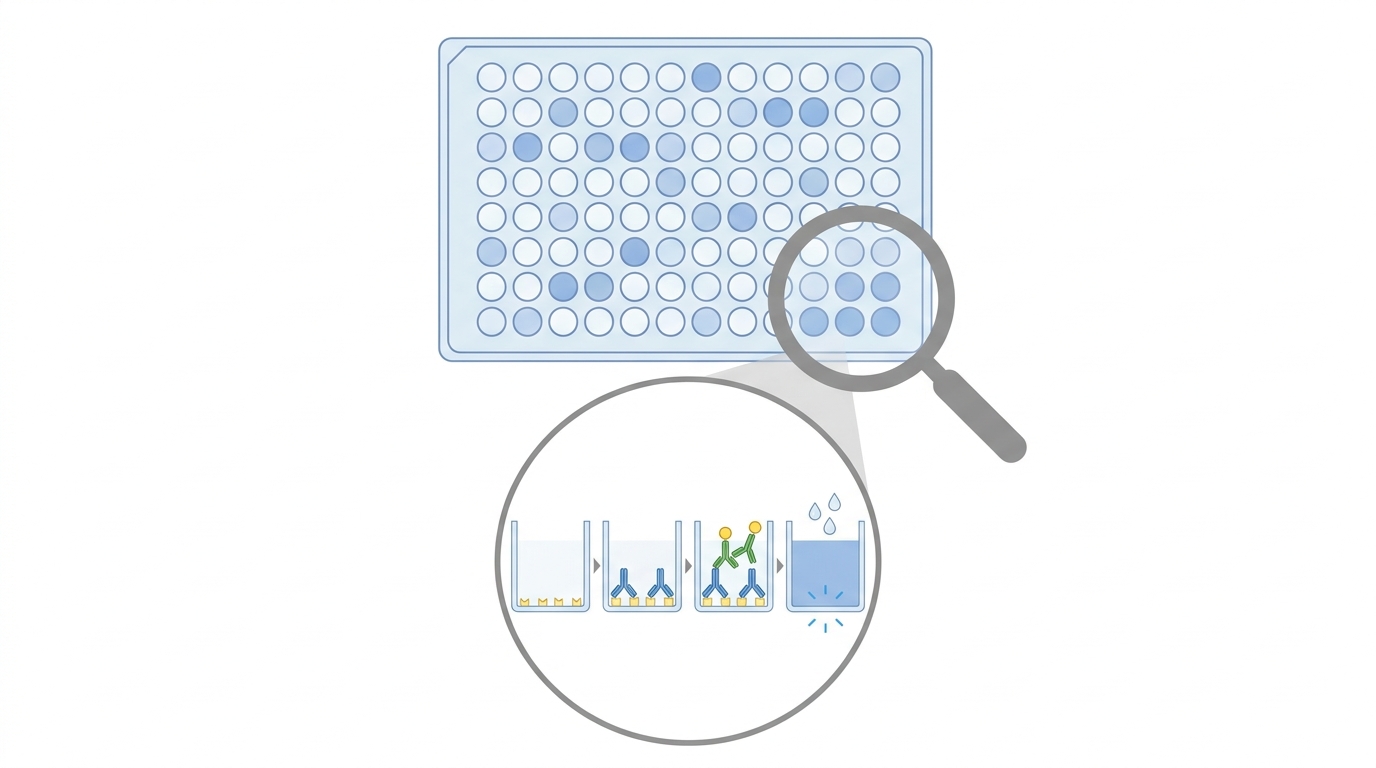
Imagine you are being tested for HIV (human immunodeficiency virus) using an ELISA method, and you have already given a blood sample. First, a medical laboratory scientist or technician applies a piece of the HIV virus (this is what acts as an antigen) to a test tube or plastic plate.

Then, the scientist adds your blood sample to the test tube or plate. If your blood sample contains antibodies to HIV, they will bind to that antigen (in this case, the HIV virus). If your blood sample does not contain HIV antibodies, nothing will happen.

Next, the scientist adds another antibody, this second antibody 'recognizes' those HIV antibodies. That is, this second antibody binds to any HIV antibody that has previously bound to the antigen. This second antibody is linked to an enzyme (a substance that speeds up a chemical reaction). This is where the 'enzyme-linked' part of ELISA comes from.

In the final step, the scientist adds a substance that reacts with the enzyme.This means that if antibodies are present, the substance will change color. In other words, if the test is positive, there will be a color change. If you do not have antibodies against that specific antigen (in this case, the HIV virus), there will be no color change. That is shown as a negative result.

The important thing is that the intensity of the color change, that is, how strong the color is, is proportional to the amount of antibody. So the ELISA method can detect both whether the antibody is present and how much of it is present. Isn't it amazing?

What are the results of an ELISA test?

The results of an ELISA test can vary depending on what is being tested and the lab that performed the test. Most ELISA tests give either a positive or negative result, but sometimes the result can be invalid:

  • Positive result: A positive result means that the test detected what it was looking for (e.g., an antibody, a hormone).
  • Negative result: A negative result means that the test did not detect anything that was being looked for.
  • Invalid result: An invalid result means that something went wrong with the test. This could be a problem with the sample collection, transportation, or testing. If this happens, you will need to take the test again.

However, your doctor will explain the meaning of your results to you.

Should I be worried if my results are abnormal?

Just because your test results are abnormal doesn't necessarily mean you have a disease. Sometimes, errors in sample collection, transportation, or test processing can cause incorrect results.

One disadvantage of the ELISA method is the possibility of false-positive and false-negative results.

  • False-positive result: This refers to the fact that the test result indicates the presence of the substance in question, even though it is actually absent.
  • False-negative result: This refers to a test result that incorrectly indicates that the substance in question is not present, even though it is actually present.

Doctors usually perform additional tests to confirm a diagnosis. ELISA tests are mainly used as screening tests.

If you get an abnormal result, your doctor will talk to you about it. Together, you will decide what to do next.

Remember, no matter what reason you have for undergoing an ELISA test, it is not a final diagnosis.An abnormal ELISA test result does not necessarily mean that you have a serious medical condition. If you get an abnormal result, your doctor will consider several factors and will likely order further tests. Don't be afraid to ask questions.

So, what is the message we should remember from this story?

Okay, so I hope you now have a good idea about the ELISA we talked about. Simply put:

  • ELISA is a special lab test method.
  • This allows us to detect many things in our body, such as antibodies, antigens , and hormones .
  • This method helps to detect various conditions such as pregnancy, infections, hormone levels, and allergies.
  • An ELISA test result can be positive, negative, or invalid .
  • Most importantly: An ELISA result is not a final diagnosis. If you get an abnormal result, don't panic, talk to your doctor, and get further testing if necessary.

If you have any questions, don't be afraid to ask your doctor. He or she is the best person to help you. Stay healthy!

👩🏽‍⚕️ Additional questions (FAQs)

💬 What does the ELISA test, which is a blood test, look for?

ELISA is a highly accurate laboratory test that checks the blood for antibodies produced by the body's immune system when a virus or bacteria enters our body.

💬 What diseases is this test most often used to diagnose?

This is mostly done to confirm 100% whether viral infections like HIV, rubella, some cases of dengue, and coronavirus have seriously affected our bodies.

💬 How accurate is the ELISA test for detecting something like HIV?

A high-quality ELISA test (4th Generation) is extremely accurate (99.9%). However, if this is done a few days after a suspicious behavior, it may not show the disease. It takes at least a month for the most accurate result to come.


` ELISA, blood tests, antibodies, antigens, diagnostics, lab tests

⚠️ Important: The medical articles and information on Nirogi Lanka are for general awareness only, and are by no means a substitute for professional medical advice, diagnosis, or treatment. For any medical problem you have, consult a qualified physician immediately.

💬 Comments (0)

No comments yet. Be the first to share your thoughts here.

Add Your Comment

Please calculate: 2 + 6 =
What is ELISA? Let's learn about this lab test in simple terms!

What is ELISA? Let's learn about this lab test in simple terms!

You may have heard the word 'ELISA' from a doctor or a lab report , right? Or maybe it's a new word. So, what is ELISA, what does it look for, and how does it work? Let's talk about it simply today, as if you were talking to a friend. Then you can get a better understanding of this.

What is ELISA? Very simple!

Simply put, ELISA is a special technique used in laboratories. It works like a detective. It looks for certain things in our bodies, such as antibodies, antigens , proteins, and hormones , and measures how much of them we have.

Imagine, this test is done by taking a sample of your blood, plasma, urine, saliva, or cerebrospinal fluid (CSF). The words 'ELISA' stand for 'enzyme-linked immunosorbent assay'. It is sometimes called an EIA test.

Researchers call this ELISA the gold standard of immunoassays . That is, it is a very reliable and accurate method. Tests using this ELISA method can help diagnose a wide range of conditions , from bacterial and viral infections (e.g., Lyme disease, HIV) to hormone-related diseases such as thyroid disease .

Did you know that even home pregnancy tests are based on this ELISA method? They look for the presence of a hormone called human chorionic gonadotrophin (HCG) , also known as the 'pregnancy hormone'.

So, what are these immunoassays?

Okay, let's now look at what immunoassays are. These are tests that rely on the interaction between antigens and antibodies under laboratory conditions (that is, in a lab, not inside your body).

To understand this, it's important to first understand how antibodies and antigens work in your body. Antibodies are substances that make up your immune system . They bind to things that are not good for your body and help it get rid of them. They're like our country's defense forces. AntibodiesAn antigen is any type of marker that antibodies can recognize. These antigens are usually proteins or sugars found on the surface of cells or viruses.

Antigens can be found on the surface of a variety of things , including:

  • Virus
  • Bacteria
  • Allergens - for example, allergens in food, allergens in the air
  • Parasites
  • Proteins
  • Cancer cells
  • Normal cells in your body

So, in immunoassays, scientists in the lab use antigens or antibodies they have on hand to test for the presence of a certain antigen or antibody in a liquid sample (e.g., a blood sample) taken from you. Got it?

Various tests using the ELISA method can detect the presence of specific antigens and antibodies.

What is the ELISA method used for?

Many different medical tests are done using the ELISA method. But the most important thing is that your lab report will not mention 'ELISA test'. The reason is that ELISA is just a method used in the lab, and there are countless tests that can be done using that method. Just like a method used to prepare food, you can prepare different types of food using that method.

One common use of ELISA is to detect and measure antibodies. For example:

  • Antibodies against bacterial, viral, or fungal infections: Examples of bacterial infections include Lyme disease, brucellosis, and syphilis. Examples of viral infections include HIV and hepatitis A, B, and C. An example of a fungal infection is yeast infection (candida).
  • Autoantibodies: These are antibodies that your immune system uses to destroy your own cells. Many autoimmune diseases are caused by these autoantibodies. An example is type 1 diabetes. In this, for some unknown reason, your body sends out autoantibodies that destroy the insulin-producing cells in your pancreas.

Other common uses of the ELISA method are:

  • Identification and assessment of hormone levels:Examples include human chorionic gonadotropin (HCG), follicle-stimulating hormone (FSH), and testosterone.
  • Monitoring disease outbreaks in the community: For example, when there is an outbreak of chlamydia or influenza (we call it 'the flu').
  • Testing donated blood for viral components: for example, HIV.
  • Detecting non-medical drug use: For example, checking if you have amphetamines or cocaine in your system. These are just screening tests.
  • Identifying and assessing levels of tumor markers: These are any substances in your body that provide information about cancer. An example is the prostate-specific antigen (PSA) test for prostate cancer.
  • Identifying dust and food allergies.
  • Checking whether you have been vaccinated against certain diseases: for example, mumps and rubella.

How does this ELISA method work? It's amazing!

Okay, now let's look at how this ELISA test works. There are some small differences depending on whether it's looking for antibodies or antigens . Let's try to understand this by taking an example of looking for antibodies. Most ELISA tests are automated - that is, most of the work is done by machines. But to understand this method, let's think about a test that we do manually.

Imagine you are being tested for HIV (human immunodeficiency virus) using an ELISA method, and you have already given a blood sample. First, a medical laboratory scientist or technician applies a piece of the HIV virus (this is what acts as an antigen) to a test tube or plastic plate.

Then, the scientist adds your blood sample to the test tube or plate. If your blood sample contains antibodies to HIV, they will bind to that antigen (in this case, the HIV virus). If your blood sample does not contain HIV antibodies, nothing will happen.

Next, the scientist adds another antibody, this second antibody 'recognizes' those HIV antibodies. That is, this second antibody binds to any HIV antibody that has previously bound to the antigen. This second antibody is linked to an enzyme (a substance that speeds up a chemical reaction). This is where the 'enzyme-linked' part of ELISA comes from.

In the final step, the scientist adds a substance that reacts with the enzyme.This means that if antibodies are present, the substance will change color. In other words, if the test is positive, there will be a color change. If you do not have antibodies against that specific antigen (in this case, the HIV virus), there will be no color change. That is shown as a negative result.

The important thing is that the intensity of the color change, that is, how strong the color is, is proportional to the amount of antibody. So the ELISA method can detect both whether the antibody is present and how much of it is present. Isn't it amazing?

What are the results of an ELISA test?

The results of an ELISA test can vary depending on what is being tested and the lab that performed the test. Most ELISA tests give either a positive or negative result, but sometimes the result can be invalid:

  • Positive result: A positive result means that the test detected what it was looking for (e.g., an antibody, a hormone).
  • Negative result: A negative result means that the test did not detect anything that was being looked for.
  • Invalid result: An invalid result means that something went wrong with the test. This could be a problem with the sample collection, transportation, or testing. If this happens, you will need to take the test again.

However, your doctor will explain the meaning of your results to you.

Should I be worried if my results are abnormal?

Just because your test results are abnormal doesn't necessarily mean you have a disease. Sometimes, errors in sample collection, transportation, or test processing can cause incorrect results.

One disadvantage of the ELISA method is the possibility of false-positive and false-negative results.

  • False-positive result: This refers to the fact that the test result indicates the presence of the substance in question, even though it is actually absent.
  • False-negative result: This refers to a test result that incorrectly indicates that the substance in question is not present, even though it is actually present.

Doctors usually perform additional tests to confirm a diagnosis. ELISA tests are mainly used as screening tests.

If you get an abnormal result, your doctor will talk to you about it. Together, you will decide what to do next.

Remember, no matter what reason you have for undergoing an ELISA test, it is not a final diagnosis.An abnormal ELISA test result does not necessarily mean that you have a serious medical condition. If you get an abnormal result, your doctor will consider several factors and will likely order further tests. Don't be afraid to ask questions.

So, what is the message we should remember from this story?

Okay, so I hope you now have a good idea about the ELISA we talked about. Simply put:

  • ELISA is a special lab test method.
  • This allows us to detect many things in our body, such as antibodies, antigens , and hormones .
  • This method helps to detect various conditions such as pregnancy, infections, hormone levels, and allergies.
  • An ELISA test result can be positive, negative, or invalid .
  • Most importantly: An ELISA result is not a final diagnosis. If you get an abnormal result, don't panic, talk to your doctor, and get further testing if necessary.

If you have any questions, don't be afraid to ask your doctor. He or she is the best person to help you. Stay healthy!

👩🏽‍⚕️ Additional questions (FAQs)

💬 What does the ELISA test, which is a blood test, look for?

ELISA is a highly accurate laboratory test that checks the blood for antibodies produced by the body's immune system when a virus or bacteria enters our body.

💬 What diseases is this test most often used to diagnose?

This is mostly done to confirm 100% whether viral infections like HIV, rubella, some cases of dengue, and coronavirus have seriously affected our bodies.

💬 How accurate is the ELISA test for detecting something like HIV?

A high-quality ELISA test (4th Generation) is extremely accurate (99.9%). However, if this is done a few days after a suspicious behavior, it may not show the disease. It takes at least a month for the most accurate result to come.


` ELISA, blood tests, antibodies, antigens, diagnostics, lab tests

⚠️ Important: The medical articles and information on Nirogi Lanka are for general awareness only, and are by no means a substitute for professional medical advice, diagnosis, or treatment. For any medical problem you have, consult a qualified physician immediately.

💬 Comments (0)

No comments yet. Be the first to share your thoughts here.

Add Your Comment

Please calculate: 2 + 6 =