
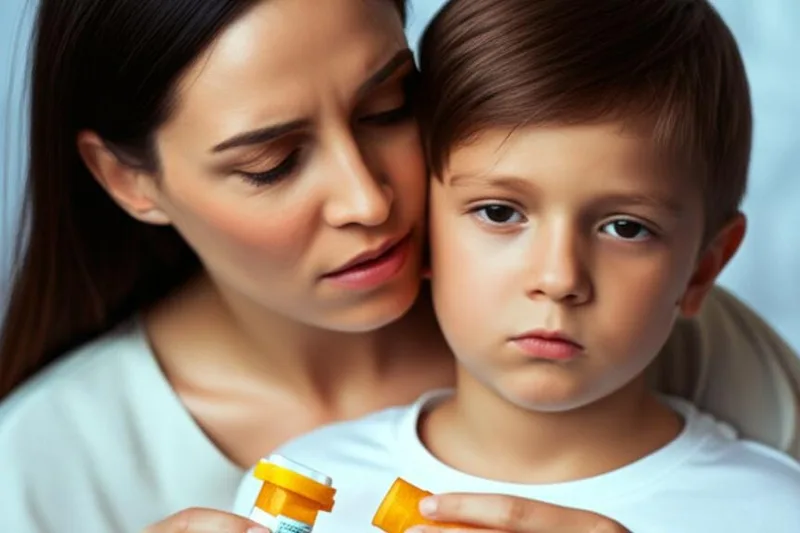
When a child with ADHD ( Attention Deficit Hyperactivity Disorder) is at home, we as parents need to take care of many things. One of the most important things is to give the child the right medication on time. But with the busyness of the day, there are times when you think, "Oh, did I give the medication in the morning?", "I remember giving it twice, but I don't know if that happened," right? This is something that happens to many mothers. But such a small oversight can sometimes be serious. That's what we are talking about today when giving ADHD medication.
Why are we talking so much about these ADHD medication errors?
Simply put, this problem is much bigger than it used to be. A recent study in the US found that calls to poison control centers due to mistakes in giving ADHD medications to children have increased by about 300% in the last 20 years . That's a three-fold increase.
The main reason for this is that doctors are now diagnosing and prescribing more children with ADHD than ever before. As children are being medicated more, so are the number of errors related to medication. This study found that these errors are most common in children between the ages of 6 and 12 .
The important thing is that these types of medication errors are something we can prevent. It just requires us to be a little more careful and know the right methods.
What are these common mistakes?
Let's take a look at the most common mistakes parents make, according to this study. When you see these, you'll realize how simple these things are, but they can happen when you least expect it.
| How the mistake happens | Reported percentage |
|---|---|
| Unknowingly giving or taking medication twice | About 54% (most common) |
| Unknowingly giving or taking medicine from another family member to a child | About 13% |
| Giving or taking the wrong medicine instead of the prescribed medicine | About 13% |
This data shows that the most common occurrence is giving medication twice. Imagine that in the morning, the mother gives the medication and goes to work. The father, without knowing it, gives the child the medication again. This kind of thing is more likely to happen in busy families.
Does the risk vary depending on the type of medication?
Yes, this is a very important point. Not all medications for ADHD are the same. Therefore, the effects of overdosing vary from one medication to another.
Stimulant Medications
These are the most commonly prescribed medications for ADHD. Examples include `Methylphenidate` (known in Sri Lanka under the brand name `Ritalin`) and `Amphetamine` compounds (e.g. `Adderall`). If a child is given a double dose of this medication without realizing it, they may experience symptoms such as headaches, loss of appetite, and stomach upset . However, these symptoms usually go away within a few hours. However, it is not a good idea to make this a habit.
Alpha-1 Adrenergic Blockers
We need to be very careful about this type of medicine. For example, `Guanfacine` and `Clonidine` are medicines that are also used for high blood pressure. These work by calming the body.
If you give this type of medicine twice a day, your child's blood pressure can drop to dangerous levels. This can cause the child to become very sleepy, dizzy, and may lead to serious problems. So be especially careful if you give your child this type of medicine.
What can we do to prevent such oversights?
The best thing to do is to avoid making these mistakes. Here are some simple tips you can follow.
- Record the time of administration: Keep a small notebook or calendar next to the medication bottle. Mark the date and time the medication was administered with a tick mark saying "administered." This will help other family members keep track of it.
- Use a " Pilbox ": You've probably seen those pill boxes that have separate sections for each day of the week. At the beginning of the week, put the pills for that week in this box. That way, you can easily see if you've taken your pills today.
- Communication between parents: If someone in the house is giving the medication, give that person the responsibility. Otherwise, be sure to tell the other person after giving the medication. Leaving a small message like "I gave the medication this morning" can prevent a big mistake.
- Keep your medicines safe: Keep all medicines in a place that children cannot reach, such as a locked cupboard.
- Parents' Note : Sometimes, a child may have ADHD and one of the parents may also have undiagnosed ADHD. This can increase the likelihood of forgetfulness, so it is important for both parents to work together on medication management.
What to do if there is a medication error?
No matter how careful we are, we can still make a mistake at an unexpected time. If that happens, don't panic and follow these steps.
1. Don't panic: First, calm yourself down.
2. Check the child: Check if the child has any symptoms such as unusual drowsiness, fainting, vomiting, difficulty breathing, or seizures.
3. Call the Poison Information Centre: Immediately call the National Poisons Information Centre at the Colombo National Hospital. Their telephone number is 0112686143. Explain clearly what happened, the type and amount of medicine given to the child. They will tell you exactly what to do.
4. Go to the ETU: If the child has serious symptoms such as seizures, excessive sleepiness, or difficulty breathing, immediately take the child to the nearest hospital's Emergency Department (ETU) while calling the Poison Information Center.
5. Inform your doctor: Whatever you do, be sure to inform your child's doctor about the incident.
Take-Home Message
- Medication errors in children with ADHD are much higher now than in the past. The main reason for this is the increase in ADHD diagnoses and prescriptions.
- The most common mistake is inadvertently giving the medication twice.
- Be especially careful with medications like Guanfacine and Clonidine, as they can cause dangerously low blood pressure when given twice a day.
- These mistakes can be largely prevented by simple things like writing down the time of medication and using a pill box.
- If a medication error occurs, do not panic, call the National Poisons Information Center immediately, and if necessary, take the child to the ETU. Always inform your doctor.


💬 Comments (0)
No comments yet. Be the first to share your thoughts here.
Add Your Comment