
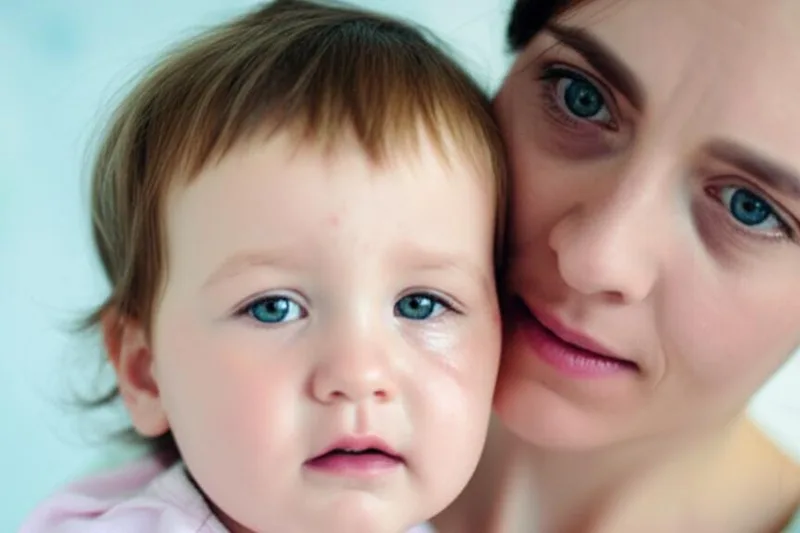
Is your little one's skin a little rough and irritated? Or is your little one constantly sneezing and coughing ? You might think, "Oh, my child always has a cold ." But, sometimes these symptoms can be more than just a common cold, they can be a sign of an allergy.
Don't worry, this is very common. Little ones can have allergic reactions to things we don't think about, such as cow's milk, house dust, or even your beloved pet. The most important thing is to be properly informed about this and do what is necessary. So, let's talk about this in detail .
Food Allergies
Food allergies are very common among young children. Surveys show that a significant proportion of children worldwide have some type of food allergy. Sometimes, they may be allergic to more than one food.
There are several main types of foods that can cause allergies in young children . Let's take a look at what they are.
| Foods that most commonly cause allergies in young children | |
|---|---|
| 🥜 Peanuts | 🥚 Eggs |
| 🥛 Cow's milk and its products | 🌾 Wheat |
| 🌰 Tree nuts like cashews and almonds | 🫘 Soy |
| 🐟 Fish | 🦞 Seafood like crabs and shrimps (Shellfish) |
Imagine that you give your baby a new food, maybe some peanut butter. After a while, your baby gets a rash around his mouth, starts to itch, or starts vomiting. These can be signs of a food allergy. Let's look at some other signs.
| Symptoms of a food allergy |
|---|
| • Stomach ache and vomiting or diarrhea |
| • Skin rash or hives |
| • Red patches around the mouth |
| • Swelling of the face, legs, or arms |
| • Runny nose or stuffy nose |
| • Coughing and feeling like you're choking |
| • Difficulty breathing, especially wheezing |
| • Fainting or loss of consciousness |
Very important: Some food allergies can suddenly become severe and even life-threatening. We call this condition anaphylaxis . In this case, the child has difficulty breathing, blood pressure drops suddenly and may go into shock. If the skin becomes pale, sweats, and feels dizzy, these can be signs of this serious condition. If you see such signs, do not delay and take your child to a hospital's emergency department (ETU) immediately.
For children with severe allergies like this, doctors often recommend that they carry an EpiPen , a device that delivers a dose of adrenaline (epinephrine) in an emergency. It should be used as soon as symptoms begin.
There is no exact "cure" for food allergies. The best thing to do is to completely avoid the food that causes the allergy. Be sure to read the labels on store-bought foods. Sometimes they can contain hidden ingredients like peanut oil.
But there is good news. Some children outgrow these food allergies as they grow older. And new research has found that introducing foods like peanuts to at-risk children between 4 and 6 months of age, under medical supervision, can help prevent serious allergies. But never try these things on your own, always talk to your doctor and follow his or her advice.
Seasonal and household allergies
Have you noticed that your child's symptoms (rhinitis, sneezing ) only increase during certain times of the year? For example, when the trees are blooming and there is a lot of pollen? Then it could be a seasonal allergy, or Hay Fever (Allergic Rhinitis) .
Indoor Allergies
Sometimes the problem lies at home. Even the toys your baby loves to cuddle can be the cause of an allergy. How can that be?
In the dust in our homes, there are tiny creatures that we can't see, called dust mites . These creatures gather in things like pillows, mattresses, and toys. These are the main cause of allergies in the home. Apart from that, mold, cigarette smoke, and perfumes can also cause allergies in children.
The symptoms of both types are very similar:
- Frequent urination
- Runny nose or stuffy nose
- Itchy eyes and watery eyes
- Sometimes earaches (children who have frequent allergies may also have frequent ear infections)
The best thing to do is to try to control these things. Here are some things you can do.
| Tips for controlling household allergies |
|---|
| • Dust cleaning: Sweep and vacuum the house regularly. If you have carpeted floors, a lot of dust can accumulate. |
| • Washing bed sheets: Wash bed sheets and pillowcases in hot water at least once every 2-3 weeks and dry them thoroughly in the sun. |
| • Mattress and pillow covers: Use special zippered covers (allergen-proof covers) on mattresses and pillows that protect against dust mites. |
| • Cleaning toys: Once a week, place your child's soft toys in a plastic bag, seal it well, and place it in the freezer for about 5 hours. This will kill dust mites. |
| • Reduce humidity in the air: Avoid using humidifiers. As humidity increases, mold and dust mites grow more. |
Pet Allergies
Your dog or cat can also cause your child to have itchy, red eyes. Allergies are caused by things like pet dander, saliva, and dead skin cells. Cats are the most common culprits, but dogs can also cause this condition. If you suspect your child is allergic to a pet, talk to your doctor about it.
How are allergies diagnosed and treated?
Your doctor is the best person to find out exactly whether your child has an allergy, and if so, what kind.
One of the best things you can do to help is to keep a diary of your child's symptoms.
- What symptoms does the child have? (e.g., body aches, wheezing, difficulty breathing)
- When do these occur? (e.g., after eating certain foods, only at certain times)
When you go to see your doctor with this information, it will be a great help for him to diagnose the disease accurately. He may even refer you to an allergist.
Treatment options depend on the type of allergy your child has. Typically, your doctor may recommend the following:
- Antihistamines tablets or sprays are used to treat symptoms such as skin irritation and hives.
- Inhalers used for breathing difficulties.
- An EpiPen for emergency treatment in case of a severe, life-threatening reaction (anaphylaxis).
Take-Home Message
- It's normal for young children to have allergies, so don't worry unnecessarily.
- Pay attention to your child's symptoms such as vomiting, frequent crying, and difficulty breathing, especially after introducing a new food.
- Severe symptoms such as difficulty breathing, facial swelling, and fainting (Anaphylaxis) are an emergency. Take the child to a hospital's Emergency Treatment Unit (ETU) immediately.
- Simple things like thoroughly cleaning the house and washing bedding regularly can go a long way in controlling household allergies.
- Most importantly: Do not self-diagnose or prescribe over-the-counter medications. Always talk to your doctor about your child's condition and follow his or her advice.


💬 Comments (0)
No comments yet. Be the first to share your thoughts here.
Add Your Comment