
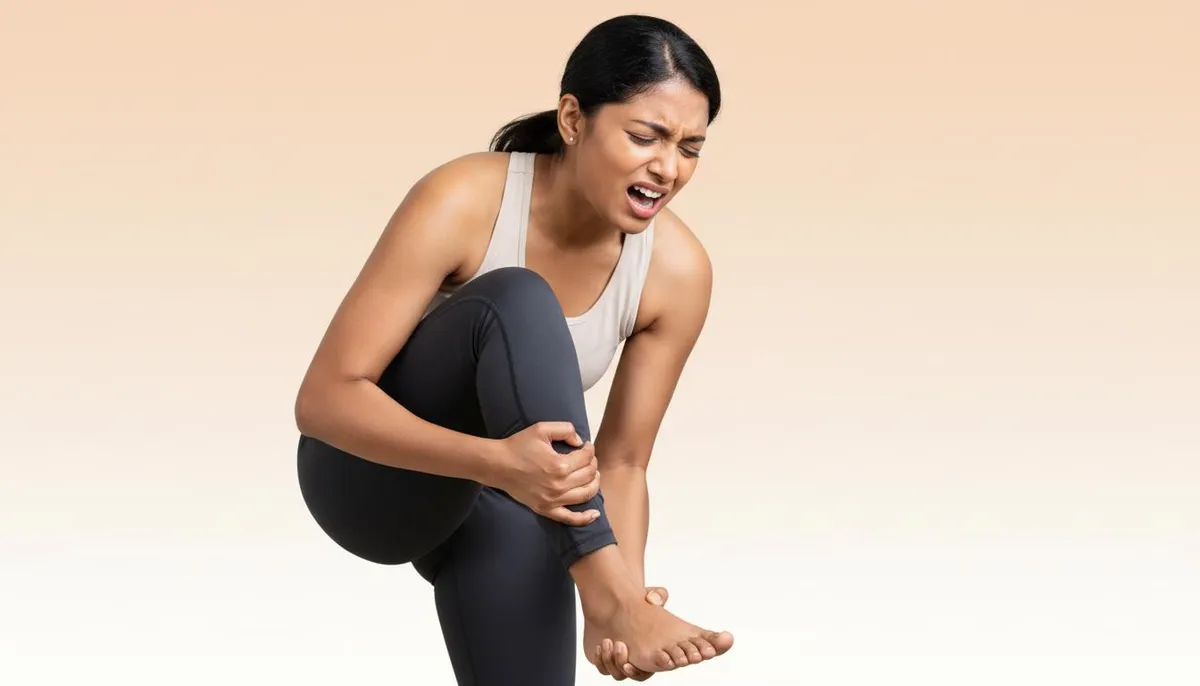
Have you ever experienced a sudden, sharp snap or intense pain in your ankle, knee, or hip while playing weekend sports, jogging in the park, or simply slipping on the stairs at home? Pretty surprising, right? Most of us automatically assume we are dealing with a simple sprain or a pulled muscle. But sometimes, the body's mechanics tell a completely different story. Today, we doctors want to sit down with you and break down a very specific type of bone injury that often masquerades as a minor sprain: the avulsion fracture. Have you ever wondered what happens beneath your skin when a muscle pulls a little too hard on your skeletal system? Let's take an in-depth look together at why this happens, how we recognize it in our clinics, and what you can do to heal properly.
📌 Key Takeaways
- Definition: An avulsion fracture happens when a tendon or ligament pulls so hard on a bone that it rips a small piece of bone away with it.
- Common Sites: Frequently occurs in the ankle, hip, foot, knee, and pelvis, often during sports involving sudden sprints or directional changes.
- Symptoms: Sudden sharp pain, immediate swelling, bruising, and tenderness right over the injury site, sometimes with a felt or heard "pop."
- Diagnosis: Confirmed by your doctor or healthcare team through a physical exam and imaging studies like an X-ray.
- Treatment: Ranges from conservative RICE protocols (Rest, Ice, Compression, Elevation) and crutches to surgical reattachment for displaced fragments.
What Exactly is an Avulsion Fracture?
An avulsion fracture is a specific orthopedic injury where a tendon or ligament—the strong connective cords anchoring muscles to bones or bones to each other—pulls away with such sudden, intense force that it rips a small fragment of bone off with it. Just think about it for a second: your skeletal structure and muscular system work together like a complex system of pulleys and ropes. When you contract a muscle or change direction instantly, that muscle acts on its tendon attachment. Normally, bones easily withstand these forces. But if the contraction is explosive, unexpected, or exceeds the bone's tensile strength at that exact attachment point, the bone gives way instead of the tendon stretching. It is very much like peeling wallpaper off a wall and accidentally bringing a small chunk of plaster along with it. Makes sense, right? This means an avulsion fracture is technically both a soft-tissue injury and a bone break rolled into one.
We see this frequently in younger individuals whose bones are still developing. Why? Because in growing children and teenagers, the ends of bones contain growth plates (epiphyseal plates) and areas where tendons attach that have not yet fully fused into hard, mature cortical bone. These attachment areas represent natural weak points during growth spurts. However, adults are certainly not immune; older adults with weakened bone density or middle-aged weekend warriors pushing their limits can also experience avulsion fractures when tripping or pivoting awkwardly.
Where Do These Types of Breaks Most Often Occur?
Although an avulsion fracture can technically happen anywhere in the body where a powerful tendon pulls on a bone, certain anatomical locations are much more vulnerable than others. Do you recall what we mentioned earlier about sudden directional changes? Let's examine the primary hotspots where these injuries show up in our clinic:
- The Ankle and Foot: One of the most frequent sites. When you roll your ankle outward or inward during a misstep on the sidewalk or a soccer pitch, the lateral or medial ligaments can pull off a tiny sliver of the ankle bone (malleolus) or the base of the fifth metatarsal in the midfoot.
- The Hip and Pelvis: Very common in adolescent athletes participating in sprinting, football, or gymnastics. The powerful hip flexor and hamstring muscles attach to various bony prominences of the pelvis (such as the ischial tuberosity or anterior inferior iliac spine) and can yank a piece of bone away during explosive starts.
- The Knee: The kneecap (patella) and the tibial tubercle (just below the kneecap where the patellar tendon attaches) are prime locations, especially in jumping sports like basketball or volleyball.
- The Elbow and Wrist: Often occurring from falls onto an outstretched hand or sudden throwing motions in baseball or cricket.
Is This a Serious Situation? Do I Have to Go to Urgent Care or the Emergency Department?
You might be asking yourself right now, "Should I really rush off to urgent care or the hospital emergency department for what feels like a twisted ankle?" Have you ever tried to "walk it off" after a painful fall? We strongly advise against brushing off severe joint pain. While not every avulsion fracture requires an emergency room visit, treating any suspected bone injury with respect is critical. If left unmanaged or misdiagnosed as a routine sprain, the pulled bone fragment can heal improperly (malunion), fail to fuse back at all (nonunion), or cause chronic joint instability, persistent pain, and limited range of motion down the road.
So, what should you do? If you experience severe pain, an inability to bear weight, rapid swelling, or visible deformity after an injury, don't wait. Head straight to your local Urgent Care center or hospital Emergency Department (ER / A&E) depending on the severity. In the US and Canada, dial 911 for emergencies; in the UK, call 999; in Europe, dial 112; and in Australia, call 000. Getting a prompt professional evaluation ensures you receive an accurate diagnosis and prevent long-term complications.
Who is Most Affected by This Situation?
Who bears the brunt of these injuries? While anyone can suffer an avulsion fracture from an awkward fall down the porch steps or a slip on an icy driveway during winter, certain groups face a significantly higher risk:
- Adolescents and Teenagers: Active kids aged 10 to 18 are prime candidates because their bones are maturing rapidly, and their tendon attachments are stronger than the growth cartilage or developing bone beneath them.
- Athletes and Fitness Enthusiasts: Soccer players, track-and-field sprinters, gymnasts, figure skaters, and dancers who demand explosive power, rapid acceleration, and sudden deceleration from their bodies.
- Older Adults: While less common than classic hip or wrist fractures from osteoporosis, elderly individuals experiencing sudden falls can occasionally suffer avulsion injuries around the hip or pelvis due to age-related bone weakening.
What Are the Causes of an Avulsion Fracture?
Let's take a closer look at the biomechanical triggers behind these fractures. It all comes down to force, vector, and timing. When a muscle contracts forcefully while simultaneously being stretched (known as an eccentric contraction), the physical tension on the tendon peaks dramatically. Here are the most common scenarios we see in clinical practice:
- Sudden Changes of Direction: Pivoting hard on the soccer field or basketball court while your foot remains planted on the turf.
- Explosive Sprinting or Jumping: Launching off the starting blocks in track or leaping for a rebound in netball or basketball.
- Kicking Movements: Delivering a powerful kick in martial arts or soccer where the leg snaps forward against resistance.
- Falls and Slips: Reaching out an arm to break a fall or slipping on a wet kitchen floor, causing your muscles to reflexively and violently brace the joint.
What Are the Symptoms of This?
How do you know whether you are dealing with a simple soft-tissue sprain or an avulsion fracture? The symptoms can sometimes feel quite similar at first glance, which is why medical imaging is so vital. Here are the hallmark signs to watch for:
- Sudden, Sharp Pain: An immediate, intense pain at the exact moment of the injury, often accompanied by a distinct snapping or popping sound or sensation.
- Rapid Swelling and Bruising: Localized swelling develops quickly around the joint, followed by dark bruising (ecchymosis) as blood vessels rupture near the bone fragment.
- Point Tenderness: Extreme sensitivity when you press gently with your finger directly over the bony prominence where the tendon attaches.
- Functional Impairment: Difficulty or complete inability to move the affected limb, bend the joint, or bear weight. For instance, if you have a hip avulsion, lifting your leg forward becomes remarkably painful and weak.
- Visible or Palpable Deformity: In some cases, the pulled bone fragment may shift noticeably underneath the skin, creating a small bump or gap that your doctor can feel during an exam.
How Does the Doctor Recognize This?
When you visit your Primary Care Physician (PCP), NHS GP, or local Urgent Care clinic, we begin with a thorough clinical history. Remember we talked about this earlier? The details you provide about exactly how the injury happened—whether you heard a pop, how you landed, and where the pain hurts the most—give us vital diagnostic clues.
Following your history, we perform a gentle physical examination. We check your range of motion, assess stability, and press carefully around the joint to pinpoint tenderness. However, because avulsion fractures can mimic simple sprains, we almost always order diagnostic imaging. An X-ray is the standard first step; it allows us to visualize the main bones and spot any displaced bone fragments or irregular gaps. In complex cases—such as pelvic or hip avulsions—we may request an advanced scan like a CT scan or MRI to get a crystal-clear 3D picture of the soft tissues and exact fragment size.
How is it Treated?
Once we have confirmed the diagnosis, treatment depends heavily on how far the bone fragment has pulled away (displacement) and which joint is involved. For minor avulsions where the bone fragment is still very close to its original site, conservative management is usually successful. Here is what that involves:
- The RICE Protocol: Rest the injured area, apply ice packs for 15-20 minutes several times a day to reduce swelling, use compression bandages, and elevate the limb above your heart.
- Immobilization: Using a cast, walking boot, brace, or splint for 3 to 6 weeks to keep the joint completely still, allowing the bone fragment and tendon to knit back together naturally.
- Assistive Devices: Crutches or a walker to ensure you stay off the injured limb while it heals.
- Pain Management: Over-the-counter pain relievers such as ibuprofen or acetaminophen (paracetamol in the UK) to keep you comfortable, always guided by your doctor or pharmacist's recommendations.
- Physical Therapy: Once the initial bone healing is confirmed on follow-up imaging, guided rehabilitation exercises restore muscle strength, flexibility, and proprioception.
| Injury Stage / Characteristic | Clinical Explanation & What You Should Do |
|---|---|
| Acute Phase (0–48 Hours) | Sudden sharp pain, rapid swelling, and bleeding under the skin. Action: Apply ice, elevate, avoid weight-bearing, and seek prompt evaluation at Urgent Care or ER/A&E. |
| Immobilization Phase (Weeks 1–6) | Bone healing and soft tissue repair. Action: Wear your prescribed cast or boot religiously, use crutches, and do not test the healing joint by walking prematurely. |
| Rehabilitation Phase (Weeks 6–12+) | Stiffness and muscle weakness from immobilization. Action: Work closely with a physical therapist on gentle stretches, strengthening, and gradual return to normal activity. |
| Surgical Intervention Cases | Significant bone fragment displacement (usually greater than 1–2 cm). Action: Orthopedic surgical consultation for internal fixation (pins, screws, or sutures) followed by structured recovery. |
Do You Need to Have Surgery?
You might wonder: does every avulsion fracture require an operating room? Not at all! The vast majority of minor avulsion fractures heal splendidly with conservative care, casting, and rest. However, surgery becomes necessary under specific circumstances. If the pulled bone fragment is displaced by a significant distance (usually more than a centimeter), if it rotates out of position, or if it involves a major weight-bearing joint surface that affects overall joint mechanics, surgical reattachment is often the best choice.
During a minor outpatient procedure, an orthopedic surgeon repositions the bone fragment back onto the main bone and secures it firmly using small screws, pins, stitches, or specialized anchors. Following surgery, you will still need a period of immobilization followed by dedicated physical therapy to regain full strength. Pretty reassuring to know that modern orthopedics has such precise solutions when conservative methods aren't quite enough, right?
How Long Does It Take to Recover? How Do I Get Back to Normal?
Patience is your greatest ally during recovery. Healing bone takes time—typically anywhere from 6 to 8 weeks for the bone fragment to fully fuse back to the main bone structure, and several more months for the surrounding tendon, muscles, and ligaments to regain their pre-injury strength and flexibility.
How do you get back to normal safely? Rushing back onto the soccer pitch or running track too soon is the number one cause of re-injury or chronic weakness. Work hand-in-hand with your doctor and physical therapist. Start with passive range-of-motion exercises, progress to isometric strengthening, and gradually reintroduce functional movements like light jogging or agility drills only when cleared. Focus on nourishing your healing body with a balanced diet rich in calcium, vitamin D, and lean proteins—think of wholesome meals like Greek yogurt, leafy greens, whole-grain toast with eggs, or a comforting bowl of chicken vegetable soup to support tissue repair.
✔️ Do's and ❌ Don'ts
- DO seek prompt medical evaluation at your PCP, NHS GP clinic, or Urgent Care if you experience sudden joint pain after a fall or sports twist.
- DO follow your doctor's instructions regarding casting, crutch use, and weight-bearing restrictions meticulously.
- DO commit to your physical therapy exercises once cleared, as they are vital for restoring full joint stability and strength.
- DON'T try to "walk off" severe swelling, sharp pain, or joint instability assuming it is just a minor sprain.
- DON'T remove your cast, brace, or splint early without explicit medical approval from your healthcare provider or orthopedic surgeon.
🚨 When to Seek Emergency Care (Red Flags)
If you notice any of these warning signs, don't wait — call your local emergency number right away (911 in the US/Canada, 999 in the UK, 112 in Europe, or 000 in Australia) or go to the nearest hospital Emergency Department (ER / A&E):
- Obvious bone deformity, crooked alignment, or a protruding fragment pushing against the skin.
- Complete numbness, tingling, or a "pins and needles" sensation in the foot, toes, hand, or fingers below the injury site.
- A cold, pale, or bluish appearance in the injured limb, indicating compromised blood circulation.
- Uncontrollable, severe pain that does not subside with prescribed pain medication and strict elevation.
- Inability to bear any weight whatsoever combined with rapid, spreading redness, warmth, or fever suggesting possible infection after trauma or surgery.
💡 Take-Home Message
- An avulsion fracture occurs when a powerful tendon or ligament rips a piece of bone away during sudden, explosive movements.
- Accurate diagnosis by a medical professional using physical examination and X-rays is essential to rule out simple sprains and prevent long-term joint damage.
- Treatment ranges from conservative RICE protocols and casting to minor orthopedic surgery for displaced bone fragments.
- Dedicated physical therapy and patience during the 6-to-12-week recovery window ensure you return to your active lifestyle safely and strongly.





No comments yet. Be the first to share your question or experience below.