
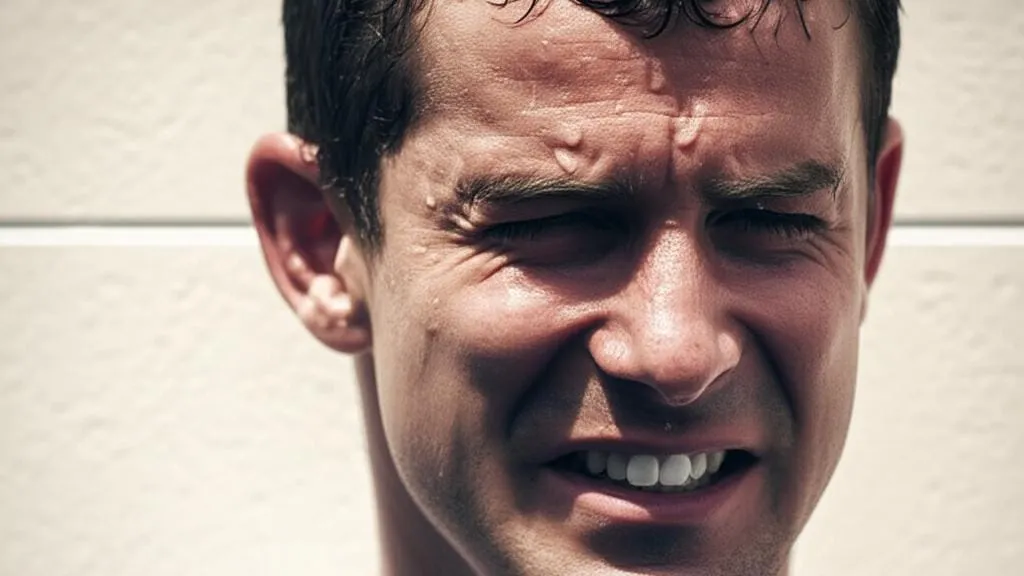
Have you ever woken up with a stiff, aching lower back—or felt a sudden, sharp jolt shooting down your leg—and wondered if your spine is quietly slipping out of place? When people search for andre agassi spondylolisthesis, they are usually looking for more than just sports trivia; they want to know how one of the fittest athletes on the planet ended up barely able to walk, and what that means for their own aching back. Most of us brush off lower back pain as a minor muscle pull from lifting heavy groceries, doing weekend yard work, or sitting too long at an office desk. We rarely stop to think about the actual bones and nerves underneath until the pain refuses to leave, do we? Today, we doctors want to talk directly with you about what happened inside Andre Agassi's spine, what we look for when examining a slipped vertebra in the clinic, and how you can protect your own back before a nagging ache becomes a daily struggle.
📌 Key Takeaways at a Glance
- Structural Slippage: Spondylolisthesis occurs when one spinal bone (vertebra) slips forward over the bone directly beneath it, destabilizing your lower back.
- Nerve Compression: Sciatica happens when that shifted bone or a worn spinal disc presses on your sciatic nerve, sending sharp, electric pain or numbness down your leg.
- Don't Ignore Radiating Pain: Persistent lower back pain—especially pain that travels past your buttock into your leg—should never be brushed off as simple muscle fatigue.
- Your Natural Corset: Strong deep core, hip, and back muscles act as a natural brace that absorbs daily impact and keeps your spinal bones aligned.
- Early Care Wins: Getting an accurate diagnosis and starting targeted physical therapy early can help you avoid reliance on heavy painkillers, repeated steroid injections, or spinal surgery.
What Is Andre Agassi Spondylolisthesis and How Did It End His Career?
Andre Agassi spondylolisthesis refers to the chronic lumbar spinal disorder where one of the tennis legend's lower vertebrae slipped forward over the bone beneath it, severely pinching his sciatic nerve and causing debilitating lower back and leg pain that ultimately forced his retirement in 2006.
Think about it for a second: imagine standing on Arthur Ashe Stadium at the US Open in front of over twenty thousand cheering fans, knowing your spine is physically giving out on you. During the final years of his remarkable 21-year professional career, Andre Agassi was fighting a hidden battle behind the scenes. When sports journalists asked him how long he had been dealing with this agonizing back trouble, his answer surprised millions of fans. He revealed that the deep pain had started the very day his first child, his son Jaden Gil Agassi, was born in October 2001, and persisted as his family grew with his daughter Jaz Elle Agassi. Supported throughout his grueling recovery routines by his wife, fellow tennis icon Steffi Graf, Agassi quietly endured five brutal years of worsening spinal instability.
At first, Agassi and his trainers assumed it was just typical athletic muscle tightness. Be honest, you have probably told yourself the exact same thing after a long week on your feet, haven't you? However, when rest and stretching stopped working, advanced imaging ordered by his medical team revealed three overlapping issues in his lower spine: spondylolisthesis (spinal bone slippage), degenerative disc disease (worn-out spinal cushions), and a bulging disc crowding his nerve roots. By the end of his career, he was sleeping on hard hotel floors during tournaments just to keep his spine straight enough to walk onto the court the next afternoon.
What Happens Inside Your Spine During Spondylolisthesis and Sciatica?
Medical jargon can sound pretty intimidating when you first hear it in a doctor's office, right? Let's break down what actually happens inside your back using everyday terms. Picture your spine as a neat, slightly curved stack of twenty-four building blocks called vertebrae. Between each pair of bone blocks sits a tough, spongy cushion called an intervertebral disc. These discs act like shock absorbers in your car, keeping your bones from grinding together whenever you walk, lift a laundry basket, or run for the bus.
In a healthy spine, tiny joints in the back of each vertebra—called facet joints—lock those building blocks neatly in place. But with spondylolisthesis (pronounced spon-dee-low-lis-THEE-sis), one of those lower spinal bones slips forward out of alignment over the bone directly below it. Imagine a stack of dinner plates on your kitchen counter where one plate near the bottom has slid half an inch forward over the plate underneath. Now that makes sense, right?
When that bone slides forward, it narrows the small tunnel where your spinal nerves exit. In Agassi's case, the shifted vertebra and flattened disc pressed directly against his sciatic nerve—the thickest, longest nerve in your entire body. When this nerve gets pinched or inflamed, we doctors call the resulting symptoms sciatica (lumbar radiculopathy). Instead of just feeling a dull ache in your beltline, you feel a fiery, electric shock, tingling, or numbness shooting through your hip, down the back of your thigh, and sometimes all the way into your foot.
| Spinal Condition or Symptom | Clinical Explanation & Action Plan |
|---|---|
| Mechanical Lower Back Strain | A stretched or microscopic tear in the muscles or tendons supporting your lower spine, causing a localized dull ache or stiffness that stays in your lower back without shooting down your leg. What you should do: Keep moving gently with short walks, apply a warm heating pad for 15–20 minutes, avoid heavy lifting for a few days, and check in with your Primary Care Physician (PCP) or family GP clinic if it lasts past two weeks. |
| Spondylolisthesis (Slipped Vertebra) | A structural shift where one vertebra slides forward over the bone below it—often due to tiny stress fractures (spondylolysis) or age-related disc wear—causing deep lower back ache that worsens when standing orarching backward. What you should do: Book an appointment with your family doctor for a physical exam and standing X-rays, avoid deep back-bending exercises, and start a guided core-stabilization program with a physical therapist. |
| Sciatica (Nerve Root Compression) | Pinching or irritation of the sciatic nerve roots by a slipped vertebra or herniated disc, triggering sharp, burning, or electric-shock pain, pins-and-needles, or weakness traveling down one leg. What you should do: Schedule a prompt evaluation at your doctor's clinic so we can test your leg reflexes and muscle strength, discuss anti-inflammatory treatment options, and refer you for an MRI scan if needed. |
| Degenerative Disc Disease | Gradual drying out, thinning, and loss of height in the shock-absorbing cushions between your spinal bones, reducing spinal flexibility and making bones more likely to shift. What you should do: Focus on low-impact aerobic movement like swimming or cycling, maintain a healthy body weight using whole, nutrient-rich foods, and upgrade your desk chair for proper lumbar support. |
Why Do Fit Athletes and Everyday Active People Develop Slipped Vertebrae?
Have you ever wondered why someone in peak physical conditioning, with six-pack abs and world-class trainers, can still suffer catastrophic spinal wear and tear? It seems almost backward at first glance, doesn't it? Yet in sports medicine and general family practice, we see this pattern all the time.
First, high-impact rotational sports like tennis, golf, gymnastics, and football place enormous mechanical stress on the lower lumbar spine (especially the L4–L5 and L5–S1 levels at the very base of your back). Every time Agassi planted his feet on hard court surfaces, twisted his torso at explosive speeds to return a 130-mile-per-hour serve, or arched his back to smash an overhead shot, his lower vertebrae absorbed massive shearing forces. Over two decades, this repetitive hyperextension and twisting creates microscopic stress cracks in the bony ring of the vertebra—a defect known medically as isthmic spondylolisthesis—while simultaneously flattening the shock-absorbing discs.
Second, athletes are mentally conditioned to compartmentalize pain. In his candid autobiography, Agassi openly discussed how physical agony and emotional exhaustion pushed him toward unhealthy coping mechanisms earlier in his life, and later forced him to rely on repeated pain-numbing procedures just to step onto the court. You don't have to be a Grand Slam champion to fall into this trap. How many times have you popped over-the-counter pain relievers before a long work shift, a weekend 5K run, or a heavy gardening session just to push through the ache? When we mute our body's pain signals without fixing the mechanical instability underneath, small spinal slips quietly progress into severe nerve compression.
HowDid Andre Agassi Manage His Back Pain—and Did He Need Back Surgery?
A lot of patients searching for andre agassi back surgery or his pain treatments ask us in the clinic: "How did he even play professional tennis with a bone pressing on his nerve, and did he have to get his spine fused?" Let's look at how his condition was managed and how we doctors approach spondylolisthesis today.
During his final years on tour, Agassi avoided immediate spinal surgery because a surgical fusion would have permanently ended his ability to twist and sprint at a professional level. Instead, to get through major tournaments like the US Open and Wimbledon, he relied on deeply targeted epidural steroid injections (often referred to as cortisone shots). Guided by real-time X-ray imaging, a specialist guides a thin needle near the pinched sciatic nerve root in the lower back and delivers powerful anti-inflammatory medication. Agassi famously described how these massive needles brought temporary relief by shrinking the swelling around the trapped nerve, allowing him to play for a few more days or weeks at a time.
Look at what happens here, though: cortisone injections calm down the chemical inflammation around the nerve, but they do not slide a slipped bone back into place. That is why his pain always returned once the steroid wore off. Fortunately, once Agassi retired from the brutal daily punishment of professional tennis, he transitioned to comprehensive conservative care—including specialized core rehabilitation, strength training, and lifestyle adjustments—allowing him to manage his back without resorting to invasive career-era spinal fusion. For everyday patients, we doctors reserve surgical procedures like spinal decompression and lumbar fusion only for severe slips that fail six months of dedicated physical therapy or cause progressive nerve weakness.
What Practical Lessons Can We Learn From Agassi's Spine Journey?
Remember how we talked earlier about your body using pain as an early warning alarm? Agassi's five-year battle gives us four straightforward, doctor-approved lessons you can apply to your own daily routine starting today.
- Stop Brushing Off Leg Pain as "Just Getting Older": A mild lower back ache after moving furniture is common. Pain, numbness, or tingling that travels into your buttock, thigh, or calf is a sign that a nerve is being crowded. Never wait years like Agassi did to have nerve pain checked.
- Build Your Deep Internal Brace: When folks hear "core exercises," they often picture doing hundreds of floor crunches. Please don't do that! Traditional sit-ups and crunches actually flex and strain unstable spinal discs. Instead, we recommend working with a physical therapist to strengthen your deep transverse abdominis, glutes, and pelvic floor using safe isometric holds like bird-dogs, gentle bridges, and modified side planks.
- Support Your Spine at Work and During Sleep: You don't need to sleep on the floor like Agassi did on tour! Choosing a supportive medium-firm mattress and placing a pillow under your knees (if you sleep on your back) or between your knees (if you sleep on your side) takes huge pressure off a slipped vertebra.
- Fuel Your Discs with Hydration and Anti-Inflammatory Foods: Your spinal discs are mostly water. Drinking plenty of water throughout the day and eating an anti-inflammatory diet rich in omega-3 fatty acids—like grilled salmon, walnuts, leafy greens, and berries—while limiting ultra-processed takeout helps keep your joints healthy and keeps extra belly weight from pulling your lower spine forward.
✔️ What You Should Do & ❌ What to Avoid
- ✔️ DO see your family doctor early: If lower back pain lasts longer than 2 to 4 weeks or sends shooting sensations down your leg, book a clinical checkup at your Primary Care Physician (PCP) or family GP clinic.
- ✔️ DO bend at your hips and knees: Whenever you pick up a heavy grocery bag, a toddler, or a package off the porch, squat down using your strong leg muscles while keeping the object close to your chest.
- ✔️ DO stay gently active: Walking on flat paths, water aerobics, or stationary recumbent cycling keeps blood and nutrients flowing to your spinal discs without jarring your joints.
- ❌ DON'T twist while lifting: Twisting your spine while holding weight (like shoveling snow, swinging a heavy golf club with stiff hips, or lifting a suitcase into the car trunk) places maximum shearing force on your lumbar vertebrae.
- ❌ DON'T push through sharp, electric pain: If an exercise or stretch triggers shooting pain or numbness down your leg, stop immediately—you cannot "tough it out" when a nerve root is pinched.
- ❌ DON'T rely solely on painkillers or steroid shots: Medications and injections can create a helpful window of pain relief, but you must use that window to do physical therapy and correct the underlying mechanics.
🚨 When to Seek Immediate Emergency Care (Red-Flag Symptoms)
If you or someone near you develops any of these red-flag symptoms, do not wait — call 911 (or 999 in the UK / 000 in Australia) immediately or go straight to the nearest hospital Emergency Room (ER / A&E):
- Loss of Bowel or Bladder Control: Sudden incontinence, leaking urine without realizing it, or finding yourself unable to urinate despite feeling a full bladder (a classic sign of a surgical emergency called cauda equina syndrome).
- Saddle Anesthesia: Sudden numbness, tingling, or loss of sensation in the areas that would touch a horse's saddle—your groin, buttocks, genitals, or inner thighs.
- Rapidly Worsening Leg Weakness or "Foot Drop": Finding that one or both legs suddenly buckle beneath you, or that you cannot lift the front of your foot and keep tripping when you try to walk.
- Back Pain with Systemic Red Flags: Severe, unrelenting spinal pain accompanied by a high fever, chills, unexplained weight loss, or a personal history of cancer.
💡 Key Take-Home Message
- Andre Agassi's struggle with spondylolisthesis and sciatica proves that even the strongest athletes cannot ignore structural spinal instability forever.
- Most cases of mild-to-moderate spondylolisthesis can be managed effectively without surgery when caught early through physical therapy, targeted core stabilization, and smart movement habits.
- Treat shooting leg pain, tingling, or numbness as an important message from your nerves, and partner with your local doctor early to keep your spine strong and pain-free.





No comments yet. Be the first to share your question or experience below.