
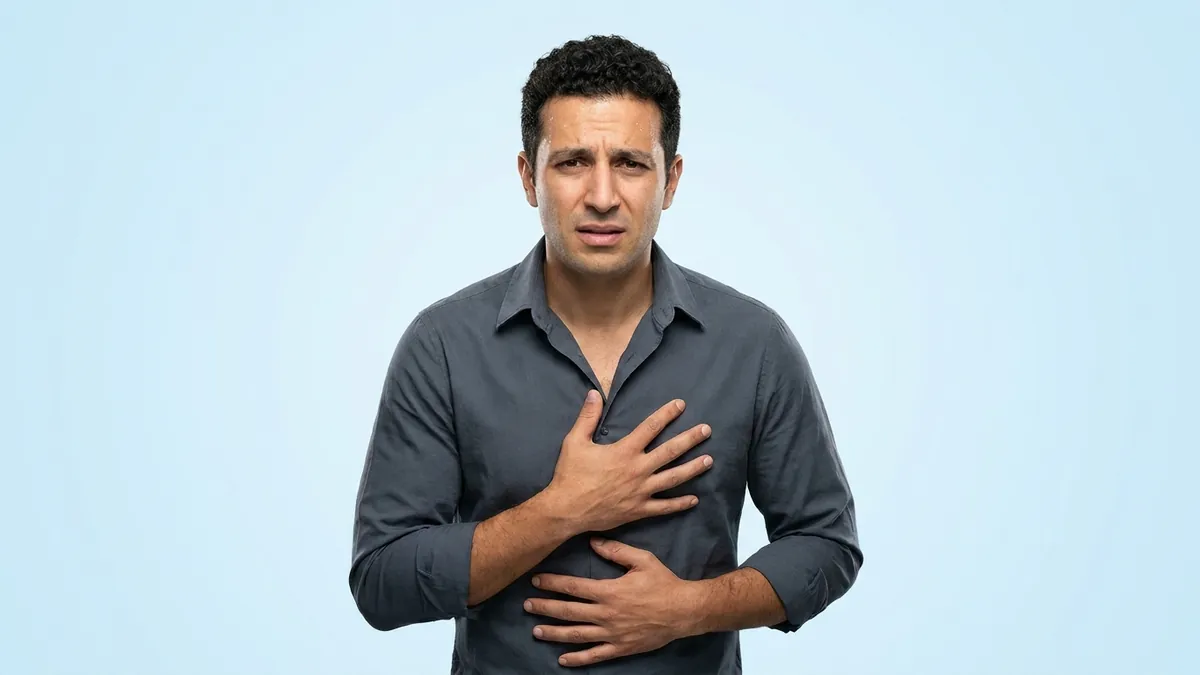
A man in his late forties came into my clinic recently looking pale and clutching his chest after a heavy night out at his local pub. He had been violently sick after too many beers and wings, and he assumed the sharp pain behind his breastbone was just stubborn indigestion—until a quick check of his racing pulse and crackling neck skin told me we needed an ambulance to the hospital Emergency Room (ER / A&E) right away.
📌 Key Takeaways at a Glance
- True medical emergency: Boerhaave syndrome is a full-thickness tear in your food pipe (esophagus) that requires immediate hospital care.
- Classic trigger: It most often happens after forceful vomiting or retching, frequently linked to heavy alcohol intake or large meals.
- Signature symptoms: Sudden, severe chest pain, vomiting, painful swallowing, and a crackling feeling under the skin of your neck or chest.
- Time-sensitive treatment: Receiving intravenous (IV) antibiotics and surgical repair within 24 hours dramatically improves survival and recovery.
What Is Boerhaave Syndrome?
Boerhaave syndrome is a rare, life-threatening medical emergency where a sudden spike in pressure causes a complete, full-thickness tear in the wall of your food pipe (esophagus). Most often triggered by violent vomiting or retching, this rupture lets stomach acid, food, and bacteria leak directly into your chest cavity.
First described in 1724 by the Dutch physician Herman Boerhaave after treating a naval admiral who became violently ill following a massive feast, doctors often call this condition a spontaneous rupture of the food pipe (transmural esophageal perforation). Unlike tears caused by swallowed sharp objects or medical instruments, this burst happens purely from internal pressure building up inside your digestive tract. Pretty alarming when you think about it, right? Because digestive fluids spill straight into the sterile space around your heart and lungs, we doctors treat Boerhaave syndrome as one of the most urgent emergencies in gastrointestinal medicine.
What Happens When Your Food Pipe Actually Ruptures?
Think about it for a second—your food pipe (esophagus) is a flexible, muscular tube about ten inches long that carries food and drink from your throat down into your stomach. Normally, circular rings of muscle at the top and bottom open and close in smooth waves so everything travels in one direction.
Look at what happens when you vomit forcefully: your stomach contracts violently to push its contents upward, while the muscular valve at the top of your food pipe (cricopharyngeus muscle) accidentally stays clamped shut. What do you think happens when all that upward pressure has nowhere to escape? The weakest section of the food pipe—almost always the lower left wall just above your diaphragm—blows open like an overinflated tire. Within seconds, corrosive stomach acid, digestive enzymes, saliva, bacteria, and bits of food pour directly into the delicate middle compartment of your chest (mediastinum), triggering rapid inflammation and deep infection.
What Is the Difference Between Boerhaave Syndrome and Mallory-Weiss Syndrome?
Have you ever wondered why two conditions caused by violent vomiting can have such wildly different outcomes? Patients frequently mix up Boerhaave syndrome with another vomiting-related injury called a superficial lining tear (Mallory-Weiss syndrome), so let us clear that up right away.
In Mallory-Weiss syndrome, forceful retching creates a shallow scratch or split only in the innermost mucous lining of your food pipe. You will typically notice streaks of bright red blood in your vomit, which looks scary, yet the outer muscular wall stays completely intact. Most Mallory-Weiss tears stop bleeding on their own and heal smoothly with rest and acid-reducing medication. In Boerhaave syndrome, however, the tear rips all the way through every single layer of the esophageal wall. Instead of staying inside your digestive tract, fluid and swallowed air escape into your chest cavity, causing severe chest pain and life-threatening infection.
Who Does Boerhaave Syndrome Affect the Most?
While Boerhaave syndrome can technically happen to anyone at any age, we doctors see a very clear pattern in who is most vulnerable. Roughly four out of five cases occur in middle-aged men between 40 and 60 years old, though women and younger adults can certainly experience it too.
We don't usually stop to think about how much physical strain violent retching puts on our body, do we? People who regularly drink heavy amounts of alcohol or eat oversized, rich meals carry the highest risk because both habits trigger intense, forceful vomiting. You also face a slightly higher risk if your esophageal wall is already weakened by chronic acid reflux (gastroesophageal reflux disease or GERD), an upper stomach bulge (hiatal hernia), esophageal ulcers, or conditions that cause repeated vomiting, such as bulimia or severe pregnancy sickness (hyperemesis gravidarum).
What Are the Main Symptoms of Boerhaave Syndrome?
Recognizing the warning signs early can literally save a life. In medical textbooks, doctors look for a classic trio of clues called Mackler's triad—forceful vomiting, lower chest pain, and air trapped under the skin—though only about half of patients show all three at the exact same time. Here are the key symptoms you should watch for:
- Sudden, severe chest pain: This is the primary hallmark symptom, striking abruptly right after an episode of retching or vomiting.
- Nausea and forceful vomiting: Repeated heaving that may bring up food, bile, or occasionally streaks of blood in the vomit.
- Painful swallowing and coughing: Swallowing even a sip of water triggers sharp pain (odynophagia), often accompanied by a painful, persistent cough.
- Rapid, shallow breathing: Breathing becomes noticeably shorter and faster (tachypnea) because pain and fluid buildup prevent your lungs from expanding fully.
- Chest and neck swelling with a crackling feel: Air and fluid leak into your chest tissues, causing visible puffiness and a strange rice-cereal crackling or crunching sensation under the skin of your neck or upper chest (subcutaneous emphysema).
- A tight, rock-hard stomach: The muscles across your upper belly tighten defensively like a rigid board (abdominal guarding) as irritation spreads downward.
- Signs of spreading infection: High fever, shaking chills, drenching sweats, and a racing heart develop quickly as bacteria multiply in the chest cavity.
What Does the Chest Pain Feel Like?
Patients describe the pain of Boerhaave syndrome as an abrupt, excruciating, tearing or ripping sensation deep behind the lower breastbone (sternum) or in the pit of the upper stomach. Unlike ordinary heartburn that creeps up slowly after spicy food, this pain hits like a lightning bolt and frequently radiates straight through to your back or up into your left shoulder.
Taking a deep breath, coughing, or trying to lie flat makes the agony noticeably worse, whereas sitting upright and leaning slightly forward may offer tiny relief. Because it feels so intense, people often mistake it for a massive heart attack (myocardial infarction), a burst stomach ulcer, or a tear in the body's main artery (aortic dissection).
What Are the Causes of Boerhaave Syndrome, and How Does Alcohol Play a Role?
Remember how we talked earlier about that upper muscular valve staying tightly shut during violent vomiting? Anything that creates an abrupt, extreme surge in pressure inside your food pipe can trigger Boerhaave syndrome. While severe vomiting and retching cause roughly 85 percent of cases, intense straining during heavy weightlifting, childbirth, severe asthma coughing fits, epileptic seizures, or straining on the toilet can occasionally spark the same pressure spike.
Alcohol plays a major, double-sided role here. First, heavy drinking—whether bingeing on pints at a neighborhood bar, cocktails at a party, or wine over a big dinner—irritates your stomach lining and triggers violent, repeated vomiting. Second, alcohol dulls your nervous system's reflexes, disrupting the split-second coordination that normally relaxes your upper esophageal valve when your stomach heaves. If you find yourself vomiting blood after drinking alcohol alongside sharp chest pain, never brush it off as a bad hangover.
What Are the Possible Complications If Treatment Is Delayed?
Because your chest cavity is not built to handle stomach acid or digestive bacteria, complications escalate hour by hour when Boerhaave syndrome goes untreated. Without rapid hospital care, patients can quickly develop:
- Deep chest cavity inflammation (mediastinitis): Corrosive stomach acid and enzymes burn and inflame the vital tissues surrounding your heart and windpipe.
- Collection of pus in the chest (empyema): Thick pockets of infected fluid and pus build up inside the lining of your chest cavity.
- Trapped air in the chest and under the skin: Swallowed air escapes through the tear, creating dangerous air pockets around the heart (pneumomediastinum), collapsing a lung (pneumothorax), or bubbling under your neck skin.
- Fluid buildup around the lungs (pleural effusion): Inflammatory fluid floods the space outside your lungs, squeezing them so you cannot draw a full breath.
- Sudden lung failure (Acute Respiratory Distress Syndrome or ARDS): Severe whole-body inflammation floods the tiny air sacs in your lungs, dropping oxygen levels dangerously low.
- Bloodstream infection and shock (septicemia, sepsis, and septic shock): Bacteria enter your bloodstream, causing blood pressure to plummet and vital organs to shut down, which can rapidly become fatal.
To help you understand how these warning signs progress and what action to take right away, we doctors put together this quick comparison guide:
| Symptom or Stage | What It Means & What You Should Do |
|---|---|
| Sudden Tearing Chest Pain After Vomiting | Strongest early warning sign that the wall of your food pipe has burst open under extreme internal pressure. What you should do: Stop eating or drinking immediately—not even sips of water—and call 911 (or 999 in the UK / 000 in Australia) for an ambulance. |
| Crackling or Swollen Neck Skin | Air leaking through the ruptured esophagus has traveled upward and become trapped right beneath your skin. What you should do: Alert Emergency Room (ER / A&E) triage staff to this symptom the second you arrive, as it points directly to a perforated food pipe. |
| Bright Red Streaks in Vomit Without Severe Chest Pain | Often indicates a shallow lining tear (Mallory-Weiss syndrome) rather than a full-thickness rupture, though both require medical evaluation. What you should do: Visit your local Urgent Care center or hospital ER / A&E the same day so doctors can safely rule out a deeper tear. |
| High Fever, Chills, and Fast Breathing | Signals that leaked stomach contents have sparked a serious chest infection (mediastinitis) or fluid buildup around your lungs. What you should do: Seek emergency hospital resuscitation immediately so intravenous (IV) fluids and broad-spectrum antibiotics can be started without delay. |
How Is Boerhaave Syndrome Diagnosed by Doctors?
Diagnosing Boerhaave syndrome takes sharp clinical detective work because its symptoms closely mimic a heart attack, collapsed lung, or inflamed pancreas. If you walk into your Primary Care Physician (PCP) / family GP clinic or a local Urgent Care center with sudden chest pain after vomiting, we doctors will check your vital signs, listen to your lungs, gently feel your neck for trapped air bubbles, and immediately arrange emergency ambulance transfer to the nearest hospital Emergency Room (ER / A&E).
Once you reach the hospital, the emergency team listens closely to your heartbeat with a stethoscope for a distinctive crunching sound timed with each heartbeat (Hamman's sign). They also draw urgent blood tests to check your white blood cell count and infection markers, and if fluid has collected around your lungs, they may sample a small amount to test for stomach acid or food particles.
Which Radiological Scans and Tests Are Used to Confirm It?
Because blood tests alone cannot pinpoint a tear in your food pipe, hospital specialists rely on targeted imaging scans to confirm the diagnosis fast:
- Chest X-ray: Usually the very first bedside image taken, revealing telltale streaks of trapped air in the center of your chest, fluid around your left lung, or a widened chest shadow.
- CT scan of the chest and upper abdomen (computed tomography): The gold-standard diagnostic scan that gives doctors detailed 3D cross-sectional pictures of the exact tear, trapped air bubbles, and fluid pockets.
- Contrast swallow study (esophagram): You swallow a small amount of safe, water-soluble liquid dye (such as Gastrografin) while live X-rays watch whether any liquid leaks outside your food pipe. Doctors avoid standard barium dye first because barium can severely irritate chest tissues if it leaks.
- Upper endoscopy (esophagogastroduodenoscopy or EGD): In select situations, a specialist gently passes a thin, flexible camera scope down your throat to inspect the tear directly, though this is done very carefully so air pumped through the scope does not widen the opening.
How Is Boerhaave Syndrome Treated in the Hospital?
Just like we mentioned a moment ago, speed is everything when treating a ruptured food pipe. As soon as Boerhaave syndrome is suspected in the hospital ER / A&E, your medical team launches a coordinated, step-by-step rescue plan:
- Intravenous (IV) fluids: Because forceful vomiting and internal fluid shifts leave you severely dehydrated, nurses immediately start rapid IV fluids through a vein to support your blood pressure and kidneys.
- Broad-spectrum antibiotics: Powerful intravenous antibiotics (and often antifungal medications) are infused straight into your bloodstream to fight bacteria leaking from your mouth and stomach.
- Urgent surgical consultation: For the vast majority of patients, emergency surgery is the standard, life-saving treatment. Only a small minority of patients with tiny, strictly contained leaks and no signs of spreading infection can be managed cautiously without surgery using close ICU monitoring, IV antibiotics, or a temporary flexible tube placed over the tear via endoscopy (endoscopic stent)—and even then, surgeons keep an operating room ready as backup.
- Primary surgical repair (best within 24 hours): Surgeons aim to stitch the ruptured food pipe closed within 24 hours of the injury. Depending on how stable you are, they may use keyhole chest surgery (video-assisted thoracoscopic surgery or VATS) or make a larger opening between the ribs (open thoracotomy) for fast, complete access.
- Drainage and cleaning (debridement): Alongside repairing the tear, surgeons thoroughly wash out spilled food and infected fluid from your chest cavity, place drainage tubes, and carefully trim away any dead or infected tissue (necrotic tissue).
- Advanced management after 24 hours: If diagnosis is delayed beyond 24 hours, the edges of the tear become swollen, stiff, and fragile, meaning simple stitches may not hold. In these advanced cases, surgeons may need to remove part or all of your damaged food pipe (esophagectomy) and construct a replacement food pipe—usually using part of your stomach or colon—roughly six weeks later once your body has fully recovered.
- Alternative feeding methods: Until your repaired food pipe heals completely, you cannot swallow food or liquids by mouth. Instead, you receive complete nutrition safely through a small feeding tube placed directly into your small intestine (jejunostomy tube) or through a specialized vein line (total parenteral nutrition or TPN).
What Is the Prospect of Recovery After Boerhaave Syndrome?
Your outlook for recovery depends almost entirely on how quickly you receive treatment after the tear happens. When Boerhaave syndrome is diagnosed and repaired within the first 24 hours, survival rates are strong—typically between 80 and 90 percent. However, if treatment is delayed past 24 to 48 hours, severe chest infection and sepsis make recovery much harder and significantly raise the risk of life-threatening complications.
Most patients spend one to three weeks in the hospital, starting in the Intensive Care Unit (ICU) before moving to a regular surgical ward. Before you take your first sip of water again, doctors run a follow-up swallow X-ray to prove the repair is completely sealed. From there, you ease back into everyday eating—moving from clear broths and electrolyte drinks to soft, gentle foods like oatmeal, scrambled eggs, yogurt, and mashed potatoes—before returning to your normal routine.
What Are the Most Important Things You Need to Remember?
If you take only a few facts away from our conversation today, keep these essential reminders front and center:
- Boerhaave syndrome is a life-threatening medical emergency caused by a full-thickness rupture of your food pipe (esophagus).
- It most commonly strikes right after forceful vomiting or violent retching.
- The primary warning signs are sudden, severe chest pain, repeated vomiting, painful swallowing, and crackling air under your neck skin.
- People who drink alcohol heavily or binge eat face a significantly higher risk.
- If these symptoms appear, seek emergency hospital care immediately—getting treated within 24 hours gives you the best chance of a full recovery.
- Emergency surgery, combined with IV fluids and strong antibiotics, is usually required to repair the tear and clear infection.
✔️ What You Should Do & ❌ What to Avoid
- ✔️ Do call an ambulance immediately: If severe chest pain hits after forceful vomiting, head straight to the hospital ER / A&E rather than driving yourself.
- ✔️ Do share the full story with doctors: Tell emergency staff honestly about recent heavy drinking, retching, or vomiting blood so they order the right CT scan fast.
- ❌ Do not eat, drink, or take pills: Avoid swallowing water, antacids, painkillers, or crackers if you suspect a tear—anything you swallow will leak straight into your chest cavity.
- ❌ Do not force yourself to vomit: Never stick fingers down your throat to relieve nausea after heavy drinking or overeating, as violent retching spikes esophageal pressure.
🚨 When to Seek Immediate Emergency Care (Red-Flag Symptoms)
If you or someone near you develops any of these red-flag symptoms, do not wait — call 911 (or 999 in the UK / 000 in Australia) immediately or go straight to the nearest hospital Emergency Room (ER / A&E):
- Sudden, severe, tearing chest pain or upper belly pain right after vomiting or retching.
- Painful swallowing, coughing up blood, or vomiting blood after drinking alcohol.
- A puffy, swollen neck or upper chest that feels bubbly or crackles like dry cereal when pressed.
- Rapid, shallow breathing, dizziness, cold sweats, high fever, or feeling faint.
💡 Key Take-Home Message
- Never dismiss sudden, agonizing chest pain after forceful vomiting as simple heartburn or a pulled muscle.
- Boerhaave syndrome is a full-thickness esophageal rupture that requires urgent hospital imaging, IV antibiotics, and usually surgery within 24 hours.
- Fast emergency action dramatically boosts survival and helps you return safely to normal life.

No comments yet. Be the first to share your question or experience below.