
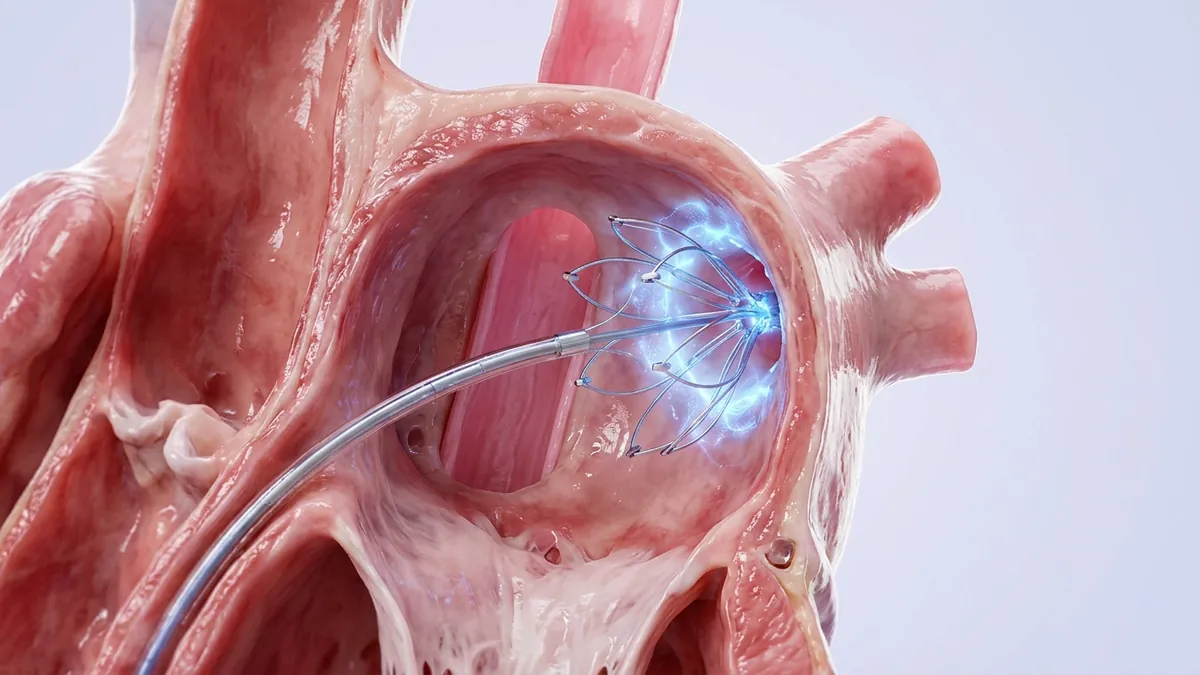
When patients ask us about Pulsed Field Ablation (Farapulse & Sphere-9) for Atrial Fibrillation: Why Non-Thermal Electroporation Protects the Esophagus, they are usually trying to answer one huge question before agreeing to a heart procedure: how can a specialist stop an erratic heartbeat without harming the delicate organs sitting right next door? If you have an irregular, quivering heartbeat (atrial fibrillation, or AFib), you have probably already heard about traditional catheter treatments that either burn or freeze tiny strips of heart tissue. Hearing words like "burning" or "freezing" near your heart and food pipe (esophagus) can make anyone hesitate, right?
Here in our clinics across the United States, the United Kingdom, Canada, and Australia, we doctors are having much more reassuring conversations today thanks to next-generation catheter systems like Boston Scientific's Farapulse and Medtronic's Affera Sphere-9. Instead of relying on extreme temperatures that can seep outward into surrounding chest structures, pulsed field ablation uses split-second electrical pulses to target only the faulty heart muscle cells causing your rhythm trouble. Let's walk through how this technology actually works inside your chest, how Farapulse and Sphere-9 differ, how to prepare step by step, and what your real-world recovery at home looks like.
📌 Key Takeaways at a Glance
- No extreme heat or freezing required: Pulsed field ablation uses microsecond electrical fields (non-thermal irreversible electroporation) rather than thermal burning or cryo-freezing to silence misfiring AFib signals.
- Built-in protection for your food pipe: Heart muscle cells respond to a much lower electrical threshold than smooth muscle or nerve tissue, sparing your esophagus and breathing nerve (phrenic nerve) from thermal injury.
- Two leading catheter designs: Farapulse uses a shape-shifting basket-and-flower catheter built for fast pulmonary vein isolation, while Sphere-9 pairs a dual-energy lattice tip with high-density 3D heart mapping for more complex rhythms.
- Shorter procedure and smoother chest comfort: Most procedures take 45 to 90 minutes under anesthesia, with noticeably less post-procedure chest inflammation and quicker discharge home.
- Blood thinners still matter afterward: Even when your heartbeat feels steady right away, you must keep taking prescribed blood thinners for at least 8 to 12 weeks—and longer if your personal stroke risk score requires it.
How Does Pulsed Field Ablation (Farapulse & Sphere-9) for Atrial Fibrillation Protect the Esophagus?
Pulsed field ablation (Farapulse and Sphere-9) treats atrial fibrillation using ultra-short, high-voltage electrical pulses rather than extreme heat or freezing cold. Through tissue-selective non-thermal electroporation, these microsecond pulses disable misfiring heart muscle cells while leaving your nearby esophagus and breathing nerves structurally unharmed.
Think about the anatomy inside your chest for a second. The upper left chamber of your heart (the left atrium), where four oxygen-rich blood vessels from your lungs (pulmonary veins) plug in, sits right in front of your esophagus—the muscular tube that carries your morning coffee, tea, or toast down to your stomach. How much space separates the back wall of your left atrium from the front wall of your esophagus? Often just 2 to 5 millimeters—barely the thickness of two stacked nickels or pound coins! We rarely stop to think about how tightly packed our chest organs are, do we?
In atrial fibrillation, rogue electrical sparks fire rapidly from sleeves of muscle inside those pulmonary veins, making the upper chambers quiver at 300 to 600 impulses per minute instead of beating smoothly. For over two decades, heart rhythm specialists (cardiac electrophysiologists) walled off those rogue sparks using thermal energy: either radiofrequency ablation (heating tissue above 50°C) or cryoablation (freezing tissue down to -40°C or colder). While both thermal methods work well, heat and cold spread by conduction—just like heat creeping up a metal spoon. In rare cases (roughly 0.02% to 0.1%), thermal spread damaged the esophagus and caused a life-threatening connection between the heart and food pipe (atrio-esophageal fistula). Non-thermal pulsed field energy eliminates that heat conduction pathway altogether.
How Does Non-Thermal Electroporation Differ From Burning or Freezing Heart Tissue?
Have you ever wondered how an electrical field can turn off one type of cell while leaving its immediate neighbor completely intact? Look at what happens at the microscopic level during non-thermal electrical pulse treatment (irreversible electroporation). Every cell in your body is wrapped in a fatty outer skin (the lipid bilayer cell membrane). When a pulsed field catheter delivers tightly timed bursts of microsecond electrical pulses—typically between 1,500 and 2,000 volts lasting tiny fractions of a second—it creates microscopic pores (nanopores) across that outer membrane.
Once permanent nanopores open up, the targeted cell calmly shuts down and is cleared away naturally without boiling proteins or charring structural collagen scaffolding. Here is the breakthrough that makes us doctors smile: different human tissues require vastly different electrical field strengths before nanopores stay permanently open.
- Heart muscle cells (cardiomyocytes): Extremely sensitive, reaching irreversible electroporation at roughly 400 volts per centimeter (V/cm).
- Nerve fibers (such as the right phrenic nerve that moves your diaphragm): Require roughly 1,700 to 3,800 V/cm before sustaining permanent injury.
- Esophageal smooth muscle and blood vessel walls: Require approximately 1,600 to 2,000+ V/cm, while their connective collagen matrix stays intact.
Now that makes sense, right? By calibrating catheter pulses inside that sweet spot above 400 V/cm for heart muscle cells yet safely below damage thresholds for esophageal walls, breathing nerves, and pulmonary vein linings, your specialist silences AFib triggers without narrowing your pulmonary veins (pulmonary vein stenosis) or scorching your food pipe.
Farapulse vs. Affera Sphere-9: How Do These Two Catheter Systems Compare?
When your Primary Care Physician (PCP) or family GP clinic refers you to a hospital cardiac electrophysiology team, you might hear your specialist mention either Farapulse or Sphere-9. Both deliver pulsed field energy, yet they are engineered like two distinct precision tools for different rhythm patterns. What do you think makes a specialist pick one over the other?
Boston Scientific's Farapulse system (cleared by the US FDA in early 2024 following European rollout) is what specialists call a "single-shot" pulmonary vein isolation catheter. Its flexible five-pronged tip (pentaspline catheter) opens inside your left atrium into two shapes: first a small "basket" that nestles inside the mouth of each pulmonary vein, and then a flat "flower" petal shape that presses gently against the rim around the vein. In just a few 2.5-second pulse trains per vein, all four pulmonary veins can be electrically isolated—often cutting total left-atrial catheter dwell time under 30 minutes. It shines brightest for intermittent AFib (paroxysmal atrial fibrillation), where episodes start and stop on their own within seven days.
Medtronic's Affera Sphere-9 system (FDA-approved in late 2024 after strong clinical trials) takes a point-by-point "focal" approach. It features a compressible 9-millimeter wire-mesh sphere (lattice tip) packed with tiny surface microelectrodes that build an ultra-sharp, color-coded 3D electrical map of your heart chamber in real time. Even more remarkably, Sphere-9 is a dual-energy catheter: your electrophysiologist can deliver safe pulsed field energy along the delicate back wall near your esophagus, and—if you also have thick tissue along the right-sided cavotricuspid isthmus causing a sibling rhythm called atrial flutter—toggle seamlessly to temperature-controlled radiofrequency energy without pulling out and swapping catheters. That makes Sphere-9 especially helpful for continuous AFib lasting longer than a week (persistent atrial fibrillation) or redo ablation procedures.
How Should You Prepare Step by Step, and What Clinical Checks Happen First?
Before you ever step into a hospital electrophysiology lab, we doctors start right in the family clinic with a thorough health check. First, we confirm your rhythm on a 12-lead heart tracing (electrocardiogram, or ECG) or wearable patch monitor, check a heart ultrasound (transthoracic echocardiogram) to measure left atrial size and pumping strength (left ventricular ejection fraction, normally 55% to 70%), and run baseline blood tests: kidney function (estimated glomerular filtration rate, or eGFR, ideally above 60 mL/min/1.73m²), electrolytes (potassium kept safely between 4.0 and 5.0 mmol/L), thyroid-stimulating hormone (TSH), and a complete blood count.
Why do we look so closely at kidney function and red blood cell counts with pulsed field ablation? Remember how we talked about electrical pulses popping open cell membranes? If a very high number of pulsed field applications (for instance, well over 70 to 100 pulse deliveries during complex extensive ablation) are delivered in poor contact with heart muscle, stray energy in the bloodstream can pop open red blood cells (intravascular hemolysis), releasing free hemoglobin that kidneys have to filter out. Keeping you well hydrated with intravenous fluids and ensuring crisp catheter-to-tissue contact protects your kidneys effortlessly.
- Uninterrupted blood thinners (4+ weeks before): Most patients take blood-thinning medications (direct oral anticoagulants, or DOACs, such as apixaban 5 mg twice daily or rivaroxaban 20 mg once daily with dinner) consistently before the procedure. Never skip doses unless your specialist gives exact written instructions!
- Clot check scan: Within 24 to 48 hours of ablation—or right in the lab once you are asleep—doctors often perform a specialized throat ultrasound (transesophageal echocardiogram, or TEE) or contrast cardiac CT scan to confirm zero blood clots are hiding in your left atrial appendage.
- Fasting rule: Have nothing to eat or drink after midnight the night before (save for tiny sips of water with approved morning pills).
- Inside the lab (45 to 90 minutes): Under general anesthesia or deep sedation, thin catheters glide up a vein at the top of your thigh (femoral vein) into your heart. Notice one unique safety step: if pulses are needed right next to a heart blood vessel (coronary artery), specialists give preventive intravenous nitroglycerin so the artery cannot temporarily squeeze shut (coronary vasospasm).
- Who must wait (contraindications): Active blood clot inside the heart, untreated bloodstream or chest infection, decompensated fluid overload, or pregnancy.
How Do Thermal Ablation, Farapulse, and Sphere-9 Compare in Real-World Care?
When you are weighing options—whether through Medicare or private insurance prior authorization in the US, NHS specialist cardiac centers in the UK, provincial cardiology programs in Canada, or Medicare/private hospital cover in Australia—seeing how each choice stacks up side by side helps clear away confusion. Below is a practical guide comparing your main ablation pathways and key recovery milestones.
| Option or Recovery Factor | Clinical Explanation & Your Action Step |
|---|---|
| Traditional Thermal Ablation (Radiofrequency or Cryoablation) | Uses conductive heat or extreme cold to scar AFib trigger zones; proven track record, though temperature spread carries a small risk of esophageal irritation, temporary stomach-emptying delay (gastroparesis), or phrenic nerve palsy. What you should do: Ask your electrophysiologist whether thermal energy is still preferred for a specific non-AFib flutter circuit or if pulsed field technology is available at your hospital center. |
| Farapulse Pentaspline Pulsed Field Ablation | Uses a basket-and-flower catheter to isolate all four pulmonary veins quickly with non-thermal electrical pulses; ideal for first-time intermittent (paroxysmal) AFib with rapid procedure times. What you should do: Discuss Farapulse if your AFib comes and goes in episodes and your main goal is fast, esophagus-safe pulmonary vein isolation. |
| Affera Sphere-9 Lattice-Tip Ablation | Combines high-resolution 3D electrical mapping with focal pulsed field and optional radiofrequency energy in one catheter; tailored for persistent AFib, scarred tissue, or repeat ablations. What you should do: Ask about Sphere-9 or focal mapping systems if your AFib lasts weeks continuously or if a previous ablation left residual rhythm gaps. |
| First 48 Hours: Groin Puncture & Hydration Care | Catheters enter through your femoral veins in the groin (often sealed with a tiny dissolvable stitch), and your kidneys flush out harmless cellular byproducts from electroporation. What you should do: Keep the groin site clean and dry, skip heavy lifting over 10 pounds (4.5 kg) for a week, and drink plenty of plain or sparkling water unless you have fluid restrictions for heart failure. |
| Weeks 1 to 12: The Post-Ablation "Blanking Period" | As microscopic heart muscle zones heal and remodel over 8 to 12 weeks, brief fluttery beats or short bursts of AFib can appear without meaning the procedure failed. What you should do: Log any racing episodes on your smartwatch or diary, keep taking every dose of your blood thinner and rhythm pills, and bring that log to your 3-month cardiology review. |
What does recovery feel like back home on your own sofa? Honestly, most patients tell us they expected to feel much more wiped out than they actually do! Because non-thermal pulses stir up far less lining inflammation (pericarditis) around the heart than heat ablation, sharp chest soreness when taking a deep breath is significantly less common, though a mild dry cough from anesthesia tubing or slight chest awareness for two or three days is normal. Stick with easy, comforting meals for the first couple of days—think warm oatmeal or porridge, broth-based chicken soup, steamed vegetables, and baked salmon—while skipping extra-strong espresso, energy drinks, and alcohol, since alcohol is a classic trigger that irritates healing atrial cells.
Be honest: once your pulse feels calm and steady again, you might feel tempted to toss your blood thinner bottle in the drawer, haven't you thought about that? See? That is the single biggest trap we doctors warn every patient to avoid. Long-term stroke protection after ablation is decided by your personal clinical risk factors—age, high blood pressure, diabetes, vascular disease, and prior stroke history (your CHA2DS2-VASc score)—never by how normal your pulse feels on your wrist.
✔️ What You Should Do & ❌ What to Avoid
- ✔️ Do take every scheduled dose of your blood thinner: Uninterrupted anticoagulation for at least 2 to 3 months protects the healing inner heart lining from forming tiny clots.
- ✔️ Do take gentle daily walks after 48 hours: Short, flat strolls around the neighborhood boost circulation without straining your healing groin vein site.
- ✔️ Do check your urine color for the first 24 hours: Drink steady glasses of water after discharge so your urine stays pale yellow; let your care team know if it looks dark tea-colored.
- ❌ Don't lift heavy groceries, suitcases, or gym weights for 7 days: Straining increases pressure in your femoral vein and can pop open a groin bruise or bleeding pocket (hematoma).
- ❌ Don't soak in hot tubs, baths, or swimming pools for 5 to 7 days: Shower gently instead until the tiny groin puncture skin seal has completely closed over.
- ❌ Don't binge on alcohol or high-caffeine energy drinks: Both directly trigger premature atrial beats during your sensitive 8-to-12-week heart healing window.
🚨 When to Seek Immediate Emergency Care (Red-Flag Symptoms)
If you or someone near you develops any of these red-flag symptoms after catheter ablation, do not wait — call 911 (US & Canada), 999 or 111 (UK), or 000 (Australia) immediately, or go straight to the nearest hospital Emergency Room (ER / A&E):
- Sudden neurological warning signs: Facial drooping, arm or leg weakness or numbness on one side, slurred speech, sudden vision loss, or abrupt confusion.
- Expanding groin swelling or active bleeding: A firm, rapidly growing lump (golf-ball sized or larger) or bright blood soaking through your bandage that does not stop after 10 minutes of firm, flat pressure while lying down.
- Crushing chest pain, fainting, or severe breathlessness: Especially chest tightness radiating to your jaw or arm, cold sweats, dizziness, or inability to lie flat—signs that could point to fluid around the heart (cardiac tamponade) or coronary spasm.
- Unexplained fever with painful swallowing days or weeks later: Although pulsed field ablation protects the esophagus, any persistent fever, chills, chest pain when swallowing food, or vomiting dark coffee-ground material during the first month still warrants immediate emergency hospital evaluation.
- Dark reddish-brown urine with very low urine output: A rare sign of red blood cell breakdown straining the kidneys, particularly if accompanied by back pain or swelling.
💡 Key Take-Home Message
- Pulsed field ablation with systems like Farapulse and Affera Sphere-9 silences atrial fibrillation triggers using tissue-selective electrical pulses rather than conductive heat or cold, dramatically protecting your esophagus and breathing nerves.
- Farapulse excels at rapid single-shot pulmonary vein isolation, whereas Sphere-9 combines pinpoint 3D mapping with dual pulsed-field and radiofrequency energy for persistent or complex rhythms.
- Successful recovery hinges on uninterrupted blood thinners, gentle groin care for one week, good hydration, and patience through the 8-to-12-week healing blanking period.




No comments yet. Be the first to share your question or experience below.