
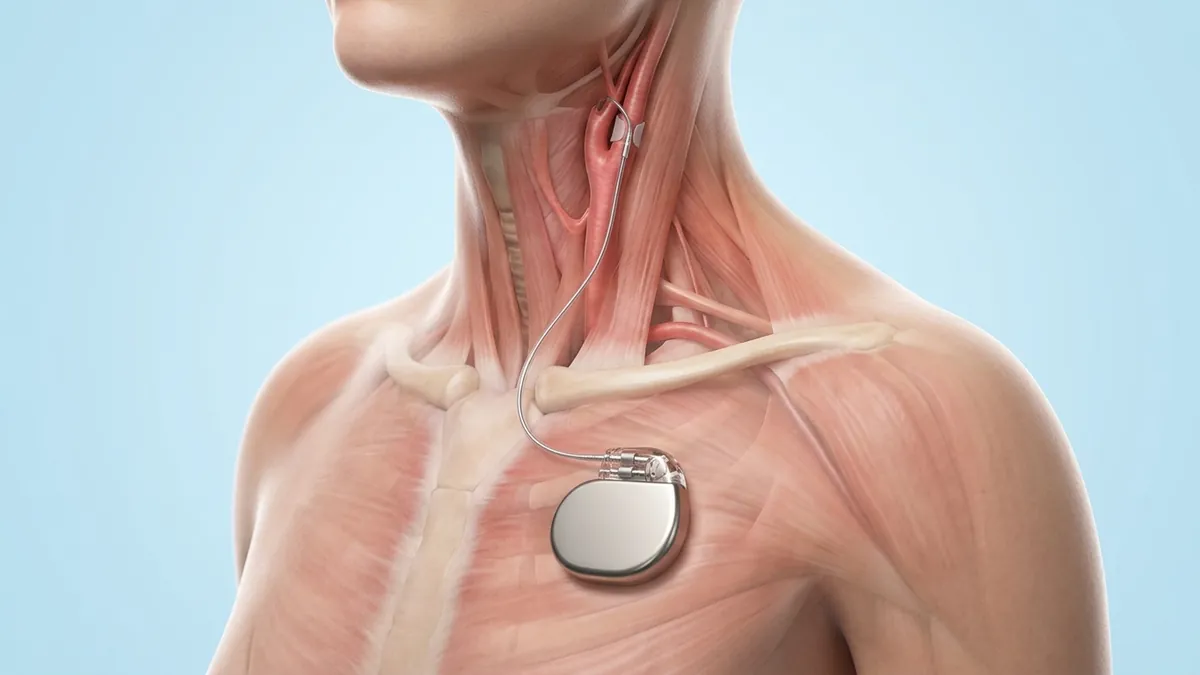
Understanding Barostim Baroreflex Activation Therapy for Heart Failure (HFrEF): Autonomic Nervous System Rebalancing & Battery Life can open a hopeful new door if you are still breathless, tired, or struggling with everyday chores despite taking all your prescribed heart medications. When someone lives with weakened heart pumping syndrome (heart failure with reduced ejection fraction, or HFrEF), daily tablets do heavy lifting—yet sometimes pills alone aren't enough to give you your energy back. Have you ever wondered what options exist when your cardiologist says you don't qualify for a specialized heart-resynchronizing pacemaker? That exact gap is where Barostim steps in.
Be honest—when you hear the words "heart failure implant," you immediately picture wires threaded straight into your heart chambers, don't you? Most people do! Here is what surprises almost everyone we talk to in clinic: Barostim doesn't touch your heart muscle or sit inside your bloodstream at all. Instead, we doctors describe it as a smart, gentle whisper to your body's natural pressure sensors in the neck, helping calm an overworked nervous system from the outside.
At your Primary Care Physician (PCP) or family GP clinic, we often help patients sort out whether persistent fatigue means their daily medications need tweaking or whether it is time for an advanced device referral to a heart failure specialist. Let's sit down and walk through how this implant rebalances your nerves, which exact lab and scan numbers qualify you, what surgery feels like, and how long the battery truly lasts.
📌 Key Takeaways at a Glance
- No wires inside your heart: Unlike traditional pacemakers or defibrillators, Barostim places a tiny sensor disc on the outside wall of your neck artery and a small battery pack under your collarbone.
- Calms "fight-or-flight" overload: Gentle electrical pulses stimulate carotid pressure sensors, telling your brain to lower stress hormones, relax stiff blood vessels, and lighten your heart's workload.
- Clear clinical cutoffs apply: Candidates typically have a heart pumping fraction (LVEF) of 35% or less, ongoing daily symptoms despite full heart medications, and an NT-proBNP heart-stretch blood level below 1,600 pg/mL.
- Gradual, painless tuning: Your cardiology team turns the settings up slowly over three to six months during regular clinic visits so your body adjusts comfortably.
- Five-year hands-free battery: The pulse generator runs automatically 24/7 with zero home charging for roughly five years, followed by a simple outpatient chest-pocket battery swap.
What Is Barostim Baroreflex Activation Therapy for Heart Failure (HFrEF), and How Does Autonomic Rebalancing Work?
Barostim Baroreflex Activation Therapy (BAT) is a minimally invasive implanted device for heart failure with reduced ejection fraction (HFrEF) that gently stimulates pressure sensors on your neck's carotid artery. This signals your brain to calm stress hormones, relax blood vessels, ease heart workload, and run automatically for roughly five years.
Think about what happens inside your body when your heart muscle weakens for a second. Because a weakened heart pumps out slightly less blood with each beat, your brain panics and thinks you are in physical danger. It flips on your "fight-or-flight" stress wiring (the sympathetic nervous system) non-stop—flooding your body with adrenaline, tightening your arteries, making your kidneys hold onto extra salt and water, and turning down your calming "rest-and-digest" nerve (the parasympathetic or vagus nerve). Over months and years, that constant adrenaline bath exhausts an already tired heart. Makes sense, right?
Normally, tiny stretch sensors in the wall of your main neck artery (carotid sinus baroreceptors) monitor blood pressure and tell your brainstem when to dial back that stress response. In chronic heart failure, however, those neck sensors become numb and sluggish. Barostim fixes that communication breakdown. By delivering tiny, continuous electrical signals to the outside of the carotid sinus, it wakes those sensors back up. Your brain receives a steady "all is calm" message, rebalances your autonomic nervous system, widens tight arteries so blood flows more easily, and lets your heart pump without fighting uphill all day. Pretty remarkable, isn't it?
How Does Barostim Differ From a Pacemaker, CRT, or Defibrillator (ICD)?
Patients ask us doctors all the time whether Barostim is just another brand of pacemaker. Look at how differently they work: a standard pacemaker or a two-sided heart resynchronizer (cardiac resynchronization therapy, or CRT) threads insulated wires through large chest veins directly into the chambers of your heart to pace each heartbeat electrically. CRT works wonderfully—if your heart's internal electrical wiring has a specific delay called left bundle branch block. But what if your heart's electrical timing is narrow and normal, yet the muscle squeeze is still weak? Roughly two-thirds of HFrEF patients don't qualify for CRT, leaving them stuck in a frustrating treatment gap.
Barostim was built specifically for people in that gap. Because its thin lead sits strictly on the outer surface of the neck artery (extravascular placement), nothing enters your veins or heart valves. It does not pace your heartbeat, and unlike an implanted shock device (implantable cardioverter-defibrillator, or ICD), it cannot shock dangerous heart rhythms. In fact, many people who get Barostim already have an ICD in place! Your surgical and cardiology teams simply test both devices together during implantation to make sure their signals never cross paths. We rarely stop to think how two separate devices can team up like that, do we?
Who Qualifies for Barostim? Key Clinical Cutoffs, LVEF, and Stepwise Evaluation
Before we doctors refer you from your family GP or PCP clinic to an advanced heart failure center, specialists look at strict, research-backed clinical numbers from major studies like the BeAT-HF trial. Why such careful screening? Because checking these exact benchmarks guarantees the device goes to people whose hearts are ready to respond safely and meaningfully.
- Heart Pumping Strength (LVEF of 35% or less): An ultrasound scan of the heart (echocardiogram) must show a left ventricular ejection fraction at or below 35%.
- Symptom Stage (NYHA Class III, or recent Class II flare): You feel winded walking across a grocery store parking lot, climbing a single flight of stairs, or carrying laundry—even after taking stable, maximum tolerated doses of core heart failure pills for at least four weeks.
- Not a CRT Candidate: Your heart tracing (electrocardiogram, or ECG) shows a narrow QRS duration (typically under 120 milliseconds), meaning a CRT pacemaker wouldn't help you.
- Heart-Stretch Blood Test (NT-proBNP below 1,600 pg/mL): This blood marker measures fluid pressure inside your heart walls. Keeping the cutoff below 1,600 pg/mL identifies hearts that still have enough reserve to bounce back once nerve stress drops.
- Neck Artery Ultrasound (Carotid Duplex Scan): A painless neck scan confirms your carotid artery splits low enough below your jawline for easy surgical reach and has less than 50% plaque narrowing without rough, ulcerated plaque.
On the flip side, Barostim is avoided if you have severe carotid plaque narrowing over 50%, prior neck radiation or surgery that scarred the carotid sinus, damaged autonomic nerves, an active bloodstream infection, or a known allergy to titanium or silicone.
How Is the Implant Procedure Done, and How Does Device Titration Work?
Remember how we mentioned earlier that nothing goes inside your heart? That makes the implant surgery far gentler than open chest procedures. Performed at a hospital by a vascular or cardiothoracic surgeon, the operation usually takes about an hour under general anesthesia, and most patients head home the very same evening or after a single overnight stay. The surgeon maps the sweet spot on your carotid artery, places a tiny two-millimeter disc gently on the outer vessel wall through a small neck crease incision, tunnels the thin wire just beneath the skin, and tucks the matchbox-sized pulse generator into a small pocket under your collarbone.
Now, here is something vital to set expectations early: you won't walk out of the hospital feeling like a marathon runner the next morning. Just like starting blood pressure or heart tablets at a low starter dose, Barostim requires stepwise "dosing" called titration. Your device starts on a whisper-quiet electrical setting while your incisions heal. Every two to four weeks over the first three to six months, you visit your cardiology clinic, where a nurse or specialist waves a wireless wand over your chest to nudge the pulse strength up slightly. If you feel a mild tickle in your throat or jawline, they dial it right back down until you feel nothing at all. Easy and comfortable, right?
How Long Does the Barostim Battery Last, and How Is It Replaced?
Let's tackle one of the biggest practical worries patients bring up: battery life and daily upkeep. Have you ever wondered if you have to wear a charging vest or plug yourself into a wall outlet every week? Thankfully, the answer is no. The Barostim pulse generator uses a sealed, medical-grade battery that runs continuously on autopilot 24 hours a day. For most people, the Barostim battery lasts an average of five years—typically ranging between three and six-plus years depending on how high your customized electrical pulse settings need to be.
Even better, the battery never dies suddenly overnight. During your routine six-month cardiology checkups, your care team reads the exact remaining battery percentage wirelessly in seconds, giving you plenty of advance notice when replacement time approaches. And look at what happens when you eventually need a fresh battery: the surgeon only reopens the small skin pocket below your collarbone under local numbing medicine during a quick outpatient visit, swaps out the old pulse generator, and plugs the new one into your existing wire. The delicate sensor up in your neck stays completely untouched! Now that's reassuring to hear, isn't it?
How Do Key Clinical Factors Compare? A Quick Patient Guide
When you are weighing a new medical device alongside daily life, seeing all the numbers, device comparisons, and practical rules side by side makes everything click faster. Here is a straightforward guide you can review before your cardiology appointment.
| Clinical Factor or Question | What It Means & Practical Next Steps |
|---|---|
| Core Qualification Cutoffs (LVEF & NT-proBNP) | Best results occur when heart pumping strength (LVEF) is 35% or less and the NT-proBNP blood test sits below 1,600 pg/mL while on full heart medications. What you should do: Ask your PCP, family GP, or cardiologist for copies of your latest echocardiogram report and NT-proBNP blood work to check your numbers. |
| Neck Artery Check (Carotid Stenosis) | Because the tiny lead sits on your carotid artery wall, plaque narrowing must be under 50% so surgery never disturbs cholesterol buildup. What you should do: Complete the painless carotid duplex ultrasound your specialist orders before scheduling any surgical date. |
| Gradual Therapy Tuning (3 to 6 Months) | Nerve rebalancing builds steadily over months as your clinic wirelessly steps up pulse levels without triggering dizziness or neck tingling. What you should do: Keep every two-to-four-week titration visit on your calendar and never stop your daily heart pills even as your energy improves. |
| Battery Lifespan (Roughly 5 Years) | Longevity averages five years (three to six-plus years based on energy settings) with zero home charging pads or external cables needed. What you should do: Have your cardiology clinic check battery life twice a year; plan a brief outpatient chest-pocket generator swap when levels run low. |
| MRI Scans & Security Gates | Modern Barostim systems are MR-Conditional (safe under specific 1.5-Tesla hospital MRI settings) and unaffected by household microwaves or phones. What you should do: Always carry your Barostim Implant ID Card in your wallet, show it to MRI technologists beforehand, and walk steadily through airport security arches. |
✔️ What You Should Do & ❌ What to Avoid
- ✔️ Keep taking all prescribed heart failure tablets: Barostim works with your beta-blockers, water pills, and modern heart drugs—never as a substitute for them.
- ✔️ Protect your healing incisions for two to four weeks: Keep the small neck and chest dressings clean and dry, and skip heavy lifting—like hauling full grocery bags, lawnmowers, or wet laundry baskets—until your surgeon clears you.
- ✔️ Watch hidden everyday sodium and fluids: Even with nerve rebalancing, salty staples like canned chicken noodle soup, deli turkey slices, cheddar cheese, frozen pizzas, and drive-thru burgers pull fluid back into your lungs and ankles. Flavor meals with lemon, garlic, and herbs instead, and weigh yourself every morning after using the bathroom.
- ❌ Don't rub, press, or massage your neck lead or chest pocket: Fiddling with the implant area under your skin ("twiddler's habit") can tug or shift the delicate wire before scar tissue anchors it securely.
- ❌ Don't let physical therapists or chiropractors apply neck ultrasound or TENS pads: Electrical muscle stimulators, diathermy heat, or forceful neck manipulation near your carotid site can damage the lead or interfere with pulses.
🚨 When to Seek Immediate Emergency Care (Red-Flag Symptoms)
If you or someone near you develops any of these red-flag symptoms, do not wait — call 911 (or 999 in the UK / 000 in Australia) immediately or go straight to the nearest hospital Emergency Room (ER / A&E):
- Sudden stroke-like warning signs: Facial drooping on one side, sudden weakness or numbness in an arm or leg, slurred speech, or sudden loss of vision in one eye.
- Severe breathlessness at rest or gasping when lying flat: Especially if accompanied by frothy pink cough, blue-tinted lips, or needing to sit bolt upright in a chair just to catch a breath.
- Chest pain, crushing tightness, or fainting (syncope): Passing out, near-blackouts, or a heart rate that suddenly feels dangerously slow, racing, or erratic.
- Expanding neck swelling or signs of implant infection: A rapidly growing firm lump in the neck after surgery, trouble swallowing or breathing, high fever with chills, or pus and hot redness spreading over your neck or chest incision.
💡 Key Take-Home Message
- Barostim gives HFrEF patients who don't qualify for a CRT pacemaker a proven way to calm stress hormones, improve walking stamina, and boost daily quality of life without placing wires inside the heart.
- Success relies on matching the right clinical window—an LVEF of 35% or lower, an NT-proBNP under 1,600 pg/mL, healthy neck arteries—and staying patient through three to six months of gentle clinic adjustments alongside low-salt living and daily medications.






No comments yet. Be the first to share your question or experience below.