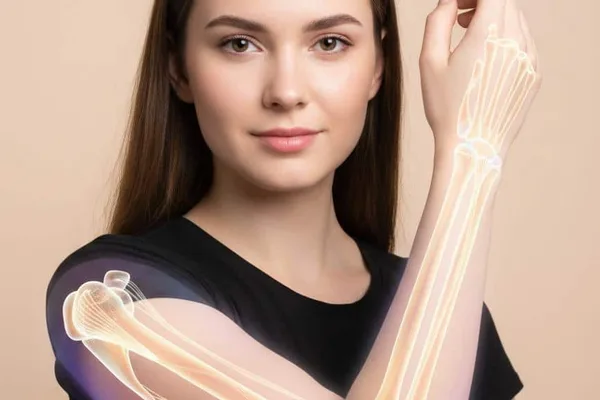
Did you know these things about your elbow? (Elbow Joint Anatomy)

Did you know these things about your elbow? (Elbow Joint Anatomy)

How much work do we do with our hands throughout the day? Just think... The elbow is a very important joint that helps us with everything from brushing our teeth in the morning, to writing, eating, lifting weights, holding a child, and driving a car. But we don't think much about it, do we? Usually, it's only when we experience a little pain or stiffness in the elbow that we realize its value. So today, let's talk about this amazing piece of engineering in our body, the elbow.

The elbow is not one, but three!

Yes, you heard that right. Although we call it the elbow, it is actually a combination of three major joints. To be precise, the elbow joint is formed where the bone in our upper arm (we call it the `Humerus`) and the two bones in our lower arm (the `Ulna` and the `Radius`) join together.

Think of it like a little machine. These three joints work together to allow us to bend, extend, and rotate our arms in and out.

1. Humeroulnar Joint: This is like a hinge on a door. It is mainly responsible for allowing us to bend and extend our arm.

2. Humeroradial Joint: This is a bit more complicated. It is a combination of a hinge joint and a rotator joint. It also helps to bend and extend the arm, as well as rotate the forearm up and down.

3. Proximal Radioulnar Joint: This is a rotator cuff joint. It is what allows us to rotate our forearm.

All three of these joints belong to the type of `Synovial Joints`. This means that there is a slippery liquid inside these joints, like the grease you put in a car, (`Synovial Fluid`). This liquid allows the bones to move very smoothly without hitting each other. Also, the ends of the bones are covered with thick cartilage, which absorbs the shocks that occur when we run and jump.

The group that makes the elbow work: muscles, ligaments, and tendons

Just having bones and joints isn't enough, right? You need a strong system to move them. The elbow is a hub where many muscles, ligaments, and tendons come together. Let's take a look at the main members of this group.

Part Name (English Name) Simply the job
Muscles
Upper arm muscles Biceps (Biceps Brachii) Helps to bend the elbow and rotate the forearm.
Upper arm muscles Triceps (Triceps Brachii) Helps to extend the elbow.
Muscles of the forearm Brachioradialis Helps to bend the elbow and keep the forearm stable.
Muscles of the forearm Muscles involved in hand and finger movements Helps to bend and extend the wrist and fingers.
Ligaments - bands that connect bones together
Bound On the inner side (Medial/Ulnar Collateral Ligament) It keeps the joint stable when there is excessive pressure on the inside of the elbow.
Bound On the outside (Lateral/Radial Collateral Ligament) Helps keep the outside of the elbow stable.
Tendons - bands that connect muscles to bones
Tendon Biceps Tendon The biceps muscle attaches to the bone at the elbow (to bend).
Tendon Triceps Tendon The triceps muscle attaches to the elbow bone (to extend).

Common elbow disorders and conditions

Because it works so complexly, elbow problems can sometimes occur. This can be caused by a fall, a sports accident, or simply by doing the same type of movement over and over again.

Common conditions

  • Arthritis: Joint swelling and pain.
  • Bursitis: Infection of the fluid-filled sacs (bursa) around a joint.
  • Dislocations: A bone slipping out of a joint.
  • Fractures: Damage to bones from something like a fall.
  • Sprains and Strains: A sprain or strain of a muscle.

Common conditions specific to the elbow

Tennis Elbow and Golfer's Elbow

When you hear these names, you think they're diseases that only affect athletes, right? But that's not the case. In fact, anyone can get this.

  • Tennis Elbow: This is a painful condition caused by damage to the tendons on the outside of the elbow. This condition can occur in people who frequently use their wrists to lift weights, hold things tightly, or use a computer mouse for long periods of time. For example, it is common in people who do carpentry, painting, or housework.
  • Golfer's Elbow: This is the opposite of tennis elbow. It is caused by damage to the tendons on the inside of the elbow and causes pain. It can also occur in people who lift weights, play throwing sports, or do repetitive tasks that involve twisting the arm.
  • Cubital Tunnel Syndrome: This condition occurs when a major nerve (the `Ulnar nerve`) that runs along the inside of our elbow gets compressed. This can cause numbness, pain, or weakness in the hand and fingers (especially the little finger and ring finger). This is common in people who bend their elbow for a long time.

If you have persistent pain, numbness, swelling, or weakness in your elbow, forearm, or hand, don't ignore it. It's not a good idea to just assume, "It'll go away in a few days." It could be a simple sprain, or it could be something that needs some attention. So, the best thing to do is to see your doctor right away. That way, you can find the right cause, start the necessary treatment, and prevent the condition from getting worse.

Take-Home Message

  • Your elbow is not a single joint, but a complex combination of three joints that help you bend, extend, and rotate your arm.
  • Conditions called 'tennis elbow' and 'golfer's elbow' can occur not only in athletes, but in anyone who continues to do the same type of work.
  • If you have persistent pain, numbness, or weakness in your elbow, hand, or fingers, don't ignore it.
  • For any joint pain or injury, it is very important to consult your doctor before self-treating.

Elbow, Elbow Pain, Elbow Disorders, Hand Pain, Tennis Elbow, Golfer's Elbow, Joint Diseases

⚠️ Important: The medical articles and information on Nirogi Lanka are for general awareness only, and are by no means a substitute for professional medical advice, diagnosis, or treatment. For any medical problem you have, consult a qualified physician immediately.

💬 Comments (0)

No comments yet. Be the first to share your thoughts here.

Add Your Comment

Please calculate: 2 + 4 =
Did you know these things about your elbow? (Elbow Joint Anatomy)
How the Body WorksJuly 6, 2026

Did you know these things about your elbow? (Elbow Joint Anatomy)

How much work do we do with our hands throughout the day? Just think... The elbow is a very important joint that helps us with everything from brushing our teeth in the morning, to writing, eating, lifting weights, holding a child, and driving a car. But we don't think much about it, do we? Usually, it's only when we experience a little pain or stiffness in the elbow that we realize its value. So today, let's talk about this amazing piece of engineering in our body, the elbow.

The elbow is not one, but three!

Yes, you heard that right. Although we call it the elbow, it is actually a combination of three major joints. To be precise, the elbow joint is formed where the bone in our upper arm (we call it the `Humerus`) and the two bones in our lower arm (the `Ulna` and the `Radius`) join together.

Think of it like a little machine. These three joints work together to allow us to bend, extend, and rotate our arms in and out.

1. Humeroulnar Joint: This is like a hinge on a door. It is mainly responsible for allowing us to bend and extend our arm.

2. Humeroradial Joint: This is a bit more complicated. It is a combination of a hinge joint and a rotator joint. It also helps to bend and extend the arm, as well as rotate the forearm up and down.

3. Proximal Radioulnar Joint: This is a rotator cuff joint. It is what allows us to rotate our forearm.

All three of these joints belong to the type of `Synovial Joints`. This means that there is a slippery liquid inside these joints, like the grease you put in a car, (`Synovial Fluid`). This liquid allows the bones to move very smoothly without hitting each other. Also, the ends of the bones are covered with thick cartilage, which absorbs the shocks that occur when we run and jump.

The group that makes the elbow work: muscles, ligaments, and tendons

Just having bones and joints isn't enough, right? You need a strong system to move them. The elbow is a hub where many muscles, ligaments, and tendons come together. Let's take a look at the main members of this group.

Part Name (English Name) Simply the job
Muscles
Upper arm muscles Biceps (Biceps Brachii) Helps to bend the elbow and rotate the forearm.
Upper arm muscles Triceps (Triceps Brachii) Helps to extend the elbow.
Muscles of the forearm Brachioradialis Helps to bend the elbow and keep the forearm stable.
Muscles of the forearm Muscles involved in hand and finger movements Helps to bend and extend the wrist and fingers.
Ligaments - bands that connect bones together
Bound On the inner side (Medial/Ulnar Collateral Ligament) It keeps the joint stable when there is excessive pressure on the inside of the elbow.
Bound On the outside (Lateral/Radial Collateral Ligament) Helps keep the outside of the elbow stable.
Tendons - bands that connect muscles to bones
Tendon Biceps Tendon The biceps muscle attaches to the bone at the elbow (to bend).
Tendon Triceps Tendon The triceps muscle attaches to the elbow bone (to extend).

Common elbow disorders and conditions

Because it works so complexly, elbow problems can sometimes occur. This can be caused by a fall, a sports accident, or simply by doing the same type of movement over and over again.

Common conditions

  • Arthritis: Joint swelling and pain.
  • Bursitis: Infection of the fluid-filled sacs (bursa) around a joint.
  • Dislocations: A bone slipping out of a joint.
  • Fractures: Damage to bones from something like a fall.
  • Sprains and Strains: A sprain or strain of a muscle.

Common conditions specific to the elbow

Tennis Elbow and Golfer's Elbow

When you hear these names, you think they're diseases that only affect athletes, right? But that's not the case. In fact, anyone can get this.

  • Tennis Elbow: This is a painful condition caused by damage to the tendons on the outside of the elbow. This condition can occur in people who frequently use their wrists to lift weights, hold things tightly, or use a computer mouse for long periods of time. For example, it is common in people who do carpentry, painting, or housework.
  • Golfer's Elbow: This is the opposite of tennis elbow. It is caused by damage to the tendons on the inside of the elbow and causes pain. It can also occur in people who lift weights, play throwing sports, or do repetitive tasks that involve twisting the arm.
  • Cubital Tunnel Syndrome: This condition occurs when a major nerve (the `Ulnar nerve`) that runs along the inside of our elbow gets compressed. This can cause numbness, pain, or weakness in the hand and fingers (especially the little finger and ring finger). This is common in people who bend their elbow for a long time.

If you have persistent pain, numbness, swelling, or weakness in your elbow, forearm, or hand, don't ignore it. It's not a good idea to just assume, "It'll go away in a few days." It could be a simple sprain, or it could be something that needs some attention. So, the best thing to do is to see your doctor right away. That way, you can find the right cause, start the necessary treatment, and prevent the condition from getting worse.

Take-Home Message

  • Your elbow is not a single joint, but a complex combination of three joints that help you bend, extend, and rotate your arm.
  • Conditions called 'tennis elbow' and 'golfer's elbow' can occur not only in athletes, but in anyone who continues to do the same type of work.
  • If you have persistent pain, numbness, or weakness in your elbow, hand, or fingers, don't ignore it.
  • For any joint pain or injury, it is very important to consult your doctor before self-treating.

Elbow, Elbow Pain, Elbow Disorders, Hand Pain, Tennis Elbow, Golfer's Elbow, Joint Diseases

⚠️ Important: The medical articles and information on Nirogi Lanka are for general awareness only, and are by no means a substitute for professional medical advice, diagnosis, or treatment. For any medical problem you have, consult a qualified physician immediately.

💬 Comments (0)

No comments yet. Be the first to share your thoughts here.

Add Your Comment

Please calculate: 2 + 4 =