
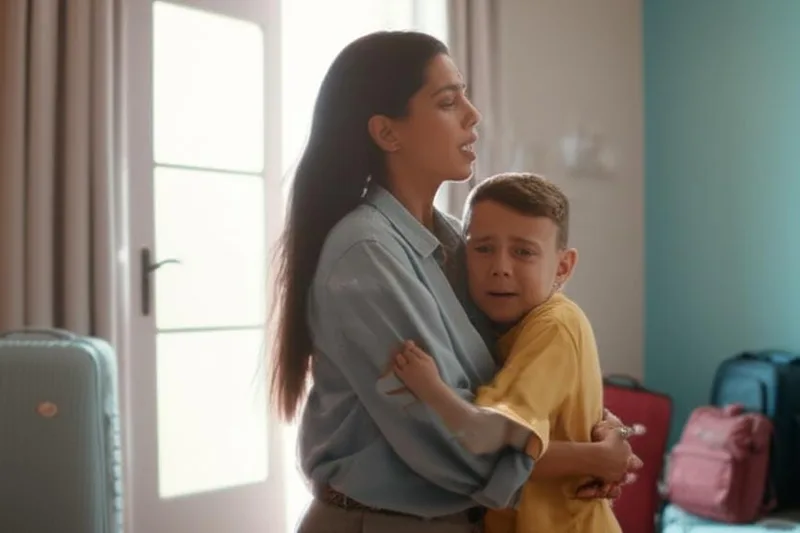
As school holidays approach, some parents plan to send their children to a leadership camp, a scout camp, or another residential program. It's a great thing for the child's personality development and future. But... when you think about sending your child away for a few days, you also feel a little scared and worried, don't you? "Will my child be alone there? Will he get into trouble? Will he miss home and cry?" Questions like these are probably running through your mind. This is actually something that many parents feel.
This fear is common not only to you, but also to the child!
Simply put, anxiety is a very common mental state for both parents and children when they have to be separated from their children in this way. But this anxiety can come in many forms. Let's look at the main types.
| Type of Anxiety | Simply put... |
|---|---|
| Separation Anxiety | This is the most common thing. The fear and sadness that both the child and the parents feel about being away from their loving and protective parents and home. |
| Social Anxiety | Excessive fear of facing a new social environment, such as "Will other kids ostracize me?", "What will others think when they see me?", "Will I be unable to make new friends?" |
| Generalized Anxiety | This is when you are unnecessarily afraid of everything in general, especially the possibility that something bad will happen. You worry, thinking about things like "Will I get hurt at the camp?", "Will something big happen?" |
How your fear affects your child
One of the most important things here is that anxiety can run in families. That is, if parents are anxious, children will feel it too . Children are very good at copying their parents' behavior patterns, facial expressions, and speech patterns.
Imagine, if you go to drop your child off at camp, with tears in your eyes, and say, "Be careful, son/daughter... If anything happens, call me right away...", what kind of feeling will that child have? He/she will also start thinking, "If mom/dad is this scared, this must be a dangerous place." So, your fear is passed on to the child without you even realizing it. Sometimes, the parents are more worried than the child.
In fact, the biggest challenge here is controlling the parents' anxiety rather than the child's.
So how do you make this journey a happy one for both of you?
Okay, so let's see what you can do to cope with this situation. These will help you and your child.
1. Talk about solutions, not fears
When talking to your child, instead of threatening them with, "Be careful, you'll get sunburned," try to solve the problem in a positive way. Ask your child, "The sun can be a bit harsh at camp. So how can we protect ourselves from it?" Then they'll say, "I'll wear a hat," or "I won't be in the sun for too long." You can then say, "Those are good ideas. But it's also a good idea to use sunscreen . Now that you're older, you can remember to use it every day." This will build your child's self-confidence .
2. Be realistic.
As a parent, it is normal to be afraid for your child's safety. But we need to understand the reality. In a well-organized camp, the chances of a child getting into a serious accident are very low . Yes, minor scrapes and injuries can happen. But such things happen in normal life too. Don't be unnecessarily afraid by thinking about terrible things like "Will someone take my child?". Explain this reality to your child too. Almost every child comes home after this experience happy and with something new in their life.
3. Keep the goodbye short and sweet.
When you go to drop your child off at camp, keep the goodbye as short as possible. If you hug your child, cry, and say goodbye in a sad way, it will only make the child feel even more sad. He may feel like he made a big mistake by leaving you. So, smile, encourage your child, and leave quickly, saying, "Go and have fun!" After you leave , your child will join the other children in a few minutes, forget everything, and start playing.
4. Do you give things that remind you of home? Think twice.
For some children, carrying something to remind them of home, like a family photo or a little note you wrote, can help them feel better. However, for some children, these things can make them feel even more homesick and sad. So, this is something you need to decide for your child. You know your child best. If you think something like that will encourage them, give it to them. But if you think it will make them feel even more sad, it's best not to give them such things.
This experience is a valuable opportunity in your child's life to build independence, self-confidence, and the ability to face challenges. Don't deprive your child of that opportunity because of your fears and anxieties.
Take-Home Message
- It's normal for both parents and children to feel scared and anxious when sending their child to camp. We call this separation anxiety.
- Don't show your child your fears, stay positive. Your child will always look up to you as an example.
- Talk to your child about solutions, not problems. Give them responsibilities and trust them.
- Keep the goodbye as short as possible. Long, sad goodbyes increase the child's sadness and fear.
- This experience is a great opportunity to build your child's self-confidence and independence. Allow it and encourage it.
- If this anxiety is affecting you or your child beyond control, don't be shy and talk to your doctor for advice.


💬 Comments (0)
No comments yet. Be the first to share your thoughts here.
Add Your Comment