
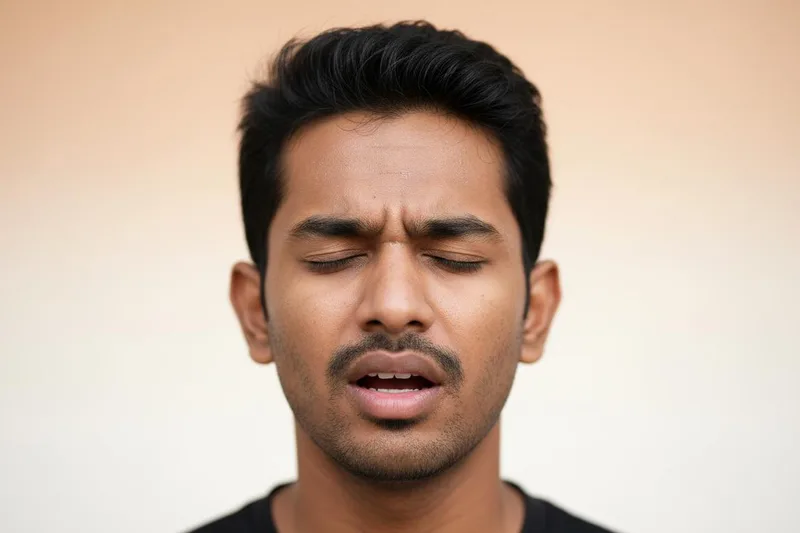
Imagine you're working out at the gym, sweating profusely, or running a little hard. Suddenly, you feel a sharp pain in your head, as if it's exploding. Sometimes this can happen when you cough hard or lift something heavy. Have you ever experienced this? Although many people get scared at times like this, it could be a condition called Exertion Headache, which is not usually dangerous. So let's find out more about it today.
Simply put, what is this Exertion Headache?
Exertion Headache is a headache that occurs when we exert ourselves physically or immediately after we have finished doing so. It starts suddenly and goes away within a few minutes or hours. But sometimes it can last for a couple of days. The important thing is that most of the time there is no serious underlying medical condition.
What causes this pain?
This pain can be caused by anything that makes the body feel tired. For example:
- Weightlifting
- Doing exercises like running and aerobics
- Having sex
- Coughing or sneezing loudly
- Straining to defecate when going to the toilet
Because exercise is a major cause of this, it is also called "exercise headaches." It is also called "weightlifter's headache" because it is more common in people who lift weights.
Why does this happen to us?
It's very simple. When we exercise, our muscles need more blood and oxygen. To meet this need, our heart beats faster and pumps blood throughout the body. At this time, the blood vessels (veins and arteries) inside the head widen to allow more blood to flow through. It's like making a water pipe bigger. When these blood vessels suddenly widen and blood pressure increases, pressure builds up inside the skull. That pressure is what we feel as a headache.
What are the symptoms of this?
The symptoms of an exertional headache can vary from person to person. However, in addition to the common symptoms, there are also some that can sometimes feel like a migraine.
| Characteristic type | How it feels |
|---|---|
| General characteristics |
|
| Symptoms that may feel like a migraine |
How long has this pain been going on?
Most of the time, this pain can last from 5 minutes to 48 hours (2 days) . This condition does not always last. Usually, this pain occurs every 3 to 6 months and then disappears on its own.
How does a doctor diagnose this exactly?
If you have frequent or severe headaches, be sure to see a doctor. Although exertional headaches are usually not serious, it is important to make sure that there are no other serious medical conditions that could be causing the headaches.
The doctor will first check to see if there are other causes. To do this, they may do a few tests, such as:
- Angiography: This examines the blood vessels in the brain. Scans called `(CTA - Computed Tomography Angiography)` or `(MRA - Magnetic Resonance Angiography)` can be used for this.
- MRI Scan: To obtain a detailed picture of the brain.
- Spinal Tap (Lumbar Puncture): A test to remove a small amount of fluid (cerebral spinal fluid) from the spine. This can help detect conditions such as infection or bleeding around the brain.
If all of these tests fail to find any serious cause, and your symptoms follow a certain pattern, your doctor may conclude that this is an exertional headache.
What are the treatments for this?
These headaches are usually treated in the same way as a regular headache. However, it is not a good idea to self-medicate. Always consult your doctor. He or she may recommend medications such as:
- NSAIDs: Painkillers such as `(Indomethacin)` that are prescribed by a doctor.
- Beta-blockers: Drugs like `(Nadolol)` and `(Propranolol).` These are used to control pain in the long term.
- Over-the-counter NSAIDs: Painkillers like ``(Naproxen)`` that you can buy at the pharmacy. But these should only be used on the advice of a doctor and for a short period of time.
What can we do to prevent this pain?
The best thing to do is to avoid the activity that causes this pain. But that's not always possible. So there are a few things you can try to reduce the pain.
| Method | What to do |
|---|---|
| Setting up the environment | Avoid exercising in extreme heat or extreme cold. Avoid exercising at high altitudes (mountains) that you are not familiar with. |
| Body preparation | Drink plenty of water before, during, and after exercise. Get enough rest and 8 hours of sleep daily. |
| How to exercise | Warm up thoroughly before starting your workout. Gradually increase the intensity of your workout. Cool down after you finish your workout. |
| Diet | Eat a healthy diet. Avoid processed foods with preservatives. |
Supplements
Some studies have shown that taking supplements such as `(Coenzyme Q10)`, `(Magnesium)`, `(Riboflavin - vitamin B2)` can help prevent these headaches. However, you should definitely talk to your doctor before using these.
When should we be worried about this and see a doctor immediately?
Although exertional headaches are usually not dangerous, there are some symptoms that should not be ignored. These could be a sign of a more serious condition.
| If you have these symptoms, go to the hospital's Emergency Treatment Unit (ETU) immediately! | |
|---|---|
| A sudden and severe headache | A sudden, severe headache like a lightning strike, unlike anything I've ever experienced in my life. |
| Persistent cramps | Headache lasting more than two days. |
| Other features | Headache accompanied by excessive drowsiness, confusion, or syncope. |
Take-Home Message
- Exertion Headache is a headache that occurs with physical exertion and is usually not serious.
- This is caused by pressure caused by dilated blood vessels in the head.
- However, it is essential to see a doctor for any frequent headaches to ensure that there are no other serious causes.
- This can be prevented by simple things like drinking plenty of water and warming up and cooling down.
- For many people, this condition resolves on its own within a few months.




💬 Comments (0)
No comments yet. Be the first to share your thoughts here.
Add Your Comment