
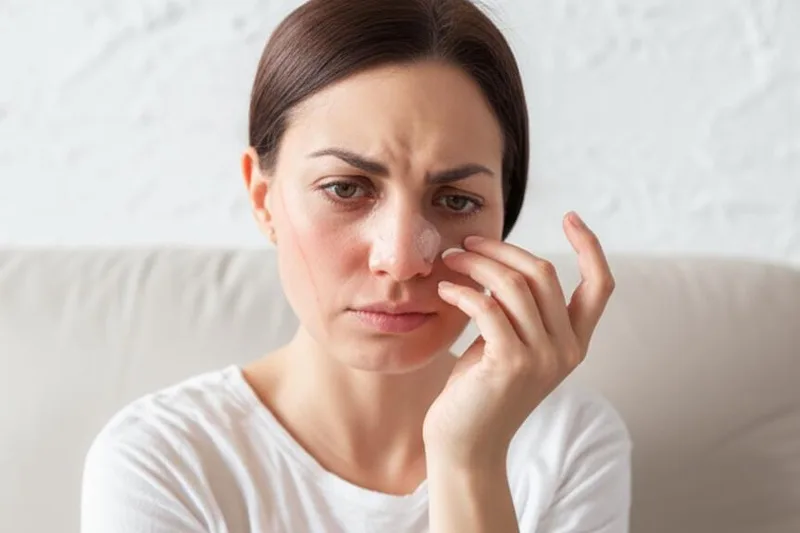
Do you also sneeze often? Do you get up in the morning and sneeze ten to fifteen times? Is your nose blocked and a watery liquid flows from your nose? Or do your eyes become red and itchy? Do you sometimes get small blisters all over your body and itch? These are common symptoms of an allergy. This is really a very annoying and annoying thing in life. But did you know that some of the foods we eat every day can reduce these allergic symptoms and provide relief? These are not instant cures like medicines, but they can be a great help in controlling your annoying symptoms .
First, let's see what an allergy is.
Simply put, an allergy is when our body's immune system overreacts to something that is actually harmless (for example, dust, pollen, certain foods). When this happens, a chemical called histamine is released from mast cells in our body.
Think of histamine as a little warning system in our body. In an allergic reaction, this signaling system becomes overactive.
Histamine is the main culprit behind all of those runny noses, sneezing, itchy skin, and red eyes. So when we take medicine for allergies , the doctor gives us 'anti-histamine' type of medicine. That is, medicine that reduces the activity of this histamine. The amazing thing is, some natural foods also have similar histamine-reducing properties.
So, let's see what foods can help reduce these allergic symptoms.
Try adding these foods to your daily diet. You may notice a big difference.
| Food type | The main ingredient that causes relief |
|---|---|
| Onions, peppers, berries, parsley | Quercetin - a natural antihistamine |
| Kiwi, orange, tangerine, guava, nectarine | Vitamin C – reduces histamine levels |
| Pineapple | Bromelain - reduces swelling and inflammation |
| Oily fish (herring, mackerel, salmon) | Omega-3 - Reduces inflammation in the body |
| Yogurt, Kefir | Probiotics - balance the immune system |
| Local Honey | It is possible that the body is acclimating to the pollen in the area (not confirmed). |
1. Onions, peppers, berries and parsley
These foods are high in a natural chemical called 'Quercetin' . This acts like a natural 'anti-histamine'. That is, this quercetin can prevent the release of the aforementioned allergy-causing histamine from mast cells. So try adding more things like red onions, chili peppers, and peppers to your diet.
2. Kiwi and other fruits rich in vitamin C
Kiwi is a fruit that is very rich in vitamin C. Vitamin C can also reduce histamine levels in the body. If you have difficulty finding kiwi, no problem. In our country, things like oranges, lemons, guavas, and other fruits that are easily available are also rich in vitamin C. Eating a fruit like this every day will boost your immunity and provide relief from allergies.
3. Delicious pineapple
Pineapple contains a special enzyme called 'Bromelain' . Its main function is to reduce inflammation and swelling in the respiratory tract caused by conditions like allergies and asthma. Therefore, pineapple is a very good fruit for those with allergies who often feel like their chest is constricted and come with a runny nose.
4. Oily fish
Salmon, tuna, and other oily fish, such as mackerel, herring, and mackerel, are rich in omega-3 fatty acids . Omega-3 is a powerful antioxidant that reduces inflammation in the body. In fact, allergies are a type of inflammatory response. A study conducted in Japan found that women who eat more fish have a lower incidence of hay fever or allergic rhinitis . So, add this type of fish to your diet at least two days a week.
5. Kefir and yogurt with probiotics
This may sound a bit new. Simply put, probiotics are the 'good' bacteria that live in our intestines. These good bacteria help our immune system function properly and in balance. When you have allergies, your immune system becomes overactive. So these good bacteria help control it. So when you buy yogurt, choose one that says "live active cultures" on the label. Kefir, a yogurt drink, is also very good for this.
6. Local Honey
There are different scientific opinions on this, so it is not possible to guarantee this 100%. But the theory here is that when you eat a small amount of honey made from flowers in the area where you live every day, your body gradually gets used to the pollen in the environment of that area. This is called 'immunotherapy'. But this is not something that works for everyone and is still scientifically controversial. So you can try it. Most importantly, it is not advisable to give honey to children under one year old.
Be sure to remember these things!
- These foods are not a cure for allergies. They only help control symptoms. Do not stop taking the medication your doctor has prescribed.
- If you experience a severe allergic reaction, such as difficulty breathing , swelling of the face and lips, or a rash all over your body, do not expect relief from these foods and immediately see a doctor or go to the nearest Emergency Department (ETU) .
- It's always safest to talk to your doctor and get advice before starting any new food, especially something like honey, on a daily basis.
Take-Home Message
- While some foods can help control allergy symptoms, they are by no means a substitute for medical treatment .
- Adding onions, peppers (quercetin), oranges, guava (vitamin C), pineapple (bromelain), oily fish (omega-3), and yogurt with probiotics to your diet may provide relief.
- While local honey may help some people, it is not a scientifically proven treatment and does not work for everyone.
- Always consult your doctor if severe allergic symptoms occur or before making any major changes to your diet.


💬 Comments (0)
No comments yet. Be the first to share your thoughts here.
Add Your Comment