
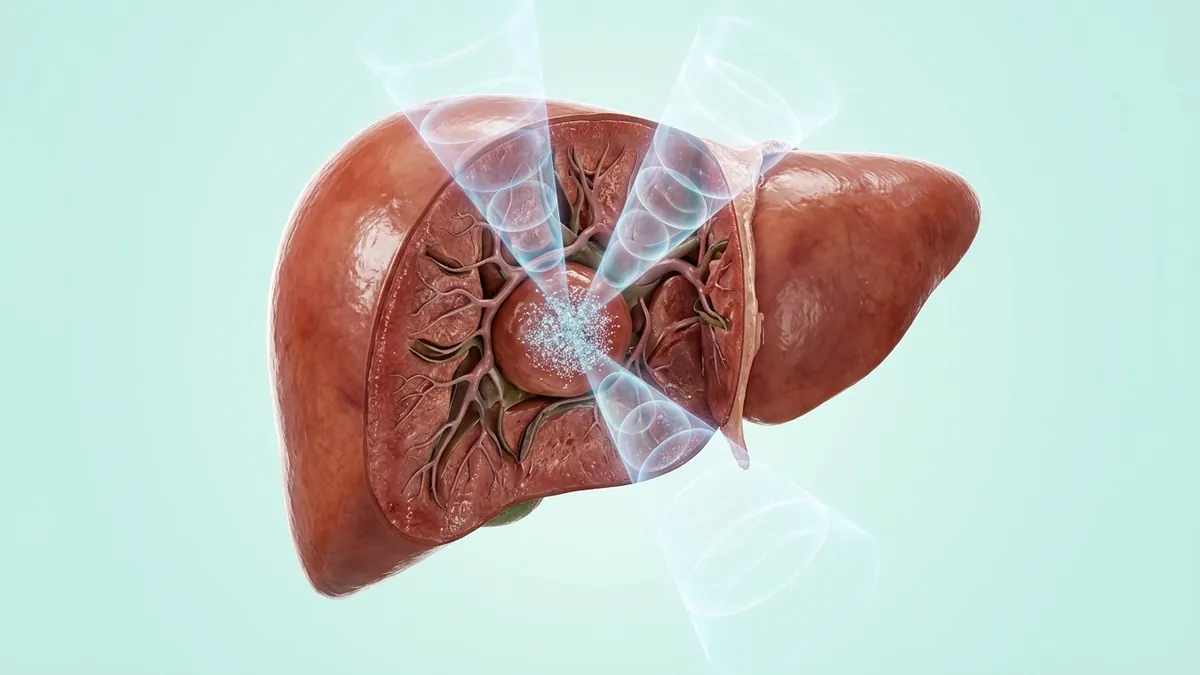
When patients ask us about Edison Histotripsy Non-Invasive Sound-Wave Liver Tumor Treatment: Candidacy, Zero Incisions & Abscopal Immune Effect, they are usually looking for real hope without the heavy toll of major abdominal surgery. If you or a loved one has been told about a primary liver tumor or cancer that has spread to the liver, hearing about a treatment that uses focused sound waves—with zero scalpels, zero needles, and zero radiation—sounds almost like science fiction, doesn't it?
Yet this technology is very real, FDA-cleared in the United States, and steadily expanding into major specialist cancer hospitals across the United Kingdom, Canada, and Australia. Be honest—when you first heard the word "ultrasound," you probably pictured a gentle pregnancy scan at a local clinic, didn't you? Histotripsy uses that exact same family of sound energy, only focused to a pinpoint so precise that it breaks apart unwanted liver tissue from outside your body while leaving your skin completely untouched.
At your family doctor or Primary Care Physician (PCP) clinic, we doctors help you make sense of complex hospital options before referring you to an interventional radiologist or liver specialist team. Let's sit down and walk through how this sound-wave procedure actually works, who qualifies, what those exciting immune effects really mean, and how to prepare step by step.
📌 Key Takeaways at a Glance
- Zero incisions or needles: The Edison system delivers focused sound pulses through a soft water cushion resting on your abdomen, breaking down targeted liver tumors mechanically without cutting the skin.
- No heat damage: Unlike heat-based ablation, microscopic bubble-popping action (acoustic cavitation) liquefies tumor cells at body temperature, helping protect nearby bile ducts and major blood vessels.
- Specific candidacy rules apply: Doctors typically treat up to 3 liver tumors per session (usually 3 cm or smaller each), provided there is a clear ultrasound path past your ribs and bowel gas.
- Intriguing immune signal: Because tumor proteins are not burned, your immune system may recognize leftover cancer fragments—sometimes sparking distant immune-triggered tumor shrinkage (abscopal effect), though whole-body treatments remain essential.
- Fast everyday recovery: Although general anesthesia is needed to keep your breathing steady during treatment, most people head home the same day or the following morning.
What Is Edison Histotripsy Non-Invasive Sound-Wave Liver Tumor Treatment, and How Does It Work?
Edison histotripsy is an FDA-cleared, completely non-invasive liver tumor procedure that uses focused ultrasound waves—not heat, radiation, or surgical incisions—to create microscopic bubble clouds inside cancer tissue. As these bubbles rapidly expand and pop, they mechanically liquefy targeted tumor cells while sparing vital nearby blood vessels and bile ducts.
Think about it for a second: inside every cell in your body, tiny dissolved gas pockets naturally exist in microscopic amounts. When the robotic arm of the Edison system aims microsecond-long bursts of high-amplitude sound waves at a precise millimeter-sized spot inside a liver tumor, the sudden drop in pressure pulls those tiny gas pockets into a visible cloud of microbubbles. Within millionths of a second, those bubbles expand and collapse with tremendous local force—a physical process called microscopic bubble-popping action (acoustic cavitation). Pretty surprising, right?
Have you ever wondered why avoiding heat matters so much inside an organ as busy as the liver? Traditional needle procedures like radio-wave heat destruction (radiofrequency ablation) or microwave heating (microwave ablation) cook tumors at high temperatures. Near large blood vessels, flowing blood carries heat away so edges of a tumor can survive, while delicate bile ducts near the burn zone can scar. Look at what happens inside the liver with histotripsy instead: tough, elastic structures made of dense collagen—like major blood vessel walls and bile ducts—naturally resist mechanical bubble popping much better than fragile cancer cells do. What do you think happens to the liquefied tumor paste afterward? Your body's own cleanup cells quietly absorb and clear that harmless fluid debris over 4 to 8 weeks, leaving behind a tiny shrinking scar.
What Is the Abscopal Immune Effect in Histotripsy, and Why Are Doctors Watching It So Closely?
One of the biggest questions families bring into our clinic rooms is about that unusual medical phrase: the distant immune-triggered tumor shrinkage (abscopal effect). Remember how we talked about avoiding heat a moment ago? That non-thermal difference turns out to be a big deal for your immune system, too.
When a tumor is burned with extreme heat, its surface proteins crumple and char—much like cooking an egg white until it turns solid and unrecognizable. Because histotripsy breaks cancer cells open mechanically without cooking them, intact cancer identification markers (tumor-associated antigens) and natural cellular alarm signals spill out into the bloodstream in their original shape. Your immune system's scout cells can pick up those intact proteins, carry them to nearby lymph nodes, and train killer T-cells to recognize what the cancer looks like. Now that makes sense, right?
In laboratory studies and early patients from clinical trials such as the pivotal #HOPE4LIVER studies, specialists noticed cases where untreated tumors outside the sound-wave zone stabilized or even shrank after a single liver lesion was treated. Still, we doctors always keep expectations honest and grounded: the abscopal immune effect is an exciting bonus under active clinical trial research—especially alongside modern immune-boosting drips (immunotherapy)—not a guaranteed standalone cure for widespread cancer. You should never stop prescribed chemotherapy or immunotherapy expecting histotripsy alone to clear distant disease.
Who Is a Good Candidate for Edison Histotripsy? Key Clinical Values, Cutoffs, and Stepwise Evaluation
Not every liver tumor can be reached safely with sound waves, so specialists follow strict, evidence-based criteria. Your journey usually starts at your family doctor or Primary Care Physician (PCP) clinic, where we check your baseline blood work, review your imaging, and send an urgent referral to a specialist liver cancer team (multidisciplinary tumor board) made up of interventional radiologists, liver surgeons, and medical oncologists.
Here are the key clinical factors and lab cutoffs hospital teams evaluate:
- Tumor origin: Approved for destructive targeting of both primary liver cancer—such as liver cell cancer (hepatocellular carcinoma) or bile duct cancer (intrahepatic cholangiocarcinoma)—and secondary cancer spreads to the liver metastases) from colorectal, breast, neuroendocrine, or pancreatic tumors.
- Size and number limits: Most centers treat 1 to 3 tumors per session, with each targeted tumor typically measuring 3 cm (about 1.2 inches) or smaller, plus a small 5 mm safety margin of surrounding tissue.
- A clear ultrasound window: Sound waves travel smoothly through water and soft tissue, but air and bone block them cold. Tumors tucked high under the lung dome or hidden completely behind thick ribs or heavy bowel gas may lack a safe acoustic pathway.
- Blood counts and liver reserve: Specialists typically look for a platelet count of at least 50,000/µL, a blood-clotting score (international normalized ratio, or INR) of 1.5 or lower, total bilirubin generally below 2.5 to 3.0 mg/dL, and stable liver function—usually Child-Pugh Class A or well-compensated Class B liver scarring (cirrhosis) without large amounts of tummy fluid (ascites).
Who cannot have the procedure? Severe uncorrectable bleeding disorders, active liver or bile duct infection, inability to tolerate general anesthesia, pregnancy, or tumors wrapped directly around the main central bile duct confluence where even mild swelling could block bile flow may rule histotripsy out.
How Should You Prepare, What Happens on Procedure Day, and How Is Insurance Handled?
Do you recall what we mentioned at the very beginning about zero incisions? Because nobody cuts your skin, many patients are surprised to hear they will still be fully asleep under general anesthesia. We rarely stop to think about how much our liver moves every time we breathe, do we? Every breath shifts the liver up and down by several centimeters! General anesthesia lets the anesthesia doctor keep your breathing shallow and rhythmic so the robotic ultrasound beam stays locked onto the tumor within millimeters.
Before procedure day, your hospital team will guide you through three vital preparation steps:
- Low-gas prep and fasting: For 24 hours beforehand, most centers ask you to avoid gassy foods and fizzy drinks—skip soda, sparkling water, beans, broccoli, cabbage, and heavy fried takeout—and sometimes take an anti-gas tablet like simethicone so intestinal gas doesn't block the ultrasound beam. You will fast from food and drink for 6 to 8 hours before anesthesia.
- Medication pauses: Your doctor will give exact hold dates for blood thinners (such as apixaban, rivaroxaban, clopidogrel, or warfarin) and certain diabetes medications—especially SGLT2 tablets (often paused 3 to 4 days prior) and weekly GLP-1 injections that slow stomach emptying.
- Insurance and access check: In the United States, Medicare assigns outpatient hospital coverage under dedicated histotripsy coding (CPT 0686T), while private insurers require prior authorization backed by tumor board notes. In the UK (via NHS specialist hepatobiliary centers and innovative access pathways), Canada, and Australia, access is coordinated through major university hospitals and regional cancer registries.
Inside the procedure suite, a soft, warm, degassed water membrane rests gently on your tummy. Active sound-wave delivery typically takes 15 to 45 minutes per tumor, with total procedure room time around 1.5 to 3 hours.
How Does Edison Histotripsy Compare With Other Liver Tumor Treatments and Clinical Scenarios?
When your specialist team weighs histotripsy against surgery or other targeted liver therapies, each option has a distinct clinical sweet spot. Below is a clear comparison of how doctors match your situation to the safest next step.
| Treatment Option or Clinical Scenario | Clinical Explanation & Recommended Action |
|---|---|
| Edison Histotripsy (Sound-Wave Cavitation) | Non-invasive, non-thermal sound waves liquefy up to 3 small liver tumors (usually under 3 cm) without incisions, sparing collagen-rich vessels and letting most patients continue systemic cancer therapy with minimal pause. What you should do: Ask your PCP or oncologist for a referral to an accredited histotripsy liver center so an interventional radiologist can check whether your recent CT or MRI shows a clear ultrasound window. |
| Surgical Liver Resection | Physically removing the tumor-bearing section of liver remains the gold-standard curative option when tumors are operable and your remaining liver is strong enough to regenerate safely. What you should do: Meet with a specialist hepatobiliary surgeon first if you have a single operable tumor and healthy liver function, rather than assuming non-invasive treatment automatically replaces surgery. |
| Thermal Needle Ablation (RFA or Microwave) | Uses a thin needle guided through the skin to destroy small tumors with heat; works very well for lesions hidden behind ribs where ultrasound beams for histotripsy cannot get a wide acoustic path. What you should do: Discuss needle ablation openly if your pre-procedure test scan ("simulation ultrasound") shows rib shadowing or lung air blocking the Edison sound-wave head. |
| Targeted Radiation (SBRT) or Artery Beads (TACE / Y-90) | Treats larger tumors (over 4 cm) or clusters of multiple liver tumors by delivering focused external radiation beams or microscopic beads straight through the liver's feeding arteries. What you should do: Request a full multidisciplinary tumor board review if your tumors exceed size or count cutoffs for histotripsy, as combining artery or radiation treatments with drug therapy often works best. |
| Mild Post-Procedure Fever or Tummy Ache (First 48 Hours) | As broken-down tumor proteins are absorbed, about 1 in 5 patients notice low-grade warmth (under 38°C / 100.4°F), mild right-sided rib soreness, or tiredness called post-ablation syndrome. What you should do: Sip plenty of water or ginger tea, rest, ask your care team before taking any pain reliever (especially acetaminophen/paracetamol, which is processed by the liver), and attend your 30-day follow-up MRI or CT scan. |
See? That's exactly why we doctors never take a one-size-fits-all approach. Once you head home after histotripsy, gentle everyday habits make recovery smooth. Stick to light, easy-to-digest meals for the first day or two—warm chicken or vegetable broth, plain oatmeal or porridge, scrambled eggs, toast, steamed white fish, and plenty of water or herbal peppermint tea—while avoiding alcohol completely so your liver can focus on healing.
✔️ What You Should Do & ❌ What to Avoid
- ✔️ DO bring original scan discs or digital portal links: Your interventional radiologist needs high-resolution contrast CT or MRI images taken within the past 4 to 6 weeks to map your ribs, blood vessels, and tumor margins.
- ✔️ DO follow the 24-hour low-gas meal plan: Keeping bowel gas low gives the ultrasound imaging probe a crystal-clear view of your liver on procedure morning.
- ✔️ DO arrange a trusted adult ride home: Because of general anesthesia, you cannot drive yourself home or operate machinery for 24 hours, even if you feel wide awake.
- ❌ DON'T stop chemotherapy, immunotherapy, or blood thinners on your own: Only pause or restart medications on the exact calendar dates written down by your oncology and procedure teams.
- ❌ DON'T drink alcohol or take unapproved herbal liver tonics: Alcohol and concentrated supplements put extra chemical stress on your liver right when it is clearing liquefied tumor debris.
🚨 When to Seek Immediate Emergency Care (Red-Flag Symptoms)
If you or someone near you develops any of these red-flag symptoms, do not wait — call 911 (or 999 in the UK / 000 in Australia) immediately or go straight to the nearest hospital Emergency Room (ER / A&E):
- Severe, worsening pain in your upper right abdomen, chest, or right shoulder tip that does not ease with rest.
- High fever of 38.0°C (100.4°F) or higher accompanied by shaking chills or drenching sweats in the days or weeks after treatment.
- New yellowing of your eyes or skin (jaundice), tea-colored dark urine, or pale clay-colored stools, which can signal bile duct blockage.
- Dizziness, fainting, racing heartbeat, cold clammy skin, vomiting blood, or black tarry stools, which may point to internal bleeding.
- Sudden shortness of breath or sharp chest pain when taking a deep breath.
💡 Key Take-Home Message
- Edison histotripsy offers a breakthrough zero-incision, non-thermal way to destroy select small primary and metastatic liver tumors using focused sound-wave cavitation.
- Careful pre-procedure ultrasound mapping, blood tests, and multidisciplinary tumor board review ensure it is matched safely alongside your broader cancer care plan.




No comments yet. Be the first to share your question or experience below.