
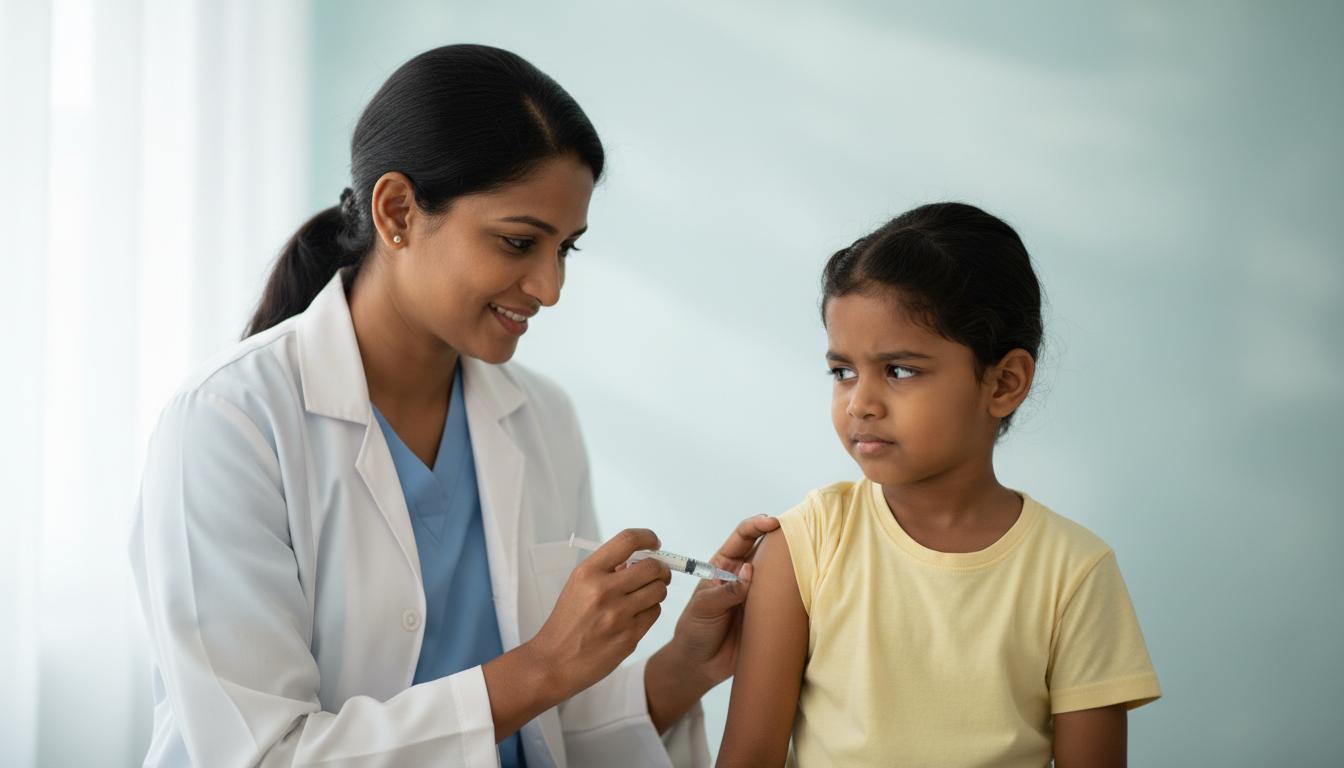
Let's be completely honest: nobody truly enjoys getting a shot—especially when it involves a tiny needle and a jab into sensitive skin. This is especially true when it comes to our beloved children, as watching a baby cry during a routine doctor's appointment can tug at any parent's heartstrings. However, did you know that these quick needle pricks delivered by doctors and nurses protect your child from a wide range of dangerous, highly contagious, and potentially life-threatening infectious diseases?
When serious pediatric illnesses strike, they can cause severe complications, long-term disability, or worse. Therefore, when weighed against the fleeting discomfort of a quick injection, the profound, lifelong protection that vaccines provide is invaluable. Understanding the science, safety, and clinical importance of pediatric immunization can help alleviate parental anxiety and empower you to make the best possible health decisions for your family.
Key Clinical Takeaways.
- Safe Immune Training: Vaccines introduce weakened or inactivated viral or bacterial fragments to train the immune system without causing active disease.
- Antibody Production: The body responds by creating specialized antibodies that remain on standby to fight off future infections rapidly.
- Community Protection: High vaccination rates establish robust herd immunity, shielding vulnerable infants and immunocompromised people within the community.
- Manageable Side Effects: Common post-vaccination reactions include temporary low-grade fever, mild soreness, and slight localized redness.
BMI Calculator
Know your body mass index (BMI) and weight classification
What Is a Vaccine and How Does It Protect Your Baby?
Simply put, a vaccine is a biological preparation introduced into your child's body to stimulate active acquired immunity against a specific infectious disease. Crucially, a vaccine does not cause the full-blown disease itself. Instead, it introduces a tiny, harmless fragment of the pathogen—such as a purified protein subunit, a deactivated (killed) virus, or a severely weakened (attenuated) live strain. If researchers were to introduce a fully virulent, live pathogen without attenuation, it would cause severe infection (such as uncontrolled measles). However, modified vaccine components safely prompt an immune response.
When these weakened or dead pathogen particles enter the body, your child's immune system recognizes them as foreign invaders and reacts by producing specialized proteins called antibodies. These antibodies are specialized defense molecules generated by white blood cells known as B-lymphocytes. They remain circulating in the bloodstream and resident in immune tissues as part of the body's long-term immunological memory. If your child encounters the actual, dangerous pathogen months or years later, their immune system right away recognizes it and deploys pre-formed antibodies to neutralize the threat before illness can take hold.
This biological state of resistance is known as immunity. In many cases, effective vaccination means a child will never contract the disease at all. In other instances, breakthrough infections can sometimes occur—such as with chickenpox (varicella). However, vaccinated children who contract chickenpox experience a greatly milder illness with very few skin lesions, minimal itching, and an exceptionally low risk of complications like secondary bacterial skin infections or scarring.
How Are Vaccines given to Infants?
Vaccines are typically delivered via a sterile injection using a fine needle attached to a medical device known as a syringe. The syringe holds the precise liquid vaccine dose, and the hollow needle allows doctors to give the medicine cleanly and rapidly into deep muscle tissue (intramuscular) or directly beneath the skin (subcutaneous). For infants and toddlers, intramuscular injections are most commonly given in the anterolateral aspect of the thigh (the outer muscle of the upper leg), while older children and adolescents receive them in the deltoid muscle of the upper arm.
The administration process is performed under strict aseptic techniques to ensure patient safety. Pediatricians and registered nurses are specially trained to minimize discomfort, positioning the child securely and delivering the injection with swift, precise technique. Parents are encouraged to hold their child's hand or cuddle them closely during the procedure to provide emotional reassurance and security.
When Are These Vaccines given During Childhood?
One of the most reassuring facts for parents is that the vast majority of essential childhood vaccines are given before a child reaches their second birthday. If your child is older than a toddler, they have likely already received the foundational series of infant immunizations, meaning subsequent vaccination requirements become much less frequent as they grow older.
National and international health organizations, including the World Health Organization (WHO), the Centers for Disease Control and Prevention (CDC), and national immunization programs, follow rigorous clinical evidence to establish optimized vaccination schedules. In clinical practice, these schedules are meticulously documented in official health records, such as the Child Health Development Record (CHDR). According to standard pediatric guidelines, primary infant immunizations are scheduled at key developmental milestones:
- Infancy Series: Initial doses are typically given at 2 months, 4 months, and 6 months of age to prime the developing immune system.
- Toddler Boosters: Subsequent booster doses are given around 12 months and 18 months of age to reinforce long-term immunological memory.
- Early Childhood Boosters: Additional boosters are scheduled between 4 and 6 years of age (prior to school entry) to maintain high antibody titers.
- Pre-Adolescent & Adolescent Series: The next major immunization grouping is generally recommended when children reach 10 to 12 years of age.
also, annual immunizations such as the seasonal influenza (flu) vaccine play a critical role in pediatric health. While traditional influenza vaccines are given via intramuscular injection, certain regions also approve a needle-free nasal spray vaccine (live attenuated influenza vaccine) for eligible children. Both clinical delivery methods offer effective protection against circulating influenza strains. Your pediatrician will advise which formulation is safest and most appropriate for your child's specific medical history and age.
Why Are Vaccines So Crucial for Our Children?
Vaccines are vital because they serve as an impenetrable shield against severe, life-threatening pediatric illnesses. Beyond protecting the person child, high community-wide vaccination coverage dramatically reduces the circulation of infectious agents. When nearly all children in a community are immunized, pathogens find it nearly impossible to spread from person to person because they continually encounter immune hosts.
This population-level protection is known as herd immunity (or community immunity). Herd immunity is especially critical for newborn infants who are too young to receive certain vaccines, as well as children with medical conditions—such as severe immune deficiencies or ongoing cancer treatments—who cannot receive live vaccines. Thanks to widespread adherence to national immunization schedules, severe vaccine-preventable diseases like measles, mumps, rubella, and poliomyelitis have become exceedingly rare in developed healthcare settings.
also, educational institutions, nurseries, and primary schools require verification of up-to-date immunization records prior to enrollment. This administrative standard is not merely bureaucratic red tape. It is a vital public health safeguard designed to prevent localized outbreaks in crowded classrooms and ensure that every child learns in a safe, protected environment.
Does Getting a Vaccine Hurt? What Parents Can Do to Help.
To be completely transparent: yes, receiving an injection causes a brief moment of sharp pain when the needle penetrates the skin. This sensory experience triggers an immediate crying response in infants and toddlers. However, this discomfort is fleeting, resolving within moments as comforting measures are applied. Parents should not feel distressed or guilty when their baby cries; crying is a normal, instinctual stress reflex, not an indicator of long-term trauma.
To make the vaccination experience as smooth and comforting as possible for your child, healthcare specialists recommend several evidence-based distraction and soothing techniques:
- Bring a comforting security item, such as a favorite stuffed animal, soft blanket, or comforting toy.
- Maintain physical contact by holding your child's hand, gently stroking their arm, or offering a reassuring embrace during the injection.
- Engage active distraction methods: sing a familiar song, tell an engaging story, point out colorful wall posters, or use bubbles for older toddlers.
- Stay calm and composed yourself. Children are highly perceptive; if a parent displays overt anxiety or panic, the child will sense it and become greatly more frightened.
- Celebrate bravery afterward. Healthcare clinics often provide decorative stickers or certificates of courage. Once home, praise your child warmly, offer a special treat, or enjoy a quiet, relaxing afternoon together.
Following vaccination, it is quite common for infants to experience mild localized reactions at the injection site, including transient tenderness, mild swelling, or a small, harmless firmness under the skin. also, a low-grade fever (pyrexia) often occurs as a normal sign that the immune system is actively responding to the vaccine antigen.
If you have any clinical concerns regarding your child's post-vaccination symptoms, consult your pediatrician. These minor side effects typically resolve on their own within 24 to 48 hours. If necessary, your doctor may recommend weight-appropriate doses of an analgesic and antipyretic medicine such as paracetamol (acetaminophen) to ease discomfort and lower fever. Never give aspirin or aspirin-containing products to infants or children due to the severe risk of Reye's syndrome—a rare but potentially fatal condition causing hepatic and cerebral dysfunction.
While your child may shed a few tears during a vaccination appointment, remember that these preventive shots represent the single most effective shield available to keep them healthy, thriving, and safe from preventable harm.
Emergency Red Flags: When to Seek Immediate Medical Attention.
While normal side effects resolve quickly, contact emergency services (call 911 in the US/Canada, 999 in the UK, or proceed right away to the nearest Emergency Department) if your child exhibits any of the following severe post-vaccination warning signs:
- Signs of severe allergic anaphylaxis, including facial swelling, tongue swelling, hives, or wheezing.
- Persistent, inconsolable crying lasting continuously for more than 3 hours.
- High fever exceeding 102°F (38.9°C) that does not respond to antipyretic medicine.
- Unusual lethargy, limpness, unresponsiveness, or difficulty waking up.
- Seizures (convulsions) or twitching episodes following immunization.
💡 Take-Home Message.
Reviewing all the clinical evidence underscores just how critical immunizations are for safeguarding pediatric health and ensuring long-term well-being:
- Gold-Standard Protection: Vaccines represent the safest, most thoroughly researched, and most effective medical intervention available to shield children from severe, disabling, and life-threatening infectious diseases.
- Stick to the Schedule: Ensure your child receives every scheduled vaccine dose on time. Regularly review your official Child Health Development Record (CHDR) and maintain an open, collaborative dialogue with your family doctor, pediatrician, or practice nurse.
- Monitor and Report: If you observe unusual symptoms, prolonged high fevers, or localized complications following a vaccination, seek prompt medical evaluation without hesitation.
- Trust Science Over Misinformation: Dismiss unverified anecdotes and social media myths. Always seek accurate, evidence-based guidance regarding immunizations directly from qualified doctors.
Witnessing your child grow up healthy, happy, and strong is every parent's greatest aspiration. Maintaining a proactive commitment to timely immunization is one of the most powerful steps you can take toward fulfilling that dream. Do not let fear or hesitation stand in the way of your child's lifelong health—stay informed, stay confident, and keep vaccinations up to date.
Comparison of Vaccine Responses vs. Natural Infections.
| Parameter. | Vaccine-Induced Immunity. | Natural Infection. |
|---|---|---|
| Pathogen Form. | Weakened, inactivated, or purified protein subunits. | Full, virulent, replicating live pathogen. |
| Risk of Severe Complications. | Extremely low (mostly mild, temporary soreness or low fever). | High risk of hospitalization, organ damage, or mortality. |
| Immune System Activation. | Controlled, targeted antibody production. | Widespread systemic stress and acute inflammatory illness. |
| Public Health Impact. | Builds robust herd immunity and eradicates disease. | Spreads infection and fuels dangerous community outbreaks. |






No comments yet. Be the first to share your question or experience below.