
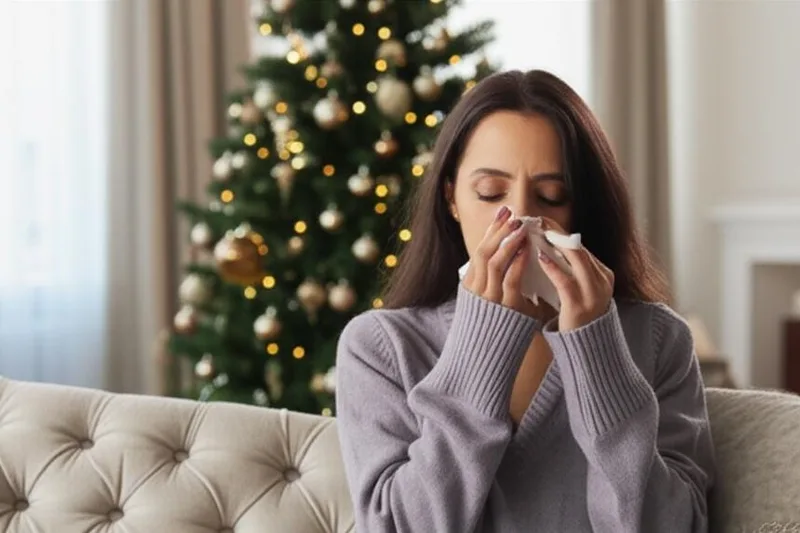
After decorating your house beautifully for Christmas and bringing in a fragrant Christmas tree, do you suddenly start to feel a cold, a stuffy nose, a cough, or itchy eyes? Many people think that it's because of the cold weather. But have you ever thought that the reason could be that beautiful Christmas tree you brought with you? Today, let's talk about this.
Demand for No-Spray Trees
Many people are now looking for trees that have been grown naturally and without pesticides when buying Christmas trees. This is because they believe that pesticides are not good for our health. Some farmers have started growing Christmas trees without using pesticides. They say that there is a good demand for these trees because their customers are environmentally conscious and health conscious.
But experts tell a different story. Their opinion is that the amount of chemicals in a conventionally grown Christmas tree may be lower than the amount found in some of the vegetables and fruits we buy from the store.
For example, an expert from North Carolina State University says, "Farmers who grow Christmas trees only use pesticides a few times a year. But you use chemicals many more times on an apple or a corn crop."
Does that mean we shouldn't be worried about the chemicals in Christmas trees? That's not really the case. There's a much more dangerous reason why bringing a Christmas tree into our home can make us sick, but we don't pay much attention to it.
So, who is the real culprit? - Mold/Fungi
If you feel sick after bringing home a Christmas tree, the main cause could be the mold on the tree. Doctors call this condition "Christmas Tree Syndrome." It's actually a mold allergy.
Think about it, Christmas trees grow outdoors in a humid environment. So, there may be millions of tiny mold spores hidden in places like the branches and trunks of these trees that we can't see. When we bring this tree inside the house, these molds start to grow rapidly due to the warm environment of the house. When these mold spores are added to the air, breathing them in can cause allergies.
This can be especially dangerous for people with asthma . Timothy Craig, an allergist at Penn State Health, has a very sad experience with this. 30 years ago, his young son had a severe asthma attack due to mold on a Christmas tree and had to spend Christmas Day in the hospital's intensive care unit.
Dr. Craig says, "I don't think you can find a mold-free Christmas tree. It's very common. The risk of allergies from mold on the tree and dust from decorations is much greater than the risk from pesticides on the tree."
Is this an allergy? Or is it just a common cold?
Since viral infections are also common during the Christmas season, it can be a little difficult to figure out whether you have allergies caused by the Christmas tree or just a common cold. But there are some subtle differences between the two.
| Symptom | Allergy | Viral infection (common cold) |
|---|---|---|
| Itching | Itching of the eyes, nose, and throat is common. | There is usually no itching. |
| Sneezing | Frequent, repeated sneezing. | Although there is sneezing, it is not as severe as with allergies. |
| Lifeless body | Usually, the body does not feel sore or lifeless. | Body aches and fatigue are common. |
| Soto fluid leakage | A clear liquid like water flows out. (Allergic Rhinitis) | Although it may initially be a clear liquid, it may later become thick and yellow/green. |
| Cough | A dry cough may accompany difficulty breathing (especially in asthmatics). | A cough with mucus is common. |
Are there any risks with Christmas decorations?
Yes. Another reason for this is Christmas decorations that have been stored in boxes for a year. These can contain dust, dust mites, and mold. When you take them out, those dust and mold spores can get into the air and cause allergies.
What should we do? - Some practical advice
There are several things you can do to stay happy and not get sick at Christmas.
1. Clean the tree before bringing it home: Before bringing your Christmas tree home, rinse it thoroughly with a hose and let it dry completely in the sun. If you bring it home while it's still wet, more mold can form. Some people spray the tree with a little bleach in the water. But be careful, as this can damage the tree.
2. Clean the decorations: After removing the old decorations, wipe them down thoroughly. If they are made of fabric, wash and dry them before using them. If they smell musty, wash them in water with a little bleach.
3. Use allergy medication: If you know you have an allergy to mold, you can use antihistamines prescribed by your doctor while you have a Christmas tree in your home. But be sure to ask your doctor for advice.
4. Asthma sufferers be especially careful: If you or someone in your household has asthma and the Christmas tree causes difficulty breathing , chest tightness, or increased coughing, remove the tree from the house immediately. Seek immediate medical attention if necessary. You may be better off using an artificial Christmas tree.
5. See a doctor: If your symptoms are severe, don't improve within a few days, or if you have difficulty breathing, be sure to see your family doctor. He or she will be able to determine if you have an allergy or another medical condition.
Take-Home Message
- The main cause of symptoms such as colds, coughs, and itchy eyes after bringing a Christmas tree home may be mold on the tree, not pesticides.
- This condition is called "Christmas Tree Syndrome," and it's actually a mold allergy.
- This can be very dangerous for people with asthma, and it is important to remove the tree from the home if symptoms worsen.
- You can reduce the risk by thoroughly washing the tree with water, drying it completely, and cleaning old decorations before bringing it into the house.
- If symptoms are severe or you have difficulty breathing, contact your doctor immediately.


💬 Comments (0)
No comments yet. Be the first to share your thoughts here.
Add Your Comment