
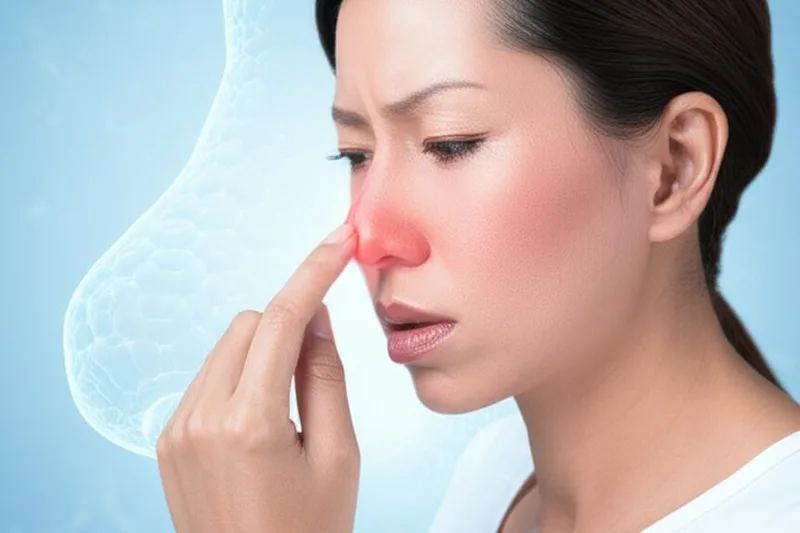
Do you also have a runny nose? Do you sneeze when you wake up in the morning? Does your nose feel heavy and blocked? So you probably think that this is definitely some kind of allergy. But when you test for allergies, the report says that there is nothing wrong? Then you may have a condition called Nonallergic Rhinitis , which we are going to talk about today. This is not an allergy, but a condition that shows the same symptoms as an allergy and is a bit annoying for us.
What exactly is Nonallergic Rhinitis?
Simply put, Nonallergic Rhinitis is a condition in which the lining of the nose becomes inflamed and produces allergy-like symptoms without any involvement from our immune system. The main thing is that the blood vessels and nerves in your nose become over-reactive to things in the environment that normally wouldn't affect you (for example, perfumes, smoke, weather changes).
Although there are many different types of rhinitis, the most common is called Vasomotor Rhinitis . This is the name usually used when a doctor cannot find a clear allergy or infection for your symptoms.
What are the symptoms of this?
The symptoms of non- allergic rhinitis are very similar to the symptoms of allergies, which is why it can be difficult to distinguish between the two conditions.
| Symptom | Description |
|---|---|
| Runny nose | A liquid, water-like discharge that constantly flows. |
| Stuffy nose | Difficulty breathing due to swelling inside the nose. |
| Sneezing | Frequent sneezing. |
| Postnasal drip | Having to clear your throat frequently due to mucus flowing from your nose to your throat. |
| Cough | Cough caused by mucus in the throat. |
| Other features | Heaviness in the ears, loss of sense of smell. However, symptoms like itchy eyes are very rare in this case. It is common in allergic conditions. |
Why do we have this situation? What are the main reasons?
Although the exact cause of this has not yet been found, several key factors (triggers) that can trigger symptoms have been identified.
1. Environmental Triggers
Imagine if you suddenly go outside into the heat from an AC room, or if you smell a strong perfume and suddenly start sneezing. These are things like triggers.
- Strong odors such as perfume , hair spray, cleaning solutions
- Cigarette smoke, car exhaust, smoke from wood stoves
- Sudden changes in weather and temperature (e.g., leaving an AC room)
- Certain foods and drinks (especially spicy foods, hot soups, and alcoholic beverages such as beer and wine)
2. Some medications
Some medications you take may also be a cause of this.
- Painkillers, especially NSAIDs (e.g. Aspirin, Ibuprofen)
- Some medications for high blood pressure (e.g. ACE inhibitors , beta-blockers )
- Birth control pills, some medications for depression
3. Hormonal Changes
This condition can be seen during times when the body's hormone levels change.
- During pregnancy : This is something that many women experience.
- During puberty and menstruation
- Hormonal conditions such as hypothyroidism .
4. Other reasons
- Age: This condition usually begins after the age of 20.
- Stress: Physical or mental stress can increase symptoms.
- Using decongestant nasal sprays for more than a few days can cause a condition called "rebound congestion," which can make your nose even more stuffy.
How does a doctor find this?
There is no specific test for nonallergic rhinitis. Your doctor will listen carefully to your symptoms, perform a physical exam, and rule out other causes.
The most important thing is to make sure it's not an allergic condition . To do this, your doctor may recommend several tests.
1. Skin test: A small amount of allergen is placed on the skin and the skin is tested for reaction. If it turns red and swells, you are allergic to that substance.
2. Blood test: This test measures the level of an antibody called Immunoglobulin E (IgE) in the blood to determine if you have an allergic condition.
If these tests confirm that you do not have an allergy, the doctor will then check for other problems in your nose (e.g., polyps, deviated septum). This may involve a nasal endoscopy (a small tube with a camera inserted into the nose) or a CT scan .
Pregnancy Rhinitis
"Pregnancy Rhinitis" is a condition that occurs during pregnancy due to hormonal changes and increased blood flow to the nose. It is usually most common in the second and third trimesters.
This can interfere with sleep, as lying down can increase nasal congestion. It is not advisable to use over-the-counter decongestant sprays, as they can make the condition worse. Instead,
- Use a humidifier to add moisture to the air in the room.
- Drink plenty of water.
- When sleeping, keep your head slightly elevated with a few pillows.
- Ask your doctor if you can use a saline spray .
The good news is that this condition usually resolves completely within two weeks after delivery.
What are the treatments for this?
Although nonallergic rhinitis cannot be completely cured, the symptoms can be very well controlled.
1. Avoid triggers: Identify what triggers your symptoms and stay away from them as much as possible. For example, if perfume makes you sneeze, avoid using it.
2. Nasal Irrigation: Rinsing your nose with a saline solution once or twice a day can be very helpful. This helps to clear out mucus and debris from your nose. You can use a Neti pot or a saline spray bottle that you can buy at a pharmacy.
3. Medications: These should only be taken on the advice of your doctor .
- Nasal antihistamines: (e.g. Azelastine) These are nasal sprays that provide quick relief.
- Nasal glucocorticoids: (e.g. Fluticasone, Budesonide) These are also sprays. Daily use can yield good results.
- Nasal ipratropium: This is very effective for watery snot, especially when eating.
- Decongestants: These are pills that are given to relieve nasal congestion. However, these are not recommended for long-term use.
Very important: Do not use decongestant nasal sprays, such as Oxymetazoline, which you can buy at the pharmacy, for more than 2-3 days . Doing so can cause rebound congestion when you stop taking the medication.
Can this cause other complications?
If this is not properly controlled, some complications may occur.
- Sinusitis: Infection of the sinus cavities due to nasal congestion.
- Ear infections (Otitis media): Infections of the middle ear.
- Asthma: People with nonallergic rhinitis are at increased risk of developing asthma.
- Snoring and sleep apnea (Obstructive sleep apnea).
- Decreased efficiency in the workplace and a decline in the quality of life.
Take-Home Message
- Nonallergic Rhinitis is not an allergy. It is caused by your nose being overly sensitive to certain things in the environment.
- The best thing to do is to identify what triggers your symptoms and avoid them as much as possible.
- Do not use decongestant nasal sprays purchased from the pharmacy for more than a few days.
- Rinsing the nose with saline (salt water) is a very safe and effective method.
- If you are concerned about your symptoms, or if your current treatment is not helping, be sure to see your doctor for proper advice and treatment.


💬 Comments (0)
No comments yet. Be the first to share your thoughts here.
Add Your Comment