
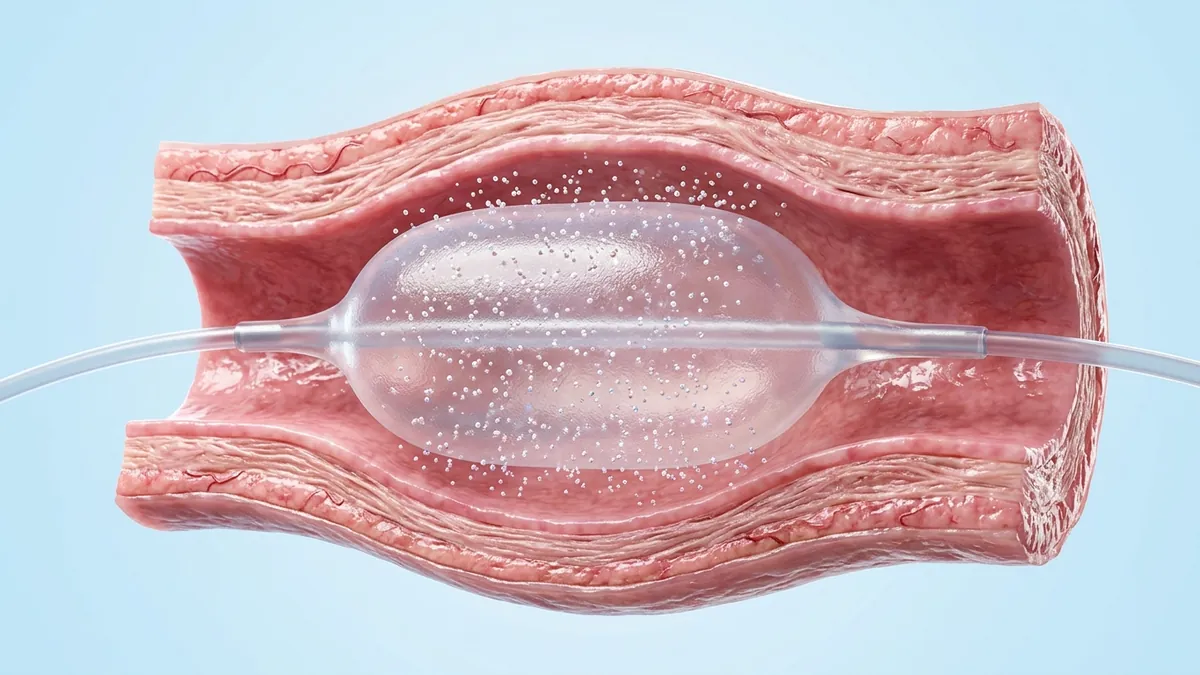
Understanding the Optilume Drug-Coated Balloon for Recurrent Male Urethral Stricture & BPH: Avoiding Open Urethroplasty has become one of the most reassuring conversations we doctors have with men frustrated by slow, straining, or blocked urination. Whether your symptoms come from scar-tissue narrowing of the urine tube (anterior urethral stricture) or a non-cancerous enlarged prostate (benign prostatic hyperplasia, or BPH), a narrowed urinary channel drains your energy, disrupts your sleep, and raises your risk of bladder damage or sudden blockage.
For decades, men with returning strictures faced a frustrating trap: undergo another quick telescopic stretch that usually scarred shut within months, or commit to major open surgical reconstruction of the urethra (open urethroplasty) requiring skin or inner-cheek grafts and weeks of catheter recovery. Be honest, you have probably wondered whether any quick outpatient procedure actually lasts, haven't you?
By pairing gentle mechanical balloon widening with a targeted anti-scarring medication, Optilume bridges the gap between temporary stretching and major surgery. When you visit your Primary Care Physician (PCP) or family GP clinic with urinary trouble, we doctors run simple initial checks to spot infections or kidney strain, then refer you to a specialist urologist to see if this outpatient option fits your anatomy.
📌 Key Takeaways at a Glance
- Dual-action technology: Optilume gently widens a narrowed urinary passage while delivering an anti-scarring medication (paclitaxel) directly into the tissue wall so scar tissue does not clamp back down.
- Two separate systems: Urologist clinics use one specialized balloon for short recurrent anterior urethral strictures (3 cm or less) and a distinct double-lobe balloon system for enlarged prostates (20 to 80 grams).
- Proven durability: Multi-year clinical trials show roughly 77% to 83% of stricture patients remain free from repeat procedures, far outperforming plain dilation while preserving erectile and ejaculatory function.
- Fast outpatient recovery: Performed in 15 to 25 minutes under local numbing gel or light sedation, most men head home the same day wearing a soft catheter for 2 to 5 days.
- Important 6-month precaution: Because tiny traces of paclitaxel enter semen temporarily, men must use condoms with pregnant partners and avoid fathering a child for 6 months after treatment.
What Is the Optilume Drug-Coated Balloon for Recurrent Male Urethral Stricture & BPH, and Can It Help You Avoid Open Urethroplasty?
The Optilume drug-coated balloon is a minimally invasive outpatient treatment that gently widens a narrowed male urethra or enlarged prostate while delivering paclitaxel straight into the tissue wall to stop new scar tissue from forming, helping suitable men avoid major open urethroplasty or prostate surgery.
One detail we doctors always clarify right away is that "Optilume" actually refers to two distinct, purpose-built catheter devices approved across the United States, United Kingdom, Canada, and Australia. The original Optilume Urethral Drug-Coated Balloon treats recurrent scar rings in the front portion of the male urethra, especially the bulbar segment beneath the scrotum. Meanwhile, the newer Optilume BPH Catheter System uses a specially contoured double-lobe balloon designed to part obstructive lateral prostate lobes without heat, steam, or tissue cutting. Pretty surprising, right?
Can it truly spare you from open surgery? For thousands of men with short, returning strictures or moderate prostate enlargement, the answer is yes. Instead of enduring a 2-to-3-hour operating room procedure with an incision between the scrotum and anus (perineal incision), eligible patients receive a 20-minute day-case treatment at an outpatient urology center. Even better, choosing Optilume never burns any bridges—if tough scarring ever returns years later, open urethroplasty or standard prostate procedures remain completely available.
How Does Paclitaxel Stop Scar Tissue From Growing Back Compared to Standard Dilation?
Have you ever wondered why standard rod stretching or an internal telescopic knife cut (direct vision internal urethrotomy, or DVIU) fails more than half the time once a stricture comes back? Think about it for a second. When a tight ring of fibrous tissue inside the spongy urethral wall (spongiofibrosis) gets stretched open by plain force, that stretch creates dozens of tiny micro-tears. Your body immediately treats those micro-tears like a fresh wound, sending repair cells (myofibroblasts) rushing in to lay down dense collagen that contracts tighter than before.
Look at what happens here when a urologist uses Optilume instead. First, controlled balloon inflation expands the narrowed lumen evenly, creating clean micro-fissures that relieve your blockage right away. Second, while the balloon stays inflated against the wall for several minutes, its specialized outer coating transfers a micro-dose of an antiproliferative medication (paclitaxel) directly into those fresh fissures and the surrounding urethral lining (urothelium).
Paclitaxel works locally by stabilizing tiny structural rods inside dividing cells (microtubules), pressing pause on runaway scar-cell multiplication for several weeks while healthy, smooth lining regrows across the widened channel. Now that makes sense, right? In the BPH version, the mechanism adapts to prostate anatomy: the balloon gently separates the upper seam binding the left and right prostate lobes (anterior commissurotomy) and coats that newly opened cleft with paclitaxel so the lobes stay parted instead of fusing back together.
Who Qualifies for Optilume? Key Clinical Cutoffs, Flow Rates, and Stepwise Workup
Before any specialist schedules a balloon procedure, we doctors walk you through a logical stepwise evaluation to make sure we are treating the true culprit behind your weak stream. At your PCP or family GP clinic, we start with a focused symptom score called the International Prostate Symptom Score (IPSS), a physical exam, a midstream urine test (urinalysis and urine culture) to clear out hidden infection, and basic blood work checking kidney filtration (creatinine and eGFR) alongside a prostate blood test (prostate-specific antigen, or PSA) when age-appropriate.
From there, we refer you to a hospital or outpatient urology clinic for three quick diagnostic measurements: an electronic urine flow speed test (uroflowmetry), a painless ultrasound bladder scan checking leftover urine (post-void residual volume, or PVR), and a thin camera inspection of the urethra and bladder (flexible cystoscopy) or contrast X-ray (retrograde urethrogram). Clinical guidelines and the landmark ROBUST III and PINNACLE trials use clear numbers to select ideal candidates:
- Recurrent Urethral Stricture Cutoffs: Adult men with a single anterior or bulbar stricture measuring 3 cm or shorter (ideally 2 cm or less), channel width narrower than 12 French (Fr), at least 1 to 2 failed endoscopic dilations, peak urinary flow rate (
Qmax) below 15 mL/s (normal adult male flow usually exceeds 15 to 20 mL/s), and an IPSS of 11 or higher. - BPH Catheter System Cutoffs: Men aged 50 and up with symptomatic BPH, prostate volume between 20 and 80 grams (cc), prostatic urethral length of 32 to 55 mm, IPSS of 13 or higher, and
Qmaxbetween 5 and 12 mL/s, often with elevated leftover bladder volume above 100 mL. - Key Contraindications: Known allergy to paclitaxel or taxane drugs, an active untreated urinary tract infection (UTI), chronic inflammatory penile scarring (lichen sclerosus), neurogenic bladder weakness, or long complex strictures exceeding 3 cm.
What Happens Before, During, and Right After the Outpatient Optilume Procedure?
Preparing for procedure day is far simpler than preparing for inpatient surgery. Your urology team will collect a urine sample about a week beforehand to confirm zero bacterial growth, and you will receive a single protective antibiotic dose right before treatment. If you take prescription blood thinners such as apixaban, rivaroxaban, warfarin, or clopidogrel, never pause them on your own—we doctors coordinate a safe 2-to-5-day hold plan with your cardiologist or GP clinic.
At the outpatient center or hospital day unit, the procedure itself takes roughly 15 to 25 minutes. Most men stay comfortable with numbing anaesthetic gel placed inside the urethra plus light intravenous sedation or inhaled pain relief, avoiding deep general anesthesia whenever possible. Guided by a tiny flexible camera, the urologist positions the Optilume balloon across the narrowed zone—leaving at least 0.5 to 1 cm of margin on either side—and inflates it to its rated pressure for at least 5 minutes (or holds the BPH balloon in place to complete the lobe split and drug transfer).
Once finished, a soft drainage tube (Foley catheter) is slipped into the bladder and connected to a discreet leg bag tucked under loose sweatpants so you can go home the very same afternoon. Most men wear the catheter for 2 to 5 days (commonly 2 days for BPH and 2 to 5 days for stricture). We rarely stop to think about how localized coatings leave the body, do we? Because small amounts of paclitaxel show up in urine for a few days and in semen for months, men must strictly use condoms if a partner is pregnant and use reliable contraception to avoid fathering a child for 6 full months.
How Does Optilume Compare With Standard Dilation, TURP, and Open Urethroplasty?
Remember how we talked earlier about matching your exact blockage size to the right tool? What do you think when you weigh quick recovery against long-term cure rates? This side-by-side table breaks down how Optilume compares with traditional choices and insurance pathways across the US, UK, Canada, and Australia.
| Treatment Option or Factor | Clinical Explanation & Recommended Action |
|---|---|
| Optilume Stricture Balloon (Strictures ≤ 3 cm) | Delivers 77% to 83% freedom from repeat intervention over 1 to 3+ years in clinical trials, takes 20 minutes outpatient, and protects erectile function. What you should do: Ask your urologist to measure your exact stricture length before agreeing to another plain stretch. |
| Optilume BPH System (Prostate 20–80 cc) | Opens lateral prostate lobes without burning, steam, or permanent metal implants, improving urine flow within 2 weeks while preserving normal ejaculation. What you should do: Request prostate sizing via ultrasound if daily BPH tablets cause lightheadedness or sexual side effects. |
| Plain Balloon Dilation or Internal Cut (DVIU) | Provides fast initial relief, but scar recurrence climbs past 50% to 70% after a second or third repeat procedure due to untreated micro-tears. What you should do: Avoid repeating plain endoscopic cuts multiple times; step up to drug-coated dilation or reconstruction. |
| Open Urethroplasty or Classic TURP Surgery | Urethroplasty achieves 85% to 90%+ permanent success for long (> 3 cm) or traumatic strictures; TURP cores out prostates > 80 cc but carries retrograde ejaculation risk. What you should do: Choose surgery when strictures exceed 3 cm, involve lichen sclerosus, or when prostate size surpasses 80 grams. |
| Medicare, NHS & Private Insurance Access | Supported by dedicated US Medicare outpatient coding, UK NICE guidance (MTG67) on the NHS, and growing Canadian provincial and Australian hospital coverage. What you should do: Have your urology coordinator confirm prior authorization or local public hospital availability ahead of time. |
Real-world follow-up stays simple: your urology clinic typically rechecks your flow speed and bladder emptying at 3, 6, and 12 months. See? That's exactly why we doctors always say tracking objective flow numbers early keeps minor narrowing from ever turning into a midnight emergency.
✔️ What You Should Do & ❌ What to Avoid
- ✔️ Do sip 1.5 to 2 liters of plain water daily: Steady hydration flushes pink-tinged urine gently through your catheter and keeps minor blood clots from forming during the first week.
- ✔️ Do wear snug cotton briefs and secure your leg strap: Anchoring the catheter tubing to your upper thigh prevents painful tugging on the healing urethra when walking around the house.
- ✔️ Do wash gently with warm water and mild unscented soap: Clean around where the tube exits once or twice daily, and sit down to flush toilet water twice after urinating during the first few days after catheter removal.
- ❌ Avoid straddle pressure and heavy gym strain for 2 to 4 weeks: Skip road cycling, stationary spin bikes, horseback riding, motorcycles, and heavy squats or deadlifts until your urologist clears you.
- ❌ Avoid bladder irritants in week one: Hold off on strong double espressos, energy drinks, pub beer or spirits, fizzy citrus sodas, and fiery takeout curries or hot wings while the lining settles.
- ❌ Never skip the 6-month barrier protection rule: Wait until your catheter is out and mild stinging fades (usually 1 to 2 weeks) before resuming sex, then use condoms with pregnant partners and prevent conception for 6 months.
🚨 When to Seek Immediate Emergency Care (Red-Flag Symptoms)
If you or someone near you develops any of these red-flag symptoms, do not wait — call 911 (US & Canada), 999 or 111 (UK), or 000 (Australia) immediately or go straight to the nearest hospital Emergency Room (ER / A&E):
- Complete inability to pass urine (acute urinary retention): Painful, tight lower abdominal swelling with zero urine dripping out—or a catheter bag that suddenly stops draining despite unkinked tubing.
- Signs of spreading urinary or bloodstream infection (urosepsis): Fever of 38.0°C (100.4°F) or higher, uncontrollable shaking chills, sudden confusion, dizziness, or deep back pain under your ribs.
- Heavy, thick bleeding or large clots: Bright-red urine as thick as tomato soup or dark clots blocking your urine stream (light pink or rose-colored urine for a few days is normal).
- Rapidly worsening scrotal or perineal swelling: Severe throbbing pain, redness, heat, or tender bruising spreading between your legs or into the scrotum.
- Severe allergic reaction: Widespread hives, facial or lip swelling, wheezing, or tightness in your throat within hours or days of receiving the paclitaxel coating.
💡 Key Take-Home Message
- Just like we mentioned at the very beginning, Optilume stops the frustrating cycle of repeat plain stretchings by pairing gentle mechanical dilation with localized anti-scarring paclitaxel.
- Accurate pre-procedure sizing—confirming whether you have a bulbar stricture 3 cm or shorter or a 20-to-80-gram BPH prostate—is the single biggest predictor of lasting success.
- Both Optilume systems protect erection quality and normal ejaculation while keeping future surgical options completely intact if ever needed.
- Partnering closely with your family GP or PCP and an experienced urologist ensures safe medication prep, smooth 2-to-5-day catheter care, and strong long-term flow.





No comments yet. Be the first to share your question or experience below.