

Have you ever wondered how it all happens when you blink, when you smile, or when you feel hungry? Behind all this is a very amazing, complex system. That is our nervous system. Today we will talk about this amazing system simply, like talking to a friend.
What is the Nervous System?
Simply put, the nervous system is a system that controls your entire body, like a supercomputer network that communicates messages between each part of your body . It's like the electrical wiring in your house. When you flip a switch, the light turns on, the fan spins, everything in your body happens according to the messages coming from our brain.
There are three main parts to this system:
1. Brain: This is like our 'main computer'. It is responsible for everything we think, remember, feel, and make decisions. Even as you read this article, your brain is interpreting those letters and making them feel to you. Isn't it amazing?
2. Spinal Cord: This is like a 'main highway' that runs from your brain down your spine. It is through this spinal cord that messages from your brain are carried to the rest of your body, and messages from your body are carried back to your brain. Imagine, if something pricks your leg, the pain message travels up the spinal cord at lightning speed to your brain.
3. Nerves: These are the 'smaller roads' that branch out from the spinal cord to every corner of the body. Just like the branches of a tree, these nerves are connected to every organ and tissue in our body. This network of nerves is what carries messages back and forth between the brain and the body.
So, the brain, spinal cord, and nerves come together to form the nervous system. It works together like a well-trained team to control the functioning of our entire body.
What are the main parts of the nervous system?
Let's now take a closer look at the main "players" of the nervous system. There are two main parts to this. It's like a central government in a country, and that government distributes power to the provinces.
1. Central Nervous System (CNS):
This is the 'Control Center' of our nervous system. To be precise, it consists of our brain and spinal cord . These two are the ones who make the main decisions, analyze the incoming information, and issue the necessary commands. Imagine, when you are walking on the road and suddenly see a car coming, this central nervous system gives the command to your body to quickly move away.
2. Peripheral Nervous System (PNS):
This is the network of nerves that extends from the central nervous system to the rest of the body. They are like 'agents' that take messages from the control center and do their jobs, and that bring information from the outside back to the control center. These peripheral nerves are spread everywhere from the tip of your finger to your earlobe.
"Simply put, the central nervous system (CNS) is like the 'boss', who makes the decisions. The peripheral nervous system (PNS) is like the 'workers' who carry the boss's messages and do the work."
This peripheral nervous system is further divided into sub-parts, but we don't need to go into too much detail about it. For now, let's understand this main division. The important thing is that both of these parts work together, in a very coordinated way. One cannot work without the other. It's like a train needs both tracks and a train to run.
So how does this nervous system work? It's amazing!
Okay, now let's see how this amazing system actually works. It's like sending messages by email, but much more complex and faster.
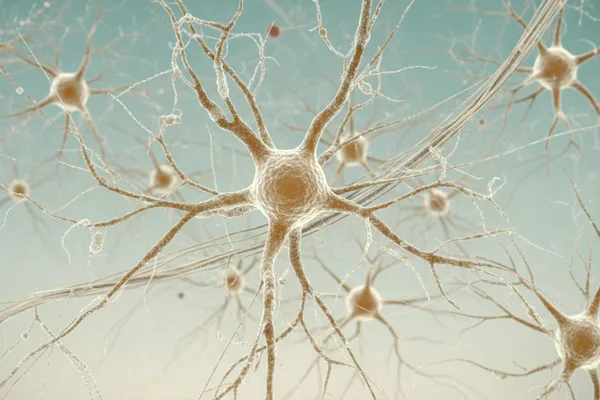
There is a tiny, but very important 'hero' in this whole process. That is special cells called neurons . There are billions of these neurons in our bodies, which are so small that you can't even imagine! Like tiny pieces of electrical wire soldered together, they come together to form our 'communication network'.
What is a neuron?
A neuron is the basic unit of the nervous system, like a brick. It's like someone who takes a message and passes it on to someone else quickly. These neurons are connected to each other and exchange information through electrochemical signals . Imagine, when you hold a hot cup of tea, that 'hot' message starts with the neurons in your hand, jumps from one neuron to another, and goes to the brain in an instant, like a game of 'dominoes'. Then the brain responds to it and sends a message back to your hand through the neurons saying, 'Take your hand away, you'll get burned!' All this happens in the blink of an eye, at a speed you can't even imagine!
Are there types of neurons?
Yes, not all neurons do the same job. Just like people in our society have different jobs (like doctors, engineers, teachers), neurons also have specific functions. We can mainly classify them as follows:
- Sensory Neurons: As the name suggests, these are the ones that take information from our senses – eyes, ears, nose, tongue, skin, etc. – and send it to the brain and spinal cord. When you see a beautiful flower, hear a song, eat a delicious meal, or feel a mosquito bite, these sensory neurons are what tell the brain all this.
- Motor Neurons: These neurons carry messages from the brain and spinal cord to our muscles and glands. Simply put, these motor neurons help you move your arm, lift your leg, talk, and smile. Think about it, when you want to run, the brain sends the command to your leg muscles to 'run' through these motor neurons.
- Interneurons: These are like 'intermediaries'. They coordinate, process, and sometimes make small decisions about the messages coming from sensory neurons before they are sent to motor neurons. They are mostly found in the central nervous system, which is the brain and spinal cord.
These billions of neurons control how we think, what we learn, how we move, and how we feel . Not only that, but this nervous system also controls many important processes that occur inside our bodies without us even realizing it.
For example, look at:
- Breathing: We don't think about breathing. It happens automatically. It is controlled by the nervous system.
- Digestion: The digestion of the food we eat is also an automatic process. The nervous system activates the muscles and glands involved in this process.
- Heart rate: This system also controls the rate at which our heart beats. When you run, your heart beats faster, and when you sleep, it beats slower. These changes are made based on signals from the nervous system.
So, do you understand how amazing, complex, and indispensable this nervous system is? It's like the 'Control Room' in our body, everything happens based on its knowledge.
Why is a healthy nervous system so important to us?
Now that you have some idea about the nervous system, you might be thinking, 'Okay, this is very complex and amazing. So what's the importance of keeping it healthy?'
Imagine what would happen if something went wrong with the electrical system in your home? Maybe the lights wouldn't turn on, the fan wouldn't turn on, or something even bigger. Similarly, if there is a weakness, damage, or disease in our nervous system, it could affect our entire health and our daily lives.
- Mobility problems: Problems with the nervous system can make it difficult to walk, hold things, and maintain balance. Sometimes, limbs can become paralyzed.
- Changes in sensation: Sometimes there may be numbness, extreme pain, or a loss of sensation to touch, heat, or cold.
- Thinking and memory impairments: Memory loss, difficulty learning new things, difficulty concentrating, and difficulty making decisions may occur.
- Changes in emotional regulation: Some neurological diseases can cause changes in mood, such as excessive anger, sadness, and fear.
- Problems with the body's internal processes: Things like breathing difficulties, digestive problems, heart rhythm irregularities, and difficulty urinating can also be related to problems with the nervous system.
Therefore, keeping our nervous system healthy and functioning well is very important for our overall quality of life. We need to take care of it. Simple things like a balanced diet, adequate sleep, daily exercise, and reducing stress can help keep the nervous system healthy. Also, if you have any unusual symptoms, for example, persistent headaches, numbness, or difficulty walking, it is very important to consult a doctor.
So, what is the most important thing to remember from what we talked about today? (Take-Home Message)
We talked a lot about the Nervous System, a very amazing and indispensable system in our body, didn't we? I hope you have a good understanding of it now.
Simply put, the nervous system is the 'master control room' that controls your entire body, helping you think, feel, move, and learn.
- This amazing system is made up of the brain, spinal cord, and nerves spread throughout the body.
- This exchange of messages occurs at lightning speed through small, yet very powerful cells called neurons.
- It is because this system is working properly that we breathe, digest food, our heart beats, and control all our actions, feelings, and thoughts.
So, your nervous system is like the most precious asset you have. Don't take it for granted. It is your responsibility to keep it healthy. A good nutritious diet, adequate sleep, a little daily exercise, and mental happiness are very important for this. If you feel any problem or anything unusual, don't ignore it and don't forget to seek medical advice immediately.
Take care of your 'supercomputer system'! Then you can live a healthy, happy, and energetic life.
Nervous system, brain, spinal cord, neurons, central nervous system, peripheral nervous system, nervous health




💬 Comments (0)
No comments yet. Be the first to share your thoughts here.
Add Your Comment