
Is your little one down with chickenpox today, or are you feeling a bit worried about what to expect? If your child gets sick, it is completely normal to feel a bit anxious and want to make them feel better right away.
The good news is that chickenpox is usually a mild illness that goes away on its own. With the right care and a lot of extra love at home, your child will be feeling back to normal in no time.
Let us walk through everything you need to know about chickenpox, simple ways to keep your child comfortable, and signs that mean you should call your doctor.
Key Takeaways for Parents.
- Chickenpox is a common viral infection that causes itchy, fluid-filled blisters all over the body.
- Home care focuses on comfort, such as soothing baths, calamine lotion, and keeping fingernails short.
- Never give aspirin to a child with chickenpox because it can cause a very dangerous condition called Reye syndrome.
- Watch for warning signs like high fever lasting over four days, trouble breathing, or infected sores.
- The chickenpox vaccine is the safest and best way to protect your child from getting sick.
Know your body mass index (BMI) and weight classification
What Is Chickenpox and What Are the Symptoms?
Simply put, chickenpox is a common illness caused by a virus. Doctors also call this virus varicella. While it used to be much more common in the past, widespread vaccines have made it less frequent today. Even so, young children can still catch it.
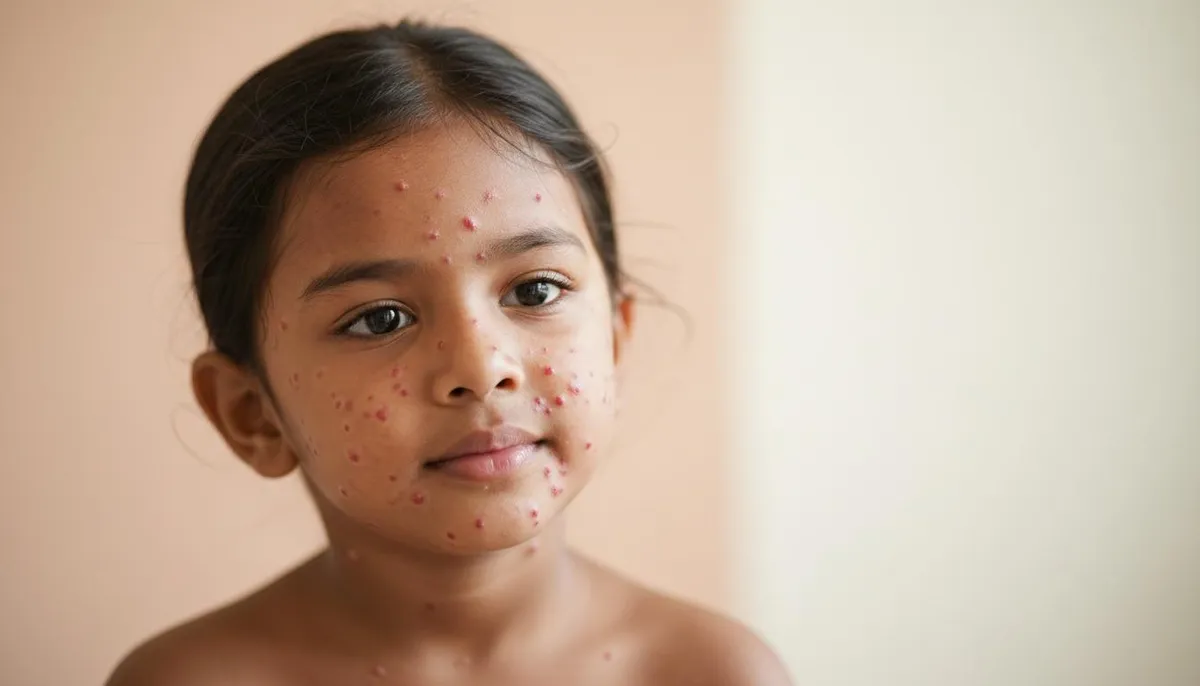
Let us look closely at the main sign of chickenpox: the itchy rash. These bumps do not all appear at once. Instead, they come out in waves over two to four days.
First, you will notice small red bumps that look a lot like tiny pimples or mosquito bites. Next, these spots turn into thin-walled fluid-filled blisters that look like tiny water bubbles. Soon after, the blisters pop and turn into small open sores. Finally, those open sores dry up and form brownish scabs.
Because the spots come out in waves, you will often see all three stages on your child's body at the same time. While some fresh red spots are just starting, older ones might be blisters or dry scabs.
The rash usually starts on the belly, back, or face. From there, it spreads across the rest of the body, including the scalp, inside the mouth, on the arms and legs, and even in private areas. Some children only get a few spots. This others are covered from head to toe.
Along with the itchy rash, your child might also show other signs. They can run a high fever and feel chilled. They may complain of a sore throat or a headache. Some children feel a mild stomachache. This others feel tired and lose their appetite a day or two before the rash even appears.
How to Care for Chickenpox at Home.
If your child has chickenpox, there is a lot you can do to help them feel comfortable at home. Your main goal is to reduce their discomfort and help them rest. Remember that chickenpox usually does not need special medical treatment because it heals on its own. You are simply treating the symptoms.
How to Soothe the Itch.
The hardest part of chickenpox for children is the constant, driving itch. It can be very hard for them to bear. To help lower the itching, you can try these simple steps:
- Use clean cloths soaked in cool water to gently press on the itchy spots. You can also give your child a lukewarm bath three or four times a day, especially during the first few days.
- You can buy special oatmeal bath products at pharmacies or supermarkets to help calm the itchy skin. Remember that taking a bath will not make the rash spread.
- After bathing, gently pat your child's skin dry with a towel. Never rub the skin hard, because rubbing can break open the blisters and make the itching worse.
- Apply calamine lotion to the itchy spots. However, keep it away from the face, especially around the sensitive eye area.
- Ask your doctor or pharmacist about safe over-the-counter pain or allergy medicines, such as antihistamines, that match your child's age and weight.
Tips to Stop Your Child From Scratching.
Scratching can break open the blisters, lead to skin infections, and leave permanent scars. To keep your child from scratching, try these tips:
- Put soft cotton mittens or clean socks over your child's hands when they go to sleep so they do not scratch in their sleep.
- Keep your child's fingernails trimmed short and clean at all times to reduce the risk of skin damage and germs.
What to Do If Sores Form in the Mouth.
Chickenpox blisters can sometimes form inside the mouth, making eating and drinking painful for your child. If this happens, try these ideas:
- Offer cool, soft, mild foods like yogurt, plain ice cream, lukewarm soups, mashed rice, or gelatin.
- Avoid sour foods like orange juice or tomatoes, and salty snacks like pretzels, because they will sting and make mouth pain worse.
- Give acetaminophen, also known as paracetamol, in the correct dose recommended by your doctor to help ease pain and fever.
Important Warning About Aspirin.
Never give aspirin to a child who has chickenpox, especially when they have a fever. Aspirin can trigger a very rare and life-threatening condition called Reye syndrome, which damages the brain and liver. Always choose safe alternatives like paracetamol.
When to Call a Doctor.
Most cases of chickenpox clear up in a week or two without trouble. However, complications can sometimes happen. You should call your doctor right away if your child shows any of these warning signs:
- Fever lasts for more than four days or suddenly gets much higher.
- Your child develops a severe cough or has trouble breathing, such as breathing very fast or pulling in the chest muscles.
- A blister starts leaking thick yellow or green pus, or the skin around it becomes red, swollen, warm, and painful to the touch, which points to a bacterial skin infection.
- Your child complains of a severe, stubborn headache or a young child cries continuously.
- Your child seems unusually sleepy, is hard to wake up, or shows sudden changes in behavior.
- Your child squints in bright light or complains that their eyes hurt.
- Your child has trouble walking or seems unsteady on their feet.
- Your child seems confused, dizzy, or disoriented.
- Your child vomits often and cannot keep any food or fluids down.
- Your child looks very weak, pale, or seriously ill.
- Your child has a stiff neck along with a fever.
How to Protect Your Child From Chickenpox.
Preventing chickenpox is always better than treating it after it starts. Fortunately, effective prevention methods exist:
- The chickenpox vaccine is the best protection. Doctors usually recommend the first dose between 12 and 15 months of age, followed by a booster dose between 4 and 6 years of age. While vaccinated children can still sometimes catch chickenpox, it usually presents as a very mild illness with only a few spots and quick recovery.
- Practice good hygiene because chickenpox spreads very easily. If someone at home is sick, family members should wash their hands often with soap and water. Keep the sick child at home until all the blisters have dried and formed scabs. Keep them away from school and public places to protect others, especially pregnant women and people with weak immune systems.
| What to Do (Do's). | What to Avoid (Don'ts). |
|---|---|
| Give lukewarm baths and use calamine lotion for itch relief. | Never give aspirin to a child with a fever or viral illness. |
| Trim your child's fingernails short to prevent skin injury. | Do not scrub or rub the skin dry with a rough towel. |
| Offer cool, soft foods and plenty of safe fluids. | Avoid spicy, salty, or acidic foods that sting mouth sores. |
| Keep your child home until all blisters scab over. | Do not send your sick child to school or public spaces. |
Key Points to Remember.
We have covered a lot of helpful information about chickenpox. Here are the most important things to keep in mind:
- Chickenpox is usually a mild illness that improves on its own in a few days, so try not to worry too much.
- Your main focus should be easing your child's itch and discomfort with loving care and attention.
- Never give aspirin to a child with chickenpox, and use paracetamol instead for fever or pain.
- Watch closely for warning signs and call your doctor right away if you notice any red flags.
- Make sure your child receives the chickenpox vaccine on schedule for long-term protection.





No comments yet. Be the first to share your question or experience below.