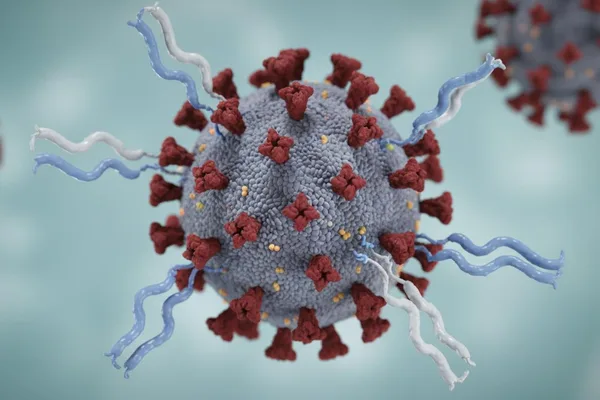
Let's learn about COVID-19 and Antibody Testing in a simple way.

Let's learn about COVID-19 and Antibody Testing in a simple way.

Do you remember when the COVID-19 pandemic started? Everyone was talking about this virus and how to protect themselves from it. So, one of the questions that many people asked was, 'I don't know if I got sick and got better, or if I got the vaccine and my body was protected?' Antibody testing is something that helps answer questions like that. Let's talk about this in a simple way today, okay?

So what are these antibodies?

Simply put, antibodies are like the body's security guards. To be precise, they are a special type of protein made by our immune system . Doctors sometimes call them 'immunoglobulins' , which is a bit of a scientific name.

Imagine if a thief came to your house, you would have a security guard who would recognize the thief and chase him away. That's how these antibodies work. When a germ, that is, a bacteria or a virus, enters our body, these antibodies 'recognize' that germ. They recognize it and fight it, and help destroy that germ, or at least remove it from our body.

These antibodies are usually produced in our bodies either after we have had an illness and recovered, or after we have been vaccinated against that illness. The best part is that once these antibodies are produced, some of them stay in our bodies for a while. Do you know why? If the same germ tries to enter our bodies again, these antibodies quickly recognize it and fight it off faster than before, protecting us. It's like a soldier who has won a war and is ready for the next time the enemy comes.

So, what is this antibody test?

This is very simple. An antibody test is a test to see if you have those antibodies we talked about earlier in your blood, and if so, how many. Just like the police are looking for evidence to catch a thief, doctors take a little of your blood and look for the 'soldiers' that have been developed to fight off those germs.

Why are antibody tests performed for COVID-19?

Now you may be wondering why these antibody tests are being done for COVID-19. There are several reasons.

  • Find out if you've had the disease before: Some people get COVID-19 but don't show any major symptoms. Or they just have a mild cold. So they don't even know if they've had the disease or not. In such cases, this test can check if your body has developed antibodies against the COVID-19 virus. If you have such antibodies, it means that you've been infected with COVID-19 before.
  • See how immunity is after vaccination:We got the COVID-19 vaccine to protect the body, that is, to produce antibodies. So if you take a test like this a few days after getting the vaccine, you can get an idea of ​​whether your body has produced the right antibodies for it, and how much. But remember, it's not just the amount of antibodies that determines our immunity . We'll talk about that later.
  • For research and public health : When you conduct such tests among a large population, you can find out a lot of valuable information, such as how many people have contracted the disease, how effective the vaccine is, and how the virus spreads. This information is used to make decisions about how to control the epidemic as a country.
  • In some special cases: For example, antibodies from the blood of people who have recovered from COVID-19 (called 'convalescent plasma' ) can be taken and given to people who are critically ill as a treatment. These antibody tests can also help determine whether it is appropriate to receive plasma from such a person.

There are different types of antibodies in our bodies. When we talk about COVID-19 , we mainly focus on two types of antibodies.

1. IgM Antibodies: These are the first antibodies to be produced when a germ enters the body. They are like the first army to arrive at the start of a battle. They indicate that there has been a recent infection. However, these IgM antibodies usually disappear from the body after a while.

2. IgG Antibodies: These take a while to develop, and are most often seen a few days after IgM antibodies have formed. But these IgG antibodies are the ones that provide long-lasting protection . Like seasoned, skilled soldiers, these are the ones that stay in the body for a long time, ready to fight if the virus comes back. These IgG antibodies are often looked at to see if we have long-term protection after COVID-19 or after a vaccine.

How is this antibody test done?

It's very simple. When you go to see a doctor, if they decide you need this test, they'll just take a small sample of blood from a vein in your arm . It's not painful, just like giving blood for a regular blood test. Then that blood sample is sent to a lab for testing. Sometimes there are rapid test kits that take a small drop of blood from your finger, but they may not be as accurate as lab tests.

How to understand the results of the test report?

When your antibody test result comes back, it will say either 'Positive' or 'Negative'.

  • A positive result: This means that antibodies to the COVID-19 virus have been detected in your blood . This means,
  • You may have had COVID-19 before (with or without symptoms).
  • You may have received the COVID-19 vaccine and your body may have developed antibodies in response to it.
  • A negative result: This means that antibodies to the COVID-19 virus were not detected in your blood. This can be due to several reasons:
  • You may have never had COVID-19.
  • You may not have been vaccinated, or it may not have been long enough since you got the vaccine to develop antibodies (usually it takes a few weeks).
  • If it's been a long time since you got sick or got vaccinated, your antibody levels may decrease over time.
  • Very rarely, some people may develop antibodies, but the levels may be too low to be detected by testing.

The most important thing: It's best to talk to your doctor about the results of an antibody test. He or she can explain it to you in a way that's appropriate for your situation.

Important things to remember about antibody tests

While COVID-19 antibody tests are very useful, there are a few things you should definitely know about them.

  • Having antibodies is not 100% protection: Having antibodies in your body does not mean that you will never get COVID-19 again. Antibodies are only one part of our immune system . In addition, many other things, such as ' T- cells', contribute to our protection. Therefore, even if you have antibodies, you can get sick again, but if you do, the disease is likely to be less severe.
  • Antibody levels change over time: The amount of antibodies our bodies produce is not always the same. Their levels can gradually decrease over time. So, even if your antibody levels are high today, they may decrease in a few months.
  • This is not a test to see if you have the disease: This is where many people make mistakes. An antibody test only tells you whether you have had the disease in the past or whether you have developed antibodies from the vaccine. It cannot tell you whether you are currently infected with COVID-19 or whether you can infect someone else. That is done either by a PCR test or a Rapid Antigen Test .
  • Different tests, different results:There are many different types of antibody tests on the market. Not all of them are equally sensitive. Some tests look for antibodies to different parts of the COVID-19 virus. Therefore, the results of a test done by one lab may be slightly different from the results of a test done by another lab.
  • Antibodies after vaccination: Not everyone develops antibodies in the same way after receiving the COVID-19 vaccine. It can vary depending on factors such as age, whether there are other diseases , and the type of vaccine received.

Therefore, we should not stop practicing the health practices we follow to protect ourselves from COVID-19 (wearing masks, washing hands, maintaining social distance) based solely on the results of an antibody test. It is very important to continue those practices.

So, what are the things we need to remember from all of this? (Take-Home Message)

We've talked a lot about COVID-19 Antibody Testing. So, here are some simple things to keep in mind:

  • Antibodies are special proteins made by the immune system that fight germs in our body.
  • A COVID-19 antibody test checks whether your blood has antibodies against the virus.
  • This will help you determine whether you have previously had the disease or whether you have developed antibodies from the vaccine .
  • A positive result means that antibodies are present. A negative result means that antibodies could not be detected.
  • However, this test is not designed to detect an existing infection . That is done using either a PCR or an Antigen Test.
  • Even if you have antibodies, don't assume that you are 100% protected . It is essential to continue following good health practices.
  • Antibody levels can change over time.
  • If you have any doubts about your test results, be sure to talk to your doctor .

I hope this information is helpful to you. Since the COVID-19 pandemic is not over yet, it is important for all of us to remain vigilant. If you have any concerns, do not hesitate to seek medical advice.

👩🏽‍⚕️ Additional questions (FAQs)

💬 What is antibody testing for Covid?

This is a blood test that checks whether your blood contains 'antibodies', which are substances that our body makes to fight against the virus when you contract Covid or are given a vaccine.

💬 Is this way of checking for antibodies in the body effective in determining if I have COVID?

No! This test cannot tell if you have COVID now (current infection). You need to do a PCR or Rapid Antigen (RAT) test for that. This antibody test only shows whether you have had COVID 'in the past' and recovered.

💬 Do these antibodies definitely appear in the body of someone who has been vaccinated against Covid?

In most cases, yes. If you take this test a few weeks after getting vaccinated, the report will show that you definitely have enough antibodies in your body to protect you from Covid.


` Antibody Testing, COVID-19, Covid-19, Antibodies, Immunity, Virus

⚠️ Important: The medical articles and information on Nirogi Lanka are for general awareness only, and are by no means a substitute for professional medical advice, diagnosis, or treatment. For any medical problem you have, consult a qualified physician immediately.

💬 Comments (0)

No comments yet. Be the first to share your thoughts here.

Add Your Comment

Please calculate: 7 + 7 =
Let's learn about COVID-19 and Antibody Testing in a simple way.

Let's learn about COVID-19 and Antibody Testing in a simple way.

Do you remember when the COVID-19 pandemic started? Everyone was talking about this virus and how to protect themselves from it. So, one of the questions that many people asked was, 'I don't know if I got sick and got better, or if I got the vaccine and my body was protected?' Antibody testing is something that helps answer questions like that. Let's talk about this in a simple way today, okay?

So what are these antibodies?

Simply put, antibodies are like the body's security guards. To be precise, they are a special type of protein made by our immune system . Doctors sometimes call them 'immunoglobulins' , which is a bit of a scientific name.

Imagine if a thief came to your house, you would have a security guard who would recognize the thief and chase him away. That's how these antibodies work. When a germ, that is, a bacteria or a virus, enters our body, these antibodies 'recognize' that germ. They recognize it and fight it, and help destroy that germ, or at least remove it from our body.

These antibodies are usually produced in our bodies either after we have had an illness and recovered, or after we have been vaccinated against that illness. The best part is that once these antibodies are produced, some of them stay in our bodies for a while. Do you know why? If the same germ tries to enter our bodies again, these antibodies quickly recognize it and fight it off faster than before, protecting us. It's like a soldier who has won a war and is ready for the next time the enemy comes.

So, what is this antibody test?

This is very simple. An antibody test is a test to see if you have those antibodies we talked about earlier in your blood, and if so, how many. Just like the police are looking for evidence to catch a thief, doctors take a little of your blood and look for the 'soldiers' that have been developed to fight off those germs.

Why are antibody tests performed for COVID-19?

Now you may be wondering why these antibody tests are being done for COVID-19. There are several reasons.

  • Find out if you've had the disease before: Some people get COVID-19 but don't show any major symptoms. Or they just have a mild cold. So they don't even know if they've had the disease or not. In such cases, this test can check if your body has developed antibodies against the COVID-19 virus. If you have such antibodies, it means that you've been infected with COVID-19 before.
  • See how immunity is after vaccination:We got the COVID-19 vaccine to protect the body, that is, to produce antibodies. So if you take a test like this a few days after getting the vaccine, you can get an idea of ​​whether your body has produced the right antibodies for it, and how much. But remember, it's not just the amount of antibodies that determines our immunity . We'll talk about that later.
  • For research and public health : When you conduct such tests among a large population, you can find out a lot of valuable information, such as how many people have contracted the disease, how effective the vaccine is, and how the virus spreads. This information is used to make decisions about how to control the epidemic as a country.
  • In some special cases: For example, antibodies from the blood of people who have recovered from COVID-19 (called 'convalescent plasma' ) can be taken and given to people who are critically ill as a treatment. These antibody tests can also help determine whether it is appropriate to receive plasma from such a person.

There are different types of antibodies in our bodies. When we talk about COVID-19 , we mainly focus on two types of antibodies.

1. IgM Antibodies: These are the first antibodies to be produced when a germ enters the body. They are like the first army to arrive at the start of a battle. They indicate that there has been a recent infection. However, these IgM antibodies usually disappear from the body after a while.

2. IgG Antibodies: These take a while to develop, and are most often seen a few days after IgM antibodies have formed. But these IgG antibodies are the ones that provide long-lasting protection . Like seasoned, skilled soldiers, these are the ones that stay in the body for a long time, ready to fight if the virus comes back. These IgG antibodies are often looked at to see if we have long-term protection after COVID-19 or after a vaccine.

How is this antibody test done?

It's very simple. When you go to see a doctor, if they decide you need this test, they'll just take a small sample of blood from a vein in your arm . It's not painful, just like giving blood for a regular blood test. Then that blood sample is sent to a lab for testing. Sometimes there are rapid test kits that take a small drop of blood from your finger, but they may not be as accurate as lab tests.

How to understand the results of the test report?

When your antibody test result comes back, it will say either 'Positive' or 'Negative'.

  • A positive result: This means that antibodies to the COVID-19 virus have been detected in your blood . This means,
  • You may have had COVID-19 before (with or without symptoms).
  • You may have received the COVID-19 vaccine and your body may have developed antibodies in response to it.
  • A negative result: This means that antibodies to the COVID-19 virus were not detected in your blood. This can be due to several reasons:
  • You may have never had COVID-19.
  • You may not have been vaccinated, or it may not have been long enough since you got the vaccine to develop antibodies (usually it takes a few weeks).
  • If it's been a long time since you got sick or got vaccinated, your antibody levels may decrease over time.
  • Very rarely, some people may develop antibodies, but the levels may be too low to be detected by testing.

The most important thing: It's best to talk to your doctor about the results of an antibody test. He or she can explain it to you in a way that's appropriate for your situation.

Important things to remember about antibody tests

While COVID-19 antibody tests are very useful, there are a few things you should definitely know about them.

  • Having antibodies is not 100% protection: Having antibodies in your body does not mean that you will never get COVID-19 again. Antibodies are only one part of our immune system . In addition, many other things, such as ' T- cells', contribute to our protection. Therefore, even if you have antibodies, you can get sick again, but if you do, the disease is likely to be less severe.
  • Antibody levels change over time: The amount of antibodies our bodies produce is not always the same. Their levels can gradually decrease over time. So, even if your antibody levels are high today, they may decrease in a few months.
  • This is not a test to see if you have the disease: This is where many people make mistakes. An antibody test only tells you whether you have had the disease in the past or whether you have developed antibodies from the vaccine. It cannot tell you whether you are currently infected with COVID-19 or whether you can infect someone else. That is done either by a PCR test or a Rapid Antigen Test .
  • Different tests, different results:There are many different types of antibody tests on the market. Not all of them are equally sensitive. Some tests look for antibodies to different parts of the COVID-19 virus. Therefore, the results of a test done by one lab may be slightly different from the results of a test done by another lab.
  • Antibodies after vaccination: Not everyone develops antibodies in the same way after receiving the COVID-19 vaccine. It can vary depending on factors such as age, whether there are other diseases , and the type of vaccine received.

Therefore, we should not stop practicing the health practices we follow to protect ourselves from COVID-19 (wearing masks, washing hands, maintaining social distance) based solely on the results of an antibody test. It is very important to continue those practices.

So, what are the things we need to remember from all of this? (Take-Home Message)

We've talked a lot about COVID-19 Antibody Testing. So, here are some simple things to keep in mind:

  • Antibodies are special proteins made by the immune system that fight germs in our body.
  • A COVID-19 antibody test checks whether your blood has antibodies against the virus.
  • This will help you determine whether you have previously had the disease or whether you have developed antibodies from the vaccine .
  • A positive result means that antibodies are present. A negative result means that antibodies could not be detected.
  • However, this test is not designed to detect an existing infection . That is done using either a PCR or an Antigen Test.
  • Even if you have antibodies, don't assume that you are 100% protected . It is essential to continue following good health practices.
  • Antibody levels can change over time.
  • If you have any doubts about your test results, be sure to talk to your doctor .

I hope this information is helpful to you. Since the COVID-19 pandemic is not over yet, it is important for all of us to remain vigilant. If you have any concerns, do not hesitate to seek medical advice.

👩🏽‍⚕️ Additional questions (FAQs)

💬 What is antibody testing for Covid?

This is a blood test that checks whether your blood contains 'antibodies', which are substances that our body makes to fight against the virus when you contract Covid or are given a vaccine.

💬 Is this way of checking for antibodies in the body effective in determining if I have COVID?

No! This test cannot tell if you have COVID now (current infection). You need to do a PCR or Rapid Antigen (RAT) test for that. This antibody test only shows whether you have had COVID 'in the past' and recovered.

💬 Do these antibodies definitely appear in the body of someone who has been vaccinated against Covid?

In most cases, yes. If you take this test a few weeks after getting vaccinated, the report will show that you definitely have enough antibodies in your body to protect you from Covid.


` Antibody Testing, COVID-19, Covid-19, Antibodies, Immunity, Virus

⚠️ Important: The medical articles and information on Nirogi Lanka are for general awareness only, and are by no means a substitute for professional medical advice, diagnosis, or treatment. For any medical problem you have, consult a qualified physician immediately.

💬 Comments (0)

No comments yet. Be the first to share your thoughts here.

Add Your Comment

Please calculate: 7 + 7 =