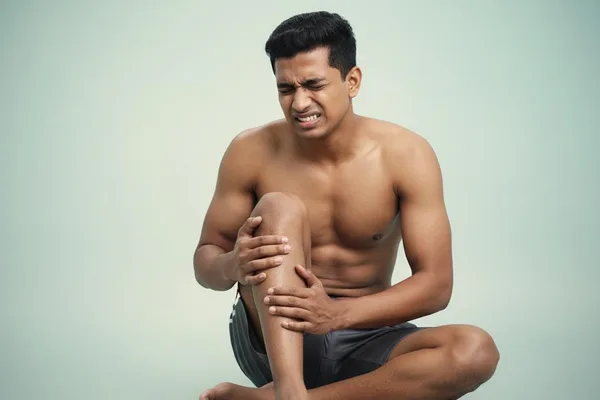
Have you ever had a sharp pain in the back of your knee while playing, running, jumping, or suddenly falling? Is your knee swollen, unable to bend or straighten, and having difficulty walking? At times like these, we think it's just a simple sprain. But this could be something more serious, an injury to an important ligament at the back of the knee. That's what we're talking about today.
Simply put, what is a PCL injury?
Our knee joint is a very complex and important joint. Our thighbone and lower leg bone are connected by strong bands called ligaments. These ligaments hold the knee in place, preventing it from moving around unnecessarily and controlling its movements. Among these ligaments, the strongest ligament
at the back of the knee is
the Posterior Cruciate Ligament , or
PCL for short. When this PCL ligament is damaged in an accident, i.e. sprained, slightly torn, or completely torn, we call it a PCL injury. You may have heard of ACL (Anterior Cruciate Ligament) injuries. They happen to athletes all the time. The PCL is the same, but it is a ligament at the back of the knee. Compared to ACL injuries, PCL injuries are a slightly less common condition. Less than 20% of knee ligament injuries are PCL injuries.
What levels of damage can this cause?
Doctors classify this PCL injury into four main levels based on the severity. It's important for you to know this too.
| Grade of damage | Simple description |
|---|
| Grade I | A partial tear or damage to the ligament. |
| Grade II | The ligament is somewhat torn, and the knee feels a little loose. |
| Grade III | The ligament is completely torn/ruptured. The knee is unstable. (A complete tear) |
| Grade IV | The PCL was damaged, but at the same time another ligament in the knee was also damaged. |
What are the symptoms of a PCL injury?
Symptoms of a PCL injury vary from person to person, but there are some common symptoms:
- Pain that starts behind the knee. This pain may gradually increase.
- Knee swelling shortly after the accident.
- The knee feels unstable , like it's giving way, and there's no control.
- Difficulty bending and straightening the knee, feeling stiff .
- Difficulty walking , especially when going down stairs or on slopes.
But remember, sometimes minor injuries may not cause these symptoms. So it's important to pay attention to any minor changes or pain in your knee.
How do these PCL injuries occur?
This injury usually occurs after a hard blow or accident to the knee. There are several main causes:
- Falling on a bent knee: This happens most often. It can happen when you suddenly fall on your knee while playing or running.
- A hard blow to the front of the knee: Imagine hitting your knee on the dashboard, like in a car accident. Such a hard blow can damage the PCL.
- Hyperextension of the knee: This can occur if the knee goes back beyond its limit.
- Dislocation of the knee joint: This is a serious condition. If this happens, there is a high chance of damage to the ligaments.
- Landing incorrectly after a jump.
How do you find this, Doctor?
When you see a doctor, he or she will first ask you about the injury and your symptoms. Then, they will examine your knee carefully. They will bend, straighten, and move your knee in different directions to check for stability. There are special tests to determine if the PCL is damaged. In addition, they may also perform the following tests to determine the extent of the damage:
- X-rays: This can check for bone damage or fractures.
- MRI (Magnetic Resonance Imaging) scan: This is the best way to clearly see damage to soft tissues like ligaments and cartilage .
- CT (Computed Tomography) scan: This may also be necessary in some special cases.
What are the treatments available?
Treatment depends on the severity of your PCL injury. Minor injuries can usually be treated without surgery, but more severe injuries may require surgery.
Non-surgical Treatment
Most mild to moderate PCL injuries can be treated with these methods.
- Rest : Stay away from any activities that put stress on the knee and increase pain for a while.
- Ice: Applying an ice pack to the injured area for about 15 minutes, about four times a day. This will reduce pain and swelling.
- Compression: Wrapping the knee with an elastic bandage will also help control swelling.
- Elevation : Whenever possible, keep your leg elevated above your heart by propping it up on a pillow.
- Crutches: Your doctor may recommend using crutches to reduce the weight on your knee.
- Knee brace: This may be recommended to keep the knee stable and protected.
- Physical therapy : This is very important . Exercises to strengthen the muscles around the knee and restore movement and stability to the knee should be done under the guidance of a physical therapist.
- Painkillers: Your doctor may prescribe medications such as NSAIDs (Non-steroidal anti-inflammatory drugs) to reduce pain and swelling.
Surgery
If your PCL is completely torn (Grade III), if other ligaments in your knee are also damaged (Grade IV), or if your knee instability does not improve with nonsurgical treatment, your doctor may recommend surgery. This is often done through a procedure called
knee arthroscopy . This involves inserting a camera and instruments through several small incisions to reconstruct the torn ligament. This is a less invasive and less painful procedure than traditional open surgery.
When should you definitely see a doctor?
If you have an injury to your knee, it's best not to ignore any of the symptoms. If that happens, see a doctor immediately.
If you have these symptoms, seek medical advice immediately.
| Characteristic | Why is it serious? |
| Having severe pain and swelling in the knee | This could be a sign of serious damage. |
| Knee instability, a feeling of wobbling | It may be a sign that the ligament has completely torn. |
| Foot numbness | It may be a sign that a nerve has been damaged. |
| Discoloration or feeling cold in the feet | It could be a sign of damage to a blood vessel and a loss of blood supply. This is an emergency. |
Take-Home Message
- The PCL is an important ligament located at the back of the knee that helps keep the knee stable.
- PCL injuries can be caused by falls, hard blows to the knee, and bending the knee too far back.
- The main symptoms are knee pain, swelling, and instability.
- Treatment options depend on the severity of the injury. There are a variety of treatments, from rest and physical therapy to surgery.
- If you have severe symptoms, such as numbness or discoloration in your foot, it is an emergency. See your doctor immediately.
- For the best recovery, always follow the instructions given by your doctor and physical therapist exactly.
Knee pain, PCL injury Sinhala, posterior cruciate ligament, knee injuries, sports injuries, ligament tear, knee swelling





💬 Comments (0)
No comments yet. Be the first to share your thoughts here.
Add Your Comment