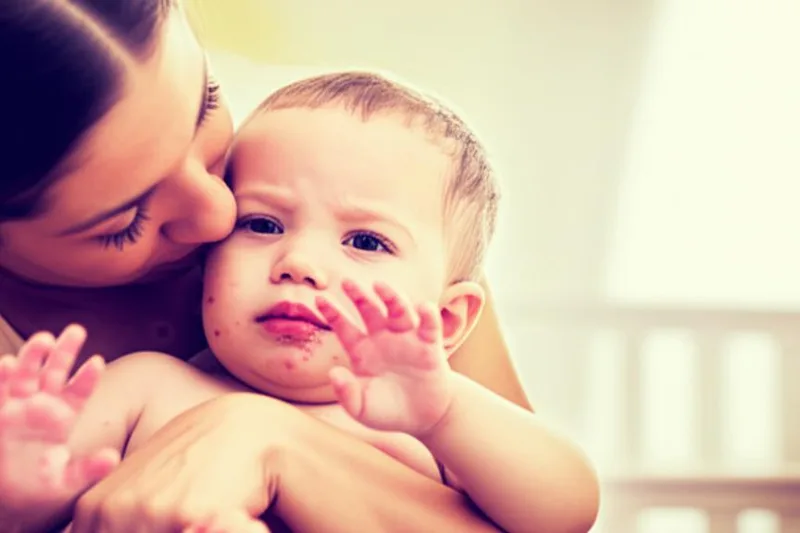
Is your little one suddenly refusing to eat? Is he crying because his mouth hurts? Does he have small red blisters on his palms and soles? Then this could be a condition that parents often fear, but is very common, called Hand-Foot-and-Mouth Disease. The name may sound a little scary, but don't worry. Let's talk about it all clearly and simply today.
Simply put, this is a disease caused by a virus, most often affecting children under the age of 10. However, it can also occur in young people and adults. The main cause of this is a group of viruses called `(Coxsackievirus)`. Usually, in our country, this is seen at any time of the year.
Many people confuse this disease with "foot-and-mouth disease" which affects animals. It is a completely different disease. This disease called Hand-Foot-and-Mouth Disease is not transmitted from humans to animals, nor from animals to humans. So don't be afraid of it.
How is this disease transmitted from child to child?
This is a very contagious disease, especially in places where young children gather together, such as preschools and daycare centers.
- When coughing or sneezing: This virus can be transmitted to another person through droplets of saliva that enter the air when an infected person coughs or sneezes.
- By touching dirty objects: If you touch something that is contaminated with the virus, such as a toy or doorknob, and then put your hand in your mouth, you are more likely to get the disease. This risk is higher in young children because they often put their hands in their mouths.
- From the fluid and feces from the blisters: The virus is present in the fluid and feces from the blisters on the baby's limbs. Therefore, you need to be very careful when changing diapers and cleaning the baby.
The first week after the illness is most contagious . However, the virus can remain in the child's body for several weeks after the symptoms have disappeared. Sometimes, adults can carry the virus in their bodies and infect others even if they have no symptoms.
What are the main symptoms of this?
Symptoms usually begin to appear between 3 and 7 days after the virus enters the body. Let's see what these are.
| Symptom | Description and what you should be aware of |
|---|
| Fever and body aches | The child may first develop a fever. Along with this, they may also show symptoms such as body aches and a cold. They may also experience things like loss of appetite and a sore throat. |
| Painful mouth sores (Herpangina) | This is a very disturbing symptom for both the child and the mother. Small, red sores appear inside the mouth, especially in the throat. These later turn into blisters and are very painful. If the child refuses to eat or drink, drools excessively, or only asks to drink cold things, it may be due to these sores in the mouth. |
| Skin rash on hands and feet | As the name suggests, the rash starts as flat, red spots on the palms and soles of the child's hands and then turns into water-filled blisters. Sometimes, these blisters can also be seen on the elbows, knees, buttocks, and genitals. It is important to keep these blisters clean and not break them, as the fluid in them can spread the disease. |
Can this disease cause other complications?
This is usually a self-limiting illness that resolves itself within 7-10 days. However, sometimes minor complications can occur. The most common complication is
dehydration . This means that the body loses water. This happens because the child is drinking less due to mouth sores. Therefore, it is very important to give the child as much fluids as possible. In addition, very rarely, this virus can affect the brain and cause serious complications. But these are very rare.
If the child is excessively sleepy, has a stiff neck, has a high fever, or has seizures , do not delay and see a doctor immediately or go to the nearest hospital's Emergency Department (ETU).
Treatment and things you can do at home
There is no specific medicine to kill this virus yet. Therefore, treatment is aimed at controlling the symptoms. Your doctor will often advise the following: 1.
Get plenty of rest. Keep your child calm and relaxed, without letting them run around and play. 2.
Give plenty of fluids. Even if it is difficult to drink due to mouth sores, give fluids in small amounts. You can give water, fruit juice (not sour), milk, and soup. Giving cold things like ice cream and yogurt can help relieve the pain in the mouth. 3.
Painkillers. Give a medicine like paracetamol prescribed by the doctor for fever and pain in the prescribed dose.
Never give children aspirin without a doctor's advice. 4.
Avoid spicy, salty, and sour foods. These foods can increase the pain when they come into contact with mouth sores.
What should we do to protect ourselves from this disease?
Cleanliness is the most important thing here.
- Wash your hands often: Wash your hands thoroughly with soap and water, especially after changing your baby's diaper, after using the toilet, before preparing food, and before feeding. Use an alcohol-based hand sanitizer when soap and water are not available.
- Keep your home and toys clean: Clean your baby's play areas, toys, and other items with soapy water regularly. It's best to wipe them down with a diluted solution of bleach.
- Keep your sick child away from others: If your child is sick, avoid sending them to preschool or daycare until their fever is completely gone and their mouth sores are healed. This can help prevent the spread of the illness to other children.
Once you get this disease, your body develops immunity against that strain of virus. However, it is possible to get this disease again with a different strain of virus that causes it.
Take-Home Message
- Hand-Foot-and-Mouth Disease is a viral infection that is common in young children and is usually not serious.
- The main symptoms are fever, painful mouth sores , and blisters on the hands and feet.
- Since there is no specific cure for this, treatment is aimed at controlling the symptoms. It is important to give the child rest , fluids, and painkillers.
- Washing your hands with soap regularly is the best way to prevent this disease.
- If you have any doubts or concerns about your child's condition, or if symptoms worsen, see your doctor without delay.
Hand-Foot-and-Mouth Disease, HFMD, Children's Diseases, Pediatric Diseases, Blisters, Mouth Sores, Viral Infections





💬 Comments (0)
No comments yet. Be the first to share your thoughts here.
Add Your Comment