

Have you ever had a sudden, severe pain that starts in your back and travels down your leg like an electric shock? Or does it feel like your leg is going numb or numb? Most people have experienced this at least once in their lives. This very common condition is called sciatica . Don't worry, it's not dangerous most of the time. Let's talk about it in simple terms today.
What exactly is Sciatica?
Simply put, sciatica is a symptom rather than a disease. The sciatic nerve is the longest and largest nerve in our body. It starts at the bottom of our spine, travels through the buttocks, down the back of our legs to the knees, and then branches out all the way to our feet.
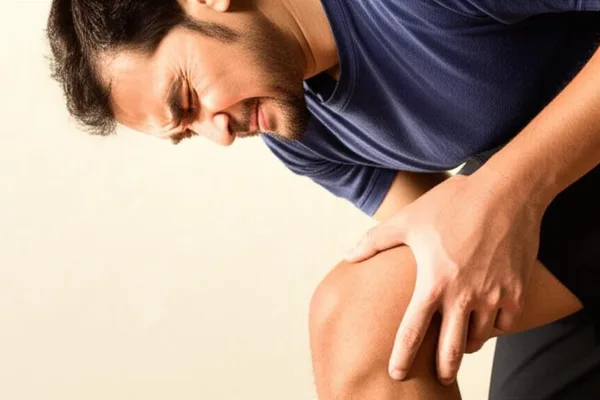
Imagine, what happens if this long nerve is compressed, pinched, or irritated somewhere along its path? That's when the aforementioned pain, numbness, and tingling occur. This pain can be felt differently by each person.
- For some, this is just a sore spot .
- For another person, it may be a sharp, burning pain, like being stabbed by a needle .
- For some, it can even be an unbearable hardship .
In addition to this pain, you may also experience numbness , a feeling of weakness, and a tingling sensation, similar to an electric shock. These symptoms usually occur in only one leg.
What are the situations where the pain may increase?
If you have sciatica, you may find that the pain gets worse when you do certain things. For example:
- When sitting in the same place for a long time: It's like when you get up after working in an office chair for a long time and feel like your back is dragging along with your legs.
- When you suddenly get up
- When coughing or sneezing : The pressure on the spine at this time can further irritate the nerve.
- If you feel pain when turning, lifting a heavy object , or having a stomachache
If the pain increases during times like this, it's important to tell your doctor about it as well.
What treatments are available to relieve this pain?
There are several treatments for sciatica. Your doctor will determine the most appropriate treatment for you based on the severity and cause of the pain.
Medications that can be taken as per medical advice
The doctor may prescribe various medications to control the pain.
| Medication Type | A simple explanation |
|---|---|
| Common painkillers | Over-the-counter medications such as Acetaminophen (Paracetamol) and NSAIDs (e.g. Ibuprofen, Diclofenac) can help reduce pain and swelling. |
| Muscle Relaxants | Sometimes the muscles in the back become tight and feel like they are being rolled over. These medications help to reduce that tightness and provide relief. These should definitely be prescribed by a doctor. |
| Antidepressants | Don't be alarmed by the name. These are not given for mental illness. These medications are used in small doses to control long-term nerve pain. |
| Strong painkillers | If there is severe pain, strong medications are given for a short period of time, under the strict supervision of a doctor. |
Important: Avoid giving aspirin to a child under the age of 18, as it can cause a very dangerous condition called Reye's syndrome.
In some cases, especially if a herniated disc is pressing on a nerve, your doctor may inject a steroid directly into the area around the nerve. This can quickly reduce the swelling and pain around the nerve.
Physical therapy is very important.
The pain makes you want to stay in bed. But now doctors are saying that staying in bed is not a good idea for sciatica. In fact, the right exercises and movements are the best treatment for it.
Physical therapy works by identifying the cause of your pain and teaching you a specific set of exercises that are tailored to that cause. These exercises,
- It can reduce pain .
- Strengthening the back and abdominal muscles can provide good support for the spine.
- It is also possible to prevent this situation from happening again.
However, these exercises should only be done under the guidance of someone experienced in this area, such as a physical therapist . Doing the exercises incorrectly can make the pain worse.
Shall we also learn about alternative treatments?
Some people turn to alternative therapies like acupuncture and biofeedback to find relief from pain.
- Acupuncture: This method involves inserting very fine needles into specific points on the body to relieve pain. They believe that pain is caused by blockages in the body's energy flow. These needles remove the blockages and restore the flow of energy.
- Biofeedback: This is a slightly more complex method. Using a machine, we give ourselves information about things in our body that we normally don't control (e.g., heart rate, muscle tension). The idea is to learn to consciously control those processes by looking at that information.
But one thing to remember: These alternative treatments have not been scientifically proven to help with sciatica pain. So, before trying anything like this, be sure to talk to your doctor and get their approval.
When is surgery necessary?
First of all, only a very small number of people with sciatica need to go to surgery, so don't be too scared about it.
Typically, if the pain persists after about a month and a half (6 weeks) of treatment, such as medication and physical therapy, your doctor will refer you to a specialist. Surgery may then be considered.
The goal of surgery is to surgically correct the root cause of the pain, which is the problem where the nerve is being compressed. For example, if a disc is herniated and pressing on a nerve, removing part of the disc and freeing the nerve will completely relieve the pain.
When to seek immediate medical advice
However, if you have any of the following symptoms, see a doctor or go to a hospital immediately without delay.
- If the pain is very severe and getting worse.
- If the weakness in the leg is increasing.
- If you experience symptoms such as difficulty controlling your urine or stool , it is an emergency. Go to a hospital's Emergency Department (ETU) immediately.
Take-Home Message
- Sciatica is more than just a simple backache. It is pain caused by compression of a nerve that runs from the back down the leg.
- Many people can recover with simple painkillers, proper exercise, and physical therapy.
- Don't stay in bed because of the pain. Proper movement and exercise can help you heal. But seek professional advice.
- Be sure to talk to your doctor before starting any medication or alternative treatment.
- If the pain is severe, the numbness in the leg increases, or you lose control of your bladder/bowel, it is an emergency. Seek immediate medical attention.




💬 Comments (0)
No comments yet. Be the first to share your thoughts here.
Add Your Comment