Does your baby get angry and shake you when you cry? Learn about this deadly danger (Shaken Baby Syndrome)

Does your baby get angry and shake you when you cry? Learn about this deadly danger (Shaken Baby Syndrome)

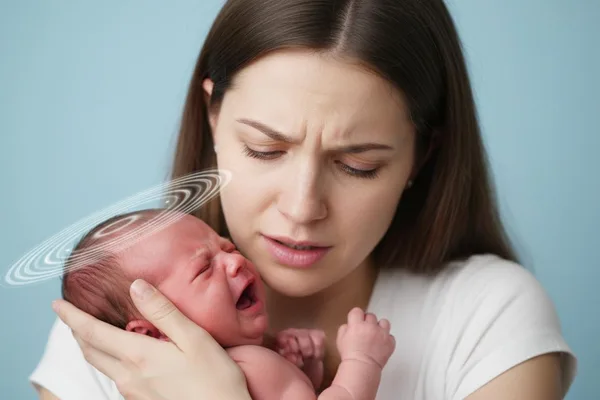
Does your little one cry for no reason? Do you also feel like I can't handle this anymore? It's normal to feel that way as a mother or father. But never pick up your baby and shake him/her violently out of anger or frustration. A few seconds of carelessness can ruin a baby's entire life. Today we are talking about that deadly danger, that is, 'Shaken Baby Syndrome'.

Simply put, what is Shaken Baby Syndrome?

Shaken Baby Syndrome is a condition that occurs when a baby or toddler is shaken violently and violently. Another name for this is 'abusive head trauma'. That is, abusive head injury.

Think about it, a baby's head is very large and heavy compared to the rest of their body. Also, their neck muscles are not yet strong enough. So when someone shakes a baby hard, the delicate, jelly-like brain inside the skull is rapidly bouncing back and forth. This shaking causes the delicate blood vessels in and around the brain to break and bleed. The brain can also swell. This is a serious condition that can occur even with a short shake of about 5 seconds . This damage can even put the baby's eyes, neck, and spine at risk. The result is permanent brain damage, permanent disability, or death.

Why would someone shake a little baby like this?

This often happens when the parent or caregiver is unable to control their anger or frustration when the baby cries continuously. They may think that shaking the baby will stop the crying.

The responsibilities that come with being a new mother or father can sometimes be overwhelming. Other family issues and financial problems may be adding to the stress. At times like these, when a baby cries nonstop, it can be overwhelming. Some people don't even realize that shaking a small baby can be so dangerous.

The most important thing is this. It's normal for babies to cry. Sometimes they won't stop crying no matter what you do. But the answer is never to shake, hit, or throw a baby.

Who is affected the most by this situation?

Shaken Baby Syndrome is a dangerous condition that can happen to a child in any family, at any economic level, and of any race. It is most often caused by the primary caregiver, the mother or father. It can also happen to other caregivers (babysitters) or relatives.

Babies under one year of age are at the highest risk. Babies between 2 and 8 months of age are especially vulnerable to this danger. Although this condition is less common in children over 2 years of age, children as young as 6 years of age have sometimes been subjected to this type of abuse.

What damage does shaking do to a baby's brain and body?

This is the most important part that we all need to understand. There are many harms that can be caused by shaking a baby too hard.

The damage caused A simple explanation
Subdural hematoma A collection of blood between the surface of the brain and the membrane that covers it. This occurs when delicate blood vessels rupture during a brain contusion.
Subarachnoid hemorrhage Bleeding between the brain and the spider-like membrane that surrounds it.
Direct brain trauma The brain is crushed and damaged by the rapid impact of the brain against the inside of the skull.
Retinal hemorrhages Bleeding into the retina at the back of the eye. This is a key symptom of Shaken Baby Syndrome.
Brain damage due to lack of oxygen If the baby stops breathing during shaking, the brain can be deprived of oxygen and brain cells can die.
Neck and back injuries Weak neck muscles and vertebrae can be damaged, causing damage to the nerves in the spinal cord.
Fractures Fractures can occur in the skull, ribs, collarbone, arms, and legs.

What are the symptoms of this condition?

Some symptoms may appear immediately after the baby is born. Some may peak between 4 and 6 hours. Also, some symptoms caused by damage (behavioral problems, learning disabilities) may appear later in life.

Severe, immediate symptoms

  • Loss of consciousness
  • Seizures
  • Shock

Other common symptoms

  • Smiling, not talking.
  • Very irritable, crying frequently
  • Vomiting
  • Loss of appetite, refusal to drink milk
  • Difficulty breathing
  • Lethargy, a state of being constantly drowsy and unable to be awakened
  • Pale or bluish skin
  • Bruises on the arms or chest
  • Abnormally large head or forehead appearance
  • The delicate area on the top of the head (the forehead crease) is bulging.
  • Inability to hold the neck properly
  • Dilated pupils
  • Inability to focus the eyes on one spot, inability to look at moving objects
  • Tremors
  • Going into a coma

Sometimes, there may be no visible external injuries or bruises on the baby's body. Therefore, someone who does not know that the baby has been shaken may think that this is a common viral illness like the flu. That is the most dangerous thing here.

How does a doctor diagnose this?

This condition is sometimes difficult to recognize. Because,

  • The person who brought the baby may not tell the doctor the truth about shaking the baby.
  • The baby can't tell where it hurts or what happened.
  • Symptoms like vomiting and irritability are common symptoms of other illnesses.

Therefore, the doctor examines the child carefully and, if necessary, performs several special tests.

  • Eye exam: Checks for retinal bleeding.
  • X-rays: Check for fractures in the skull, ribs, or limbs.
  • CT scan (Computed Tomography scans): This test is very important to detect swelling, bleeding, and other damage to the brain.
  • MRI scans (Magnetic Resonance Imaging scans): Even subtle brain damage can be seen very clearly.

Treatment and long-term effects

If your baby has any of these symptoms, you should immediately take him to a hospital's Emergency Treatment Unit (ETU) . This is not an illness that can be treated at home.

Treatment depends on the severity of the damage to the baby. You may be given medication and kept in the hospital for observation. In severe cases, life-saving surgery may be necessary. Surgery may be needed to stop bleeding in the brain and reduce swelling.

The long-term consequences of this situation are not very favorable.

  • About 25% of babies who suffer from this condition die .
  • Nearly 80% of those who survive will develop serious neurological disorders and lifelong disabilities.

Some of the permanent disabilities that can result from this are:

  • Speech and learning disabilities
  • Vision loss or blindness
  • Complete loss of hearing
  • Cerebral Palsy
  • Epilepsy
  • Frequent seizures
  • Paralysis

How can we prevent this catastrophe?

This is the most important part. Shaken Baby Syndrome is 100% preventable . It's normal to feel upset and stressed when a baby cries. What's important is how we handle it.

If you feel like you're under too much pressure, try these things:

1. First, check the baby's basic needs: Is the baby's diaper wet? Is he hungry? Is he cold? Does he have any signs of illness, such as fever or swelling? Does he have any pain anywhere on his body.

2. Try to calm the baby:

  • Sing a song, talk to the baby.
  • Play some soft music. Some babies also like the sound of a vacuum cleaner or hair dryer.
  • Give a pacifier.
  • Wrap the baby tightly in a cloth (swaddle).
  • Place it securely in the car seat and take a short walk.
  • Put it in the stroller and go for a walk.

3. Ask for help: This is the best thing you can do. If you are tired or angry, ask a trusted friend, relative, or neighbor to watch the baby for a few minutes. There is no shame in asking for help.

4. Last resort: If no one is available to help, leave the baby in a safe place, such as his crib, and leave the room . Go to another room for 5-10 minutes to calm down. Take a deep breath. Then go back to the baby.

A baby's crying won't hurt him, but if he's shaken, it can cause serious harm.

Also, if you are giving your child to someone else (babysitter, nanny), choose them carefully. Make sure they are clearly informed about the dangers of Shaken Baby Syndrome. Never leave your baby with someone you don't fully trust.

Take-Home Message

  • Shaken Baby Syndrome is a serious, fatal brain injury caused by shaking a baby violently.
  • Because babies have weak necks and large heads compared to their bodies, they are easily susceptible to this danger.
  • It's normal to feel frustrated and angry when your baby cries incessantly. But it's essential to control those emotions.
  • If you feel like you can't control the situation, put the baby in a safe place and step away for a moment to calm yourself down. Never hesitate to ask for help.
  • This condition is 100% preventable. Your awareness and patience will save your child's life.

shaken baby syndrome sinhala, shaking a baby, child abuse, brain damage, infant health, parenting advice, abusive head trauma sinhala

⚠️ Important: The medical articles and information on Nirogi Lanka are for general awareness only, and are by no means a substitute for professional medical advice, diagnosis, or treatment. For any medical problem you have, consult a qualified physician immediately.

💬 Comments (0)

No comments yet. Be the first to share your thoughts here.

Add Your Comment

Please calculate: 6 + 7 =
Does your baby get angry and shake you when you cry? Learn about this deadly danger (Shaken Baby Syndrome)
For ParentsJuly 7, 2026

Does your baby get angry and shake you when you cry? Learn about this deadly danger (Shaken Baby Syndrome)

Does your little one cry for no reason? Do you also feel like I can't handle this anymore? It's normal to feel that way as a mother or father. But never pick up your baby and shake him/her violently out of anger or frustration. A few seconds of carelessness can ruin a baby's entire life. Today we are talking about that deadly danger, that is, 'Shaken Baby Syndrome'.

Simply put, what is Shaken Baby Syndrome?

Shaken Baby Syndrome is a condition that occurs when a baby or toddler is shaken violently and violently. Another name for this is 'abusive head trauma'. That is, abusive head injury.

Think about it, a baby's head is very large and heavy compared to the rest of their body. Also, their neck muscles are not yet strong enough. So when someone shakes a baby hard, the delicate, jelly-like brain inside the skull is rapidly bouncing back and forth. This shaking causes the delicate blood vessels in and around the brain to break and bleed. The brain can also swell. This is a serious condition that can occur even with a short shake of about 5 seconds . This damage can even put the baby's eyes, neck, and spine at risk. The result is permanent brain damage, permanent disability, or death.

Why would someone shake a little baby like this?

This often happens when the parent or caregiver is unable to control their anger or frustration when the baby cries continuously. They may think that shaking the baby will stop the crying.

The responsibilities that come with being a new mother or father can sometimes be overwhelming. Other family issues and financial problems may be adding to the stress. At times like these, when a baby cries nonstop, it can be overwhelming. Some people don't even realize that shaking a small baby can be so dangerous.

The most important thing is this. It's normal for babies to cry. Sometimes they won't stop crying no matter what you do. But the answer is never to shake, hit, or throw a baby.

Who is affected the most by this situation?

Shaken Baby Syndrome is a dangerous condition that can happen to a child in any family, at any economic level, and of any race. It is most often caused by the primary caregiver, the mother or father. It can also happen to other caregivers (babysitters) or relatives.

Babies under one year of age are at the highest risk. Babies between 2 and 8 months of age are especially vulnerable to this danger. Although this condition is less common in children over 2 years of age, children as young as 6 years of age have sometimes been subjected to this type of abuse.

What damage does shaking do to a baby's brain and body?

This is the most important part that we all need to understand. There are many harms that can be caused by shaking a baby too hard.

The damage caused A simple explanation
Subdural hematoma A collection of blood between the surface of the brain and the membrane that covers it. This occurs when delicate blood vessels rupture during a brain contusion.
Subarachnoid hemorrhage Bleeding between the brain and the spider-like membrane that surrounds it.
Direct brain trauma The brain is crushed and damaged by the rapid impact of the brain against the inside of the skull.
Retinal hemorrhages Bleeding into the retina at the back of the eye. This is a key symptom of Shaken Baby Syndrome.
Brain damage due to lack of oxygen If the baby stops breathing during shaking, the brain can be deprived of oxygen and brain cells can die.
Neck and back injuries Weak neck muscles and vertebrae can be damaged, causing damage to the nerves in the spinal cord.
Fractures Fractures can occur in the skull, ribs, collarbone, arms, and legs.

What are the symptoms of this condition?

Some symptoms may appear immediately after the baby is born. Some may peak between 4 and 6 hours. Also, some symptoms caused by damage (behavioral problems, learning disabilities) may appear later in life.

Severe, immediate symptoms

  • Loss of consciousness
  • Seizures
  • Shock

Other common symptoms

  • Smiling, not talking.
  • Very irritable, crying frequently
  • Vomiting
  • Loss of appetite, refusal to drink milk
  • Difficulty breathing
  • Lethargy, a state of being constantly drowsy and unable to be awakened
  • Pale or bluish skin
  • Bruises on the arms or chest
  • Abnormally large head or forehead appearance
  • The delicate area on the top of the head (the forehead crease) is bulging.
  • Inability to hold the neck properly
  • Dilated pupils
  • Inability to focus the eyes on one spot, inability to look at moving objects
  • Tremors
  • Going into a coma

Sometimes, there may be no visible external injuries or bruises on the baby's body. Therefore, someone who does not know that the baby has been shaken may think that this is a common viral illness like the flu. That is the most dangerous thing here.

How does a doctor diagnose this?

This condition is sometimes difficult to recognize. Because,

  • The person who brought the baby may not tell the doctor the truth about shaking the baby.
  • The baby can't tell where it hurts or what happened.
  • Symptoms like vomiting and irritability are common symptoms of other illnesses.

Therefore, the doctor examines the child carefully and, if necessary, performs several special tests.

  • Eye exam: Checks for retinal bleeding.
  • X-rays: Check for fractures in the skull, ribs, or limbs.
  • CT scan (Computed Tomography scans): This test is very important to detect swelling, bleeding, and other damage to the brain.
  • MRI scans (Magnetic Resonance Imaging scans): Even subtle brain damage can be seen very clearly.

Treatment and long-term effects

If your baby has any of these symptoms, you should immediately take him to a hospital's Emergency Treatment Unit (ETU) . This is not an illness that can be treated at home.

Treatment depends on the severity of the damage to the baby. You may be given medication and kept in the hospital for observation. In severe cases, life-saving surgery may be necessary. Surgery may be needed to stop bleeding in the brain and reduce swelling.

The long-term consequences of this situation are not very favorable.

  • About 25% of babies who suffer from this condition die .
  • Nearly 80% of those who survive will develop serious neurological disorders and lifelong disabilities.

Some of the permanent disabilities that can result from this are:

  • Speech and learning disabilities
  • Vision loss or blindness
  • Complete loss of hearing
  • Cerebral Palsy
  • Epilepsy
  • Frequent seizures
  • Paralysis

How can we prevent this catastrophe?

This is the most important part. Shaken Baby Syndrome is 100% preventable . It's normal to feel upset and stressed when a baby cries. What's important is how we handle it.

If you feel like you're under too much pressure, try these things:

1. First, check the baby's basic needs: Is the baby's diaper wet? Is he hungry? Is he cold? Does he have any signs of illness, such as fever or swelling? Does he have any pain anywhere on his body.

2. Try to calm the baby:

  • Sing a song, talk to the baby.
  • Play some soft music. Some babies also like the sound of a vacuum cleaner or hair dryer.
  • Give a pacifier.
  • Wrap the baby tightly in a cloth (swaddle).
  • Place it securely in the car seat and take a short walk.
  • Put it in the stroller and go for a walk.

3. Ask for help: This is the best thing you can do. If you are tired or angry, ask a trusted friend, relative, or neighbor to watch the baby for a few minutes. There is no shame in asking for help.

4. Last resort: If no one is available to help, leave the baby in a safe place, such as his crib, and leave the room . Go to another room for 5-10 minutes to calm down. Take a deep breath. Then go back to the baby.

A baby's crying won't hurt him, but if he's shaken, it can cause serious harm.

Also, if you are giving your child to someone else (babysitter, nanny), choose them carefully. Make sure they are clearly informed about the dangers of Shaken Baby Syndrome. Never leave your baby with someone you don't fully trust.

Take-Home Message

  • Shaken Baby Syndrome is a serious, fatal brain injury caused by shaking a baby violently.
  • Because babies have weak necks and large heads compared to their bodies, they are easily susceptible to this danger.
  • It's normal to feel frustrated and angry when your baby cries incessantly. But it's essential to control those emotions.
  • If you feel like you can't control the situation, put the baby in a safe place and step away for a moment to calm yourself down. Never hesitate to ask for help.
  • This condition is 100% preventable. Your awareness and patience will save your child's life.

shaken baby syndrome sinhala, shaking a baby, child abuse, brain damage, infant health, parenting advice, abusive head trauma sinhala

⚠️ Important: The medical articles and information on Nirogi Lanka are for general awareness only, and are by no means a substitute for professional medical advice, diagnosis, or treatment. For any medical problem you have, consult a qualified physician immediately.

💬 Comments (0)

No comments yet. Be the first to share your thoughts here.

Add Your Comment

Please calculate: 6 + 7 =