
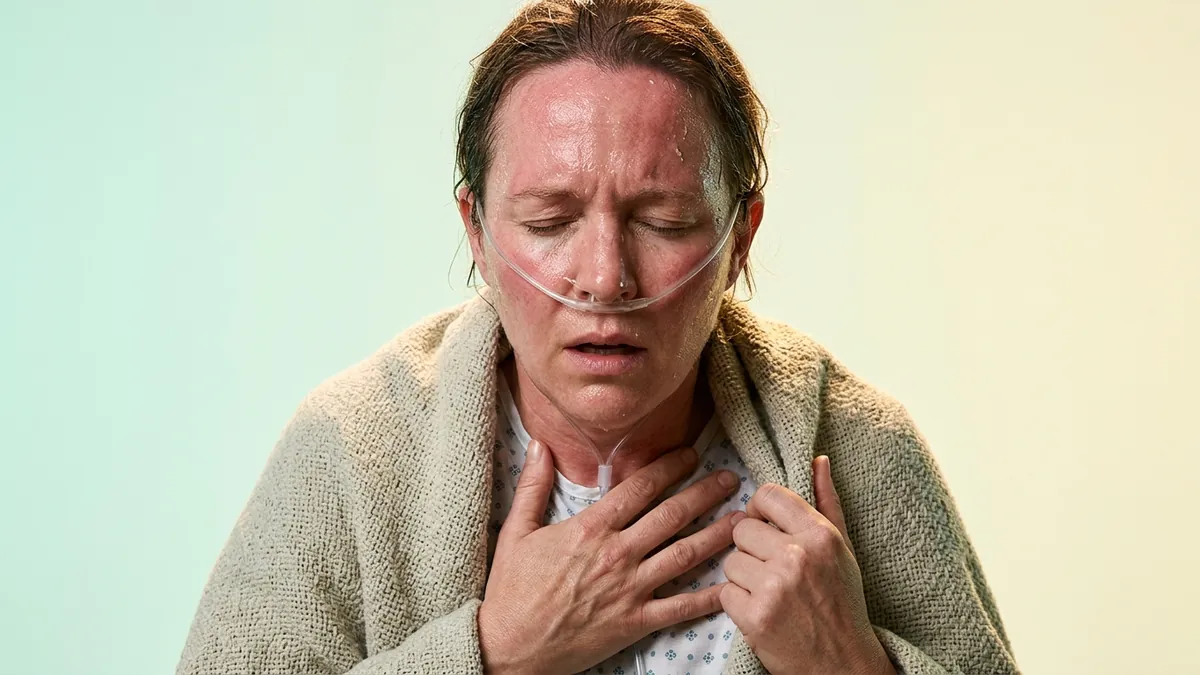
Understanding SIRS syndrome symptoms—their clinical meaning, causes, normal ranges, and next steps—became suddenly urgent for a 54-year-old teacher named Mark when I examined him at our clinic one chilly Monday morning. He had spent the weekend shivering under heavy blankets, assuming his pounding pulse and shallow breathing were just a stubborn chest virus, until his wife noticed he could barely walk to the kitchen without feeling dizzy. Within minutes of checking his temperature, pulse, and breathing rate, it was clear his body had switched on a powerful systemic alarm that needed immediate hospital care.
Have you ever spotted the letters "SIRS" on an Emergency Room (ER / A&E) discharge summary or patient portal note and wondered what on earth was happening inside your body? You are certainly not alone. In everyday family medicine across the United States, the United Kingdom, Canada, and Australia, we doctors frequently explain to anxious patients and families that a whole-body inflammatory alarm (systemic inflammatory response syndrome, or SIRS) is not a single contagious disease you catch from someone else.
Instead, think of SIRS as your immune system pulling every fire alarm in the building at the exact same time. Whether the spark comes from a hidden urinary tract infection, a gallbladder flare-up, a major burn, or a tough surgery, recognizing these early vital-sign shifts gives you and your medical team a critical head start before organs come under strain.
📌 Key Takeaways at a Glance
- What SIRS means: Systemic inflammatory response syndrome (SIRS) is an exaggerated whole-body defense reaction to either an infection or a non-infectious physical injury.
- The 2-out-of-4 rule: Doctors identify SIRS when you meet at least two of four strict criteria involving body temperature, heart rate, breathing rate, and white blood cell levels.
- Not always sepsis: While an infection plus SIRS can progress into life-threatening organ injury (sepsis), non-infectious events like trauma or sudden pancreas inflammation (acute pancreatitis) also trigger SIRS.
- Fast action saves lives: Early fluids, lab work, and targeted care at a hospital Emergency Room (ER / A&E) prevent dangerous drops in blood pressure and organ damage.
What Are SIRS Syndrome Symptoms and What Do They Mean Clinically?
SIRS syndrome symptoms signal an exaggerated whole-body inflammatory response marked by fever above 100.4°F (38.0°C) or body temperature below 96.8°F (36.0°F), a resting heart rate above 90 beats per minute, breathing faster than 20 breaths per minute, or abnormal white blood cell levels, requiring urgent clinical evaluation.
When you are living through these shifts at home, you obviously do not see your white blood cell numbers floating in the air. Instead, you feel how hard your body is working. Most people notice intense shaking chills (rigors), drenching sweats, flushed warm skin—or conversely, clammy pale hands when body temperature drops abnormally low. Pretty surprising that an overactive immune response can actually make your temperature plummet instead of rise, right?
Alongside temperature swings, you may feel your heart thumping against your ribs even while lying completely flat on the sofa. Everyday conversations suddenly leave you winded because your lungs are taking extra breaths to blow off acid building up in your bloodstream. Many patients also tell us they felt an unusual wave of exhaustion, muscle aches, nausea, or mild mental fog hours before a fever ever showed up on the thermometer. Be honest—you have probably brushed off a racing pulse during a fever as "just fighting off a bug," haven't you? Yet when two or more of these signs team up, we doctors treat them as an urgent medical priority.
How Does Systemic Inflammatory Response Syndrome Work in Your Body?
Have you ever wondered why a localized problem—like an infected kidney stone or a bad ankle burn—can suddenly make your lungs breathe faster and your heart race? Look closely at what happens under the surface. Normally, when tissue gets injured or invaded by germs, your immune cells release tiny chemical messenger proteins (cytokines) right at the trouble spot. Blood vessels widen locally, white blood cells move in, clean up the mess, and switch the signal off. Makes sense, right?
In SIRS, that local containment wall breaks down. Huge waves of pro-inflammatory messengers—such as interleukin-1 and tumor necrosis factor-alpha—spill into your main bloodstream all at once. Suddenly, blood vessels throughout your entire body widen and become slightly leaky. Fluid seeps out of your circulation into surrounding tissues, which subtly lowers the blood volume returning to your heart. To keep oxygen flowing to your brain and kidneys, your heart speeds up—a sign called fast heart rate (tachycardia).
At the same time, your microscopic clotting pathways switch on, tiny blood vessels stiffen or clog, and cells start working overtime with less efficient oxygen delivery. Your brain's thermostat resets higher (or occasionally misfires downward in older or frail adults), while your bone marrow rushes freshly made white blood cells into circulation. See? Every single symptom you feel on the outside is actually your body scrambling to protect blood flow on the inside.
What Are the 4 Official SIRS Criteria and Normal Reference Ranges?
When you arrive at your Primary Care Physician (PCP) or family GP clinic, a local Urgent Care center, or a hospital triage desk, nurses and doctors measure your numbers against four internationally recognized cutoffs first established by critical care societies. You meet the clinical definition of SIRS if two or more of these four measurements step outside their healthy adult normal ranges:
- Body Temperature: Higher than 100.4°F (38.0°C), known as fever (pyrexia), or lower than 96.8°F (36.0°C), known as low body temperature (hypothermia). Normal adult oral temperature typically sits around 97.7°F to 99.5°F (36.5°C to 37.5°C).
- Resting Heart Rate: Faster than 90 beats per minute while resting quietly. A healthy adult resting pulse normally ranges between 60 and 90 beats per minute (or up to 100 in standard textbooks, though SIRS flags anything above 90).
- Breathing Rate (Respiratory Rate): More than 20 breaths per minute at rest—called rapid breathing (tachypnea)—or an arterial blood gas test showing carbon dioxide pressure (PaCO2) below 32 mmHg. Normal adult resting breathing is a calm 12 to 20 breaths per minute.
- White Blood Cell Count (Leukocyte Count): A complete blood count (CBC) showing more than 12,000 cells/mm³ (12.0 × 10⁹/L), fewer than 4,000 cells/mm³ (4.0 × 10⁹/L), or more than 10% immature white cells ("band neutrophils"). Normal adult white blood cell levels generally sit between 4,500 and 11,000 cells/mm³.
Think about it for a second: jogging up the stairs can push your pulse past 95 and your breathing past 22! That is why we doctors always interpret these numbers at true physical rest and alongside your clinical story, pain levels, and medications—such as beta-blockers that artificially hold your heart rate down, or acetaminophen (paracetamol) that masks a fever.
What Causes SIRS Syndrome: Is It Always an Infection?
One of the biggest myths patients share with us is assuming that SIRS automatically means "blood poisoning." We rarely stop to think about non-infectious tissue injury, do we? Remember how we talked about those chemical messengers earlier? Your immune system responds to cellular alarm signals whether they come from invading bacteria or crushed, burned, or inflamed human cells.
We doctors divide SIRS triggers into two clear buckets so nothing gets missed during your workup:
- Infectious Triggers: Bacterial pneumonia, kidney or urinary tract infections (pyelonephritis), abdominal infections like a ruptured appendix or infected gallbladder (cholangitis), skin infections (cellulitis), viral illnesses such as severe influenza or COVID-19, and fungal bloodstream infections, especially in people with weakened immunity.
- Non-Infectious Triggers: Sudden pancreas inflammation (acute pancreatitis), widespread thermal or chemical burns, major car accidents or bone fractures, major chest or abdominal surgery, blood clots in the lungs (pulmonary embolism), severe dehydration or heatstroke, autoimmune flares (like lupus or vasculitis), and severe prescription drug reactions.
Identifying which bucket caused your alarm is crucial. Giving heavy intravenous antibiotics helps tremendously if bacteria are behind the curtain, whereas acute pancreatitis or a major burn needs targeted fluid resuscitation, pain control, and surgical or specialist support rather than unnecessary prolonged antibiotics.
How Do Doctors Tell SIRS Apart From Sepsis and Septic Shock?
Recall those four vital-sign cutoffs we walked through a moment ago? For decades, doctors defined blood-borne infection reactions (sepsis) simply as having two SIRS criteria plus a suspected infection. Today, modern hospital guidelines (including Sepsis-3 standards) look even deeper: SIRS shows your immune alarm is ringing loudly, whereas sepsis means a dysregulated response to infection has started injuring vital organs—like your kidneys, lungs, liver, or brain. If blood pressure drops dangerously low despite intravenous fluids, clinicians call that septic shock.
When you visit your family GP clinic or PCP with suspicious symptoms, our job is rapid initial assessment—checking your blood pressure, pulse oximetry (oxygen saturation), chest sounds, tummy tenderness, and mental alertness. If two or more SIRS signs appear alongside unwell symptoms, we refer you straight to the nearest hospital Emergency Room (ER / A&E) rather than waiting days for routine outpatient lab results. Now that makes sense, doesn't it?
At the hospital, emergency teams act within the critical "golden hour." They typically draw blood cultures before starting broad-spectrum IV antibiotics (if infection is suspected), check a blood acid buildup test (serum lactate test) to see if tissues are starved of oxygen, run kidney and liver panels, and arrange specialist imaging—such as a chest X-ray, ultrasound, or CT scan with a radiologist—to pinpoint the exact source while giving measured IV fluids.
How Do SIRS Criteria, Causes, and Next Steps Compare?
When you or a loved one are feeling unwell at home, sorting out mild viral symptoms from a true systemic warning can feel stressful. The two-column clinical guide below breaks down each key finding and shows you exactly what action to take.
| Clinical Finding or Situation | Clinical Meaning & Recommended Action |
|---|---|
| Single Mild Symptom (e.g., low-grade fever of 99.9°F / 37.7°C with normal pulse and calm breathing) | Usually points to an uncomplicated upper respiratory cold or mild local inflammation where your body's response remains well contained. What you should do: Rest, sip fluids steadily, monitor your temperature and pulse every 4 to 6 hours, and book a routine check-in with your PCP or family GP if symptoms persist beyond 48 to 72 hours. |
| 2 or More SIRS Signs at Rest (e.g., fever over 100.4°F / 38.0°C plus resting pulse over 90 bpm or breathing over 20/min) | Meets clinical thresholds for systemic inflammatory response syndrome, meaning inflammatory signals have entered your wider circulation. What you should do: Seek same-day urgent medical evaluation at a hospital Emergency Room (ER / A&E) or physician-staffed Urgent Care center for vital-sign monitoring, a complete blood count, and lactate testing. |
| Low Body Temperature (<96.8°F / 36.0°C) with Weakness or Chills | Cold-phase systemic inflammation is particularly common in older adults, frail individuals, or severe infections and carries higher risk than fever. What you should do: Treat this as an urgent warning—do not try to "sleep it off" under electric blankets; head straight to the nearest hospital ER / A&E. |
| Recent Surgery, Pancreatitis History, or Burn Plus Fast Heart Rate | Strong clue toward non-infectious SIRS, though post-operative infection or internal bleeding must also be ruled out promptly. What you should do: Contact your surgical team immediately or attend the hospital ER / A&E so doctors can run blood work and targeted imaging. |
| SIRS Signs Plus Confusion, Dizziness, Pale Mottled Skin, or Low Urine Output | Signals potential organ strain, dropping blood pressure, or progression from SIRS into acute sepsis or shock. What you should do: Call emergency ambulance services—911 (US & Canada), 999 (UK), or 000 (Australia)—immediately without attempting to drive yourself. |
Once hospital specialists have treated the root trigger and cleared you to recover at home, gentle daily habits help rebuild your strength. Sip water, oral electrolyte solutions, or warm chicken or vegetable broth throughout the day to support blood volume. Choose easy-to-digest meals like plain oatmeal, toast, scrambled eggs, soup, and bananas as your appetite returns. Pace your walking around the house, keep a simple notebook of your morning and evening temperature and pulse for the first week, and attend your follow-up visit with your family doctor so repeat blood counts confirm everything has settled back into range.
✔️ What You Should Do & ❌ What to Avoid
- ✔️ DO measure resting vitals accurately: Sit or lie quietly for 10 full minutes before checking your temperature, pulse (via wrist check or home pulse oximeter), and breathing rate.
- ✔️ DO share your medication list with triage nurses: Mention blood pressure pills (like beta-blockers) and recent doses of acetaminophen (paracetamol) or ibuprofen, since these can hide fast heart rates or fevers.
- ✔️ DO keep wounds, catheters, and chronic conditions clean and well managed: Prompt care for urinary symptoms, dental abscesses, or skin cuts stops minor infections from going systemic.
- ❌ DON'T take leftover antibiotics from your medicine cabinet: Partial or mismatched pills cloud hospital blood cultures and delay accurate treatment.
- ❌ DON'T push through intense chills or breathlessness with energy drinks or heavy exercise: Dehydration and extra exertion place dangerous strain on an already overworked heart.
🚨 When to Seek Immediate Emergency Care (Red-Flag Symptoms)
If you or someone near you develops any of these red-flag symptoms, do not wait — call 911 (or 999 in the UK / 000 in Australia) immediately or go straight to the nearest hospital Emergency Room (ER / A&E):
- New confusion, slurred speech, extreme drowsiness, or difficulty waking up (in the UK, if you are unsure about non-life-threatening early symptoms, you can also dial NHS 111, but always use 999 for acute red flags).
- Severe shortness of breath, gasping when speaking full sentences, or bluish/ashen lips and fingernails.
- Lightheadedness, fainting, or systolic blood pressure dropping significantly below your usual baseline.
- Mottled, blotchy, icy-cold, or non-blanching skin that stays pale or purplish when pressed.
- Passing very little or no urine for 12 hours or longer despite trying to drink fluids, or severe worsening chest or tummy pain.
💡 Key Take-Home Message
- SIRS is your body's loud early warning system—meeting two or more vital-sign or white-blood-cell criteria tells doctors to search immediately for a hidden infection or tissue injury.
- Because non-infectious conditions and serious infections look nearly identical at first glance, timely hospital blood work and medical assessment are far safer than watching and waiting at home.
- Catching systemic inflammation early—before blood pressure falls or organs struggle—makes treatment simpler, hospital stays shorter, and full recovery the expected outcome.






No comments yet. Be the first to share your question or experience below.