
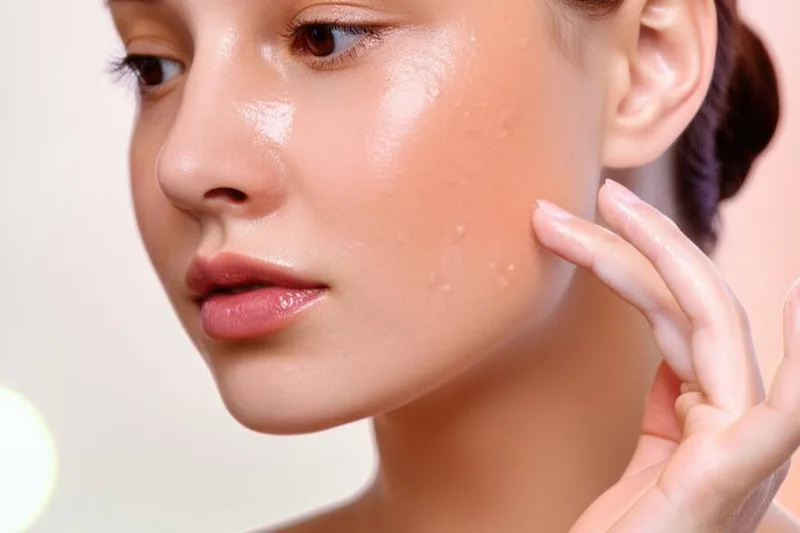
A big problem for many people is the oily appearance of their face. Even if they look beautiful in the morning, their face starts to shine during the day, looking as if they have been oiled. Because of this, sometimes our self -confidence also decreases, doesn't it? Not only that, but this excess oil also clogs the pores of the skin and increases the chances of acne . But there is no need to worry about this or worry too much. By using the right products, we can easily control this condition.
Why is our skin so oily?
Simply put, all of our skin produces a natural oil called sebum to keep it healthy and moisturized. This is essential for our skin. However, some people produce more sebum than necessary. That's when we call it "Oily Skin." This excess oil makes the skin shiny, pores look larger, and sometimes they become clogged and cause acne.
There may be several reasons for this.
- Hormonal changes : Oil production can increase when hormones fluctuate, especially during adolescence and pregnancy.
- Stress: When we are under a lot of stress, the body's hormonal activity can change and oil production can increase.
- Certain medications: Some medications can also cause increased oiliness of the skin as a side effect.
- Heredity : Sometimes this can run in the family, meaning it's something that runs in the family. If your parents have oily skin, you're more likely to have it too.
Don't rush oily skin!
When our face feels oily, we feel like scrubbing it vigorously and washing it off. While it feels "fresh" for a while, what's really happening is that the skin's natural protective oil layer is completely gone. Our body knows that this oil layer is a protection for the skin. So when it's gone, the skin thinks, "Oh, there's not enough oil," and then it produces even more oil to replace the lost oil.
So remember, when cleansing oily skin, never rub too hard. Instead, use a gentle cleanser, massage gently in circular motions with your fingertips, and rinse with lukewarm water.
Also, avoid using cleansers and toners that contain alcohol . While they may seem to remove oil quickly, they can actually dry out your skin. This can also result in your skin producing more oil.
So what are the best things for oily skin?
Okay, so let's take a look at what to look for when caring for oily skin. When you're choosing a skincare product, it's very important to take a look at the ingredients.
| Ingredient | What happens with this? |
|---|---|
| Salicylic Acid | This penetrates deep into the skin's pores, dissolving excess oil and dirt. It's also great for controlling acne. |
| Retinoids | These are compounds derived from vitamin A. They control the production of oil in the skin. They also help reduce wrinkles and brighten the skin. |
| Glycolic Acid | This gently exfoliates the dead skin cells on the surface of the skin. This brightens the skin and reduces oiliness. However, it is not good to use too much. |
| Hyaluronic Acid and Niacinamide | Oily skin also needs a moisturizer. A moisturizer containing these will provide the skin with the moisture it needs, and niacinamide will also help absorb oil from the skin. |
Is a moisturizer definitely necessary?
Many people think that applying moisturizer to oily skin will make it even oilier. That's a misconception. A light moisturizer is essential to restore the moisture that is lost when we wash our face. If we don't, our skin will recognize that it is dry and start producing more oil.
But you should choose a moisturizer that is lightweight, oil-free, and non-comedogenic. Products containing hyaluronic acid will help hydrate your skin, while niacinamide will help control oil and reduce inflammation caused by acne.
What if these things don't work? See a doctor.
If you're having trouble controlling your oiliness even after using these skincare products, the best thing to do is to see a dermatologist. Don't be shy about talking about it.
The doctor will examine your skin and prescribe the most suitable treatment for you. He or she may recommend medications that you can only get with a prescription.
- Tretinoin : This is a strong retinoid cream that is only available on a doctor's prescription.
- Isotretinoin: If you have oily skin with severe acne, you can also talk to your doctor about this type of medication.
- Hormonal birth control pills: For some women, hormonal birth control pills can help control oily skin. Talk to your doctor about this as well.
Your doctor may also recommend a professional treatment, such as a chemical peel or microdermabrasion. These are treatments that are performed under the supervision of a doctor and deeply remove dead skin cells and excess oil.
Take-Home Message
- Oily skin is a very common condition. Don't worry about it.
- Never rub your skin too hard when cleansing. Cleanse gently and slowly.
- Check to see if your skincare products contain ingredients like salicylic acid and retinoids.
- Even for oily skin, a lightweight, oil-free, non-comedogenic moisturizer is essential.
- If home remedies are not effective, do not hesitate to see your doctor for advice.




💬 Comments (0)
No comments yet. Be the first to share your thoughts here.
Add Your Comment