
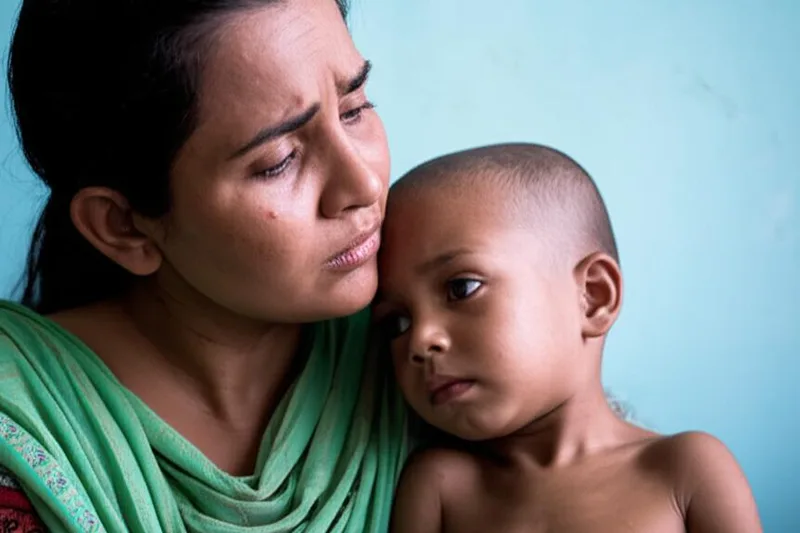
Sometimes as parents, we are very concerned about the little changes in our children, right? Imagine if your little one doesn't hold his neck straight like other children, doesn't roll over properly, or doesn't sit up, it's normal for you to feel a little worried. Sometimes the cause of these things can be Spinal Muscular Atrophy , or SMA for short. Today we are talking about Spinraza, a drug used worldwide as a treatment for this SMA disease.
Simply put, what is Spinal Muscular Atrophy (SMA)?
Spinal Muscular Atrophy (SMA) is a genetic disease . It means it can be passed down from generation to generation. What happens in this is that the muscles in our body, that is, the muscles, gradually weaken. This weakness can make it difficult for a child to keep their neck straight, sit up on their own, walk, and in some severe cases, even simple things like swallowing and breathing.
There are several types of this disease, divided according to the age at which symptoms begin to appear.
- Infantile-onset SMA: When symptoms appear in a very young baby (before 6 months).
- Juvenile/Later-onset SMA: If symptoms appear in childhood (after 6 months).
- Adult-onset SMA: If symptoms appear after adulthood.
When it comes to this disease, Spinraza is a very important treatment for this. Let's talk about it in detail now.
How is Spinraza (Nusinersen) treatment given?
Spinraza is not given as a regular shot. It is given as an intrathecal injection . Simply put, it is injected directly into the spinal fluid, which is inside your spine. This should only be done by specially trained doctors. Therefore, this treatment is usually done in a special treatment center in a hospital. This process can take several hours.
When treatment begins, four doses, called "loading doses," are given at close intervals.
1. The first three doses are given every 14 days.
2. The fourth dose is given 30 days after the third dose.
After those four doses, treatment continues with one dose every four months .
Sometimes, your doctor may order some blood and urine tests before giving you this medicine. This is to check if the medicine is having any effect. However, only your doctor will decide how often you will be treated, what dosage you will receive, and what tests you will need to do.
The most important thing is to never miss your scheduled treatment and tests as prescribed by your doctor.
What are the results of this medicine?
Two large studies have been conducted to investigate the effectiveness of the Spinraza drug: one in very young children (infantile-onset), and the other in slightly older children (later-onset).
In these studies , some of the children were given the drug Spinraza. The other group was given a sham procedure . This means that they were not actually injected with the drug, but were simply pricked with a small needle. This is done to measure the true effect of the drug.
The results are really encouraging.
- In a study of young babies: Nearly half of the babies who received Spinraza showed significant improvements in movement milestones, while none of the babies who received the placebo showed any improvement.
- In the older children's study: After 15 months, 57% of the children who received Spinraza had improved muscle function, compared with only 26% of those who received the placebo.
This shows how much of a difference this treatment can make in the lives of SMA patients. But remember, these are research results, and your child's results may be different. Your doctor is the best person to understand this.
Spinraza side effects and serious risks
Like any medication, Spinraza can cause side effects. These vary slightly depending on the age at which symptoms begin.
| Time of onset of symptoms | Common side effects |
|---|---|
| Infantile-onset | Lower respiratory tract infections (e.g. lung infections) and constipation. |
| Later-onset | Fever, headache, vomiting and backache. |
Tips to manage common side effects
- For headaches: Sleep well, eat on time, and drink plenty of water.
- For constipation: Eat more fruits, vegetables, and fiber-rich foods, and drink plenty of water.
- Prevent infections: Wash your hands frequently and avoid touching your face.
Although these are common side effects, if they persist or seem severe, be sure to tell your doctor.
Be very careful, serious risks!
You should be aware of two very rare, but very serious, risks associated with Spinraza.
| Risk | Symptoms to watch out for |
|---|---|
| Risk of bleeding (Bleeding Risk - Low Platelets) |
|
| Kidney damage (Kidney Damage) |
|
Very important: If you or your child develop any of the serious symptoms mentioned above, inform your doctor immediately or go to the Emergency Department (ETU) of the nearest hospital. This is not something to delay.
Take-Home Message
- Spinal Muscular Atrophy (SMA) is a genetic disease that weakens muscles.
- Spinraza (Nusinersen) is a treatment used for this disease that helps improve muscle function.
- This treatment is given by a specialist doctor, through an injection into the spinal fluid.
- Common side effects such as headache and fever may occur. However, always be aware of serious symptoms such as excessive bleeding or kidney damage.
- Follow your doctor's instructions exactly. Don't miss scheduled appointments for treatment and tests.
- Discuss any questions you have about the treatment, its side effects, and costs openly with your treating specialist.


💬 Comments (0)
No comments yet. Be the first to share your thoughts here.
Add Your Comment