

Looking back over the last few years, you've been spending more time at home than ever before, right? Maybe it's because you're now 'working from home'. However, staying at home has become the norm. While there are positive aspects to this, there are also negative aspects that can affect our health in ways we don't expect. Loneliness, increased screen time, and decreased physical education are the main ones. At the same time, staying at home has also given us more time to sleep well, do things we enjoy, and eat at home. So today, let's talk about how this new lifestyle is affecting four key aspects of our health, and how we can make the most of it and stay healthy.
Food and Drink: Home-cooked food is good, but is it the right way to eat?
Since we spend most of our time at home, it's a great idea to cook and eat at home. Because then we get a healthier, lower-calorie meal than store-bought food.
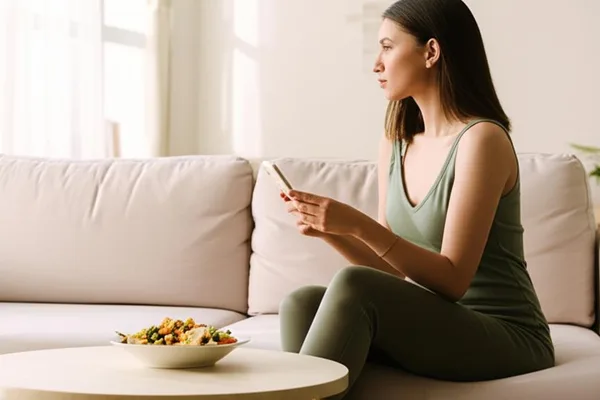
But the problem is the way we eat. Do you also eat while watching TV, scrolling on your phone, or in a Zoom meeting with the camera off? Eating while doing something else like this can distract our brain from the signals that our stomach is full. Then we unknowingly eat more food than we should.
So what is the solution to this?
It's simple. Eat one meal a day, without looking at any screen, and focus solely on the food. Eat slowly, savoring the color, smell, and taste of the food. When you eat slowly, taking about 20 minutes, the food tastes better. Then the enzymes in our saliva help digest the food well, and the nutrients can be absorbed better by the body.
If you often order food from a delivery service, take a moment before eating it and chop up some vegetables and make a salad. With every decision you make, ask yourself: "Am I choosing to face illness or wellness?"
| Eating while looking at the screen (bad habit) | Mindful eating (good habit) |
|---|---|
| Eating more than you want without realizing it. | The brain receives signals to eat in moderation. |
| Not being able to taste or smell food properly. | Being able to enjoy food and eat with satisfaction. |
| Digestive disorders. | Food mixes well with saliva and is easier to digest. |
Relaxation: Are you really relaxing? Or are you scrolling on your phone?
Being at home gives you more time to relax and do something you love (a hobby). When you do something that really relaxes your mind, your body's 'calming system' is activated. In medicine, we call this the ``parasympathetic nervous system''. This helps reduce our heart rate and relieves stress.
But the biggest problem here is that many people think of "relaxing" as watching TV or scrolling through social media on their phones.
"Many people think that watching TV and scrolling on their phones is relaxation. But it's not really relaxation."
True relaxation is a moment when both your mind and body are deeply relaxed. This stimulates a special nerve called the ``vagus nerve`` that runs from our brain to our intestines. You can activate this nerve through things like deep breathing and meditation. But when you are doomscrolling on social media, what happens is that your body releases stress hormones ``adrenaline`` and ``cortisol.`` Then your heart rate increases, and you become even more tired.
So how do you know if you're truly relaxed? If you're using a smartwatch, check your heart rate variability (HRV). When you breathe deeply, or when you walk in nature, this HRV value increases, which means you're relaxing.
Sleep: Staying in bed longer is the same as sleeping well!
Surveys show that people are sleeping about 16 minutes more than they used to. While that's good to hear, as doctors, we have a little problem.
"Do you really sleep well? Or do you just stay in bed too long?"
Many people say that even though they sleep for a long time, they don't wake up feeling refreshed. Recently, there was a trend on TikTok called "bed rotting." It means staying in bed all day, pretending to be resting. But sleep experts say that this disrupts your body's natural clock (circadian process) .
To get good, restorative sleep, you need to have some good sleep habits (sleep hygiene).
- Reduce the light at night: Dim the lights in your home about an hour before bed.
- Stay away from screens: Looking at your phone, TV, or computer before bed will only stimulate your brain. Blue light reduces the production of sleep-inducing hormones.
- Exercise during the day: A person who exercises well during the day and is exposed to sunlight will sleep better at night.
- Create a 'bedtime' ritual: Just like you would put a small child to sleep, prepare yourself for sleep. Try something like reading a book or listening to soothing music.
If you have ongoing sleep problems, it's best to talk to your doctor about it.
Social connections: Family is not enough, friends are also essential for life!
It's true that staying at home allows us to spend more time with our family. That's a great thing. But one thing we don't realize is that we lose out on time with our friends.
A survey conducted in America found something very interesting. When asked, "If you were somewhere far away and had a flat tire, and you needed help in an emergency, would you have someone you could call and say, 'Hey, I need help'?", most people had no answer.
What does this show? Family relationships can often be one-sided (e.g., parents taking care of their children). But friendship is a mutually beneficial, reciprocal relationship. It is essential for our mental health. Loneliness is a factor that contributes to many mental and physical illnesses.
Loneliness creates behaviors that create more loneliness. To break out of that cycle, we must consciously make an effort.
So what you need to do is set aside time in your schedule for your friends. Maybe take a little time out of your family time to call a friend or go see them. The mental happiness you get from that will be a good investment for the rest of your life.
Take-Home Message
- Pay attention when eating: Make it a habit to eat at least one meal a day, without the TV or phone, and just enjoy the food.
- Find real relaxation: Scrolling through your phone isn't relaxation. Try to really calm your mind with something like deep breathing, a walk in nature, or meditation.
- Think about sleep quality: Rather than staying in bed for too long, establish good sleep hygiene habits.
- Make time for friendships: Friends are as important as family. Make a conscious effort to maintain relationships with your friends.
- Take care of yourself: Take a good look at your habits from time to time. Talk to your doctor if you have any health concerns.




💬 Comments (0)
No comments yet. Be the first to share your thoughts here.
Add Your Comment