

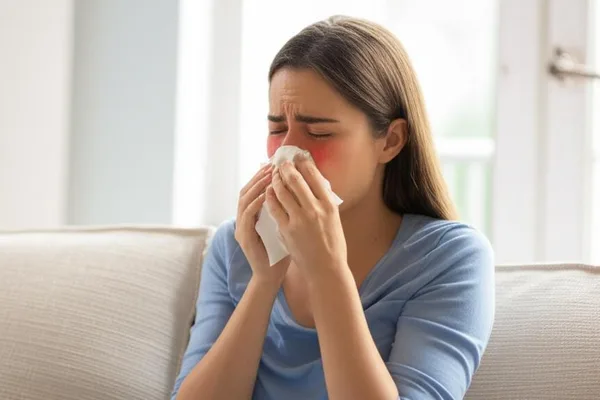
Do you sometimes wake up in the morning and sneeze ten times in a row? Or do you have a blocked nose, red eyes, and itchy eyes? Do you get a rash after eating certain foods? These are the symptoms of a condition we simply call an 'allergy'. Many people suffer from this, but they don't really know what causes their allergies. So today, let's talk about the main causes of these allergies ( allergy triggers ) and how to avoid them.
How do you find the cause of an allergy?
There are actually many things that our bodies can be allergic to. Sometimes it's hard to figure out exactly what it is. If you're having trouble figuring out the exact cause of your allergy, or if you feel like you can't control it on your own, the best thing to do is see a doctor and talk about allergy tests. These tests can help you figure out exactly what you're allergic to.
Until then, the best thing you can do is keep a little diary of your symptoms. That means writing down things like when they started, how long they've been there, and what times they get worse, so your doctor can give you that information. This can be a big help in diagnosing the condition.
The main things that cause us allergies
Let's take a look at the main things that cause allergies in many people. Perhaps your cause is among them.
| Trigger | Symptoms | How to manage? |
|---|---|---|
| 1. Pollen Small particles that collect in the wind from trees, flowers, and grass. | Frequent sneezing, stuffy or runny nose, itchy eyes/nose/palate, red and watery eyes, fatigue. | Keep your home and car windows closed during high pollen times. Wash your hands and face after going outside. Take medications such as antihistamines as directed by your doctor. |
| 2. Dust Mites Small animals that are invisible to the eye and live in mattresses, pillows, and carpets. | Symptoms are similar to those of pollen allergy, but they can last all year round. | Use dust mite covers on mattresses and pillows. Wash bedding weekly in hot water. Reduce dust-collecting items (toys, heavy curtains) in the bedroom. |
| 3. Mold A type of fungus that grows in damp places (bathrooms, damp walls). | Sneezing, stuffy nose, coughing, itchy and watery eyes. | Repair damp areas in the house. Use a dehumidifier . Avoid keeping plants indoors (mold can grow in the soil). |
| 4. Animal Dander Small pieces of skin, saliva, and fur that fall off the skin of pets (dogs, cats). | Sneezing, stuffy nose, itchy and red eyes. | Try to stay away from animals. Prevent your pet from getting on the bed or sofa. Bathe your pet weekly. Consider allergy shots as directed by your doctor. |
| 5. Insect Stings Stings from animals such as bees, wasps, and hornets. | Pain, redness, and swelling at the site of the bite. In severe cases (anaphylaxis) , difficulty breathing, swelling of the face/throat, and dizziness may occur. | If you have symptoms of anaphylaxis, it is an emergency. Go to a hospital emergency room (ETU) immediately. Keep an epinephrine auto-injector handy if your doctor has prescribed it. |
| 6. Latex A substance found in rubber gloves, condoms, etc. | Redness and itching of the skin, sneezing, coughing, shortness of breath. In severe cases (anaphylaxis) may occur. | Avoid using anything containing latex. If you have a severe allergy, carry an epinephrine auto-injector as directed by your doctor. |
| 7. Food Things like milk, eggs, peanuts, soy, seafood. | Hives, vomiting, diarrhea, swelling around the mouth, difficulty breathing. | Avoid eating foods that you are allergic to. Keep an epinephrine auto-injector handy in case of severe allergies. If you have symptoms of anaphylaxis , go to the ETU immediately. |
| 8. Drugs Some medications such as penicillin and aspirin. | It can be anything from a skin rash to severe (anaphylaxis) . | Always inform your doctor about any medications you are allergic to. In case of a severe reaction, you should be hospitalized immediately. |
The most dangerous condition: Anaphylaxis
This is something you should be especially aware of. This is the most severe reaction to some allergies, especially insect stings, foods, and medications. This is a medical emergency that can be life-threatening. If you experience these symptoms suddenly, you should go to a hospital's Emergency Department (ETU) without wasting time.
- Difficulty breathing, wheezing
- Swelling of the face, eyes, lips, tongue, or throat
- Hives (hives)
- Stomach ache, vomiting, or diarrhea
- Dizziness or loss of consciousness that makes it difficult to stand up
Hidden allergens that are invisible to the eye
Sometimes we get allergies from things we don't even think about.
- Indoor air: Sometimes the air inside your home can be more polluted than outside. Therefore, it is a good idea to have good ventilation and, if possible, use an air purifier with a good `(HEPA)` filter.
- Vacuum cleaner : A regular vacuum cleaner can re-circulate dust particles back into the air. So choose one with a `(HEPA)` filter.
- Pets: When your cat or dog goes outside, they can bring things like pollen and mold into your home in their fur.
- Guests: Guests who come to your home can carry allergens from other sources (e.g., their pets' fur) on their clothes, even in their bags.
- Humidity: Mold and dust mites thrive when humidity is high. Also, if the air is too dry (below 20%), nasal mucus production can increase, causing a stuffy nose.
- Furniture and Paint: New furniture, carpets, and paint can release chemicals called volatile organic compounds (VOCs). These can also cause respiratory problems. If you are building a new home or painting, make sure there is good ventilation.
How can a doctor help you?
If you see a doctor, especially an allergist, for an allergy problem, they will help you by:
1. Talk about your symptoms in detail. (How long have you had them? When are they worse? Things like that)
2. Asks about your and your family's medical history.
3. Performs a complete physical examination. (Examination of eyes, nose, throat, chest, skin)
4. If necessary, blood tests, skin tests, or patch tests are ordered to confirm the allergy.
5. Medication or allergy shots are prescribed to control symptoms.
6. Provides important advice on how to control allergies by changing your environment and lifestyle.
Take-Home Message
- If you suspect you have an allergy, don't just assume it. The best thing to do is see a doctor.
- Keep a small note of when the allergy occurs and what you eat/do. This will be very helpful for the doctor in diagnosing the disease.
- If you experience severe symptoms (anaphylaxis) such as difficulty breathing and swelling of the face/throat, it is an emergency. Do not waste time and go to a hospital's Emergency Department (ETU) immediately.
- Many allergies can be controlled by keeping your home clean, reducing dust, and controlling humidity.
- Having a clear understanding of what you think you are allergic to and your symptoms before seeing a doctor will make it easier to seek the right treatment.




💬 Comments (0)
No comments yet. Be the first to share your thoughts here.
Add Your Comment