
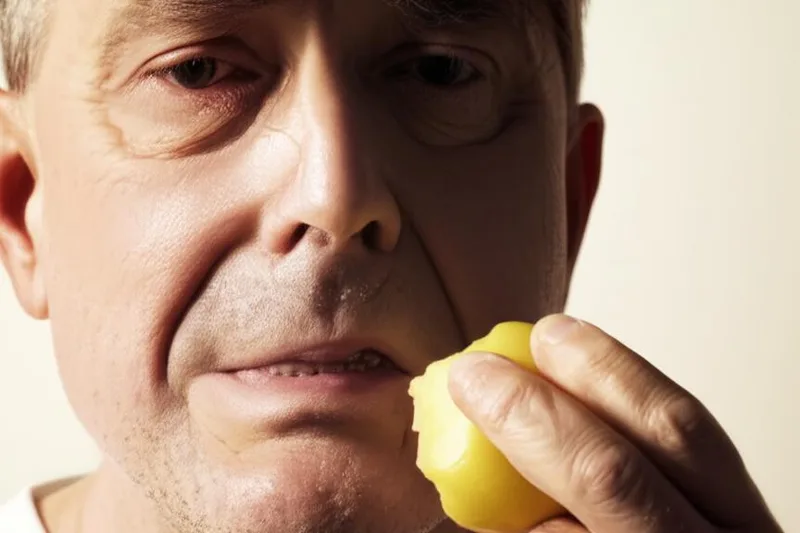
Do you feel like your jaw suddenly goes numb and you have difficulty chewing food while eating? But after a while, the discomfort goes away and you can eat normally again? If you have had this experience, then this topic we are discussing today will be very important for you. This is a condition called Myasthenia Gravis .
What is Myasthenia Gravis?
Simply put, myasthenia gravis is a chronic condition in which the muscles in our body tire and weaken quickly. The most distinctive feature of this is that the muscles weaken when they are used, and then strengthen again after rest. It is like a battery that dies when you work, but recharges when you put it aside for a while.
This condition can affect different muscle groups in the body. When it does, we call it `generalized myasthenia gravis`. This can cause difficulty in chewing food, swallowing, smiling, shrugging shoulders, raising an arm, gripping something tightly, standing up, and climbing stairs.
Very important: Sometimes this condition can also affect the muscles needed to breathe. This is a very dangerous, life-threatening emergency. We call this a myasthenic crisis. In such a case, you should be admitted to a hospital's Emergency Treatment Unit (ETU) immediately.
Although this disease can affect anyone, it is most common in women between the ages of 20 and 40 and in men between the ages of 50 and 70. If a mother with this disease gives birth to a child, some of the proteins (antibodies) in the mother's blood can pass to the child, causing temporary muscle weakness. But there is nothing to worry about, as the child's body usually clears these substances within a few weeks and the child's muscles return to normal.
What are the common symptoms of this disease?
For many people, the disease begins in the eyes. So the first symptoms may be drooping eyelids, blurred vision, or double vision. Within a year or two, this weakness can spread to other muscles in the body.
Let us further explain these symptoms in the table below.
| Symptom | What happens with this? (What happens?) |
|---|---|
| Weakness of the eye muscles | Drooping eyelids, double vision, or blurred vision in one or both eyes. |
| Change in facial expression | Difficulty controlling facial muscles when doing things like smiling or making faces. |
| Difficulty speaking | Voice changes. After speaking for a while, the voice gradually becomes hoarse and nasal. |
| Difficulty swallowing | Difficulty swallowing food, drink, and saliva. Sometimes, things you eat or drink may come out of your nose. |
| Difficulty breathing | This is an emergency! (Myasthenic Crisis). It is difficult to breathe due to weakness of the chest muscles. |
| Limb and neck weakness | Difficulty keeping the neck straight, difficulty walking, inability to raise an arm, or lift a weight. |
Why is this happening? What is the reason?
To understand this, we first need to know a little about how our nerves and muscles work. Imagine that when you want to raise your arm, a message comes from your brain along the nerves. This message reaches the muscle at a small junction between the nerve endings and the muscle. The chemical messenger that carries this message is called acetylcholine . When this chemical, acetylcholine, binds to receptors in the muscle, the muscle contracts, that is, it works.
Myasthenia gravis is an autoimmune disorder . That is, the immune system that protects our body makes a mistake and attacks healthy parts of our own body. In this disease, antibodies produced by the immune system block or destroy the acetylcholine receptors that I mentioned earlier. Then the message from the nerves does not reach the muscles properly. That is why the muscles become weak.
The exact reason why the immune system does this is not yet known. But it is sometimes thought to be related to the thymus gland, which is located in the upper chest. This gland helps make antibodies. About 15% of people with myasthenia gravis have a tumor (thymoma) in this gland. Although these tumors are not cancerous, surgical removal of the gland (thymectomy) can help reduce symptoms in some patients.
How does a doctor diagnose this disease?
If you have these symptoms, you should first see a doctor. He or she will examine you regarding your nervous system. Then, they may recommend several tests to diagnose the condition.
- Blood test: This test is done to see if your blood contains the specific antibodies that attack the acetylcholine receptors I mentioned.
- Ice pack test: If your eyelid droops, an ice pack is placed on it for about two minutes. This is done to see if the cold temporarily reduces muscle weakness .
- Repetitive nerve stimulation tests: Electrodes are placed on the skin and small electrical signals are sent to measure the speed and efficiency of messages from the nerves to the muscles.
- EMG (Single-fiber electromyography) test: A very fine needle-like electrode is inserted through the skin into a muscle and the electrical activity between the brain and the muscle is monitored.
- Imaging scans: You may be asked to have a CT scan or MRI scan to check for a thymus tumor (thymoma).
- Pulmonary function tests: These tests are done to find out if the disease has affected the function of the lungs.
Treatments and things you can do at home
Treatment for this disease depends on your age, the severity of your symptoms, and how quickly the disease has spread.
Medications
Your doctor may recommend medications such as:
- Cholinesterase inhibitors: These medications improve communication between nerves and muscles, which helps strengthen muscles.
- Corticosteroids: These control the activity of the immune system and reduce the production of harmful antibodies.
- Immunosuppressants: These medications are also given to further reduce the immune system's response.
Specialized Therapies
In cases of sudden worsening of symptoms or before surgery, your doctor may recommend intravenous (IV) therapy.
- Plasmapheresis: This involves sending your blood through a machine to filter out harmful antibodies. Although the results are quick, they only last a short time.
- Intravenous immunoglobulin (IVIg): This treatment involves injecting healthy antibodies into your bloodstream. These change the way your immune system works and control your symptoms.
Surgery - Thymectomy
If the disease is caused by a tumor in the thymus gland, the gland is completely removed surgically. Even if there is no tumor, some patients' symptoms improve when the thymus gland is removed.
Lifestyle changes
In addition to medication, making small changes to your lifestyle can also help control symptoms.
- Save energy when eating: If you have difficulty chewing food, eat at a time of day when you have the most energy. Instead of eating large meals, eat several small meals throughout the day. Choose bland foods.
- Use safety equipment: Install grab bars near the toilet and bed, etc. Remove mats and other objects from the floor to reduce the chance of slipping and falling.
- Get help from machines: Save your energy by using electrical appliances (electric toothbrush, can opener) instead of manual tasks.
- Use an eye patch: This can help with double vision. When watching TV or reading, close one eye and use both eyes alternately.
- Plan your day: Use your energy wisely. Find the time of day when you are most energetic and do chores and outdoor activities.
Take-Home Message
- Myasthenia Gravis is a disease caused by the body's own immune system that weakens the muscles. The weakness decreases after rest.
- Although symptoms often begin in the eyes (blurred vision, double vision), any muscle in the body can be affected.
- Difficulty breathing (myasthenic crisis) is a medical emergency that requires immediate treatment. In such a case, go to a hospital's Emergency Treatment Unit (ETU) immediately.
- This is a condition that can be very well controlled with proper medical treatment and lifestyle changes. Don't be afraid, talk to your doctor and get the necessary treatment.
- You can make living with symptoms easier by planning your daily activities and conserving energy.




💬 Comments (0)
No comments yet. Be the first to share your thoughts here.
Add Your Comment