
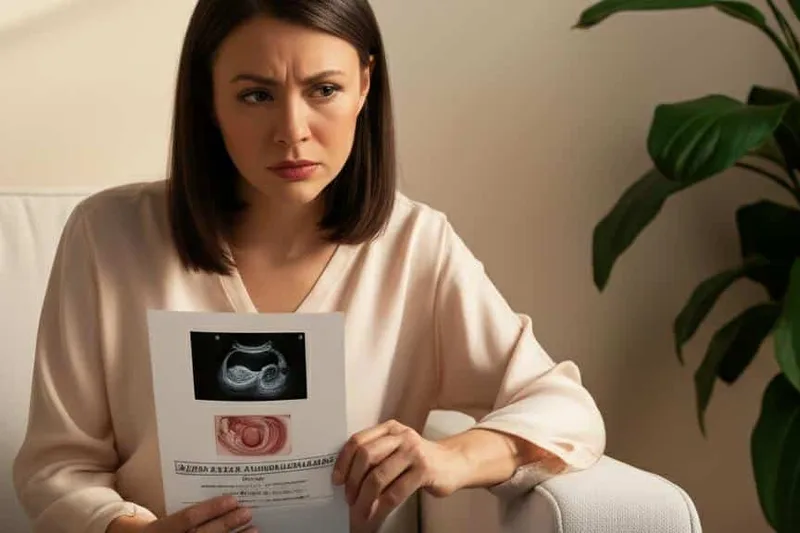
Are you tired of heavy bleeding during your monthly period, pain that lasts for days, or excessive pressure in your lower abdomen? Your doctor may have told you that the cause is uterine fibroids , a type of non-cancerous tumor that develops in the uterus. So today we are talking about a treatment that can help you heal quickly without major surgery. This is called Uterine Artery Embolization, or UAE for short.
Simply put, what is this UAE treatment?
UAE is a special treatment that is performed without a large incision, but only through a small hole. This involves blocking the blood vessels that supply blood to your uterus and fibroids. It's like blocking a water pipe. When the blood supply is cut off, the fibroids don't get any nourishment. Then they gradually shrink and shrink. This helps relieve your symptoms, such as heavy bleeding and pain.
We often use the terms UAE and UFE (Uterine Fibroid Embolization) interchangeably. However, there is a slight difference between the two. UFE is a treatment specifically for fibroids. However, UAE can also be used to control excessive bleeding after childbirth, bleeding due to cancerous tumors, or bleeding due to accidents, in addition to fibroids.
What types of cases are treated in the UAE?
Not everyone with fibroids will need this treatment. Your doctor will only recommend this treatment if you are experiencing certain symptoms due to fibroids. Let's take a look at what those are.
| Situations where UAE treatment may or may not be necessary | |
|---|---|
| You may consider UAE if you have these symptoms: | |
| Heavy bleeding | Excessive bleeding and blood clots during menstruation. |
| Lower abdominal pressure/pain | Constant heaviness and pain in the lower abdomen. |
| Frequent need to urinate | Frequent urination due to the pressure of the uterus on the bladder. |
| Constipation | Constipation due to the tumor pressing on the colon. |
| Pain during sex | Pain during intercourse. |
| UAE treatment is not suitable in the following cases: | |
| If pregnant | This treatment is not performed if you are pregnant. |
| If there are no symptoms | Even if you have fibroids, if they are not causing any discomfort, no treatment is necessary. |
| Pelvic Infection | If there is an infection in the pelvic cavity. |
| Allergy to Contrast Dye | If you are allergic to a specific dye used during treatment. |
What happens before, during and after treatment?
Although this is not a major surgery, there is some preparation beforehand. Let's talk about those steps.
Preparation before treatment
Your doctor will decide to treat you in the UAE after reviewing your complete medical history and performing several necessary tests.
- Medical history: Your doctor will talk to you about your allergies , medications you take, menstrual cycle details, and especially whether you hope to have children in the future, as this treatment can affect fertility .
- Tests: To find out the exact cause of the bleeding, tests such as an MRI scan, ultrasound scan , or hysteroscopy (examining the uterus using a camera) are performed.
- Biopsy: Sometimes a small piece of tissue may be taken from the lining of the uterus to check for cancer cells.
- Medications and Food: You will be asked to stop taking aspirin, NSAIDs (painkillers), and blood thinners a few days before the treatment. You will also need to avoid eating or drinking for a few hours before the treatment. Your doctor will give you specific instructions on this.
During treatment
This treatment is usually done on an outpatient basis. The entire procedure takes about an hour and a half.
1. Interventional Radiologist: This treatment is performed by a specialist doctor who uses imaging techniques such as scans to guide the treatment. (Interventional Radiologist).
2. Preparation: You will lie down on an examination table and be connected to machines that will measure things like your heart rate and blood pressure. You will be given an injection to numb the skin in your groin area.
3. Sedation: A sedative is given intravenously along with saline to make you feel relaxed and sleepy. This will prevent you from feeling any pain or fear.
4. Insertion of the catheter: A tiny hole is made in the skin of the groin, and a very fine tube (catheter) is inserted through it into one of your blood vessels.
5. Guidance: Using a special X-ray technique called fluoroscopy and contrast dye (a liquid that glows on X-rays), the thin tube is guided to the blood vessels that supply blood to the uterus.
6. Blockage: When the tube reaches the correct location, tiny particles (embolic agents) like sand particles are injected into the blood vessel. These particles travel and block the blood vessel.
7. Finishing: When the work is finished, the catheter is removed and a small plaster is applied to the hole.
After treatment
You will need to rest for a few hours after the treatment. Most people can go home the same day.
- Pain: You may experience severe abdominal pain (cramps) within the first 24 hours. This is normal. Your doctor will prescribe painkillers for this.
- Vaginal discharge: A watery or mucus-like vaginal discharge may occur for several weeks. Some people may also have shrunken pieces of fibroid tissue pass through the vagina.
- Menstruation: Menstrual cycles may stop for a few months. When they start again, the amount of bleeding will initially be less, but will gradually return to normal (better than before treatment).
- Recovery: You can return to normal activities within a week or two . It can take about three months for symptoms to completely subside. Most people feel completely recovered by six months.
What are the benefits and risks of this treatment?
As with any medical treatment, there are benefits and minor risks in the UAE. It is important to discuss these openly with your doctor.
| Advantages | Risks |
|---|---|
| Almost 90% of people experience complete or near-complete relief of symptoms. | There is a small chance of infection at the catheter insertion site. |
| A large cut, healing quickly because there are no stitches. | There is a very low chance that particles will travel to the wrong blood vessel and damage healthy tissue. |
| No excessive bleeding. | Allergic reactions to contrast dye or numbing medications. |
| Less invasive than a hysterectomy or a myomectomy . | Between 1-5% of people have a chance of permanently stopping their periods. |
| Being able to avoid the side effects of hormone treatments. | Risk of effects on fertility (ability to have children). |
What you need to know specifically about having children
Although there are women who have had healthy babies after UAE treatment, there is still no complete data on how this treatment affects fertility. Therefore, UAE treatment is not usually recommended for women who are planning to have children in the future. They will be advised by their doctor about options such as myomectomy. It is very important to talk clearly with your doctor about your future plans.
When should I see a doctor after treatment?
It is normal to experience some pain, discomfort, and a low-grade fever in the first few days after treatment. However, if you are still experiencing severe pain or discomfort after two weeks , tell your doctor immediately. Also, if you develop signs of infection, such as a high fever or foul-smelling vaginal discharge, seek medical advice immediately.
Take-Home Message
- UAE is a minimally invasive, non-invasive treatment for heavy bleeding and pain caused by uterine fibroids.
- This treatment is not suitable for everyone. Your doctor will determine the most appropriate treatment based on your symptoms, age, and hopes for future children.
- It is normal to experience some lower abdominal pain in the first few days after treatment, and the recovery period is usually as short as 1-2 weeks.
- If you are hoping to have children, be sure to discuss the risks of this treatment and alternative treatments with your doctor.
- UAE is a very effective treatment method. But before deciding on anything, be well informed, talk to your doctor, and make an informed decision.
Uterine Artery Embolization, UAE, Uterine Fibroids, Uterine Fibroids, Heavy Bleeding, Women's Diseases, Hysterectomy, Myomectomy, Gynecology


💬 Comments (0)
No comments yet. Be the first to share your thoughts here.
Add Your Comment