
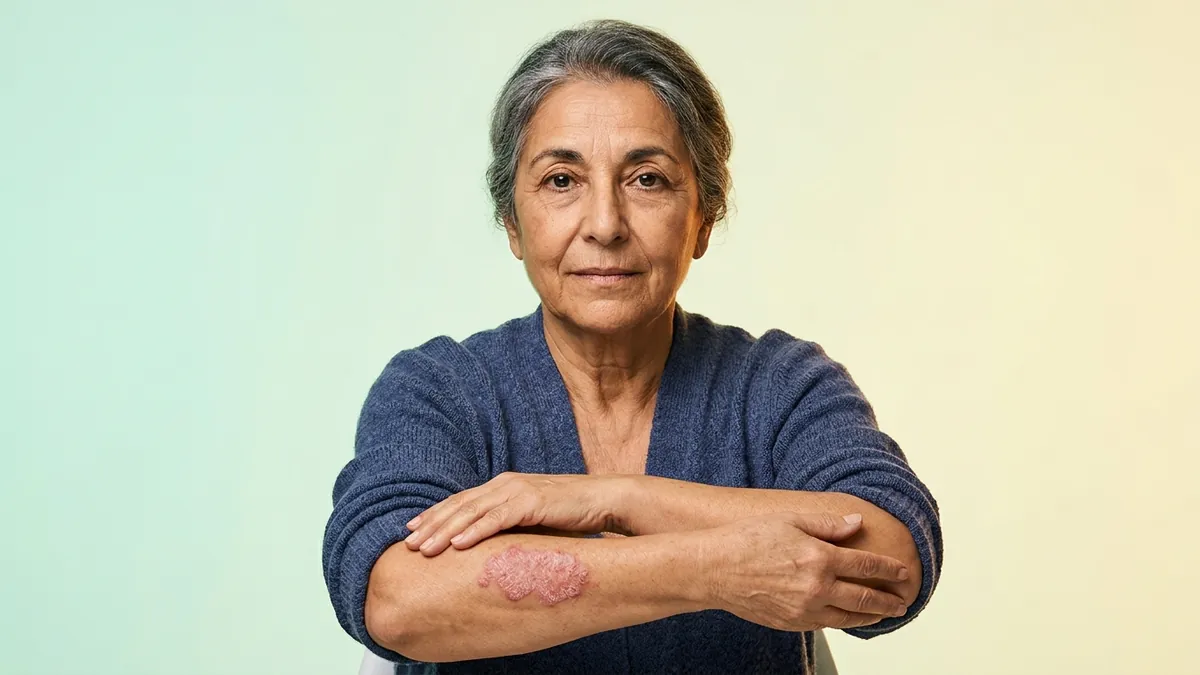
Just last week, a retired schoolteacher came into my clinic looking worried and pointing down at her socks. "Doctor, my ankles puff up every evening, my shins itch like crazy, and the skin around my lower calves has turned a weird rusty brown—I thought it was just dry winter skin or an allergy to my laundry detergent, so I kept slathering on regular body lotion, and nothing helped." Sound familiar? When I gently checked her lower legs, I explained that her skin wasn't reacting to soap at all—it was signaling a circulation backup inside her leg veins called venous stasis dermatitis.
📌 Key Takeaways at a Glance
- It is a circulation-driven skin condition: Venous stasis dermatitis (varicose eczema) happens when weakened leg veins allow fluid and pressure to build up around your ankles, shins, and calves.
- Watch for early warning signs: Evening ankle swelling, stubborn itching, dry flaky patches, and yellow-brown or reddish skin staining are classic early clues.
- Not contagious: You cannot catch it from anyone or pass it on to family members through touch.
- Daily habits make the biggest difference: Elevating your legs above heart level, walking daily, moisturizing gently, and wearing properly fitted compression stockings calm inflammation and prevent skin ulcers.
What Exactly Is Venous Stasis Dermatitis (Varicose Eczema)?
Venous stasis dermatitis (also called varicose eczema) is a common, non-contagious inflammatory skin condition on the lower legs, ankles, and shins caused by poor blood flow in weakened leg veins. When blood pools downward due to gravity, fluid leaks into surrounding skin tissue, triggering swelling, itching, dryness, and reddish-brown discoloration.
Depending on whether you visit a clinic in the United States, the United Kingdom, Canada, or Australia, you might hear us doctors use a few interchangeable names for this exact same condition. In North America, we usually call it venous stasis dermatitis or simply stasis dermatitis. In the UK, Australia, and New Zealand, doctors very commonly call it varicose eczema or venous eczema, and occasionally gravitational dermatitis.
Why so many names? Because each one describes a different piece of the puzzle! "Venous" refers to your veins, "stasis" means sluggish or pooled blood, "gravitational" points to gravity pulling fluid down toward your feet, and "eczema" or "dermatitis" describes the irritated, inflamed skin rash that shows up on your ankles, shins, and calves. Pretty logical once you break the words down, right?
How Common Is Venous Stasis Dermatitis and Who Gets It?
Venous stasis dermatitis is remarkably common, especially as we get older. Medical studies suggest it affects roughly 6% to 7% of adults over age 50—meaning millions of older adults across the US, UK, Canada, and Australia deal with it every single day. Even so, many people mistake it for simple dry skin or aging spots for years before bringing it up with their doctor.
While anyone can develop lower-leg skin changes if their circulation slows down, certain people are much more likely to experience it:
- People with chronic venous insufficiency (CVI): This is the number-one underlying culprit, where tiny valves inside the leg veins weaken and struggle to push blood back up to the heart.
- Adults over age 50: Vein walls and valves naturally lose some elasticity over the decades, making middle-aged and older adults prime candidates.
- People living with heart failure: When the heart muscle pumps less efficiently, fluid backs up throughout the bloodstream and settles heavily in the lower legs and ankles.
- Individuals with lymphedema: This happens when the body's lymphatic drainage system gets blocked or sluggish, causing protein-rich fluid to pool in the lower limbs alongside venous pressure.
How Does Poor Leg Circulation Cause Skin Changes on Your Ankles, Shins, and Calves?
Have you ever wondered why this rash almost always hugs the lower third of your legs—right around the inner ankles, lower shins, and calves—rather than your arms or upper body? Think about it for a second. Every heartbeat sends fresh, oxygen-rich blood down to your feet effortlessly with the help of gravity. Getting that used blood back up to your heart is a much harder uphill climb.
To win that battle against gravity, your legs rely on two clever built-in tools: your calf muscles acting like a natural pump every time you walk, and dozens of tiny one-way valves inside your veins that snap shut so blood cannot slide backward. When those delicate valves wear out or stretch open, blood trickles downward and pools in your lower legs.
Look at what happens next inside your tissue: rising pressure inside the veins forces fluid, proteins, and even microscopic red blood cells out through tiny blood vessel walls into the surrounding skin. As those trapped red blood cells break down, they leave behind iron deposits called hemosiderin. That iron acts like permanent rust staining your skin from the inside out, while trapped fluid starves skin cells of oxygen and triggers chronic inflammation.
What Are the Main Risk Factors for Stasis Dermatitis?
Remember how we talked about your calf muscles and vein valves working together as a team? Anything that weakens those valves, slows down your calf pump, or increases fluid pressure in your lower body raises your risk. We rarely stop to think about how daily routines affect our leg veins, do we? Here are the biggest everyday and medical risk factors we look for:
- Lack of regular physical activity: Without regular movement, your calf muscles sit idle and stop squeezing blood upward toward your heart.
- Sitting for long stretches: Working at a desk all day, sitting with your legs crossed, or taking long flights, train rides, or road trips lets blood pool in your lower extremities.
- Standing on your feet for hours: Jobs like teaching, retail sales, nursing, hairstyling, or factory work force your leg veins to fight gravity nonstop without relief.
- Varicose veins and past blood clots: Bulging, twisted blue or purple veins—or a prior deep vein thrombosis (DVT) blood clot—directly damage vein valves.
- High blood pressure (hypertension), heart disease, or kidney disease: These conditions increase overall fluid retention and strain blood vessel walls.
- Carrying extra weight (obesity) and multiple pregnancies: Both place extra downward pressure on pelvic and leg veins, while pregnancy hormones also relax vein walls.
What Are the Early and Later Symptoms of Venous Stasis Dermatitis?
Be honest—if your ankles started itching at night, you'd probably reach for regular moisturizing lotion or scratch it without thinking twice, wouldn't you? That is completely understandable, because itchy skin (pruritus) is usually the very first clue people notice. Symptoms tend to build gradually over months or years, moving from mild evening ankle puffiness to noticeable skin changes across your ankles, shins, and calves.
To help you recognize where your skin might be on this spectrum, look at how symptoms typically progress and what action makes sense at each stage:
| Symptom or Stage | What Is Happening & Your Next Step |
|---|---|
| Early Stage: Evening Ankle Swelling & Itching (Pruritus) | Fluid builds up around your inner ankles and lower calves after standing or sitting, leaving sock marks and irritating nerve endings in the skin. What you should do: Elevate your legs above heart level for 20 to 30 minutes each evening, avoid scratching, and schedule a routine checkup with your primary care doctor or family GP. |
| Discoloration: Yellow-Brown or Rusty Skin Staining | Leaking red blood cells break down and leave iron deposits (hemosiderin staining) across your ankles and shins, often accompanied by visible varicose veins. What you should do: Have your doctor evaluate your leg circulation before discoloration spreads, as early compression therapy helps prevent deeper tissue damage. |
| Active Flare: Red, Scaly, Oozing, or Tender Patches | Ongoing inflammation makes the skin red, flaky, thickened, or sore to the touch; small blisters may weep clear fluid and crust over. What you should do: Visit your PCP or family GP for a prescribed anti-inflammatory steroid cream and specialized dressings—avoid perfumed soaps or harsh over-the-counter remedies. |
| Advanced Stage: Hardened Skin or Open Venous Ulcers | Long-term swelling causes tight, woody skin thickening around the ankle (lipodermatosclerosis) or shallow, slow-healing open sores. What you should do: Seek prompt medical wound care from your doctor or a dedicated vascular/wound clinic to heal the ulcer safely and block bacterial infection. |
Is Venous Stasis Dermatitis Contagious?
Let's clear up one of the biggest worries patients share with us right away: no, venous stasis dermatitis is 100% non-contagious. Even when the skin looks bright red, scaly, weeping, or crusty, you cannot catch it from someone else, and you cannot pass it to your partner, children, or grandchildren through hugs, shared towels, or touching.
Because the rash comes from internal blood vessel pressure rather than a virus, fungus, or contagious germ, it never spreads from person to person. The only caveat we doctors keep an eye out for is when scratched or cracked skin picks up everyday skin bacteria, causing a localized bacterial skin infection called cellulitis. Even then, cellulitis requires antibiotics for your own skin's recovery rather than isolation from loved ones.
How Do Doctors Diagnose Venous Stasis Dermatitis and What Tests Are Needed?
In most cases, your Primary Care Physician (PCP) or family GP can recognize venous stasis dermatitis simply by listening to your story and examining both of your lower legs. We look closely at the pattern of swelling, check where the redness or brownish staining sits, feel for warmth or skin thickening, and check pulses in your feet.
Because leg swelling can sometimes overlap with heart, kidney, or artery issues, we often recommend a few straightforward tests to confirm the exact cause and make sure treatment is safe:
- Vein ultrasound (venous duplex ultrasound): A painless, non-invasive scan using sound waves to watch blood flow through your leg veins and spot leaky valves or hidden blood clots.
- Ankle-brachial index (ABI) blood pressure check: A quick comparison of blood pressure at your ankle versus your arm to confirm your arteries bring plenty of fresh blood down to your feet before we prescribe tight compression stockings.
- Routine blood tests: Basic checks on your heart, kidney, and liver health if swelling affects both legs evenly.
- Allergy patch testing (occasionally): Because inflamed leg skin easily develops sensitivity to creams, bandages, or ointments, a dermatologist may test for contact allergies if a rash refuses to settle.
How Is Venous Stasis Dermatitis Treated—and Will You Need Surgery?
Here is the reassuring news: for the vast majority of people, treating venous stasis dermatitis does not require surgery. Just like we mentioned earlier, when you lower the pressure inside your leg veins and calm down the surface inflammation, your skin finally gets the breathing room it needs to heal.
A well-rounded treatment plan from your doctor typically combines four practical steps:
- Leg elevation: Propping your legs up on pillows above the level of your heart while resting and sleeping uses gravity in your favor to drain pooled fluid back toward your chest.
- Medical compression stockings or wraps: Specially graded elastic socks squeeze gently around your ankle and gradually ease up toward your calf, helping your muscles pump blood upward. Your doctor or pharmacist will measure your legs so you get the exact right size and pressure level.
- Prescription topical creams and dressings: A short course of a medium-strength corticosteroid cream calms itching and redness quickly, while specialized hydrocolloid or foam dressings protect weeping spots or open sores so new skin can grow.
- Antibiotics when needed: If bacteria enter cracked skin and trigger a warm, spreading infection (cellulitis), a targeted course of oral antibiotics clears it up.
What about surgery? We only consider vein procedures—such as minimally invasive endovenous laser ablation, radiofrequency closure, or sclerotherapy to seal off faulty surface veins—if severe varicose veins or stubborn venous ulcers keep returning despite faithful compression and daily care.
How Can You Reduce Your Risk and Prevent Flare-Ups at Home?
Once your skin settles down, everyday habits become your best insurance policy against future flare-ups. Think of it as giving your leg veins a little daily backup. Walking briskly for just 30 minutes a day engages your calf muscles like a natural pump, and taking a two-minute stretch or short walk every hour prevents blood from stagnating during long desk shifts, flights, or TV marathons.
Skin care and nutrition matter too. Across the US, UK, Canada, and Australia, many convenient packaged foods—like canned soups, deli meats, salty snacks, and takeout—pack heavy amounts of sodium that encourage your body to hold onto extra fluid. Balancing meals with fresh vegetables, berries, bananas, leafy greens, and plenty of water supports healthier blood pressure and circulation. Meanwhile, washing gently with a soap-free cleanser and sealing in moisture twice daily with a thick, fragrance-free cream or plain petroleum jelly prevents dry skin from cracking.
✔️ What You Should Do & ❌ What to Avoid
- ✔️ Do put compression stockings on first thing in the morning: Slip them on right after waking up, before gravity causes your ankles to swell, and take them off before bed unless your doctor instructs otherwise.
- ✔️ Do elevate your legs above heart level: Rest your calves on a stack of pillows or a footstool when sitting, and place a supportive pillow under your lower legs at night.
- ✔️ Do moisturize twice daily with plain, fragrance-free creams: Thick ointments or ceramide creams lock hydration into fragile shin and ankle skin without irritating it.
- ❌ Don't sit or stand motionless for hours: Flex your ankles up and down, wiggle your toes, or take a brisk 2-minute walk every 60 minutes.
- ❌ Don't scratch itchy patches or use harsh, scented soaps: Scratching breaks delicate skin and invites bacterial infection, while perfumed washes strip natural skin oils.
- ❌ Don't wear tight, non-medical socks with narrow elastic bands: Tight cuffs act like a tourniquet around your calf and worsen fluid trapping below the band.
How Long Does Venous Stasis Dermatitis Last and Can It Be Completely Cured?
Patients ask us this question every single week, and we always give an honest, practical answer: while an active flare-up of itching, redness, and swelling usually improves noticeably within two to four weeks of consistent treatment, venous stasis dermatitis is generally a long-term (chronic) condition.
Why? Because once those microscopic one-way valves inside your leg veins have stretched out, creams and pills cannot physically rebuild them—though minimally invasive vein procedures can sometimes close off specific faulty surface veins. That said, "chronic" does not mean hopeless! With daily compression, regular walking, and good skin care, most people keep their skin calm, comfortable, and symptom-free for years.
Ignoring it, however, carries real risks. Left untreated over time, constant fluid pressure can cause permanent dark brown staining, hard woody scarring around the lower leg called lipodermatosclerosis (which gives the lower leg an inverted champagne-bottle shape), recurrent bacterial cellulitis, and painful, slow-healing venous leg ulcers.
When Should You See a Doctor or Seek Emergency Care?
Schedule a routine appointment with your Primary Care Physician (PCP) or family GP clinic whenever you notice persistent ankle swelling by evening, new itching on your shins or calves, or gradual yellow-brown skin darkening. Catching venous stasis dermatitis early makes treatment dramatically simpler and keeps your skin intact.
If your skin starts oozing clear fluid, feels unusually tender, or fails to improve after a couple of weeks of home elevation and moisturizing, a visit to your family doctor or local Urgent Care / walk-in clinic is the smart next step so we can rule out infection and prescribe targeted care.
🚨 When to Seek Immediate Emergency Care (Red-Flag Symptoms)
If you or someone near you develops any of these red-flag symptoms, do not wait — call 911 (US & Canada), 999 or 111 (UK), or 000 (Australia) immediately or go straight to the nearest hospital Emergency Room (ER / A&E):
- Sudden painful swelling in just one leg: Rapid calf swelling, tightness, or deep aching in a single leg can signal a dangerous blood clot (deep vein thrombosis / DVT).
- Shortness of breath, chest pain, or coughing up blood: These are critical warning signs that a leg clot may have traveled to the lungs (pulmonary embolism).
- Rapidly spreading redness, heat, fever, or chills: Bright red skin that feels hot to the touch and spreads upward over hours—especially with fever or red streaks—points to a serious spreading skin infection (cellulitis) or sepsis.
- Deep, foul-smelling, or heavily bleeding leg sores: Open ulcers draining pus or bleeding uncontrollably need urgent hospital evaluation.
💡 Key Take-Home Message
- Act early on lower-leg clues: Swollen ankles, itchy shins, and brownish discoloration are your veins asking for help—see your doctor before open sores form.
- Stick closely to your treatment plan: Apply prescribed medicated creams exactly as directed and wear doctor-fitted compression stockings from morning until bedtime.
- Keep blood moving upward: Walk for 30 minutes daily, take movement breaks every hour, and prop your legs above heart level whenever you rest or sleep.
- Protect your skin barrier: Wash with a gentle soap-free cleanser and apply a thick, fragrance-free moisturizer at least twice a day.





No comments yet. Be the first to share your question or experience below.