
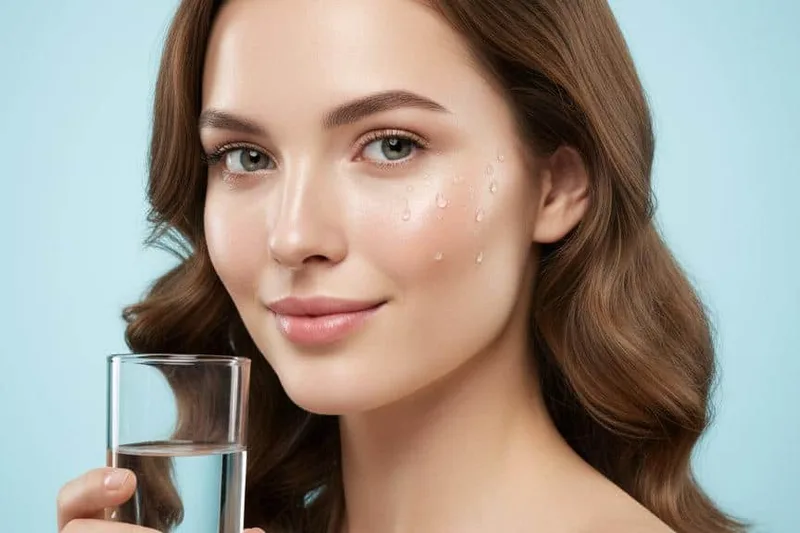
Have you seen commercials for skin care products on TV? They always say things like "hydrate your skin." But what exactly does "hydrate your skin" mean? Why is hydration so important for our skin? Let's talk about that today.
Why is moisture so important for our skin?
Simply put, hydration is the process of providing the skin with the water it needs. Water is essential for our skin to be strong, flexible, and therefore healthy and radiant.
Ideally, our skin has a natural barrier that prevents water from evaporating. The top layer of our skin, which is made up of dead skin cells, is like a brick wall. These cells are the bricks. The mortar between these bricks is made up of lipids, a type of fat found in our skin. This "cellular brick wall" is what keeps the moisture inside the skin from escaping.
However, this moisture- retaining system doesn't always work properly. In some people, this lipid barrier can quickly become dry. This is when the skin looks flaky or starts to peel off .
When the cells beneath this protective barrier lose too much water, the skin becomes dehydrated. The cells then shrink. As a result, the skin looks dull and lifeless , and fine wrinkles become more visible . This dryness doesn't just affect your appearance. Sometimes the skin starts to peel and crack. That's really annoying, isn't it?
What are the causes of skin loss of moisture?
The loss of lipids, which retain moisture in the skin, is a major cause of dry skin. For example, people with atopic dermatitis , a condition we all know as eczema, have a very weak protective barrier on their skin. As a result, their skin dries out quickly.
Sometimes our daily activities and habits can cause our skin to lose moisture . It can also be caused by certain medical conditions.
| Reason type | Examples |
|---|---|
| Our daily habits and environment | |
| Some medical conditions |
|
It's not that difficult to fix problems caused by everyday habits. For example, you can do things like increase the amount of water you drink per day, reduce shower time and use lukewarm water, and reduce the use of harsh soaps that strip the skin of its natural oils.
However, if you have any of the conditions I mentioned above, it's best to talk to your doctor about the right treatment for you.
Are 'Moisturizing' and 'Hydrating' two different things?
Although these two words are often used for the same thing, there is a slight difference between the two.
Moisturizing is primarily aimed at the skin's protective barrier. These products work by preventing the water inside the skin cells from evaporating, locking that moisture in. Simply put, they don't let the moisture in the skin evaporate.
Hydrating means penetrating the skin barrier and drawing water into the cells . This allows water to enter the wrinkled cells and make them "plump" again.
However, it is sometimes difficult to distinguish between the two, because many products now contain ingredients that perform both functions.
Main ingredients in moisturizers
A moisturizer usually contains these three types of ingredients.
| Raw material type | What to do and examples |
|---|---|
| Humectants | These work by drawing water vapor from the air and water in the deeper layers of the skin to the surface layer of the skin, adding moisture. Eg: glycerin, hyaluronic acid, urea |
| Occlusives | These create a protective film on the skin's surface, preventing the water inside from evaporating. Ex: beeswax, soybean oil, lanolin |
| Emollients | These make the skin smooth and soft. For example: coconut oil, shea butter, colloidal oatmeal |
The latest moisturizers now contain ingredients like ceramides , which repair damaged lipid barriers and prevent water loss.
So, how do you maintain moisture for healthy skin?
To improve the appearance and texture of your skin, you need to attract moisture into your skin and keep it from escaping. Here are some simple things you can do to do this:
- Limit bath time to 5-10 minutes. Use lukewarm water instead of hot water.
- Choose gentle soaps, laundry products, and cosmetics that are gentle on the skin .
- During the winter or if you spend a lot of time in air-conditioned rooms, use a humidifier that adds moisture to the air.
- Drink enough water throughout the day.
- If your skin is still dry and flaky after doing these things, apply a good moisturizer or a hydrating mask.
But there is one very important thing. Before buying any skin care product, you need to know exactly what type of skin you have. That is, whether you have oily skin or dry skin . Otherwise, some products can clog pores and cause acne. Then, the products used to treat those acne can dry out your skin even more. Therefore, if you are not sure what is right for you, it is wise to seek advice from a doctor .
Take-Home Message
- Hydration is the process of providing the skin with the water it needs. It is essential for healthy, radiant skin.
- Our skin naturally has a protective barrier to retain moisture, but it can be weakened by our habits and certain medical conditions.
- 'Moisturizing' means keeping the moisture in the skin from evaporating. 'Hydrating' means providing new water to the skin cells.
- Simple things like reducing the use of harsh soaps, bathing in lukewarm water, and drinking enough water can help reduce skin dryness.
- Before choosing any skin care product, it is very important to identify your skin type (oily/dry).
- If dry skin persists or you suspect a condition such as eczema, be sure to consult your doctor for advice.


💬 Comments (0)
No comments yet. Be the first to share your thoughts here.
Add Your Comment