
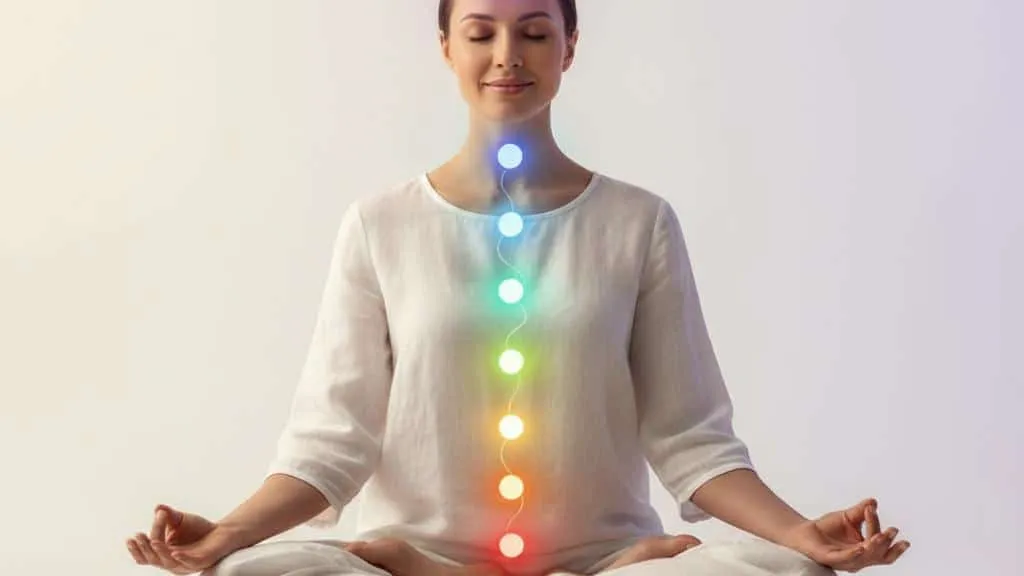
You have likely heard the word chakra before today. You might have heard it in a yoga class, during a meditation session, or while scrolling through social media feeds.
Many people describe these as energy centers located throughout your human body. This is actually a very old concept rooted in spiritual history. However, it is important to know this is not a medical fact.
Instead, it is a traditional spiritual belief system. Learning about these energy points can still offer a fresh way to think about your mental wellness and body connection.
Key Takeaways
- Chakras are ancient spiritual energy centers rather than proven medical structures in Western science.
- There are seven primary chakras positioned along your spine from the base to the crown of your head.
- Each chakra connects to specific emotional states, physical areas, and life aspects.
- Practices like yoga, breathwork, and meditation can help you balance these energy centers and reduce daily stress.
- Always consult a qualified doctor if you experience physical illness or mental health concerns.
What Are Chakras? Understanding Your Body's Energy Centers
The word chakra comes from an ancient Sanskrit word. Its direct translation means wheel or circle. According to traditional Indian spiritual beliefs, your body is much more than just a physical shell.
Believers view the human body as a complex energy system. They consider chakras to be spinning wheels or vortexes of subtle energy within this system.
According to this belief, you have seven main chakras running vertically along your spine. This path starts at the very bottom of your tailbone and moves all the way up to the top of your head.
When these energy wheels are balanced and open, your life force flows smoothly through your body. This smooth flow helps you feel physically healthy, emotionally stable, and mentally strong.
It is vital to remember that chakras are not proven by modern medical science. Just like many traditional or spiritual practices, this framework is designed to help you explore your mind and body connection. If you have any physical symptoms or mental health struggles, always talk to your doctor right away for proper diagnosis and treatment.
The Origins and History of the Chakra Concept
This spiritual belief system originated in India thousands of years ago. It is deeply connected to ancient Hindu and Buddhist spiritual traditions. Some historians believe the tradition is even older than written records suggest.
Early Hindu texts, such as the Vedas and the Yoga Upanishads, contain some of the earliest written mentions of these energy points. Over centuries, the concept grew and evolved.
In Eastern cultures, chakras became tightly woven into traditional healing arts. These include Ayurveda, yoga, Hinduism, and Buddhism. A shared core belief unites all these traditions.
That core belief is that a universal life force flows through your body and the entire universe. People call this life force prana. Chakras act as tools to interact with this energy.
For example, yoga uses physical postures and controlled breathing to build body energy. It then guides that energy through your various chakras. Ayurveda uses herbal remedies, diet, and meditation to clear blockages and restore balance.
Exploring the Seven Main Chakras in Detail
Most modern wellness traditions focus on seven primary chakras. These energy centers sit in a straight line along the center of your torso, following your spinal column.
Let us look closely at each of these seven chakras. We will examine where they are located, what areas of life they influence, and what signs appear when they fall out of balance.
| Chakra Name & Color | Physical Location / Associated Life Aspects / Signs of Imbalance |
|---|---|
| Root Chakra Red |
Physical Location: Base of the spine Associated Life Aspects: Survival, safety, physical stability, grounding Signs of Imbalance: Intense fear, insecurity, lack of focus, restlessness |
| Sacral Chakra Orange |
Physical Location: Just below your belly button Associated Life Aspects: Creativity, sexuality, emotions, passion Signs of Imbalance: Sudden anger, low creativity, emotional numbness |
| Solar Plexus Chakra Yellow |
Physical Location: Upper abdomen near stomach Associated Life Aspects: Self-esteem, personal power, confidence Signs of Imbalance: Low self-worth, sadness, digestive discomfort |
| Heart Chakra Green |
Physical Location: Center of your chest Associated Life Aspects: Love, compassion, trust, relationships Signs of Imbalance: Bitterness, jealousy, high anxiety, guarded feelings |
| Throat Chakra Blue |
Physical Location: Throat and neck area Associated Life Aspects: Communication, self-expression, honesty Signs of Imbalance: Trouble speaking up, social fear, neck tension |
| Third Eye Chakra Indigo |
Physical Location: Between your eyebrows Associated Life Aspects: Intuition, wisdom, imagination, mental clarity Signs of Imbalance: Frequent headaches, brain fog, poor concentration |
| Crown Chakra Violet or White |
Physical Location: Top of your head Associated Life Aspects: Spiritual connection, higher consciousness, peace Signs of Imbalance: Feeling disconnected, isolation, spiritual emptiness |
1. Root Chakra (Muladhara)
The root chakra sits at the base of your spine. It governs your basic survival instincts and your sense of physical safety.
When this center is healthy, you feel grounded and secure in the world. If it becomes blocked, you may experience intense fear and chronic worry.
2. Sacral Chakra (Svadhisthana)
Your sacral chakra is located just below your belly button. It controls your creative drive, emotional expression, and intimate relationships.
A balanced sacral chakra allows you to enjoy life's pleasures freely. An imbalance can lead to mood swings, creative blocks, and emotional withdrawal.
3. Solar Plexus Chakra (Manipura)
This chakra is found in your upper abdomen, near your stomach. It is the powerhouse of your personal confidence and inner strength.
When it functions well, you make decisions easily and trust your abilities. When blocked, you may struggle with self-doubt and low self-esteem.
4. Heart Chakra (Anahata)
The heart chakra rests right in the center of your chest. It bridges your physical desires with your spiritual aspirations through love and empathy.
An open heart chakra helps you build deep, loving connections with others. If it is closed, you might feel isolated, resentful, or overly guarded.
5. Throat Chakra (Vishuddha)
Your throat chakra is located right in your neck area. It governs all forms of communication, listening, and honest self-expression.
When this center is clear, you speak your truth with confidence and kindness. An imbalance makes it hard to express your thoughts clearly to others.
6. Third Eye Chakra (Ajna)
This center sits right between your eyebrows on your forehead. It is linked to your inner wisdom, intuition, and mental clarity.
A balanced third eye helps you see situations clearly beyond surface details. An imbalance can trigger mental fatigue, confusion, and tension headaches.
7. Crown Chakra (Sahasrara)
The crown chakra is located at the very top of your head. It represents your highest spiritual connection and universal awareness.
When this chakra is open, you feel a deep sense of inner peace and unity. When blocked, you may feel detached from life and lack life purpose.
Chakra Healing and Balancing Methods
Life brings many challenges that cause stress, anxiety, and poor habits. These daily pressures can disrupt your energy flow, leading to blocked or unbalanced chakras.
Chakra healing refers to practices designed to restore your natural energy balance. People use many different wellness techniques to achieve this peaceful state.
Common Methods Used to Balance Your Chakras
- Meditation and Breathwork: You can quiet your mind and focus your attention on a specific chakra location. Visualizing warm, healing light entering that area helps calm your nervous system and reduce stress.
- Yoga Postures: Yoga combines physical movement with mindful breathing. Specific poses are designed to stretch parts of your body linked to particular energy centers.
- Reiki Sessions: Reiki is a Japanese energy healing technique. A trained practitioner gently guides their hands near your body to help clear energetic blocks.
- Ayurvedic Therapies: Ayurveda offers a complete wellness approach. It uses herbal supplements, dietary changes, and daily routines to support overall mind-body health.
- Color and Crystal Therapy: Some people use specific colors or smooth stones during meditation. They believe gazing at a matching color or holding a crystal helps focus positive intentions.
What Does Western Science Say About Chakras?
Western medical science has not found direct physical proof of chakras. Because of this, doctors do not use chakra diagnostics to treat illnesses.
Researchers studying these concepts often look for links to known human biology. For instance, some explore how specific chakra locations overlap with major nerve plexuses or endocrine glands.
An example is the third eye chakra location, which sits near the pineal gland in your brain. This tiny gland helps regulate your natural sleep cycles.
Even without direct medical proof, many people report powerful benefits from chakra practices. They find that meditation, yoga, and breathwork help them manage everyday stress very effectively.
These practices improve emotional well-being and promote relaxation. Therefore, mainstream doctors often view these techniques as valuable complementary therapies.
Complementary therapies do not replace standard medical care. Instead, they work alongside your regular medical treatments to support your overall quality of life.
When to Seek Emergency Medical Attention
While mindfulness and wellness practices support mental relaxation, they cannot treat acute medical emergencies. Call 911 (US/Canada), 999 (UK), or go to your nearest Emergency Department right away if you experience any of the following:
- Sudden chest pain, pressure, or shortness of breath.
- Signs of a stroke, such as sudden weakness, facial drooping, or trouble speaking.
- Severe physical injuries or uncontrollable bleeding.
- Thoughts of self-harm, suicide, or severe mental health crises.
- Sudden, severe confusion or loss of consciousness.
Chakra Practices vs. Western Medicine: A Quick Guide
| Feature | Chakra Practices / Western Medicine |
|---|---|
| Primary Focus | Chakra Practices: Subtle energy flow, spiritual awareness, and inner peace. Western Medicine: Evidence-based diagnosis, pathology, and clinical treatments. |
| Key Tools | Chakra Practices: Meditation, yoga, breathwork, and mindfulness exercises. Western Medicine: Prescription medicine, surgeries, lab tests, and physical therapy. |
| Best Used For | Chakra Practices: Reducing everyday stress and supporting emotional wellness. Western Medicine: Treating physical diseases, infections, injuries, and mental disorders. |
💡 Take-Home Message
Chakras are ancient spiritual concepts rooted in Hindu and Buddhist traditions, representing energy centers across your body.
There are seven main chakras, and each one connects to specific emotional states, body parts, and life experiences.
Practices like yoga, meditation, and breathwork can help balance these energy points, lower your stress, and improve your daily wellness.
Most importantly: These are complementary practices only. If you have a physical disease like diabetes, or a mental health condition like depression, do not rely solely on chakra healing. Always work with a qualified doctor for safe, proven medical care.





No comments yet. Be the first to share your question or experience below.