
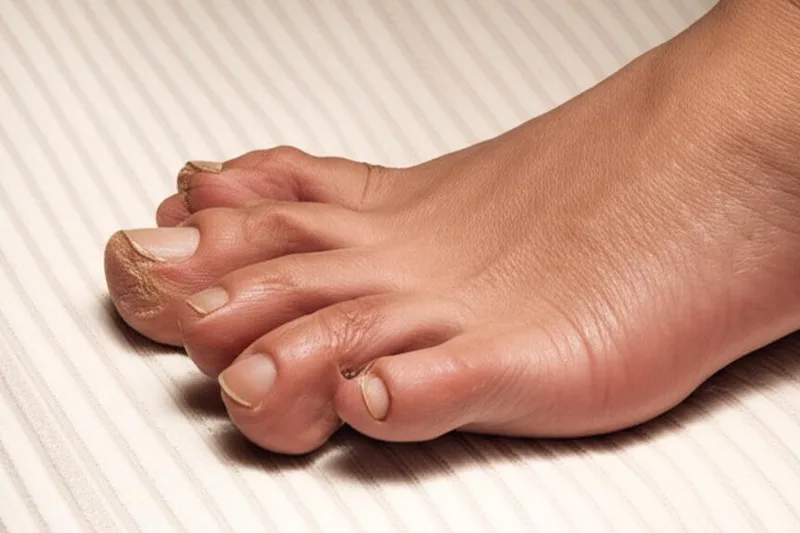
Have you ever felt like your toes are bent inward, like a claw? Do you feel a little uncomfortable or painful when you stand or walk? Maybe it's even hard to put on your shoes. This is what we medically call a claw foot (sometimes called a claw toe or hammertoe ). Don't be alarmed when you hear this. It's not dangerous, but it's important to be aware of it and do what's necessary for your well-being.
Simply put, Claw Foot is a condition where your toes are bent into the shape of a claw. For some people, this can be something they are born with. For others, it can develop later in life. So let's take a look at what causes it, how it affects our health, and what can be done about it.
What are the causes of claw foot?
Most of the time, this condition is directly related to some kind of damage to your feet. Imagine, if there is some damage to the nerves or muscles in your feet, your body tries to compensate and maintain balance . In this effort, your toes start to curl inward slightly. Over time, this curling can become permanent.
Apart from this main cause, there are several other causes of Claw Foot. Let's take a closer look at them.
| Cause | A simple explanation |
|---|---|
| Foot injuries and surgeries | Any surgery or serious accident to the foot or ankle can damage the nerves and muscles in that area. |
| Diabetes | If you have uncontrolled diabetes, high blood sugar levels can damage the nerves in your feet. This can lead to numbness in your feet and tingling in your toes. |
| Rheumatoid arthritis | This is a disease of the immune system. In this case, the body's own cells attack the joints. Over time, this can cause muscle weakness and deformity of the finger joints. |
| Cerebral palsy | This condition causes muscle function to become irregular. Some muscles become too tight or too loose. This can also cause twitching of the fingers. |
| Stroke | After a stroke, it can be difficult to control the muscles of the body. The fingers may twitch to help maintain balance. |
| Charcot-Marie-Tooth disease | This is a genetic disease that affects the nervous system. One of the first symptoms is weakness in the legs and deformities such as claw feet. |
How does this situation affect your health?
Claw foot is not a life-threatening condition, but it can be painful and uncomfortable to walk when your toes are bent into a claw shape. It can also be a challenge to find a pair of shoes that fit you properly.
The most important thing is to identify this condition early and begin treatment .
You can prevent this condition from getting worse while your fingers are still flexible. If left untreated, over time, your fingers may become stiff and permanently "stuck" in that bent shape.
So, if you notice any changes in your fingers, it's best to talk to your doctor about it so that they can keep your fingers flexible and treat any underlying conditions that may be causing it.
What are the treatments for claw foot?
If you notice that you are starting to develop claw foot, your doctor may recommend several treatments. The main goal of all of these treatments is to keep your foot flexible, helping you walk and work more easily.
These are the treatments that are often recommended:
- Taping your fingers: This is a very simple solution. If your fingers are just starting to twitch, you can wrap them in tape so that they are straight. This will help keep your fingers in the correct position.
- Wearing a splint: If your fingers are sprained but still flexible, you can use a splint. These are a little stronger than tape, so they are more effective at straightening fingers that are a little more sprained.
- Treating underlying conditions: If you have a medical condition like diabetes or rheumatoid arthritis , your doctor will treat those conditions. Controlling those conditions can help prevent claw foot from getting worse.
- Surgery: If your condition is severe, meaning your fingers are very bent and stiff, you may need surgery. This involves lengthening the tendons in your fingers or shortening the bones in your fingers to help straighten them again.
How to prevent the development of claw foot?
For many people, it's easier to prevent this condition than to treat it. If you're even a little concerned about it, there are a few things you can do to protect your feet.
Control diabetes
If you have diabetes, the best thing you can do is to control your blood sugar levels . This can help prevent damage to the nerves in your feet, which can go a long way in stopping your toes from twitching.
Wear comfortable shoes.
Wearing high heels and tight shoes can make this condition worse. Therefore, get into the habit of wearing shoes that have plenty of room for your toes and don't put too much pressure on the ball of the foot.
Use special devices (Orthotics)
Your doctor may recommend that you wear special gel pads or other orthotics that are placed inside your shoes. These help to reduce pressure on your toes and the front of your foot, which can help to relieve pressure on your feet. This can help prevent or reduce the risk of developing claw feet.
Exercise your fingers.
Strengthening your toes and doing stretching exercises can help keep them flexible.
- Hold your fingers together and spread them out straight.
- Try picking up something on the floor, like a small towel or a marble, with your fingers.
Simple exercises like these can reduce the effects of nerve damage.
Take-Home Message
- Claw foot is a condition where the toes of the foot are drawn together like a claw. This is usually not dangerous, but it can make walking difficult.
- Conditions like diabetes, arthritis, and neurological disorders can be a major cause of this.
- See your doctor as soon as possible for advice. Treatment is most effective when the fingers are still flexible.
- Wearing well-fitting, comfortable shoes, exercising your toes, and controlling diseases like diabetes go a long way in preventing this condition.


💬 Comments (0)
No comments yet. Be the first to share your thoughts here.
Add Your Comment