
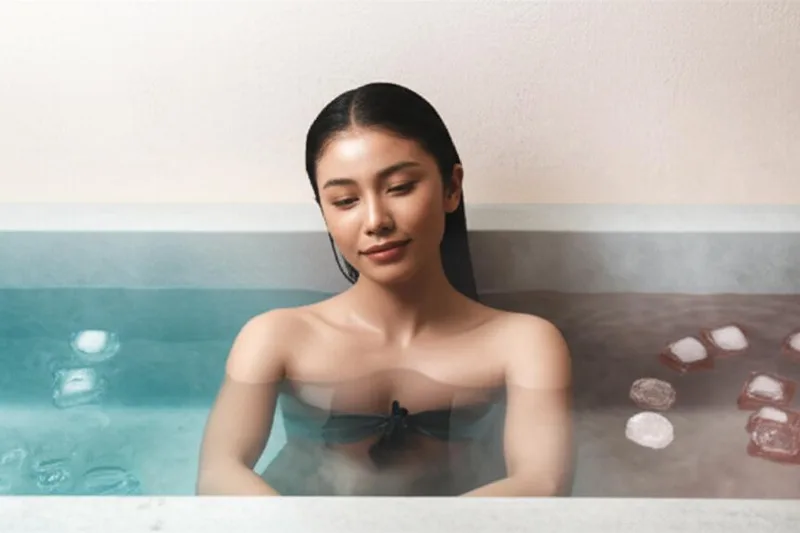
You've probably seen videos like that on social media , whether it's Facebook, TikTok, or Instagram, haven't you? A well-built person looks at the camera and then suddenly jumps into a tank of ice-cold water. Some people seem to be doing it with great enthusiasm, while others seem to be doing it as a real feat. When you see these, you might be wondering, "Is it really good for your body to jump into ice-cold water like this, or into extremely hot water?"
In fact, water is a healing agent for our bodies in many ways. Research has even found that water immersion can reduce muscle pain, relax the mind, and improve blood circulation. So today, let's talk about these hot water and cold water treatments in detail.
Why is bathing in this water so healing?
This is because when we are immersed in water, it affects several systems in our body. Simply put, it affects our cardiovascular system, respiratory system, and endocrine system. It is the combination of all these that gives us these health benefits.
Okay, so let's now look at the details of each of these popular methods.
Cold Plunge
Although research on this is still in its early stages, preliminary studies have shown that immersion in cold water can have some beneficial effects on conditions such as blood pressure , mood, and depression.
There may be several reasons for this.
- Reducing inflammation: This helps reduce the invisible swelling in the body.
- Stimulation of the vagus nerve: This is a very important nerve in our body. When it is stimulated, it slows down our heart rate and calms our body. This helps us control our anxious mind and stay in the present moment.
- Reduced body fat and improved insulin sensitivity: Some small studies have found these benefits, but no firm conclusions have been reached yet.
Be aware of the risks too.
But that's not to say that this is without risk. When we suddenly plunge into ice water, our body can go into a shock response . Within the first 30 seconds, blood pressure, breathing rate, and heart rate suddenly increase. This puts people with heart disease or blood vessel problems, such as arrhythmias, at higher risk.
So if you have heart disease or other health problems, be sure to talk to your doctor before trying something like this.
If you do, instead of jumping into the water all at once, slowly and carefully get your body used to the water . That way, you can reduce that shock response.
A good starting point for beginners is usually a 5-minute soak in water between 10-15 degrees Celsius (50-59 Fahrenheit). Remember, anything colder and longer is not good.
Hot Tub
This method, which is much more comfortable than ice water, also benefits our heart health. Being in hot water, a process called "passive heating," can have the same effects on the body as exercising .
Imagine, when we get into hot water, blood flow to our skin increases. That means a large volume of blood moves to our arms and legs. This puts some stress on our heart and blood vessels. Just like exercising. This strengthens our cardiovascular system. It can also reduce stress hormones and reduce anxiety.
To fully reap these cardiovascular benefits, you need to soak in warm water at around 39 degrees Celsius (102 Fahrenheit) for about 30 minutes . But if you just want to feel better and lower your blood pressure a little, 15 minutes is enough.
| Treatment method (Method) | Main advantages | Things to watch out for |
|---|---|---|
| Cold Plunge | Good for mental well-being, reducing inflammation, and blood pressure. | Risky for heart patients. Should be adjusted slowly, not suddenly. |
| Hot Tub | Good for heart health, reduces stress, and relaxes muscles. | Excessive heat and prolonged exposure are not recommended. |
| Immersing the face in ice water | Instantly reduces anxiety and panic, calming the mind. | You should not feel excessive discomfort or difficulty breathing. |
| Washing feet with hot water | Makes it easier to sleep, relieves pain. | There is hardly any particular risk, but control the water temperature. |
Face Dunking in Ice Water
This is very popular on places like TikTok as a way to instantly reduce anxiety. There's science behind it. When we feel scared or anxious, our bodies go into " fight-or-flight " mode. Then our body temperature, heart rate, and stress hormones all go into overdrive .
But when we put our face in cold water, our body's parasympathetic nervous system, which is associated with relaxation and calmness, is activated. It sends a message to the brain to "calm down."
Why do we press our faces? Since our faces have a large number of nerves and are close to the brain, this message can be sent to the brain very quickly. But you shouldn't feel so uncomfortable when doing this that you suffocate. Splashing some cold water on your face, holding an ice pack on your neck, or holding an ice cube somewhere on your face can also achieve similar results.
Foot Bath
Soaking your feet in a tub of hot water not only feels good, but it can also help you sleep better and manage pain. One reason for this is that it affects the body's thermoregulation systems. After washing your feet in hot water, your core body temperature drops slightly. This helps you sleep better.
A recent study found that hot foot baths improved sleep quality in patients who had undergone back surgery. Research has also shown that this method can help women who are going through menopause and reduce menstrual pain.
Swimming
This is something we all know. But swimming is not just a good exercise. Because of the pressure of the water, or hydrostatic pressure , swimming can increase heart rate and the volume of blood pumped by the heart better than other exercises. This pressure facilitates the movement of fluids throughout the body.
Recent research shows that activities such as swimming and underwater running can increase blood flow to the brain and even help reduce memory loss that occurs with age.
Like other methods, open-water swimming has become popular. But it also has its risks, so it's important to follow safety precautions, especially if you're just starting out. But if done safely, you can reap the same health benefits as diving into icy water.
There's another lesson we can learn from all of this. That is, to face some degree of "difficulty." Exercise is also a form of difficulty. Facing such manageable difficulties helps our bodies and minds adapt to challenges and stay healthy.
Take-Home Message
- Hot and cold water therapies actually have health benefits, including reducing muscle pain, calming the mind, and improving blood circulation.
- Be sure to consult your doctor before trying any of these, especially if you have any health conditions like heart disease or high blood pressure.
- Don't go to extremes all at once. If you're going into cold water, acclimate your body slowly. Even in hot water, don't start with too much heat.
- Being colder or hotter doesn't always give better results. Sometimes, staying at a lower temperature for a shorter period of time produces the best results.
- You don't need any fancy equipment to do these methods. You can get these benefits at home by filling your bathtub with cold water or taking a cold shower.


💬 Comments (0)
No comments yet. Be the first to share your thoughts here.
Add Your Comment